
Add ₹999 more to unlock FREE SHIPPING!
Your sacred cart is currently empty.
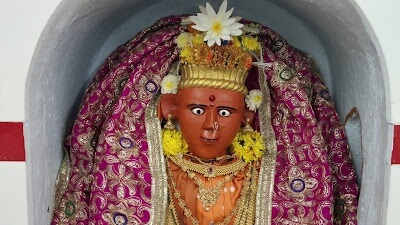
Shop Photo FramesThe town of Chaul, located in the Alibag taluka of Raigad district, is blessed with a rich historical and religious heritage. It is believed that this town was established by the Buddhist King Champa. However, according to some scholars, a large trade in rice was conducted from this port. In the local language, rice is called ‘Chaul’, from which the town’s name first became Cheul and later Chaul. Chaul is home to historical forts like the Portuguese Agarkot and the Maratha Rajkot, as well as religious sites such as the Rameshwar Temple, Dattatreya Temple, and Buddhist caves. An ancient temple of Hingulja Devi is situated on a hill here. Devotees believe that this Goddess is ‘Jagrut’ (awakened/manifest) and fulfills their vows.
It is said that this shrine is about a thousand years old. The ancient Buddhist caves adjacent to the temple bear witness to its antiquity. The temple is situated on an important trade route stretching from the seashore to the mountain pass. The original seat (Peetha) of Hingulja Devi is in Balochistan. It is believed that traders from that region built this temple here. A legend is prevalent regarding this temple: it is said that to save twelve Kshatriyas from Parashurama, who had set out to rid the earth of Kshatriyas, the Goddess gave them the guise of Brahmins and her sacred mantra. These Kshatriyas stayed on this hill and built the temple of the Goddess themselves.
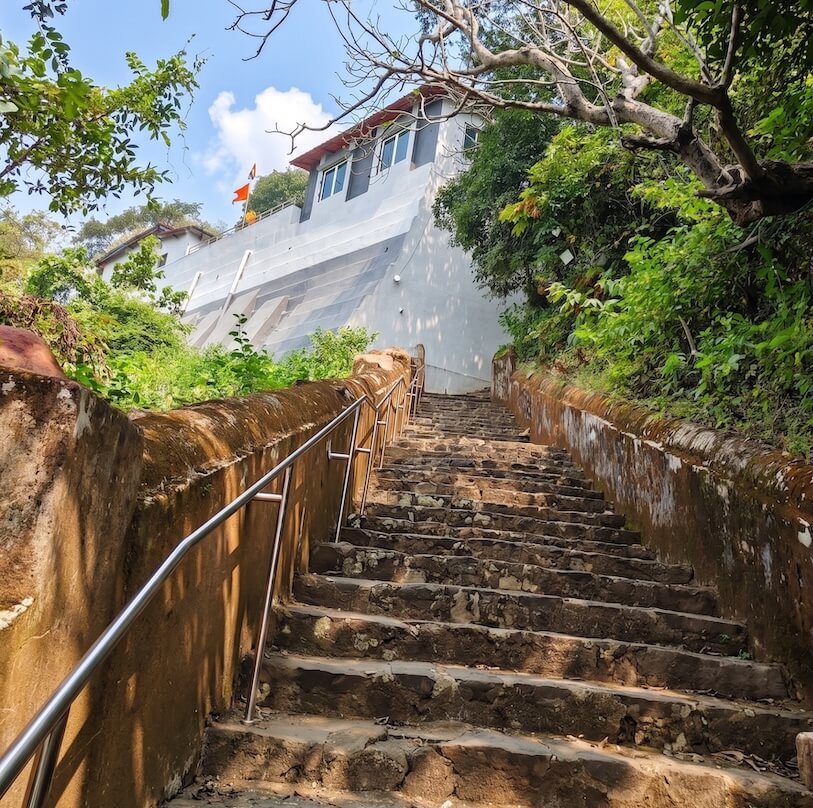
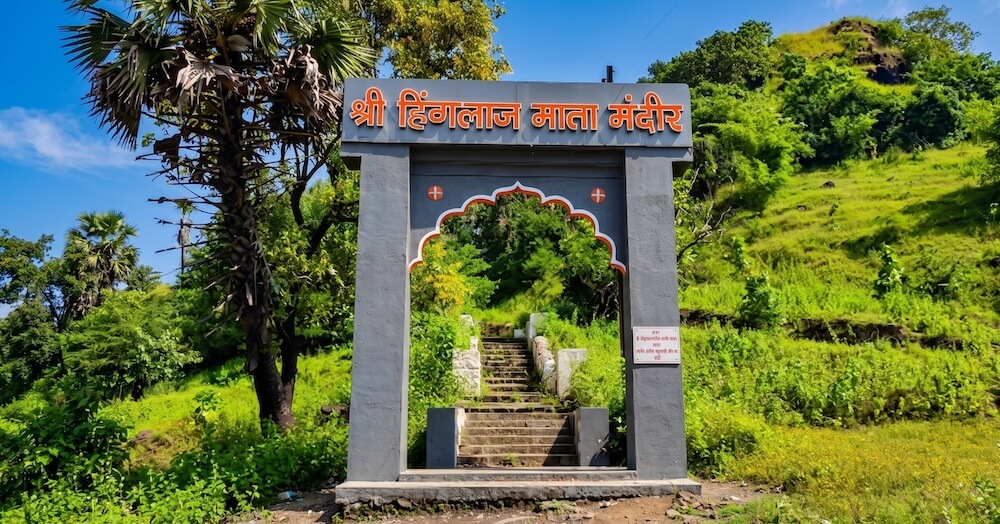
While approaching the temple from the Chaul-Vawe road, one encounters the first welcome arch. It consists of an iron crescent-shaped arch resting on two square pillars. From here, there is a path of about 158 steps leading to the temple on the hilltop. At the beginning of this stairway is the second welcome arch. This arch features ornate square pillars topped with a *Meghadambari* (canopy). Both pillars are connected by a scalloped arch. There are safety railings on both sides of the steps. After climbing a few steps, one finds an ancient vermilion-smeared stone idol of Hanuman within the railing. Seating arrangements have been provided at regular intervals along the stairway for the convenience of devotees.
The temple is surrounded by a sturdy fortification wall with a narrow entrance. Upon entering, one finds a spacious paved courtyard. Seating for devotees is provided along the fortification wall. In front of the temple is a platform featuring a *Deepmal* (lamp tower) and a *Tulsi Vrindavan*. The octagonal lamp tower has niches for lighting lamps. The temple’s architecture consists of a *Mukhamandapa* (front porch), *Ardhamandapa* (half-hall), *Sabhamandapa* (main assembly hall), and *Garbhagriha* (sanctum sanctorum). The *Mukhamandapa* has ornate octagonal pillars on both sides and a tiled roof. There are steps to reach this porch, which is elevated above the courtyard. The *Ardhamandapa* is open from the front. Eight ornate octagonal pillars stand on square bases here. At the top of the pillars are crescent-shaped arches supporting the roof.
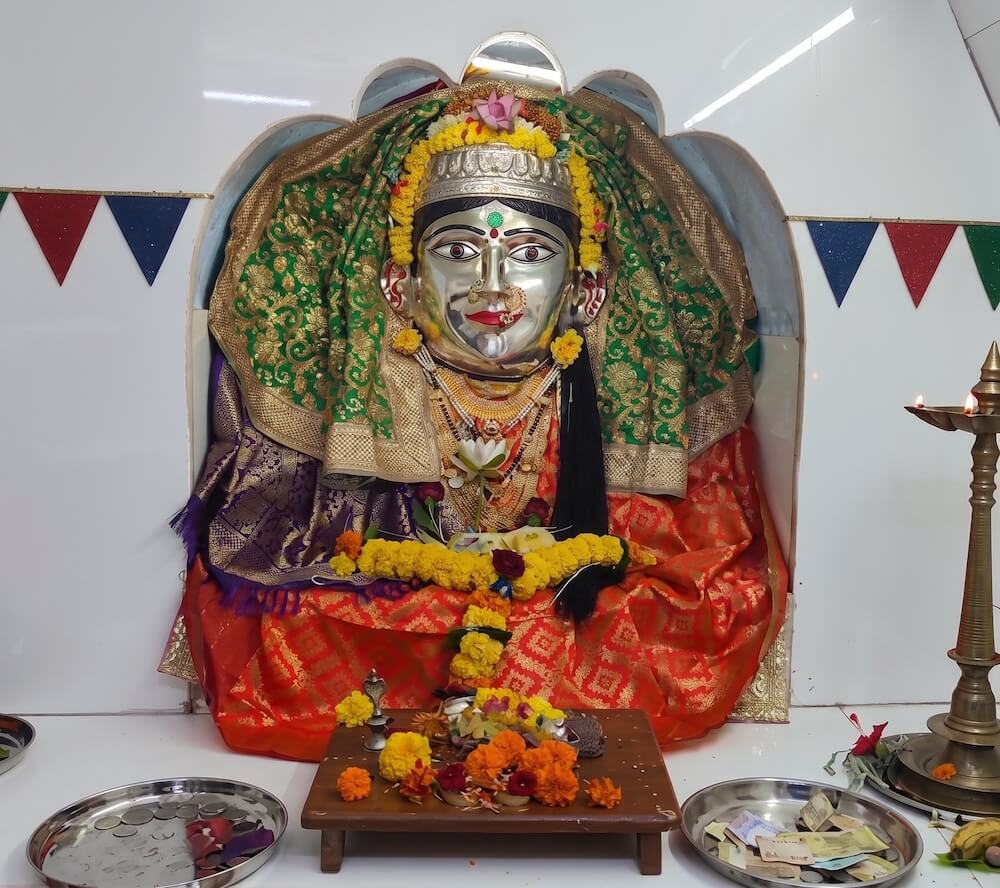
The entrance to the *Sabhamandapa* is slightly higher than the *Ardhamandapa*. An image of Lord Ganesha is carved on the lintel of this entrance. The *Sabhamandapa* has four rows of octagonal ornate pillars. The ceiling features circular carvings, and brass bells are hung from it. The floor between the central pillars of the *Sabhamandapa* is slightly recessed by a few inches, which is considered a characteristic of the Konkani architectural style. An idol of Hanuman is enshrined in a niche on the right, and an idol of Ganesha is in a niche on the left. The entrance to the *Garbhagriha* has stainless steel latticed doors. Inside, on a *Vajrapitha* (sacred pedestal), is the four-armed idol of Hingulja Devi. In her two back hands, the Goddess holds a trident and a discus. Behind the idol, on the stone slab, are images of the sun and the moon.
The four corners of the temple roof have square pillars adorned with sculptures of various deities and small spires. The roof of the *Sabhamandapa* has three dome-shaped spires. The roof of the *Garbhagriha* has a square tapering spire, with three smaller subsidiary spires on each of its four sides. At the apex of the spire are the *Amalaka* and the *Kalash*. Beside the main temple is the temple of Annapurna Devi. The entrance to this temple features ornate circular pillars and a crescent-shaped arch. There are stone benches (*Kakshasana*) for devotees in the *Sabhamandapa*. On the *Vajrapitha* in the *Garbhagriha* is the sixteen-armed (*Shodashabhuja*) idol of Annapurna Devi. The Goddess holds various weapons and implements in her hands. Garments, ornaments, and a crown are carved onto the idol. The roof of this temple has a sloping design.
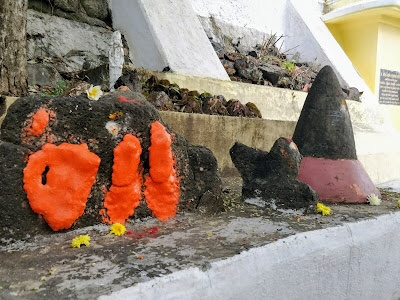
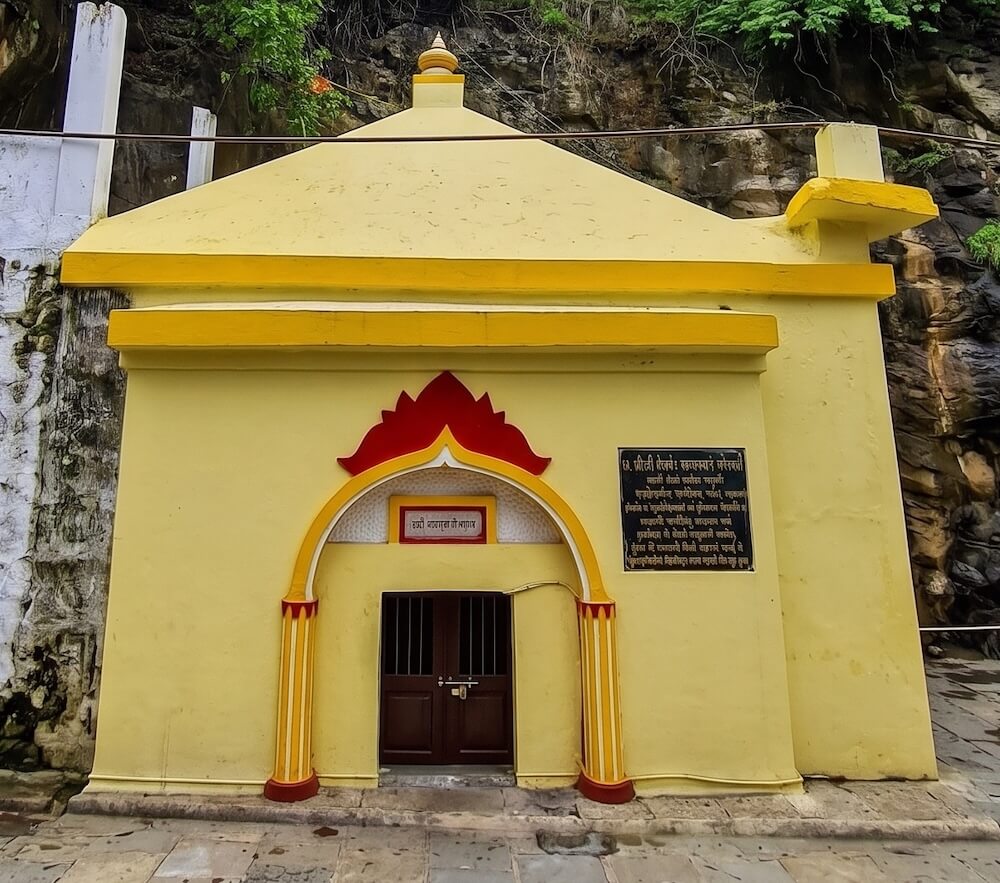
Near the Hingulja Devi temple is the temple of Ashapura Mata. There is a *Yajnakunda* (sacrificial fire pit) in front of the entrance of this temple. The door frames of the *Sabhamandapa* are carved with floral patterns. A four-armed idol of Ashapura Devi is enshrined in the *Garbhagriha*. The Goddess holds a trident and a spear, and wears a crown with a lotus flower design. The temple roof slopes on all four sides. The path behind the Ashapura temple leads to water tanks carved into the mountain rock. It is said that the water supply here is perennial. Beside the temple, there are Buddhist caves and an ancient stupa in the mountain. In a cave near the Buddhist caves, there is a vermilion-smeared idol of Chandika Devi and a Shiva Linga in front of it.
The Sharadiya Navratri festival is the main annual event celebrated here with great enthusiasm. For ten consecutive days, *Bhajans*, *Kirtans*, music, *Jagaran* (night vigils), and *Mahaprasad* are organized in the temple. During this time, thousands of devotees from the surrounding areas come for *Darshan* and to fulfill their vows. Akshaya Tritiya is celebrated here as the birthday of Annapurna Devi. Apart from this, there is a large crowd of devotees at the temple on Chaitra Padwa, Hanuman Jayanti, Dussehra, Diwali, and Kojagiri Purnima. A large number of devotees also visit for *Darshan* on Tuesdays, Fridays, Purnima (full moon), Amavasya (new moon), and Ashtami. Devotees can have *Darshan* of the Goddesses daily from 7:00 AM to 7:00 PM.
This sacred temple stands as a testament to deep spiritual devotion, ancient architectural grandeur, and rich local cultural traditions.
The sanctum sanctorum houses the divine idol consecrated according to ancient Vedic traditions, surrounded by serene courtyards and traditional temple architecture.
Navratri, Maha Shivratri, Annual Temple Jatra & Deepotsav
Compare and book flights, secure top-rated local hotels near the temple, hire reliable guides, and rent cars instantly.
Extend your pilgrimage by visiting other highly sacred temples located nearby.


Add ₹999 more to unlock FREE SHIPPING!
Your sacred cart is currently empty.
Shop Photo FramesFill in your delivery details below to place your order.
Add comment