
Add ₹999 more to unlock FREE SHIPPING!
Your sacred cart is currently empty.
Shop Photo FramesDapoli, located in the Ratnagiri district of Konkan, is considered a city of great tourism, cultural, and religious significance. Dapoli is famous everywhere due to the Balasaheb Sawant Konkan Krishi Vidyapeeth, which is the largest agricultural university in the country. In this very city, holding fast to religiosity and preserving the heritage of tradition, many festivals are celebrated. Among them, the Ram Navami festival celebrated at the Shri Ram Mandir in Prabhu Ali and Hanuman Jayanti at the Panchmukhi Hanuman Mandir in the market area are considered major festivals.
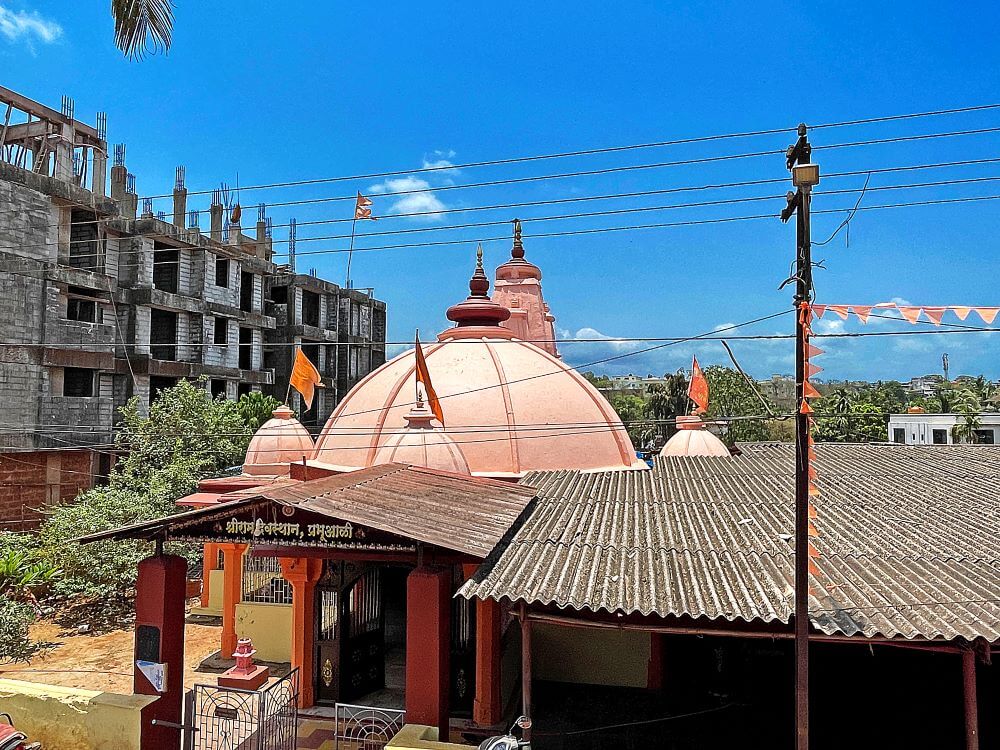
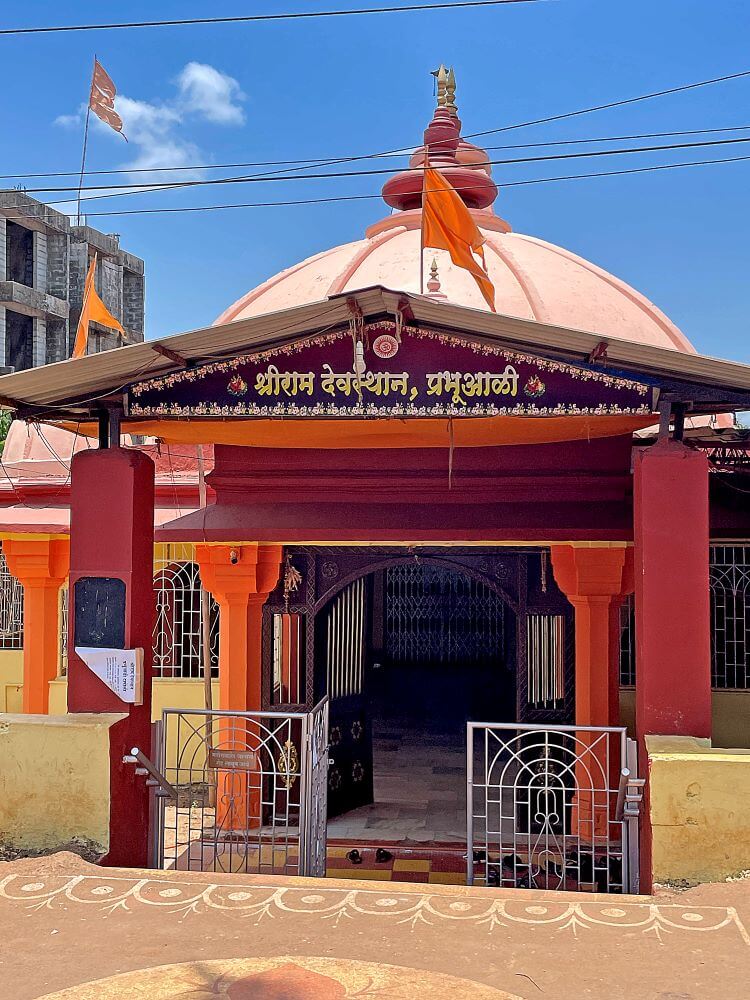
The Shri Ram Mandir in Prabhu Ali is a ten-minute walk from the Dapoli bus stand. This temple, which is approximately 200 years old, is a place of deep faith for the residents of Dapoli city and many other devotees. Upon entering Prabhu Ali, the temple is situated slightly below the level of the road. One enters the temple courtyard by descending a few steps from the arch on the road. A tin shed has been erected across this entire courtyard for the convenience of the devotees. The temple structure consists of a Darshan Mandap, a Sabha Mandap, and an entrance gate. In addition to the main entrance on the east, there are also entrances on the south and north sides to access the Sabha Mandap. To the left of the Darshan Mandap, there is a large sculpture of an elephant with its trunk raised in welcome.
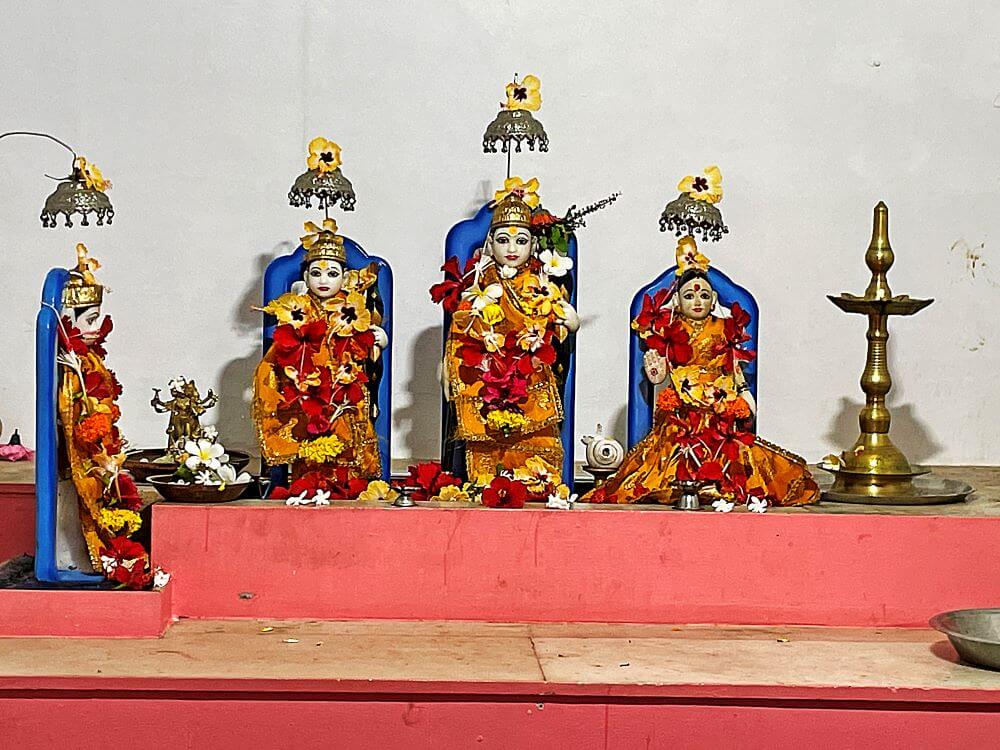
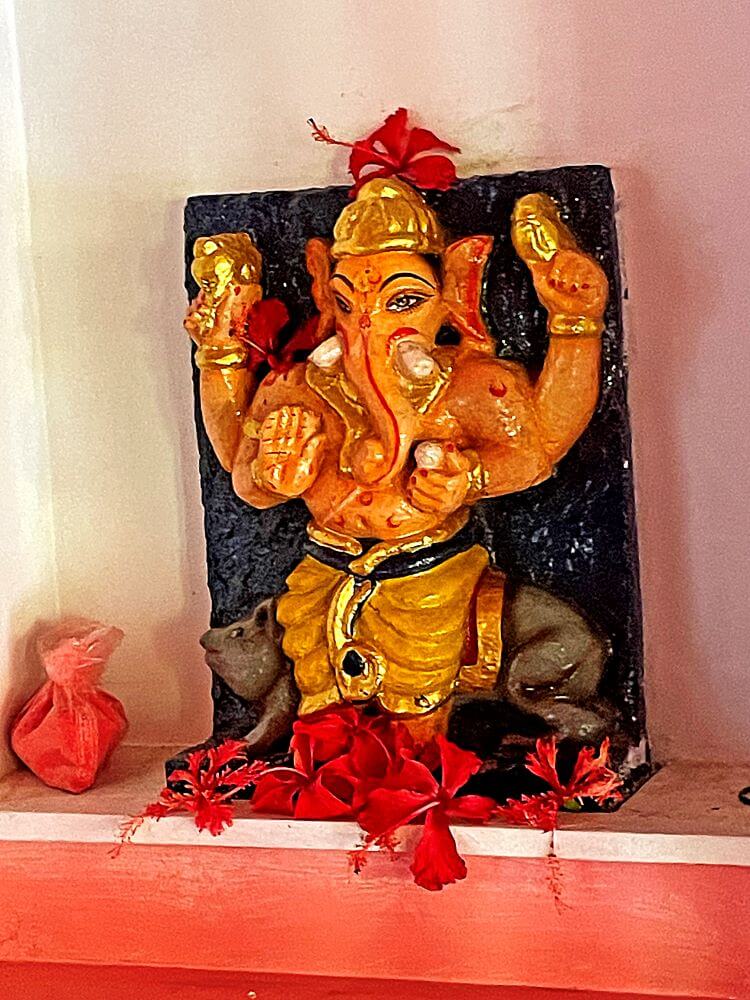
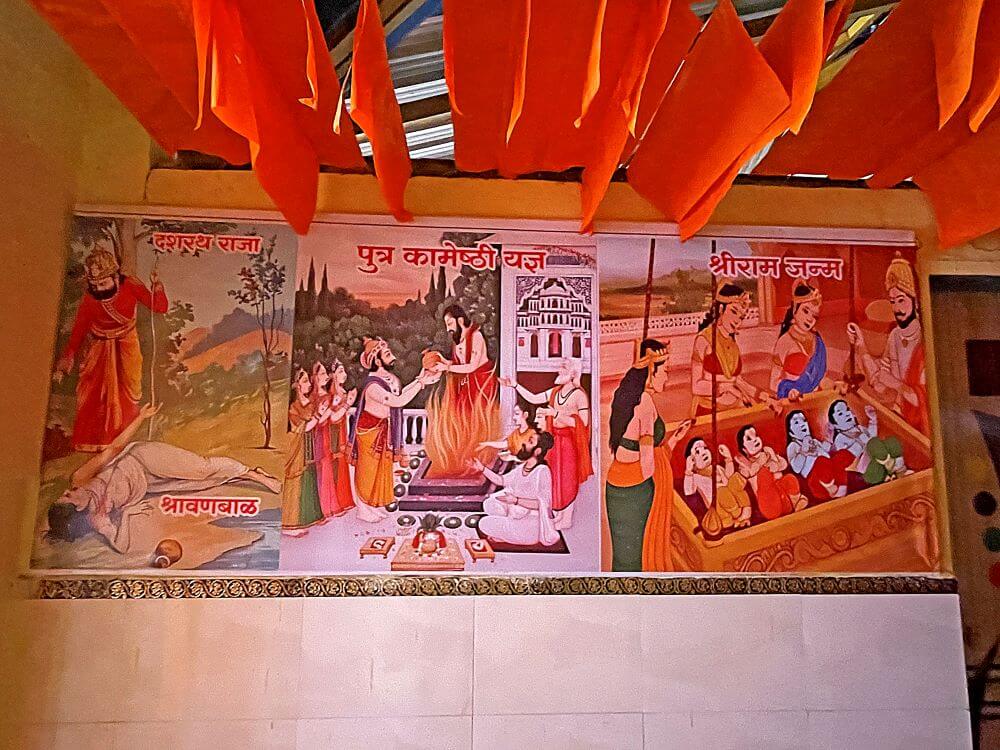
Upon moving from the Darshan Mandap to the Sabha Mandap, one can see various episodes from the Ramayana depicted on its walls. These include the dialogue between King Dasharatha and Shravan Bal, the Putra Kameshti Yajna, the birth of Shri Ram, education at the Gurukul, the Sita Swayamvar, and the wedding of Shri Ram and Sita. The sanctum sanctorum (Garbhagriha) has been designed within this Sabha Mandap, with a path provided for circumambulation (Pradakshina). On the outer side of the sanctum sanctorum, there are stone idols of Ganpati and Hanuman. On a raised platform inside the sanctum sanctorum, there are marble idols of Shri Ram, Lakshman, and Sita. Beside Lakshman is an idol of Hanuman. A sacred thread (Janve) is carved around the neck of this idol. It is said that previously, the idols here were made of black stone. As they had become worn with age, new marble idols were consecrated. Outside the main hall, in the temple courtyard, there is a platform featuring a Shivling and Nandi. The temple attained its current form following the renovation that took place in 1998.
The Ram Navami festival here is considered the most prestigious and grandest among all the festivals celebrated in the city of Dapoli. The responsibility for this festival lies solely with the residents of Prabhu Ali. Preparations for this festival begin approximately two months in advance. From the day of Gudi Padwa, programs such as Kirtan, Bhajan, Pravachan, Haripath, and devotional songs commence. There is a tradition of hoisting a large Gudi in front of the temple on Gudi Padwa. On the day of Ram Navami, the cradle of the Lord is placed in this temple. Thousands of devotees from Dapoli come for the darshan of this cradle. They come to the temple. From here, the grand procession of Shri Rama departs at two o’clock in the afternoon.
In the year 1966, a silver idol of Lord Shri Rama was gifted by the Shri Ram Mitra Mandal of Mumbai for the Shri Ram Janmotsav. Even today, the same idol is enshrined in the palanquin during the procession. This procession sets out amidst the thunderous sounds of drums and cymbals, accompanied by the continuous chanting of the name of Rama. At various places, devotees shower flowers upon this palanquin. Water and light refreshments are distributed to the devotees participating in the procession at several points. After visiting the designated places of honor in the city of Dapoli, this procession returns to the temple between 1:00 and 2:00 at night. The next day, a Lalita Kirtan and a Mahaprasad program for the devotees are organized. Apart from this, various religious, social, and cultural programs are organized in the temple throughout the year.
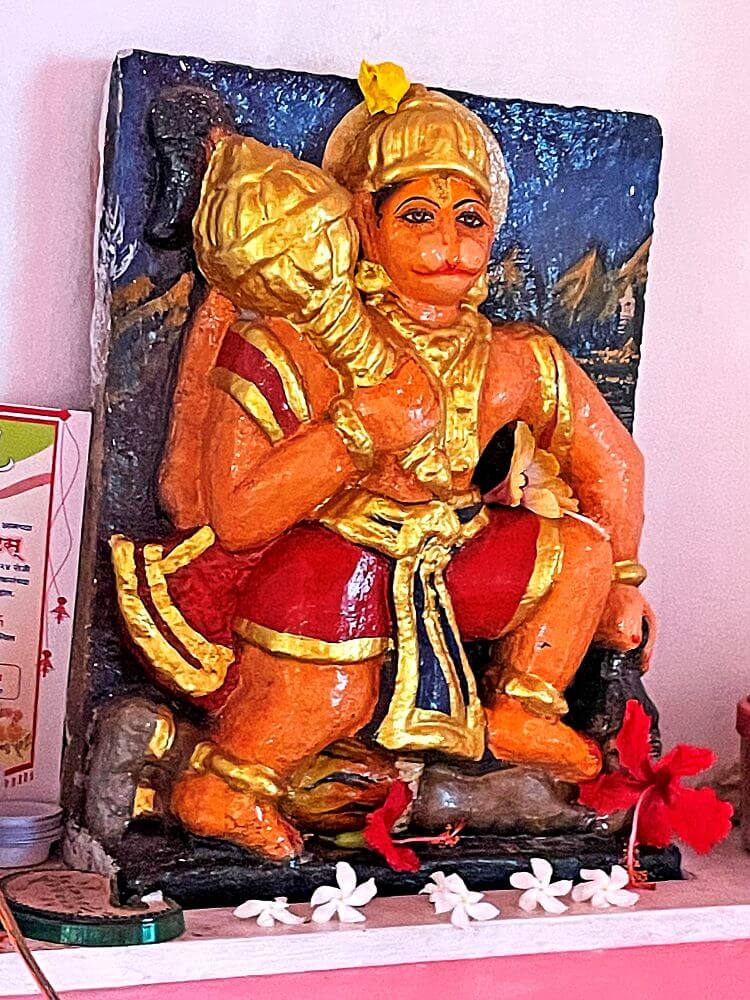
Located at a five-minute walking distance from the Shriram Mandir, on the banks of the Jog River, stands the 250-year-old Swayambhu Panchamukhi Maruti Mandir. Situated in the main market, this temple is a two-story, tile-roofed structure built in an ancient architectural style. The temple is located slightly below the road level, featuring a compact courtyard in front and a circumambulatory path around it. The temple layout consists of a Sabhamandap and a Garbhagriha. The idol of Hanuman housed in this Garbhagriha was discovered 150 years ago by the late Abhay Puri while excavating his own land. He had built a hut-like temple next to his house and consecrated the idol there at that time. As the glory of this Hanuman began to spread throughout Dapoli and the surrounding areas, the number of devotees visiting for Darshan continued to grow. Over time, that small temple was transformed into the large temple that stands today. This temple is considered to be the most revered among all the temples in the city of Dapoli. Every day, hundreds Devotees come to the temple for darshan. On Saturdays or holidays, this number reaches into the thousands.
The self-manifested (Swayambhu) idol of Panchamukhi Hanuman situated in the sanctum sanctorum of the temple is unique. The feet of this idol are not visible; only the upper part from the neck upwards can be seen. There is a face one and a half feet tall in the front, two on the sides, and a horn-like part visible at the back. The idol possesses five faces in total, with one face situated beneath a silver crown. As thousands of citizens of Dapoli hold deep faith in this Maruti, the Hanuman Jayanti festival here is also celebrated on a grand scale.
The temple is decorated even before Ram Navami. The ceiling area is beautifully adorned with buntings, the idol of Hanuman in the sanctum sanctorum is decorated with various ornaments and flowers, and the entire temple is illuminated. On the day of Hanuman Jayanti, which falls on Chaitra Shuddha Purnima, the morning Aarti of Hanuman is performed at dawn. Following long-standing tradition, the Kirtan begins here at 5 o’clock in the morning. Hundreds of Dapoli residents attend this early morning Kirtan. As the birth anniversary is celebrated at sunrise, the ritual bathing of Hanuman and the cradle ceremony take place. After the rituals are completed, the chariot carrying the idol of Hanuman circumambulates the temple, and a grand procession begins. During this procession, the sounds of Khalubaja, Dhavjicha Baja, and drums and cymbals resonate. This chariot of Panchamukhi Hanuman first goes to the Shri Ram temple in Prabhu Ali. After worship and Aarti are performed there, arrangements for tea and snacks are made for the devotees accompanying the procession. After the chariot leaves the Shri Ram temple, the procession returns to the main temple at midnight. The festival concludes the next morning after the Lalit Kirtan is performed.
Apart from this grand festival, various other festivals are celebrated at the Hanuman Temple, including Gudi Padwa on Chaitra Shuddha Pratipada, Maharudra on Chaitra Shuddha Dwadashi, Shri Krishna Janmotsav and Gopalkala on Shravan Krishna Ashtami, Dussehra on Ashwin Shuddha Dashami, Tripurari Purnima on Kartik Purnima, and Mahashivratri on Magh Krishna Trayodashi.
This sacred temple stands as a testament to deep spiritual devotion, ancient architectural grandeur, and rich local cultural traditions.
The sanctum sanctorum houses the divine idol consecrated according to ancient Vedic traditions, surrounded by serene courtyards and traditional temple architecture.
Navratri, Maha Shivratri, Annual Temple Jatra & Deepotsav
Compare and book flights, secure top-rated local hotels near the temple, hire reliable guides, and rent cars instantly.
Extend your pilgrimage by visiting other highly sacred temples located nearby.


Add ₹999 more to unlock FREE SHIPPING!
Your sacred cart is currently empty.
Shop Photo FramesFill in your delivery details below to place your order.
Add comment