
Add ₹999 more to unlock FREE SHIPPING!
Your sacred cart is currently empty.
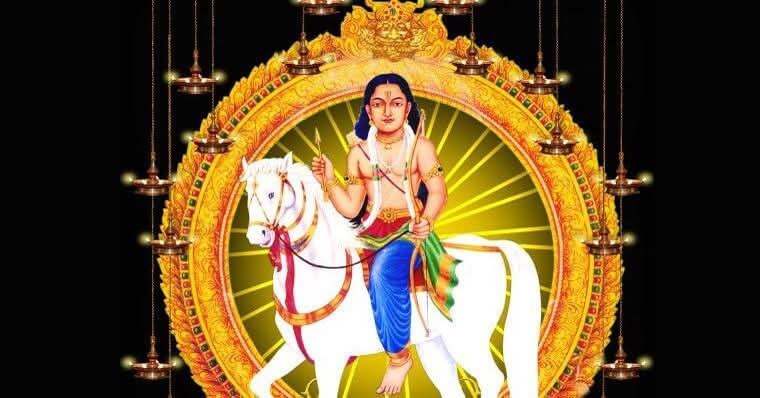
Shop Photo FramesKuthiranmala Dharmasastha Temple is a well-known Hindu shrine located at Kuthiran Mala in Thrissur district, beside National Highway 544 connecting Thrissur and Palakkad. The temple is regarded as an important place of worship for long-distance travellers and Sabarimala pilgrims. The main deity of the temple is Lord Dharmasastha, who is uniquely enshrined in a seated posture on horseback and faces east. Several sub deities are also worshipped here with equal importance. Many devotees travelling along the national highway visit the temple to pray for a safe journey and protection from accidents. Even those who are unable to stop at the temple often offer coins while passing by and seek the blessings of Lord Dharmasastha. The temple continues to be a symbol of deep faith and devotion among devotees.
Kuthiranmala Dharmasastha Temple has a history of around 400 years. Over time, the temple fell into a state of disrepair and was later renovated through extensive restoration works. Most of the major construction activities that gave the temple its present form were carried out during the late 1990s and early 2000s. As part of these renovations, the main sanctum, built entirely of granite in the gajaprishta style (resembling the back of an elephant) and the brass finial above it were constructed. In 2008, a new sanctum was built for the self-manifested Shiva deity, which had previously been situated in an open natural setting. The four-foot-tall stone idol of Yogeeswaran (Gosai Swami), one of the temple’s principal other deities, was consecrated in 2019. Most of the important structures and facilities seen at the temple today were developed during these phases of renovation. At present, the temple is administered and maintained by a trust led by the Pampumkattil family.
According to the main legend associated with the temple, a respected elder who was a devoted follower of Lord Dharmasastha was once travelling through this hill region on horseback. Feeling tired during the journey, he tied his horse to a tree and went to bathe in a nearby spring. After returning, he tried to continue his journey, but the horse refused to move even a single step forward. Instead, it remained standing and kept looking intently towards a particular spot. That night, the elder is believed to have received a divine vision of Lord Dharmasastha seated on horseback. The deity revealed that His presence was at the very place towards which the horse had been looking and that He was the Sastha installed by Parasurama on the eastern boundary to protect the ancient village of Peruvanam. According to the legend, it was following this divine revelation that a temple was established at the site and worship began there.
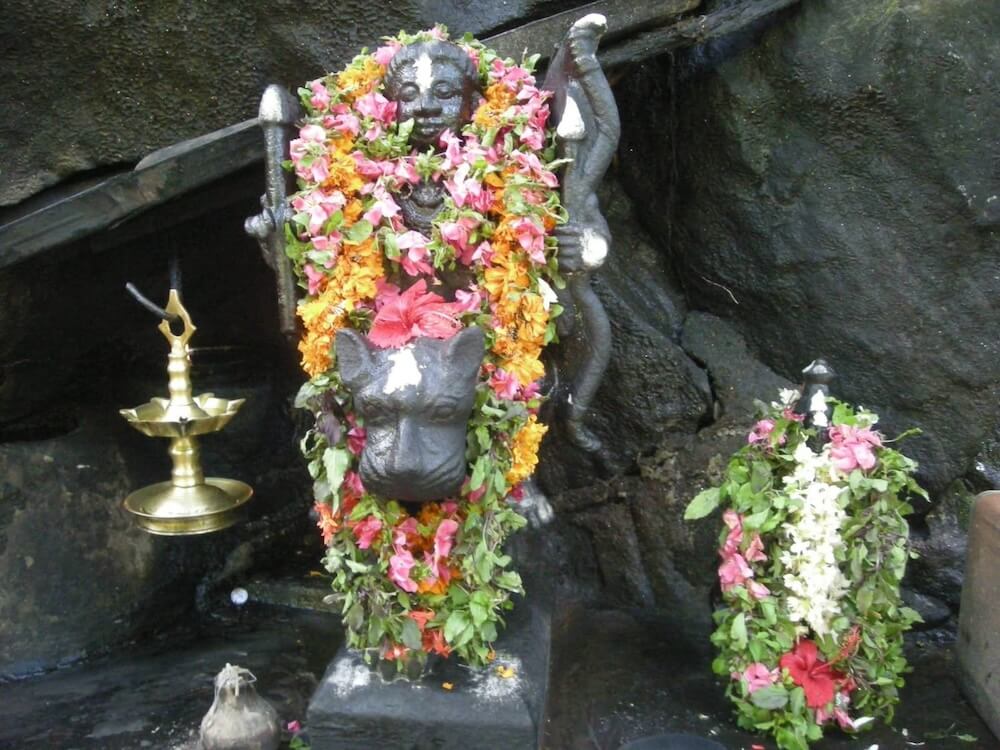
According to another popular legend associated with the place name, the King of Cochin or British officials once attempted to travel through this hill region on horseback. As they approached the hill, the horses suddenly became frightened and refused to climb further. Despite repeated efforts, the animals would not move forward. It is believed that this was due to the powerful divine presence of Lord Dharmasastha, the guardian deity of the forest, in the area. According to the legend, the place came to be known as “Kuthirakeramala”, meaning “the hill that horses would not climb” and over time the name evolved into “Kuthiranmala”. This belief is also associated with the temple’s unique main deity, where Lord Dharmasastha is worshipped in the rare form of a horse-mounted deity, holding a bow and arrow in one hand and the reins in the other.
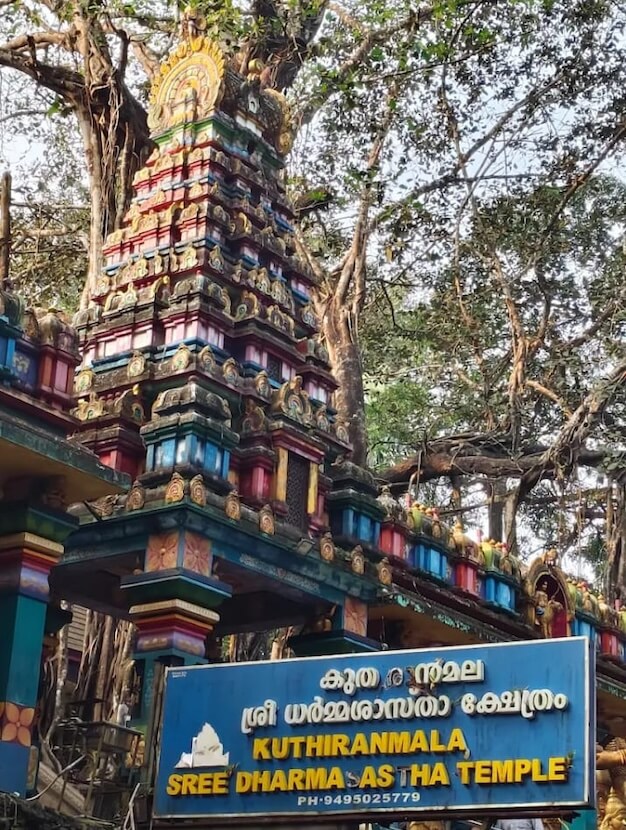
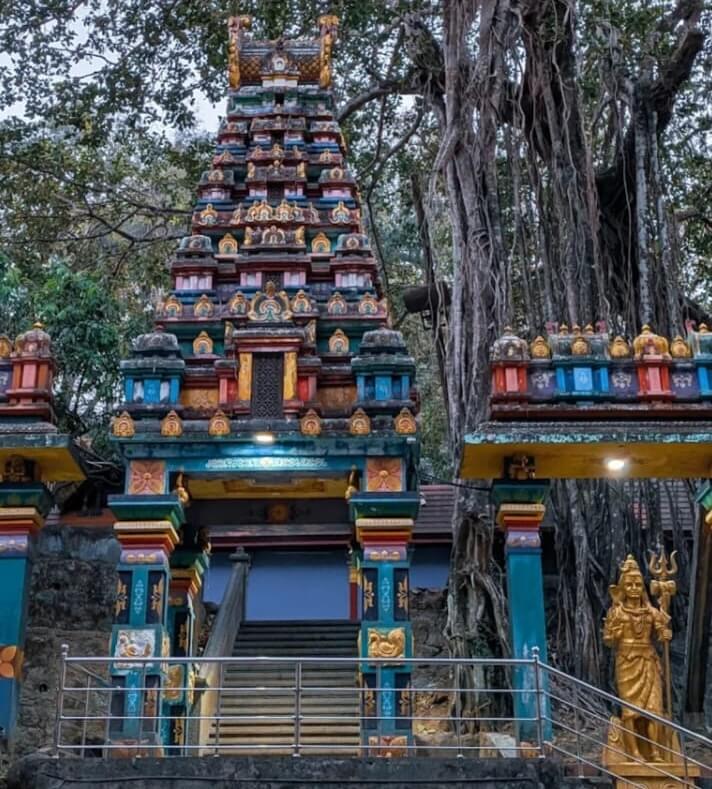
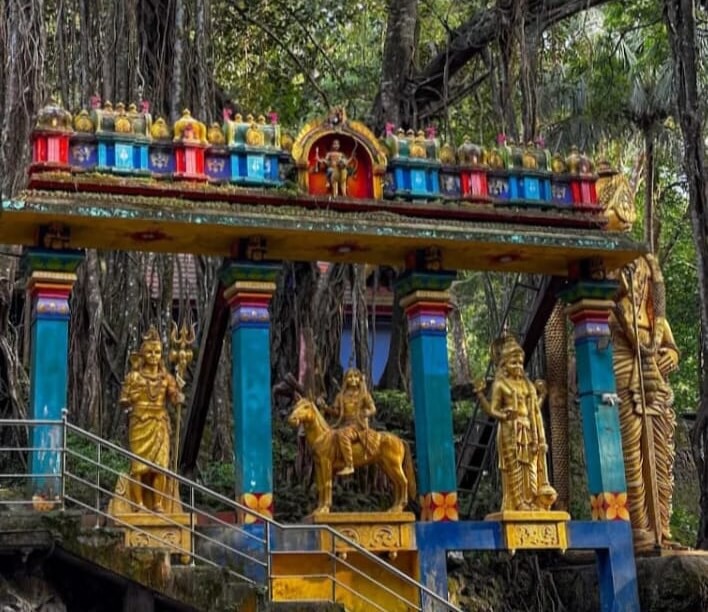
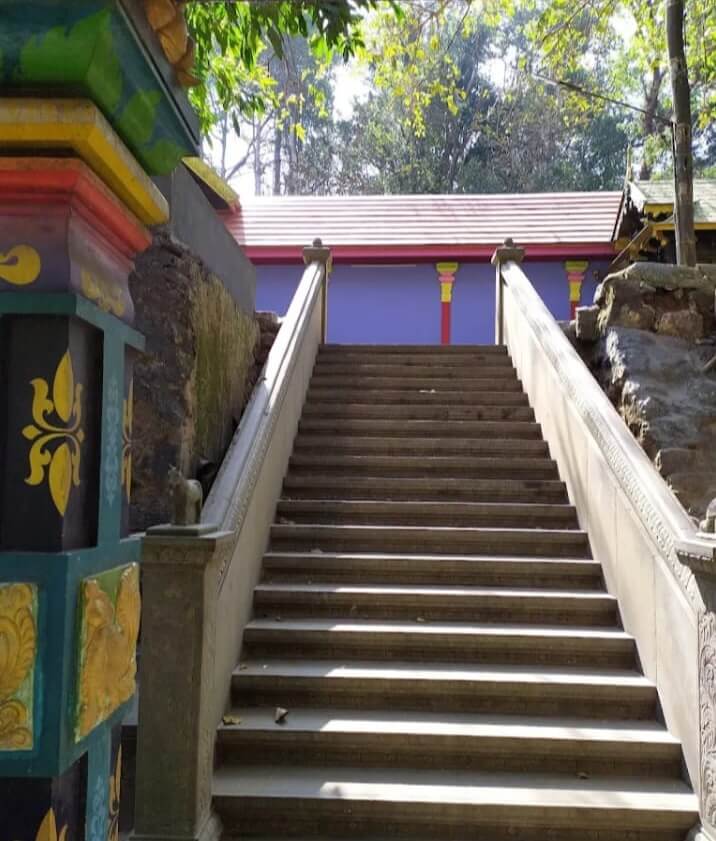
Kuthiranmala Dharmasastha Temple is situated in the valley of Kuthiran Mala, on the southern side of the old national highway, amidst a serene and scenic natural setting. Although the temple faces east, its main entrance is located on the northern side. Devotees must climb eighteen steps to reach the temple, which stands on elevated ground above the road. At the foot of the steps are shrines dedicated to Lord Ayyappa seated on a tiger and Malikappurathamma. A large ornamental arch inspired by Tamil Nadu temple architecture, along with various deity sculptures, is one of the temple’s main attractions. Surrounded by hills and forested landscapes, the temple is set amidst a scenic natural environment.
Upon entering the temple, devotees first come across the shrine of Lord Shiva, where a self-manifested Shiva Lingam is worshipped. Lord Shiva is accorded the same importance as the principal deity, Lord Dharmasastha. Nearby are shrines dedicated to Yogeeswaran (Gosai Swami), Brahmarakshas, Goddess Bhuvaneswari and the Naga deities. A brass flagstaff and bali stone are installed within the eastern mandapam. Another distinctive feature of the temple is the presence of the self-manifested Kiratha Moorthy and Kirathi, located on the opposite side of the road.
The sanctum sanctorum of the temple is a simple yet elegant granite structure built in a square shape with a single storey. Its Tamil-style roof and the finial above it add to its distinctive appearance. Enshrined within the sanctum, facing east, is a stone idol of Lord Dharmasastha seated on horseback, standing approximately three feet tall. The deity is depicted holding an arrow in the right hand and a bow in the left, in the posture of riding on a horse. This rare form of Lord Dharmasastha is one of the temple’s most notable features. The sanctum reflects a style of architecture that emphasises simplicity rather than elaborate decoration. Although there are no extensive murals or wooden carvings on its walls, traditional granite carvings and guardian figures on either side of the entrance can be seen. The steps leading to the sanctum and the door panels are clad in brass, enhancing its appearance. On the northern side, an outlet allows the sacred substances used during abhishekam to flow out of the sanctum.
Surrounding the sanctum is a small nalambalam constructed of granite. The outer walls are decorated with traditional oil lamps, while the entrance features carvings depicting the eight forms of Lord Sastha. Within the nalambalam, the homa mandapam is located on the southern side and the vadyapura (hall for temple instruments) on the northern side. A temple kitchen and a well are also situated within the complex. Shrines dedicated to Lord Ganesha, Goddess Saraswati, Lord Mahavishnu and Lord Subrahmanya are located inside the nalambalam. On the north-eastern side stands a shrine for Malikappurathamma, facing west. Here, the goddess is worshipped in the form of Goddess Durga.
The principal festival of Kuthiranmala Dharmasastha Temple is the eight-day annual festival celebrated during the Malayalam month of Medam (April–May). The festival concludes with the Arattu ceremony on the Rohini star day of Medam. Thrikkodiyettu (flag hoisting), Pallivetta and Arattu are among the main rituals of the festival. As the temple’s consecration anniversary festival, it attracts a large number of devotees every year. The 41-day Mandala–Makaravilakku season, beginning on the first day of Vrischikam and continuing until Makaravilakku, is also observed with great devotion. During this period, Ayyappan Pattu (Sastha devotional songs) is conducted daily at the temple. Special poojas and the Shaniswara Homam for relief from the effects of Saturn are held on Saturdays. As the temple has a shrine dedicated to Goddess Saraswati, many devotees visit Vijayadashami for the Vidyarambham ceremony, marking the initiation of children into learning.
One of the most distinctive offerings at the temple is the offering of coins for a safe journey. Devotees offer coins and pray for protection from accidents and for the successful completion of their travels, making it a unique tradition of the temple. Other important offerings include Annadanam (free distribution of food), Neeranjanam, Ghee Abhishekam, Tender Coconut Offering and Neyvilakku (ghee lamp offering). While Annadanam is conducted daily for devotees, Neeranjanam and Ghee Abhishekam are among the most popular offerings made to Lord Dharmasastha. Devotees also offer Neyvilakku for the fulfilment of wishes and blessings. In addition, special rituals such as Shaniswara Homam for relief from the effects of Saturn, Ashtadravya Ganapathi Homam for the removal of obstacles, Maha Mrityunjaya Homam for health and well-being and Vidya Mantra Pushpanjali for children’s educational progress are regularly performed at the temple.
The temple is open to devotees from 5:00 AM to 11:00 AM and from 5:00 PM to 8:00 PM. The day begins with Nirmalya Darshan when the temple opens at 5:00 AM, followed by Usha Pooja and other daily rituals. The temple closes after the Ucha Pooja at 11:00 AM. In the evening, the temple reopens for worship, and Deeparadhana along with other evening rituals are performed. The day’s rituals conclude with Athazha Pooja, after which the temple closes at 8:00 PM. Timings may be revised on Saturdays, Sundays, special occasions and during the Sabarimala Mandala–Makaravilakku season to accommodate the increased number of devotees.
This sacred temple stands as a testament to deep spiritual devotion, ancient architectural grandeur, and rich local cultural traditions.
The sanctum sanctorum houses the divine idol consecrated according to ancient Vedic traditions, surrounded by serene courtyards and traditional temple architecture.
Navratri, Maha Shivratri, Annual Temple Jatra & Deepotsav
Compare and book flights, secure top-rated local hotels near the temple, hire reliable guides, and rent cars instantly.
Extend your pilgrimage by visiting other highly sacred temples located nearby.


Add ₹999 more to unlock FREE SHIPPING!
Your sacred cart is currently empty.
Shop Photo FramesFill in your delivery details below to place your order.
Add comment