
Add ₹999 more to unlock FREE SHIPPING!
Your sacred cart is currently empty.
Shop Photo FramesWashim, known in ancient times as Vatsagulma, was the capital of the Vakatakas. The Vakatakas were devotees of Bhairava, who is considered an incarnation of Lord Shiva. The Rashtrakutas, who came to power here after them, were also worshippers of Lord Shiva. Historians state that the Kailasa rock-cut cave at Ellora was built by the Rashtrakuta King Krishna (I). Many Shiva temples were erected during the era of these kings. Evidence shows that several small and large temples were also constructed here subsequently during the Yadava period. The Mahadeva Temple at Kupata is one of them. In front of this ancient temple stands a large stepwell built in stone.
The ancient name of Washim was ‘Vatsagulma’, which finds mention in the Mahabharata era. It is referred to as ‘Vatsagulma’ in scriptures such as the Mahabharata, Vatsyayana’s Kamasutra, Padma Purana, and Vatsagulma Mahatmya. According to mythological legend, this was a part of the ancient Dandakaranya. The ashram of Sage Vatsa was situated here. His severe penance struck even the gods with awe. They all gathered here, and this ‘gulma’ (group) of gods began to dwell in the vicinity of Sage Vatsa’s ashram; hence it came to be named ‘Vatsagulma’. In Prakrit, it became ‘Vachhagumma’, and based on that, it was named Washim during the Muslim rule. The Vakataka dynasty of the Vatsagulma branch ruled here from approximately 330 to 550 CE. Following this, the Rashtrakutas and later the Yadavas established their rule here for some years.
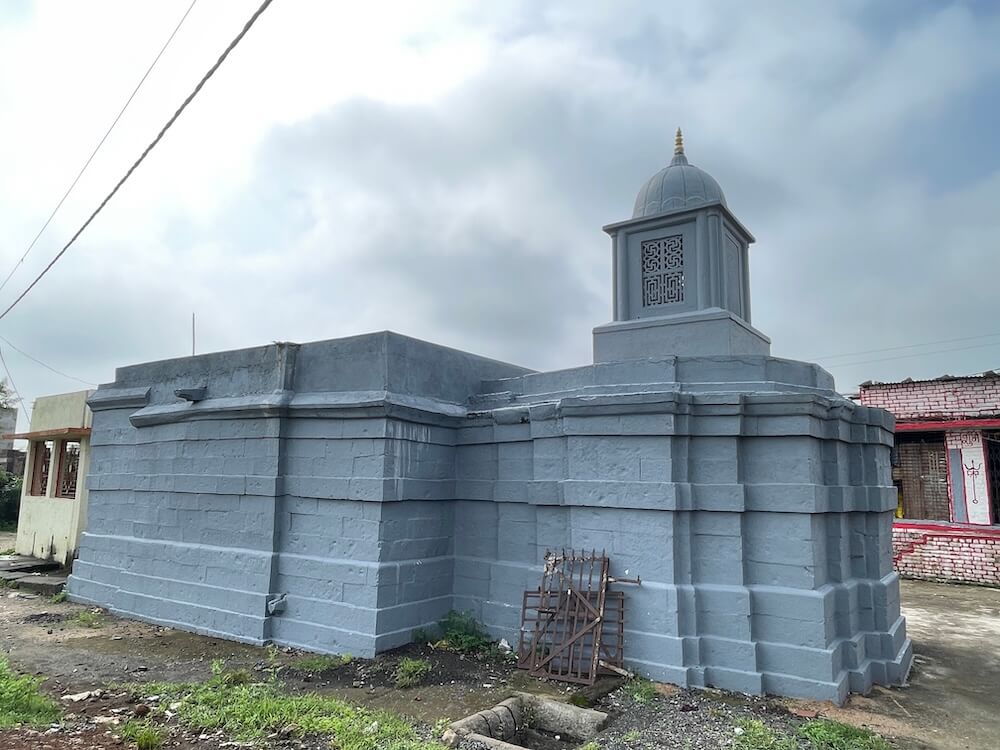
Kholeshwar was a general of the Yadava monarch Singhana, who ascended the throne in 1210 CE. Kholeshwar was a Rigvedi Brahmin of the Mudgala gotra. According to some historians, he was originally from Ambajogai. He was a devotee of Goddess Yogeshwari. He had close ties with the Varhad (Berar) region of Vidarbha. He had founded the village of Kholapur on the banks of the Purna river, west of Amravati, in his own name. This village is situated at a distance of about 100 km from Kupata. Chamup, a general of Singhana, had established a Shaivite settlement named Shivpur in Saudatti taluka of Belagavi district. Due to such royal patronage received by the Shaiva religion, many Shiva temples were built at various places in Maharashtra. The Mahadeva Temple at Kupata is one of them. The exact history of the establishment of this temple is unavailable. Although this temple belongs to the Hemadpanti architectural style, scholars estimate based on its unadorned, simple structure that it must belong to the post-Yadava era.
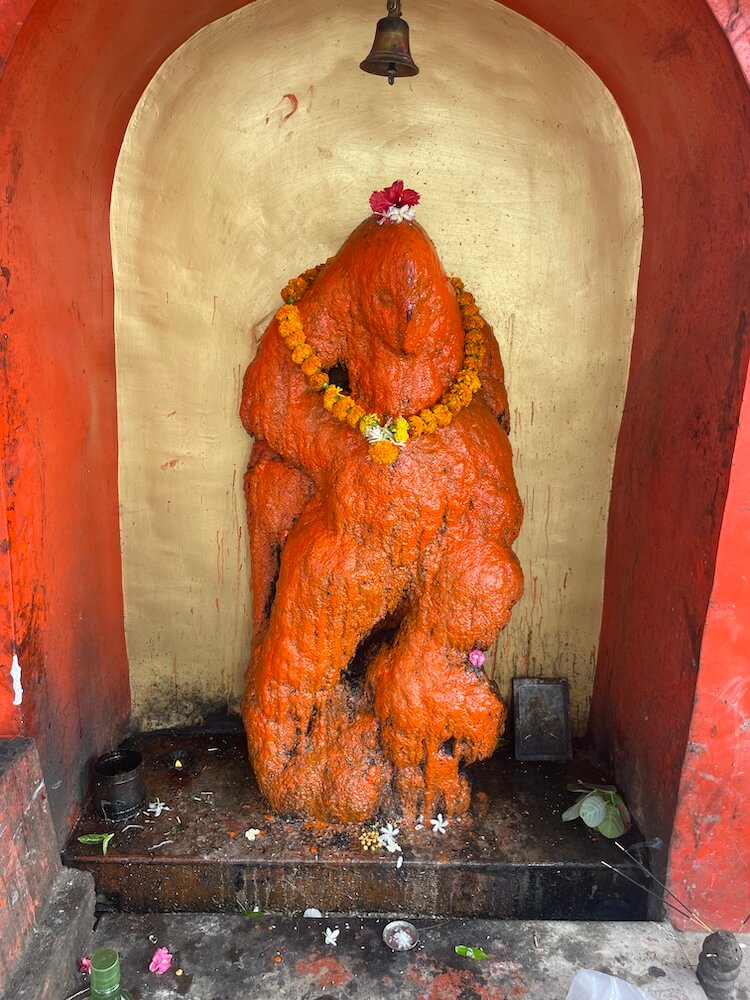
A temple of Lord Shiva is usually built near a river or a water body. In front of this temple too, there is a large barav (a large stepwell). This stone-built barav is quite deep. It has three tiers. Both upper tiers have steps on all four sides. There are nine steps in the upper tier and seven in the tier below it. On the parapet walls of the steps in the upper tier, niches are carved facing the water body. They contain various forms of Ganesha idols. A few steps away from here is a recently built temple of Lord Hanuman. Inside it, an uncarved stone idol of Lord Hanuman is enshrined. On the platform alongside the side wall of the Hanuman temple, three stone idols of Nandi are enshrined. Right in front is the ancient Mahadeva Temple.
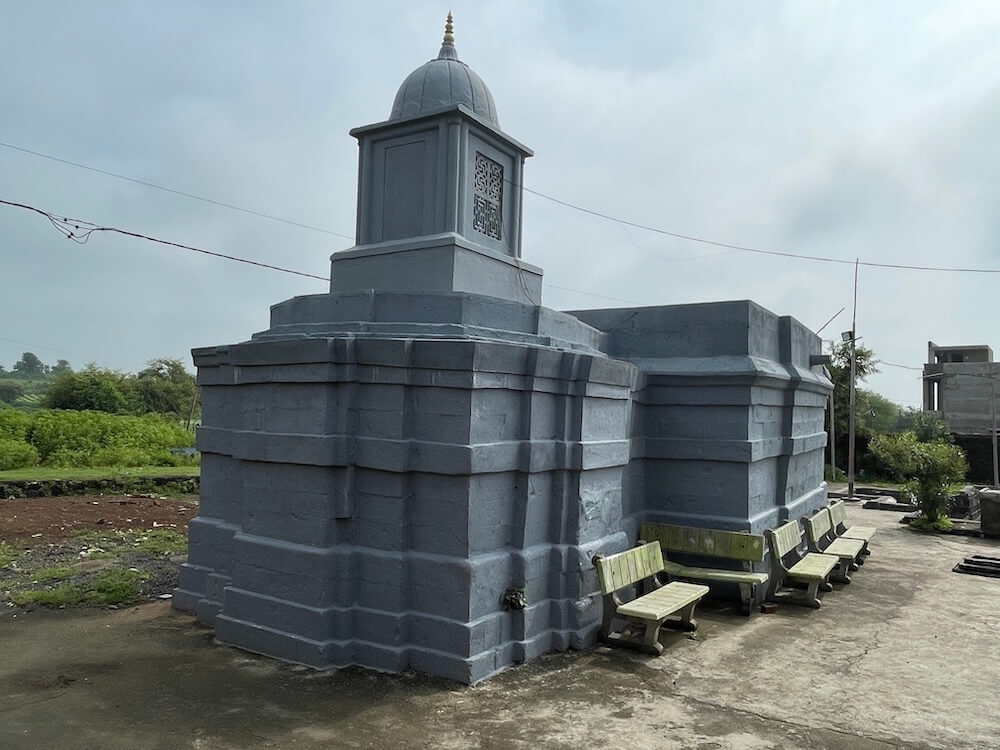
The temple structure comprises a sabhamandapa (assembly hall), antarala (vestibule), and garbhagriha (sanctum sanctorum). The temple is constructed from large stone slabs. The temple is built on a high jagati (raised platform) and has three newly built steps. On the platform to the right of these steps is a small niche for Lord Ganesha. The entrance here leads into the sabhamandapa of the temple. This sabhamandapa features half-pillars on both sides of the walls connected by arches. The left and right walls of the sabhamandapa contain stone niches. The idols of Lord Ganesha and Lord Vishnu are enshrined within them.
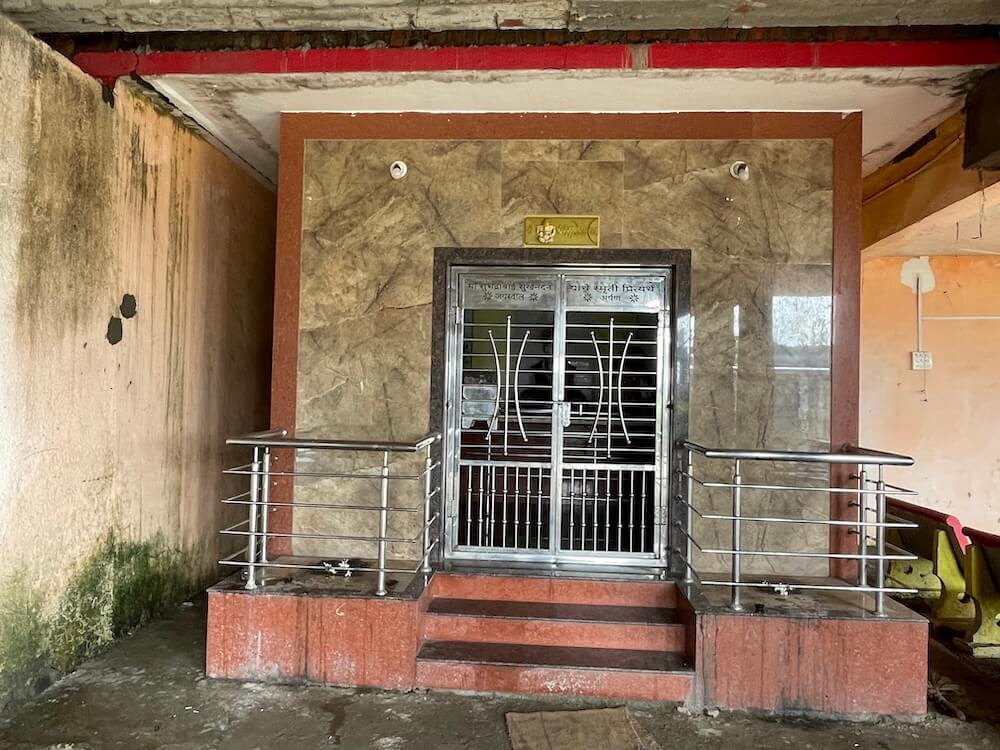
The temple has a modest antarala. The garbhagriha has a stone entrance. A sculpture of Lord Ganesha is carved on the lalatabimba (lintel) of the door frame. Inside the garbhagriha, there is a large Shiva linga made of black stone with a brass covering. Here, the Shiva linga is encircled by a five-headed serpent deity (Nagadevata) made of panchaloha. Above it is the abhishekapatra (consecration vessel). The ceiling of the antarala and garbhagriha is made of large square stone slabs. The spire over the garbhagriha resembles a small shrine-niche. Its form consists of a square base at the bottom, a dome over it, and a kalasha on top.
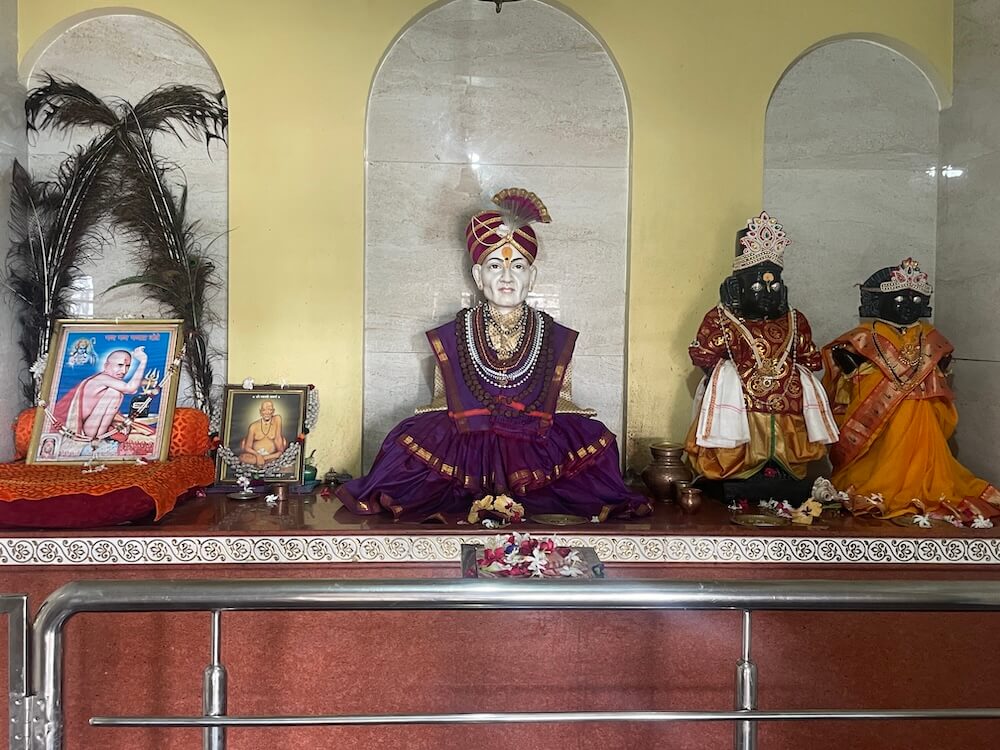
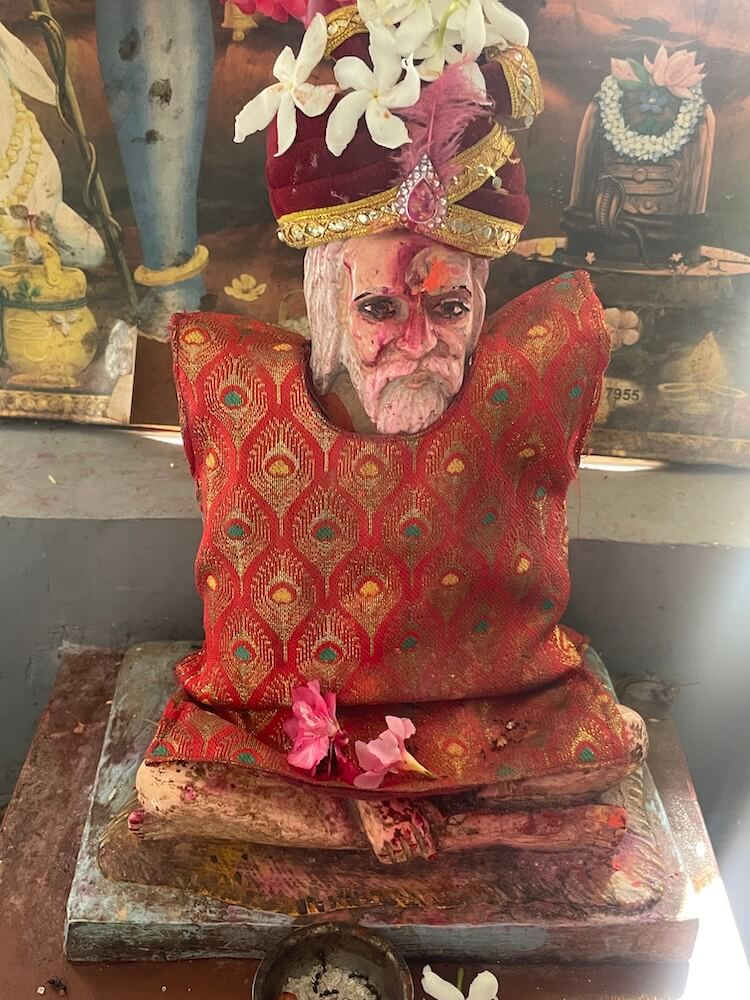
Beside the main temple is the homakunda (sacrificial fire pit) and in front of it is the tulshi vrindavana (holy basil planter). On one side here is also the temple of Shri Gajanan Maharaj. A marble idol of Shri Gajanan Maharaj is installed within it. Beside this idol, the idols of Vitthal-Rukmini made of black stone are enshrined. These idols are adorned with garments and ornaments. Photographs of Shri Gajanan Maharaj and Swami Samarth are also kept right here. Prasada is distributed here on Saturdays and Thursdays in the name of Lord Hanuman as well as Shri Gajanan Maharaj. Maha Shivaratri is an important festival celebrated at this Mahadeva temple. Devotees from the village flock here for darshana on Mondays, and especially on Shravani Mondays.
This sacred temple stands as a testament to deep spiritual devotion, ancient architectural grandeur, and rich local cultural traditions.
The sanctum sanctorum houses the divine idol consecrated according to ancient Vedic traditions, surrounded by serene courtyards and traditional temple architecture.
Navratri, Maha Shivratri, Annual Temple Jatra & Deepotsav
Compare and book flights, secure top-rated local hotels near the temple, hire reliable guides, and rent cars instantly.
Extend your pilgrimage by visiting other highly sacred temples located nearby.


Add ₹999 more to unlock FREE SHIPPING!
Your sacred cart is currently empty.
Shop Photo FramesFill in your delivery details below to place your order.
Add comment