
Add ₹999 more to unlock FREE SHIPPING!
Your sacred cart is currently empty.
Shop Photo FramesDharashiv district is home to many ancient and famous temples of the Goddess. The temple of Tulja Bhavani, one of the three-and-a-half Shakti Peethas, is located in this very district at Tuljapur. Apart from this, the district houses several other temples of the Goddess, such as Dharasurmardini of Dharashiv, Yedeswari of Yeramala, Hatladevi, Tembhai, Chaundheshwari, and Yellama. Overall, it can be said that the number of Shakta-sect temples is quite high in Dharashiv district. In the village of Para, located in the Washi taluka of this district, stands the ancient and famous temple of Goddess Kagadamba. This shrine is also popularly known as the “Mother of Para.”
Built in the Hemadpanti architectural style with stone masonry, this temple dates back approximately eight hundred years. According to legend, in ancient times, this region was ruled by a demon named Kagadasur. The subjects of the kingdom were in great distress due to the demon’s increasing atrocities. To seek liberation from this tyranny, the people prayed fervently to Goddess Jagadamba. The Goddess slew the demon Kagadasur at this very spot. Upon the request of her devotees to remain here for the protection and welfare of the people, the Goddess manifested herself in the form of an idol. Having slain the demon Kagadasur, the Goddess became famous by the name Kagadamba.
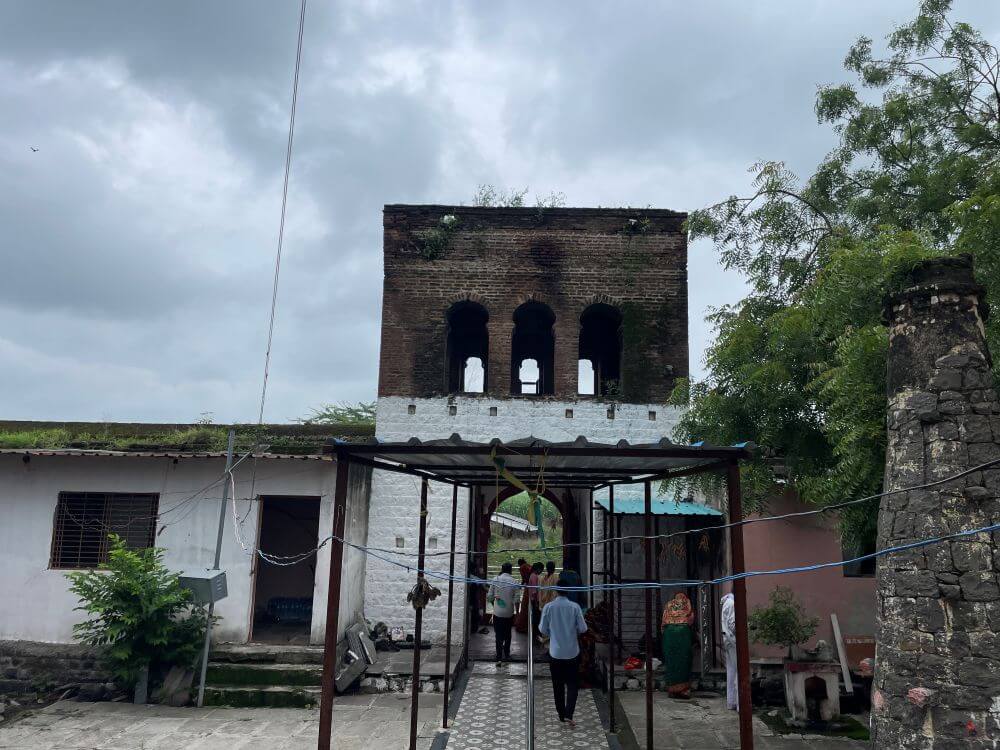
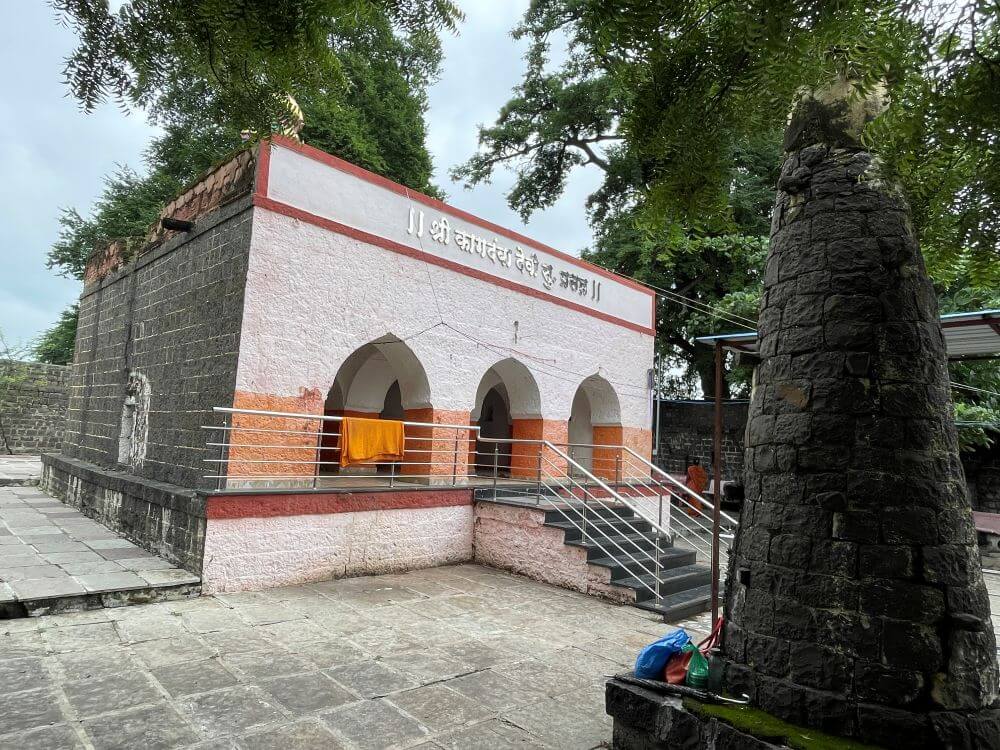
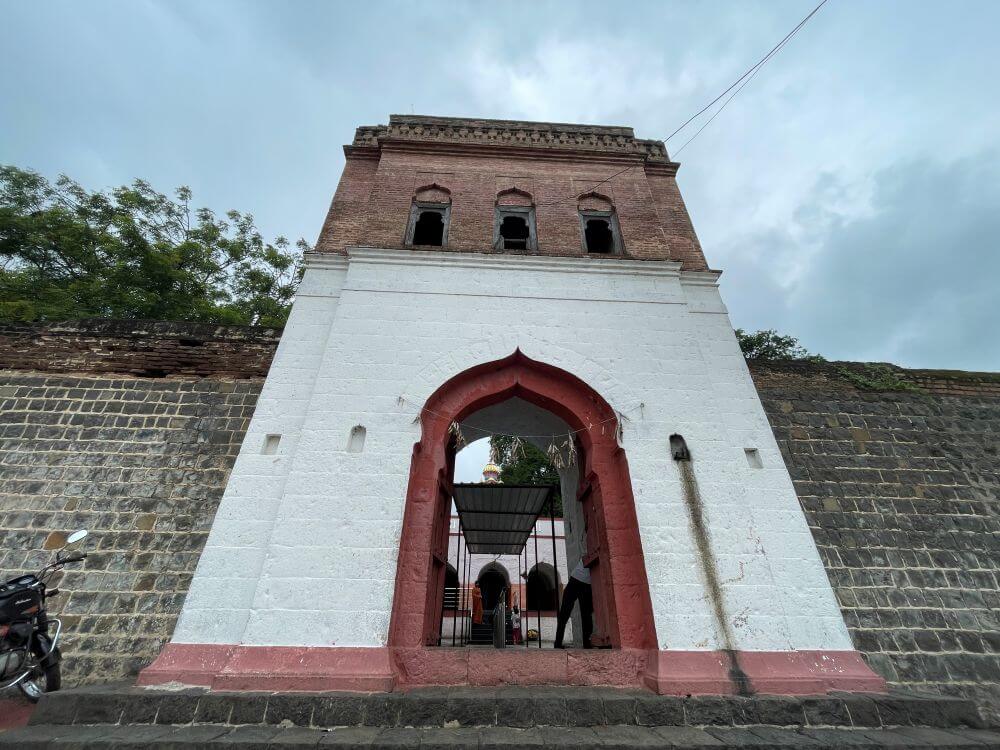
There is a paved road leading to this temple, which is situated a short distance from the village. In front of the temple lies the Kallol Kund (a sacred water tank). This tank, built with carved stone, has steps leading down to the water. It is said that the water in this tank never dries up. It is customary to purify oneself here before proceeding to the temple for Darshan. The temple is surrounded by a sturdy fortification wall about fifteen feet high, which features a two-story entrance gate. On both sides of the entrance, there are lamp niches (deep-koshtakas) in the facade of the fortification wall. The entrance gate has ornate wooden doors and faint carvings on the door frames. Inside the entrance, there are guard rooms on both sides, and a Nagarkhana (drum house) on the upper floor. Stairs on both sides of the entrance lead up to the Nagarkhana. A paved path leads from the entrance to the Sabhamandap (main hall). There are seats for devotees in the stone-paved courtyard. In front of the temple, on both sides, stand ancient circular stone lamp towers (Deepmalas).
The temple structure consists of a Sabhamandap and a Garbhagriha (sanctum sanctorum). There is a platform in front of the Sabhamandap. The entrance features three arches supported by four pillars. To enter the Sabhamandap, which is elevated above the courtyard, one must climb seven steps. The enclosed Sabhamandap has four rows of four square pillars each. All pillars are connected to each other by semi-circular arches, and the ceiling between every four pillars is dome-shaped. There is a sculpture of a tortoise on the floor of the Sabhamandap.
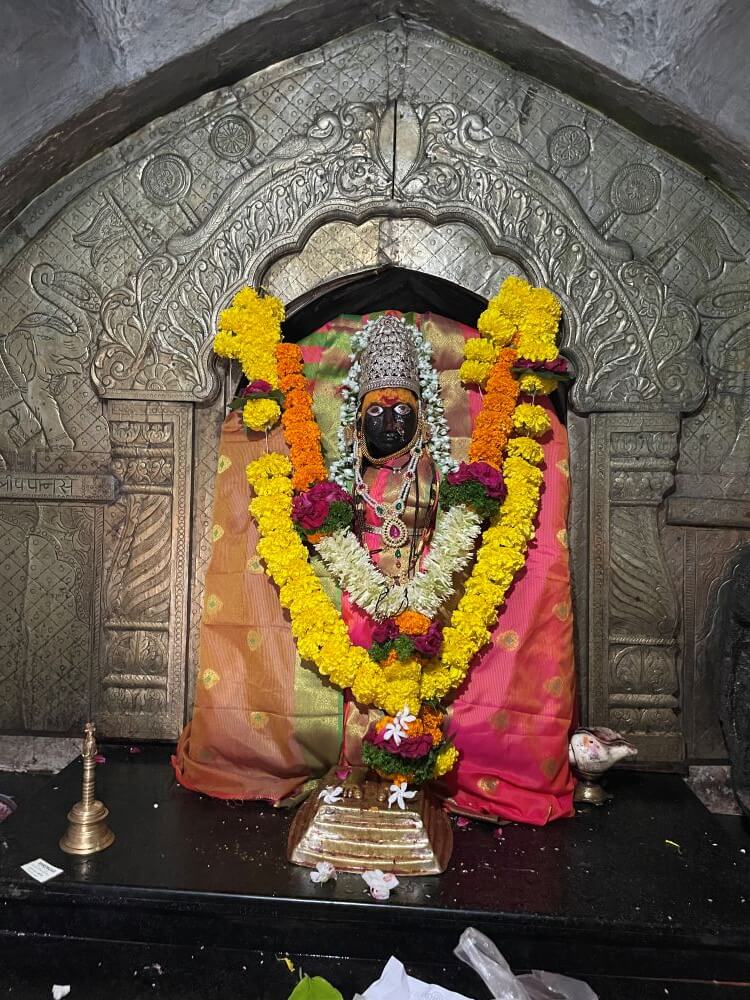
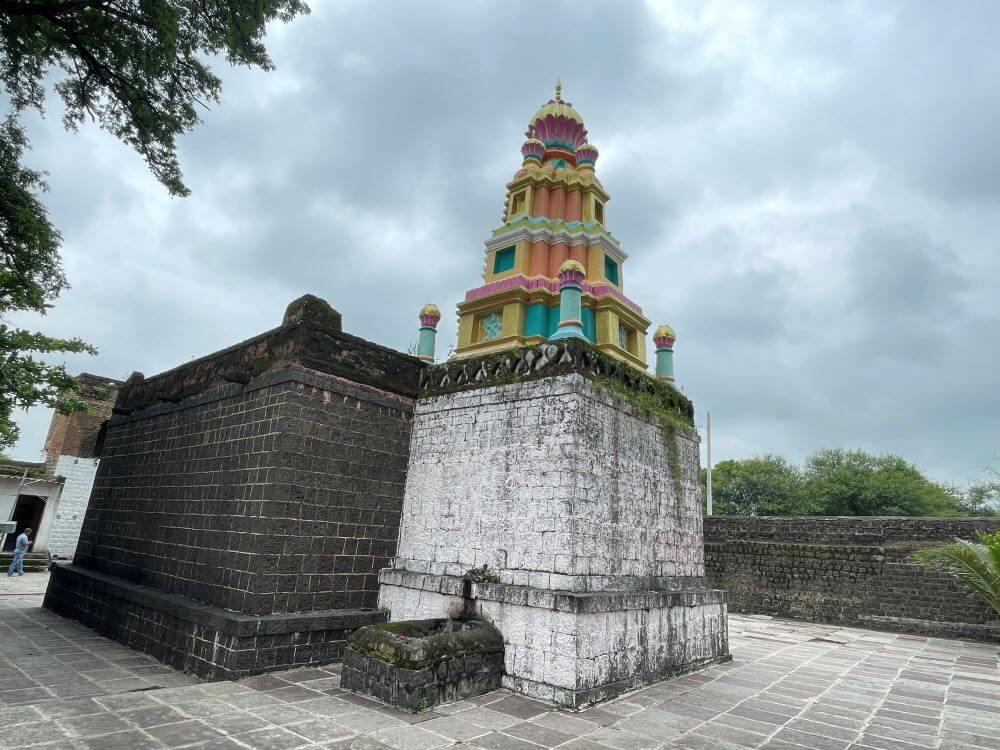
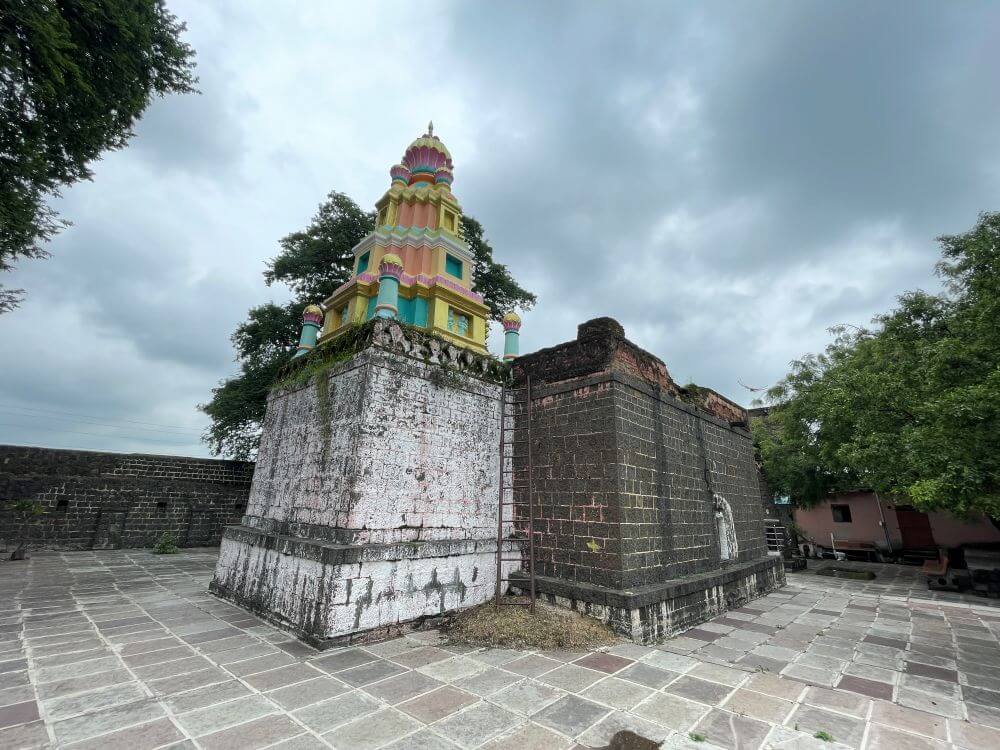
Since the Garbhagriha is at a higher level than the Sabhamandap, one must climb four steps to reach it. The door frames of the Garbhagriha are adorned with floral carvings and pillar motifs. The wooden latticed doors of the entrance are covered in silver plating. Inside the Garbhagriha, the stone idol of the Goddess rests on a Vajrapitha (diamond throne). The Goddess is adorned with a silver crown, silver eyes, a pearl nose ring, garments, and various ornaments. There are Padukas (footprints) in front of the idol. Beside the Goddess’s idol is a black stone idol representing her Shakti. The Prabhavali (halo) behind the Vajrapitha is carved with floral and leaf patterns. The roof of the Garbhagriha features four Vaman-stambhas (dwarf pillars) at the corners, topped with Amalakas and Kalashas. The roof is crowned by a four-tiered Shikhara in the Bhumija style. The lower three tiers feature decorative niches and pillar carvings on all four sides. The fourth tier has miniature shikharas on all sides with an Amalaka in the center, topped by a Kalash and a flagstaff.
Annual festivals of the Goddess are celebrated on Vaishakh Purnima and Ashwin Purnima. During both festivals, a Palkhi (palanquin) procession of the Goddess is taken out. The Palkhi ceremony is celebrated amidst the beating of drums and the showering of Gulal. Thousands of devotees arrive during this time for Darshan, to fulfill vows, and to participate in the procession. Various programs are organized in the temple during these festivals. It is customary to offer ‘Paradi’ (baskets of offerings) and perform ‘Oti-bharne’ (offering of blouse pieces, coconut, and rice) to the Goddess during the pilgrimage. Additionally, festivals like Chaitra Padwa, Sharadiya Navratri, Dussehra, and Diwali are celebrated at the temple. There is a special rush of devotees on every full moon day (Purnima), as well as on Tuesdays and Fridays. Devotees can have Darshan at the temple daily from 6:00 AM to 6:00 PM.
This sacred temple stands as a testament to deep spiritual devotion, ancient architectural grandeur, and rich local cultural traditions.
The sanctum sanctorum houses the divine idol consecrated according to ancient Vedic traditions, surrounded by serene courtyards and traditional temple architecture.
Navratri, Maha Shivratri, Annual Temple Jatra & Deepotsav
Compare and book flights, secure top-rated local hotels near the temple, hire reliable guides, and rent cars instantly.
Extend your pilgrimage by visiting other highly sacred temples located nearby.


Add ₹999 more to unlock FREE SHIPPING!
Your sacred cart is currently empty.
Shop Photo FramesFill in your delivery details below to place your order.
Add comment