
Add ₹999 more to unlock FREE SHIPPING!
Your sacred cart is currently empty.
Shop Photo FramesThe gushing streams during the monsoon, the blanket of mist spread across the winter, the birds chirping eternally, and the atmosphere of the Dongargan region wrapped in a lush green quilt are truly captivating. This was a favorite tourist destination of the British, which is why they named this area ‘Happy Valley’. In this nature-rich region, the ancient Rameshwar Temple nestled in the mountain valley is considered one of the prominent awakened Shiva shrines among the Mahadeva temples established by Lord Rama.
Until the country attained independence, the British resided in the ‘Happy Valley’ of Dongargan. British officers arriving in Ahilyanagar would make it a point to visit this place. Many of their travelogues also contain writings about this region. In the १८५१ English book ‘Life in Bombay and its Neighbouring Outstations’, the author, while describing this area, writes, ‘The picturesque places of England Even those who are full of pride will certainly have to admit that ‘Happy Valley’ near Dongargan is a mesmerizing place. ‘Happy Valley’ is the laughter of nature, which has broken its silence after observing a vow of silence since time immemorial. When we look down from the cliffs of Happy Valley, it feels as if some Yaksha has created this paradise on earth by piecing together fragments of nature. The small streams leaping down through the rocks and the lush greenery spread across the valley captivate the mind.
Blessed with natural beauty, this land of Dongargan is endowed with a rich historical and mythological heritage. According to the references in the ‘Ramvijay’ scripture, the ashram of Sage Sharabhanga was located in the Dongargan area, exactly where the temple stands today. Sage Sharabhanga suffered from a condition where his body developed sores, causing blood and pus to ooze out, which emitted a foul odor. During his period of exile, Lord Shri Ram, accompanied by Lakshman and Sita, once arrived near his ashram. Following the sage’s wish, they stayed here for 2 days. To cure Sage Sharabhanga’s ailment, Lord Shri Ram shot an arrow of fire into the ground, creating a hot water spring. During his stay here, to ensure that the daily worship of Lord Mahadev would not be interrupted, Lord Shri Ram installed a Shivling. At that time, Lord Mahadev manifested and declared that devotees visiting this place would invoke the name of Shri Ram before mine. Since then, this sacred site has been known as ‘Rameshwar’.
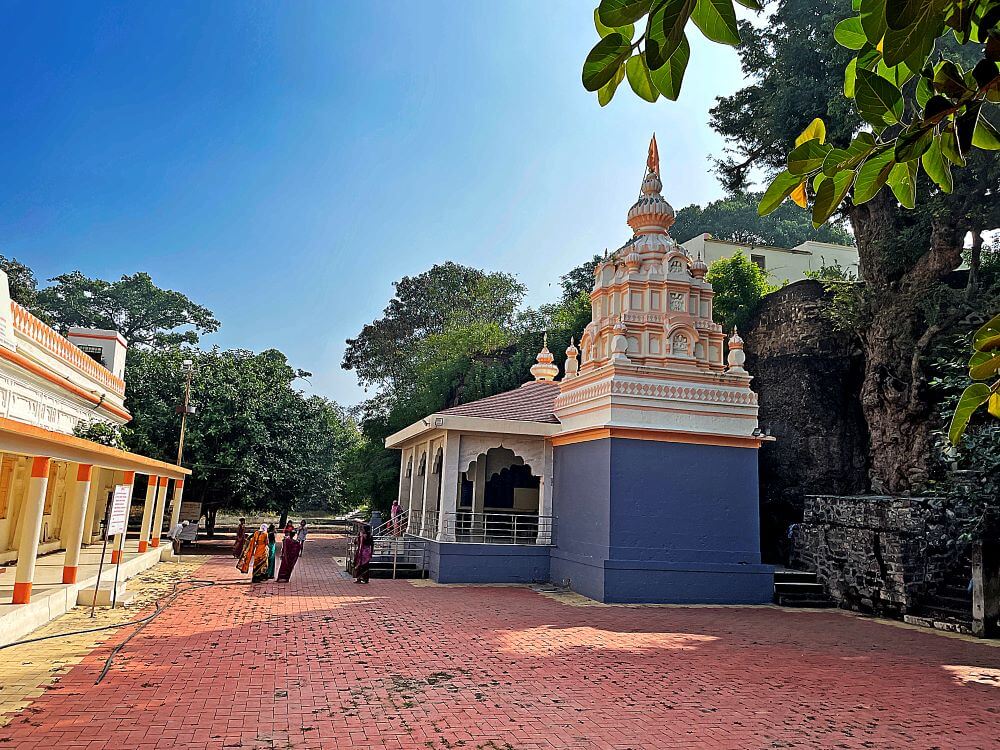
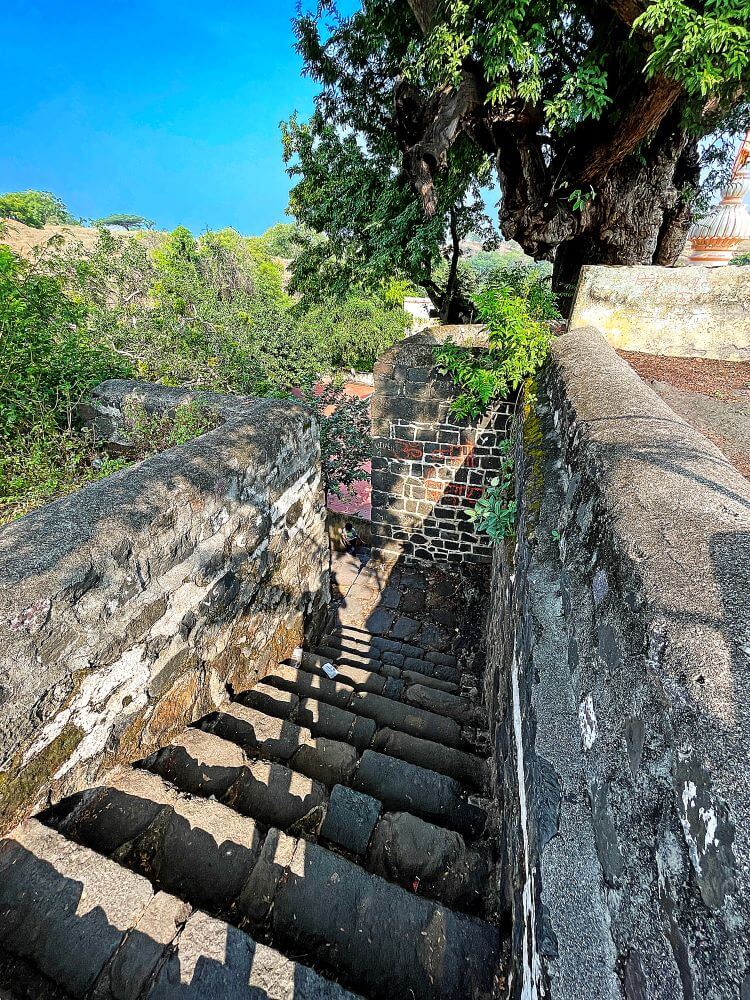
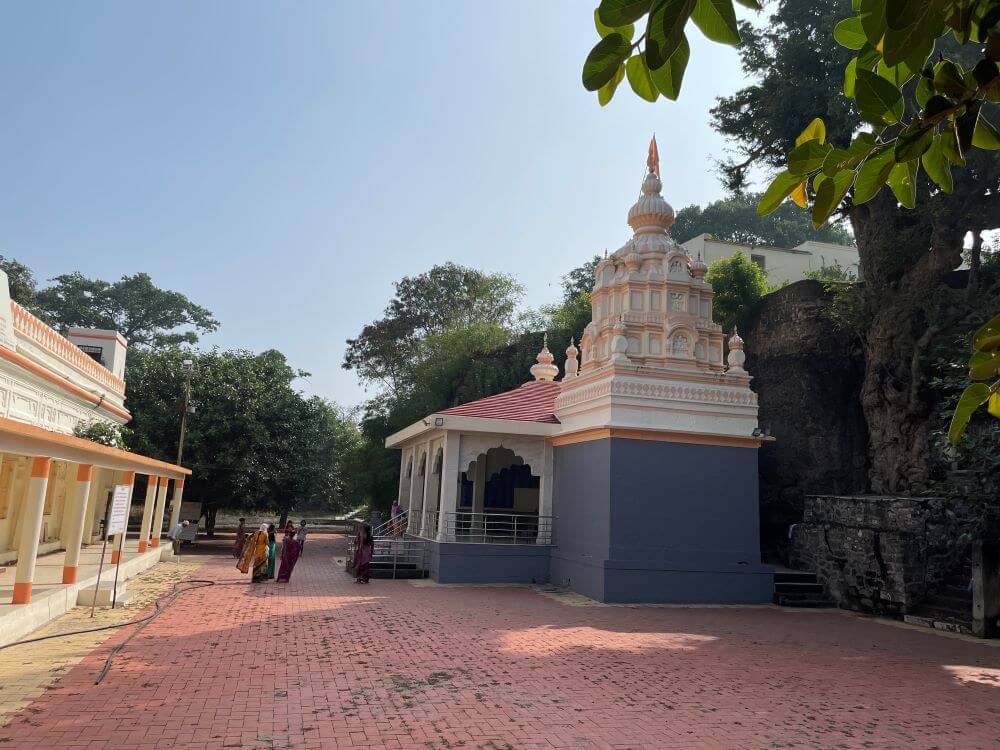
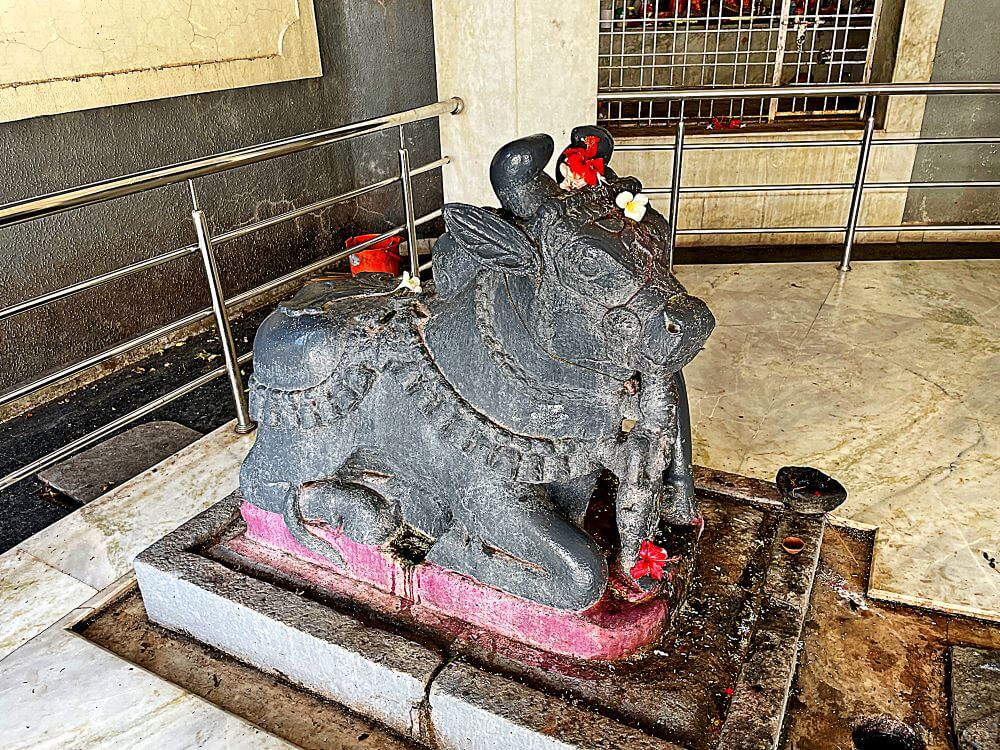
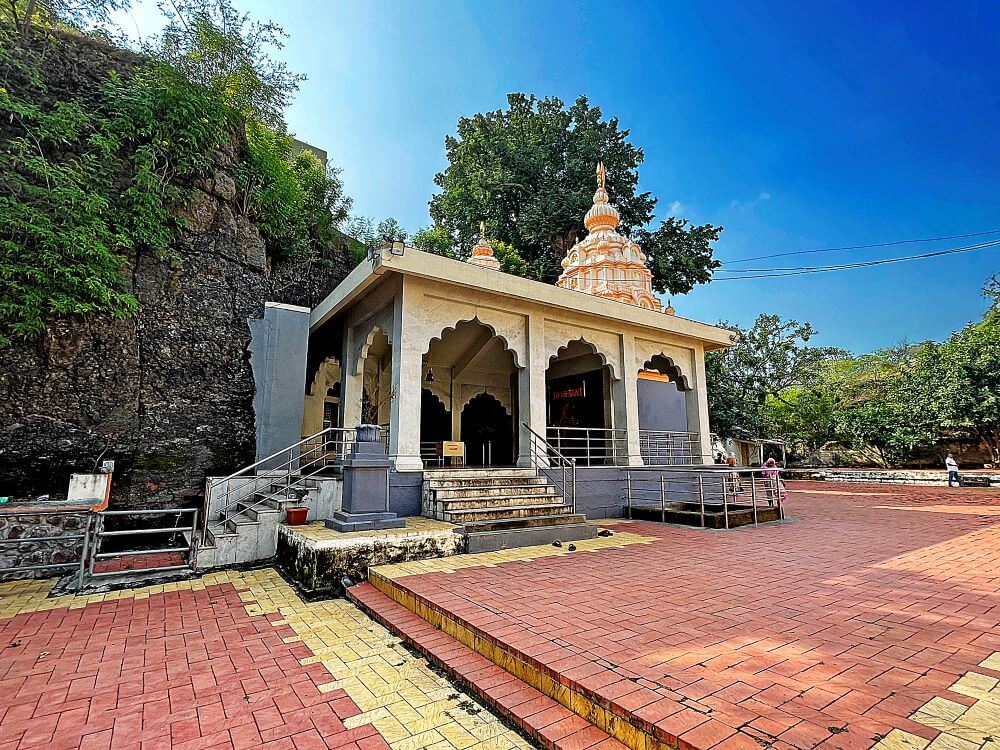
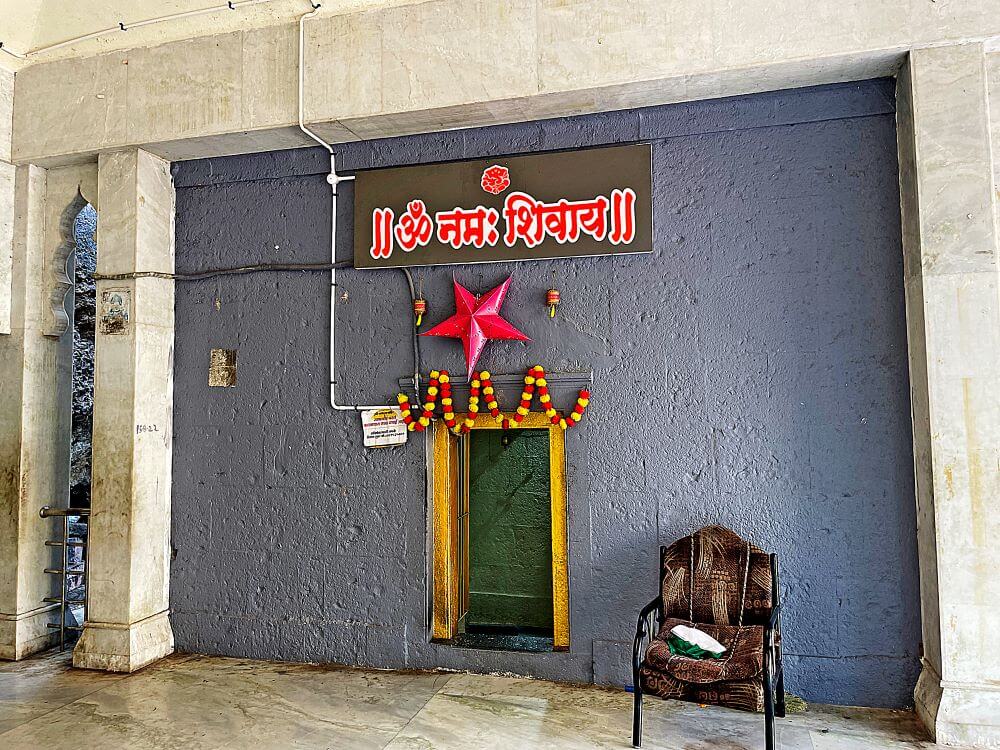
This place, sanctified by the presence of Lord Shriram, Sage Sharabhanga, and Chakradhar Swami, the founder of the Mahanubhava sect, is situated to the north of Dongargan village. One enters the courtyard of the Rameshwar Temple by descending approximately 50 steps carved into the rock of the large mountain here. The entire temple courtyard is paved with stone, and the temple stands amidst towering trees. The structure of the temple consists of a Sabha Mandap (assembly hall) and a Garbhagriha (sanctum sanctorum). There is a record that the Shende family of Wai renovated this ancient temple. Next to the Nandi in the Sabha Mandap, there is a small Rama temple. This temple houses the idols of Lord Shriram, Sita, Lakshmana, and Hanuman. In the sanctum, there is an ancient Shiva Linga, and an idol of Parvati is placed in front of it. Adjacent to the Sabha Mandap, on the lower side, there is a water reservoir.
Within the temple premises are the Dattatreya Temple, Ramkund, Hanuman Temple, Sadguru Temple, Sita Nhani, and Anand Sagar. Additionally, the ashram of Sage Sharabhanga is located nearby. Behind the Rameshwar Temple is the temple of Shri Chakradhar Swami. Thousands of devotees come for darshan here on Mahashivratri and every Monday of the month of Shravan. A large fair is held here on the third and fourth Mondays. It is the faith of the devotees that by having darshan of Rameshwar, one attains the merit of visiting Rameshwardham and the twelve Jyotirlingas.
Within the temple premises, there is a two-story building featuring stone architecture from the Nizam era. At that time, this building was famous as the ‘Hawa Mahal’. During the British period, judicial proceedings were conducted from this building. Even today, this building is in good condition. Currently, accommodation facilities are available here for government officials and tourists as well.
This sacred temple stands as a testament to deep spiritual devotion, ancient architectural grandeur, and rich local cultural traditions.
The sanctum sanctorum houses the divine idol consecrated according to ancient Vedic traditions, surrounded by serene courtyards and traditional temple architecture.
Navratri, Maha Shivratri, Annual Temple Jatra & Deepotsav
Compare and book flights, secure top-rated local hotels near the temple, hire reliable guides, and rent cars instantly.
Extend your pilgrimage by visiting other highly sacred temples located nearby.


Add ₹999 more to unlock FREE SHIPPING!
Your sacred cart is currently empty.
Shop Photo FramesFill in your delivery details below to place your order.
Add comment