
Add ₹999 more to unlock FREE SHIPPING!
Your sacred cart is currently empty.
Shop Photo FramesThe Renuka Devi temple in Bhagur, Nashik, is considered a highly awakened (Jagrut) site, being one of the three-and-a-half Shakti Peethas of the Goddess in the state. The village of Bhagur is renowned as the birthplace of Swatantryaveer Vinayak Damodar Savarkar and for the Renuka Mata Temple. Devotees believe that the Goddess grants their wishes and that bathing in the ancient stepwell (Barav) located in front of the temple cures skin ailments; consequently, hundreds of devotees visit the temple daily for her darshan.
The village of Bhagur in Nashik district, situated on the banks of the Darna River, holds an ancient history. In the past, it was the residence of Maharshi Bhrigu Rishi, who was considered an expert in architecture. It is believed that the Kalaram Temple in Nashik was constructed according to Bhrigu Vastu Shastra. He authored texts such as the Rigveda, Atharvaveda, Bhrigu Samhita, Bhrigu Ayurveda Samhita, Bhrigu Smriti (Manusmriti), Bhrigu Gita (on Vedanta), Bhrigu Siddhanta, and Bhrigu Sutra. It is said that Bhrigu Rishi performed penance and established a Gurukul in this region of Dandakaranya, which is why the area was named ‘Bhargav’, which later evolved into ‘Bhagur’. He established the Renuka Devi Temple on the banks of the Darna River here. Bhagur is blessed with a rich heritage, including the residence of Bhrigu Rishi, tales of the Maratha Empire and the Peshwa era, and the freedom struggle led by Swatantryaveer Savarkar. The poem ‘Bhargav’ written by Savarkar about Bhagur describes the greatness of this village.
The legend of this temple states that in ancient times, in this region known as Dandakaranya, Lord Shriram, Sita, and Lakshman spent some years of their exile. While residing in present-day Bhagur, Lord Shriram worshipped Renuka Devi. Approximately २०० years ago, following a vision in a woman’s dream, the idol of the Goddess was discovered here in the ground.
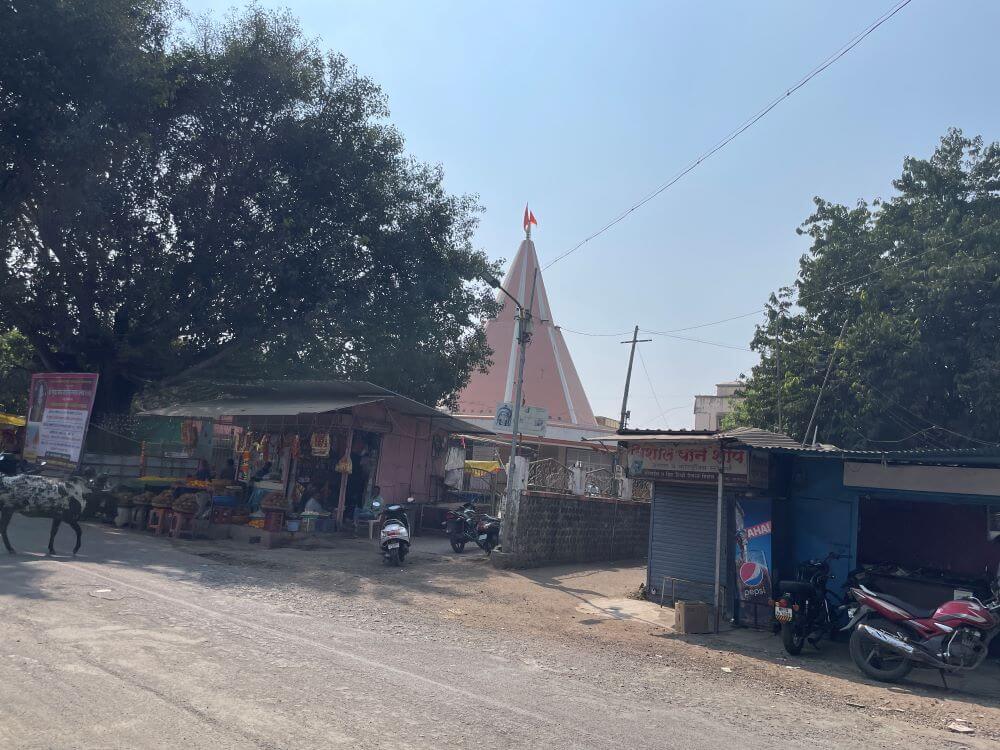
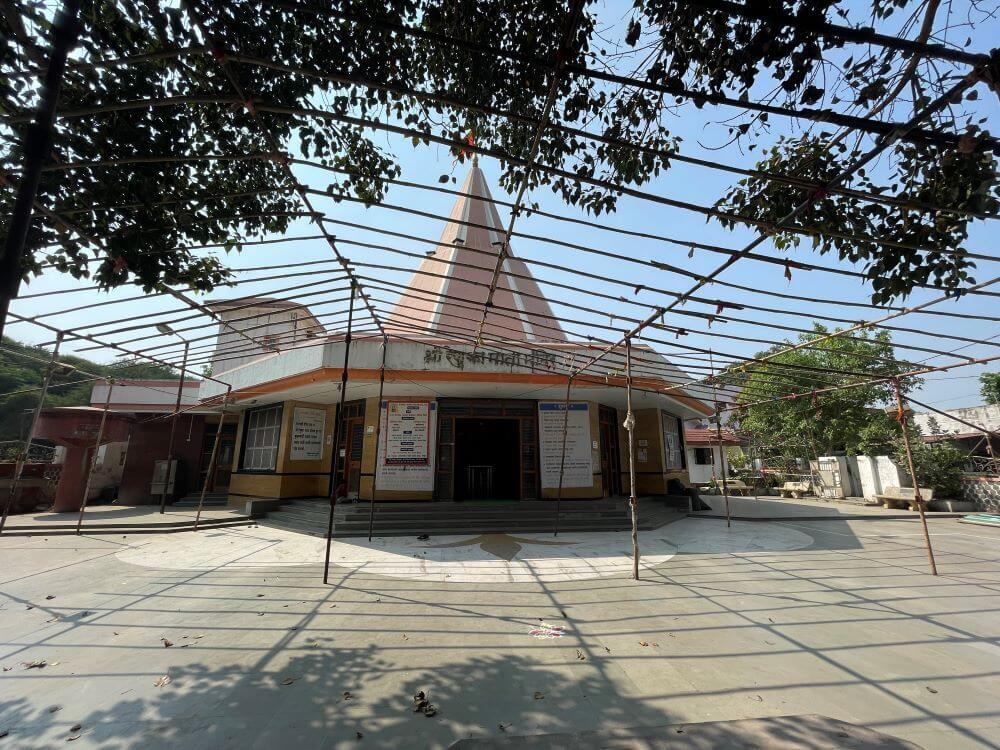
The Renuka Mata Temple is located in Deolali Camp on the Nashik-Bhagur road. An inscription in the temple mentions that it was built by a merchant named Dhatigan. Since the original temple was small and roofed with tiles, it attained its current form after a renovation in २००२. This Renuka Devi temple is made of marble, and the temple premises appear clean and spacious.
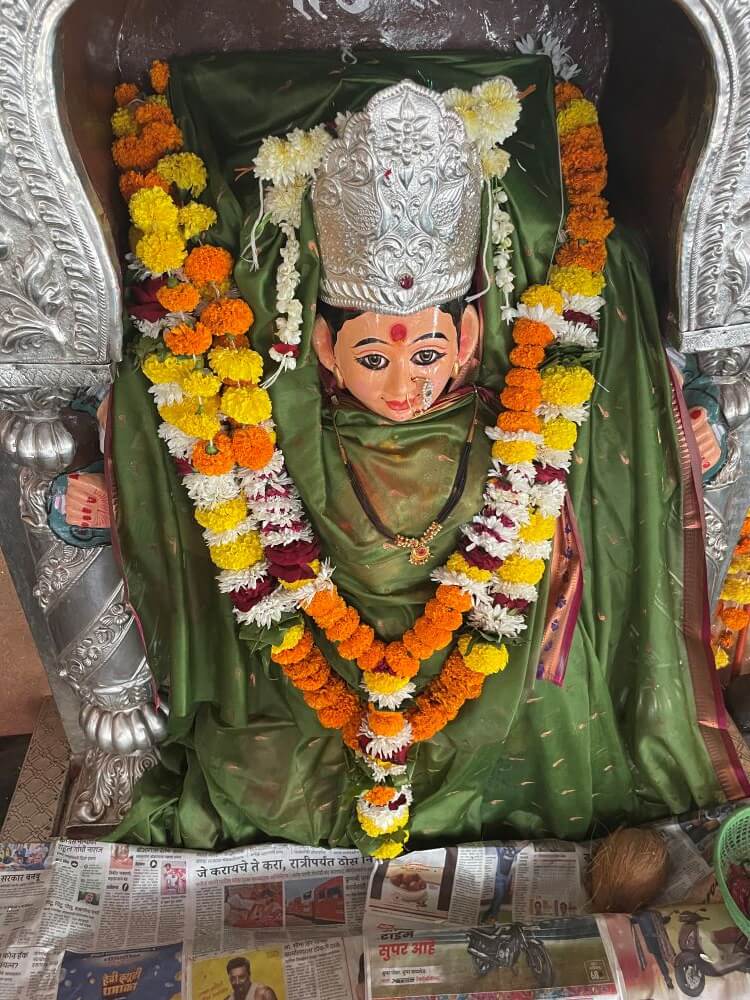
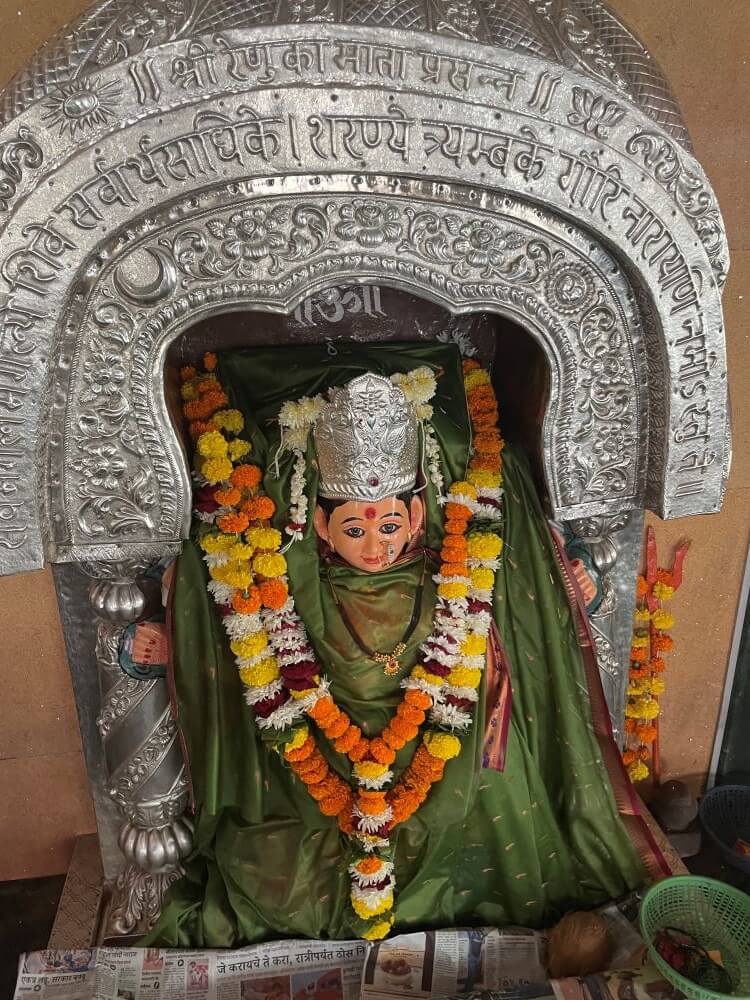
Upon entering the temple from the courtyard, one gets the darshan of the Goddess situated in the assembly hall (Sabhamandap). Seated in a silver throne, the Goddess is eight-armed (Ashtabhuja). The idol of the Goddess, adorned with a crown, nose ring, mangalsutra, and saree, looks distinctive. There are images of a lion and a turtle in front of the Goddess. Devotees believe that applying the oil from the lamp (Nandadeep) that burns continuously near the Goddess cures skin diseases, so many devotees make vows to the Goddess for relief from such ailments. It is a tradition to offer a silver plate to the Goddess upon the fulfillment of a vow.
A unique feature of this temple is the stone-stepped stepwell (Barav) in front of it. This stepwell contains water throughout all twelve months. Devotees believe that fasting for ५ Tuesdays and bathing in this stepwell cures skin diseases. As it is a living spring, the water in the stepwell refills within moments after being drawn. There is a record that this stepwell was built by Punyashlok Ahilyadevi Holkar.
Navratri Utsav is celebrated here on a grand scale. During this time, a fair is held for ९ days. On the day of Ghatasthapana, Renuka Mata is anointed with Panchamrit. On the seventh day, the Durgashtami Homa is performed between १२ midnight and ६ in the morning. From Ashwin Shuddha Pratipada to Kojagiri Purnima, the Durga Saptashati is recited daily. On the day of Dussehra, the idols of Swatantryalakshmi Ashtabhuja Devi and Khanderao Maharaj are brought in a procession from the Khandoba Maharaj temple in the village to this temple for Simollanghan (crossing the border). The famous song ‘Jayo’stu te Shrimahanmangale, Shivaspade Shubhade…’ composed by Swatantryaveer Savarkar in memory of this very Swatantryalakshmi Ashtabhuja Devi is well-known. Many Savarkar enthusiasts and devotees are present during this festival. Various religious programs are organized here on the days of Dussehra and Kojagiri Purnima.
This sacred temple stands as a testament to deep spiritual devotion, ancient architectural grandeur, and rich local cultural traditions.
The sanctum sanctorum houses the divine idol consecrated according to ancient Vedic traditions, surrounded by serene courtyards and traditional temple architecture.
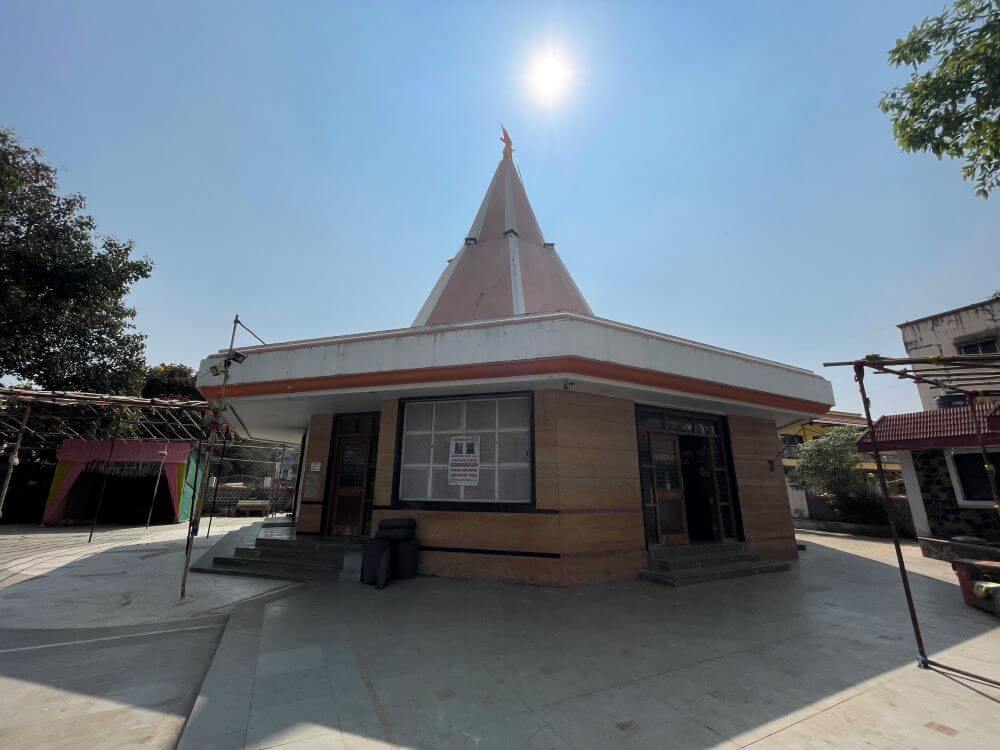
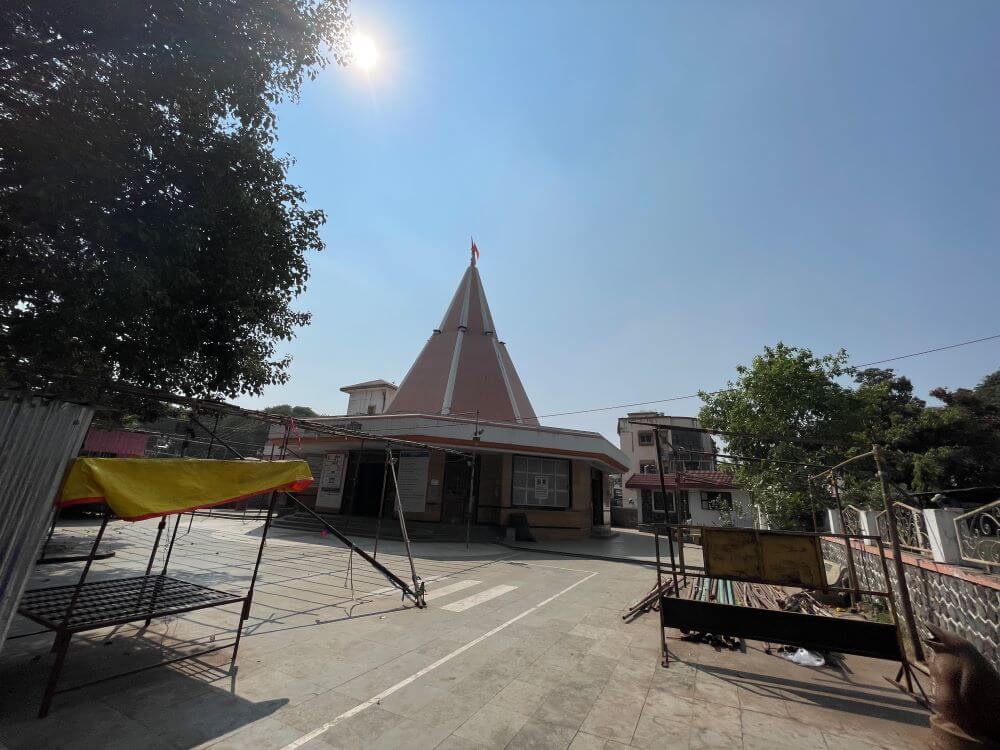
Navratri, Maha Shivratri, Annual Temple Jatra & Deepotsav
Compare and book flights, secure top-rated local hotels near the temple, hire reliable guides, and rent cars instantly.
Extend your pilgrimage by visiting other highly sacred temples located nearby.


Add ₹999 more to unlock FREE SHIPPING!
Your sacred cart is currently empty.
Shop Photo FramesFill in your delivery details below to place your order.
Add comment