
Add ₹999 more to unlock FREE SHIPPING!
Your sacred cart is currently empty.
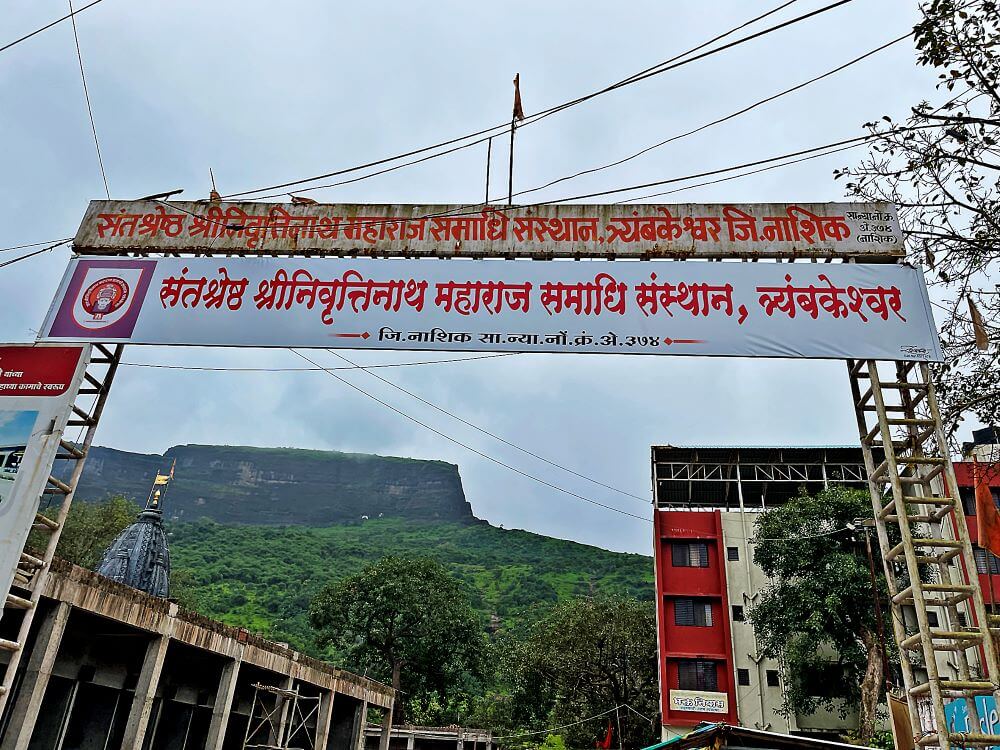
Shop Photo FramesNashik is a city bustling with sacred sites and deep spiritual foundations. For this very reason, this land has been known as a ‘Punyabhumi’ (land of merit) since ancient times. In this holy land, near the famous Jyotirlinga temple of Trimbakeshwar, at the foothills of the Brahmagiri mountain, lies the Sanjeevan Samadhi of Shri Sant Nivruttinath Maharaj. Sant Nivruttinath attained Sanjeevan Samadhi in the presence of Brahmagiri on the day of २३ June १२९७.
A legend regarding this states that while Nivruttinath was performing the circumambulation of the Brahmagiri mountain, he arrived at the spot where the temple stands today. At that time, the area was covered with a dense forest. Gahininath resided in a cave there. Staying there, Nivruttinath received initiation from Gahininath. It was there that he found the definitive direction for his divine mission.
Nivruttinath was born on ११ February १२७३ in Apegaon, located in the Aurangabad district. However, there are differing opinions regarding the birth year of Nivruttinath. Among the four siblings—Dnyaneshwar, Sopandev, Muktai, and Nivruttinath—Nivruttinath was the eldest. Nivruttinath was the Guru of Dnyaneshwar. Nivruttinath instructed Dnyaneshwar to write the Bhagavad Gita, which was in Sanskrit, in a simple language that everyone could understand and grasp. Following this, Dnyaneshwar composed the Dnyaneshwari.
Nivruttinath composed three to four hundred Abhangs, which are focused on Yoga, Advaita (non-duality), and devotion to Krishna. However, even after guiding Dnyaneshwar, he remained detached from success, true to his name ‘Nivritti’ (detachment). He authored three texts: ‘Nivruttidevi’, ‘Nivruttisar’, and ‘Uttargitatika’. However, these are not currently available. Two manuscripts, ‘Samadhi Bodh’ and ‘Satik Bhagavad Gita’, attributed to Nivruttinath, are preserved at the Shrisamarth Vagdev Mandir in Dhule. After Sant Dnyaneshwar and Sant Sopandev attained Sanjeevan Samadhi, Muktabai gave up food and water and departed from this world. A few days later, at the age of २४, Nivruttinath attained Sanjeevan Samadhi at Trimbakeshwar.
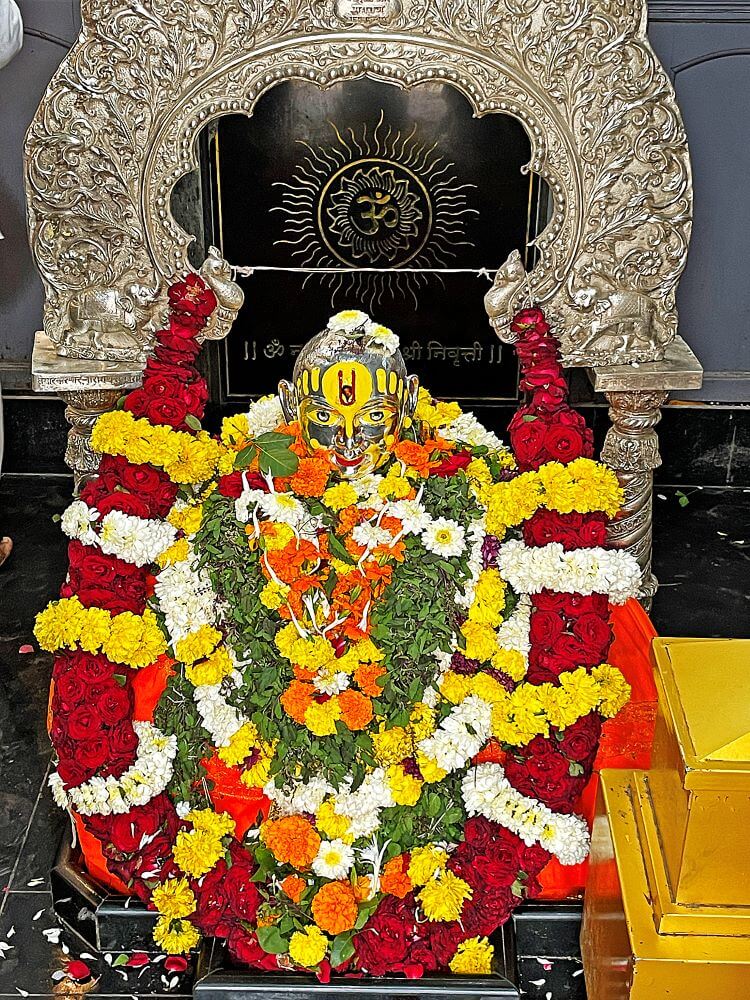
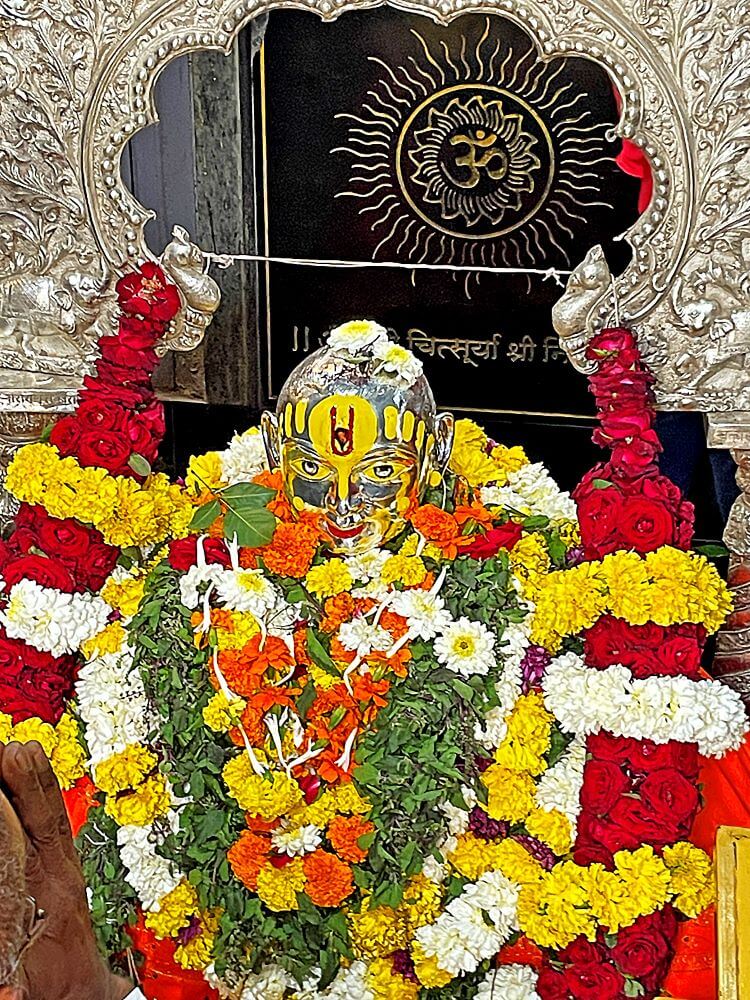
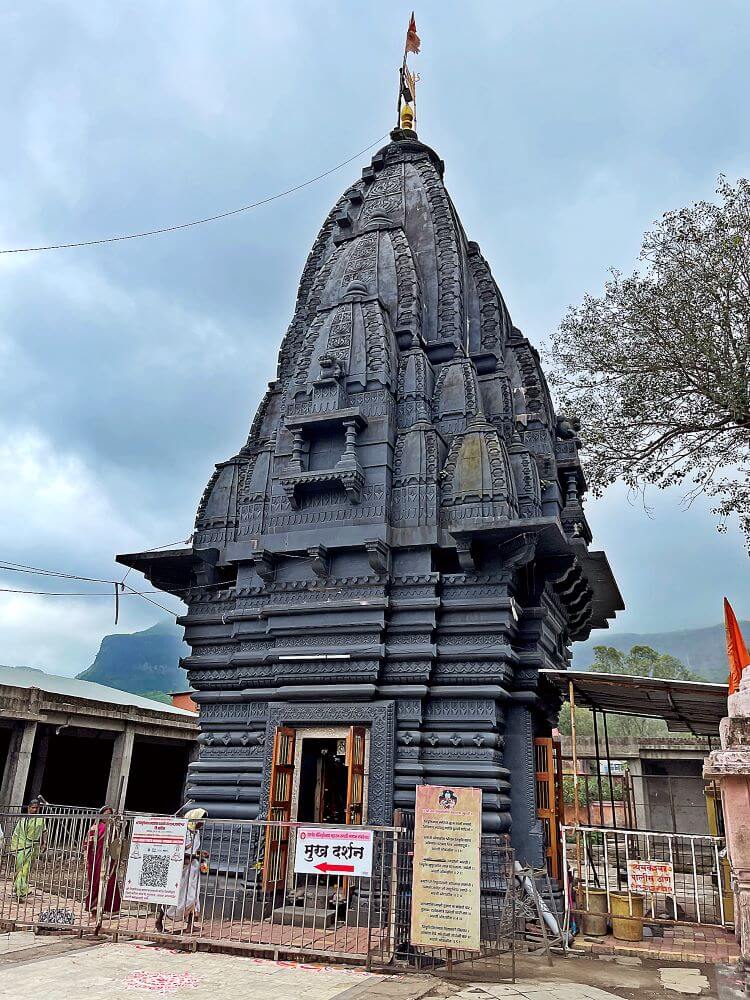
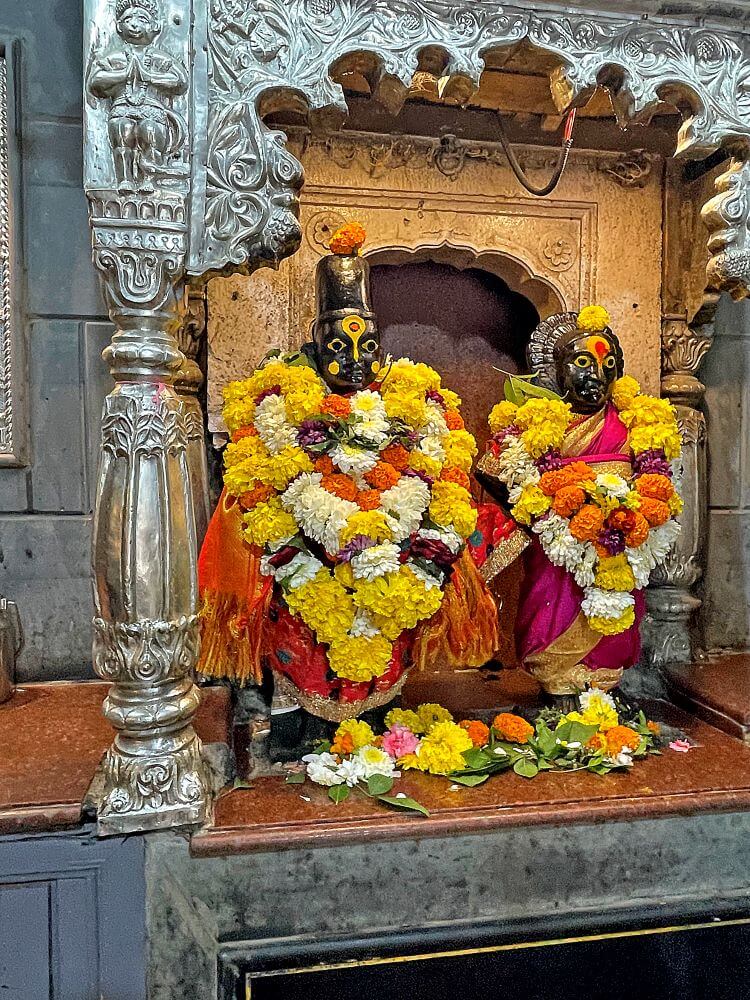
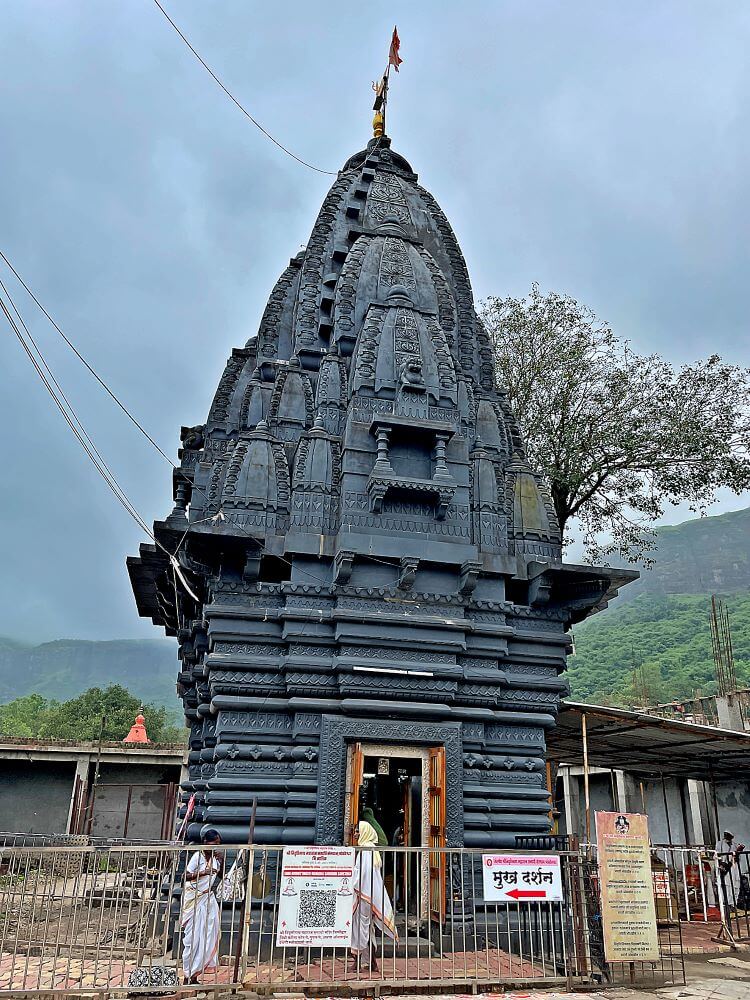
Entering the temple through the tall gateway built in the Nagara style, one reaches a large assembly hall (Sabhamandap). From the assembly hall, one can proceed to the Samadhi site. There is an image of Lord Ganesha on the lintel of the Samadhi site. In the inner sanctum, at the back, one can see the carved black stone idols of Shri Vitthal-Rukmini. They are seated in a silver arch. Beneath them is the four-stepped Samadhi site of Sant Nivruttinath, upon which a silver mask of Nivruttinath is placed. This Samadhi is adorned with unique silver carvings. There is a golden pinnacle (Kalash) atop the temple. Behind the temple, one can view the Brahmagiri mountain. In the temple courtyard, there are separate shrines for Sant Tukaram and Lord Hanuman.
In the Samadhi temple, between ५ AM and ८ AM, Kakad Bhajan, Kakad Aarti, and the daily worship of the Samadhi are performed. Naivedya is offered between १२ PM and १ PM. At ४ PM, the time for changing the attire (Poshakh) is observed. At ७ PM, the Dhup-aarti takes place. Between ८.३० PM and १० PM, Panchpadi Bhajan and Haripath are performed, followed by Shej-aarti.
During the annual festival, instead of the date of the Samadhi, a ‘Nam-Saptah’ (seven-day chanting) is organized between Chaitra Vadya Panchami and Chaitra Vadya Dwadashi. For seven days, devotees prepare sandalwood paste (Uti) daily. On the ११th day, the Uti is applied to the Samadhi and then distributed among the devotees. It is the firm belief of the devotees that this Uti destroys various ailments and worldly sorrows, granting an experience of bliss. The accommodation and meals for the devotees arriving during this period are traditionally arranged by designated villages. The festival concludes with the ‘Kalyache Kirtan’ and a procession around the town. From this very Samadhi site, after the official government worship, the Palkhi (palanquin) departs for Pandharpur for the Ashadhi Vari. Hundreds of Warkaris participate in this Palkhi.
This sacred temple stands as a testament to deep spiritual devotion, ancient architectural grandeur, and rich local cultural traditions.
The sanctum sanctorum houses the divine idol consecrated according to ancient Vedic traditions, surrounded by serene courtyards and traditional temple architecture.
Navratri, Maha Shivratri, Annual Temple Jatra & Deepotsav
Compare and book flights, secure top-rated local hotels near the temple, hire reliable guides, and rent cars instantly.
Extend your pilgrimage by visiting other highly sacred temples located nearby.


Add ₹999 more to unlock FREE SHIPPING!
Your sacred cart is currently empty.
Shop Photo FramesFill in your delivery details below to place your order.
Add comment