
Add ₹999 more to unlock FREE SHIPPING!
Your sacred cart is currently empty.
Shop Photo FramesThe Manikgad Fort in the Jivati Taluka of Chandrapur district is considered the ‘gem’ of the Gond Empire. According to historical records, this fort was constructed in the ९th century by the Nagvanshi King Mahindu Yon. Their reign lasted until the १२th century. At the foothills of this fort lies an ancient Hemadpanti Vishnu Temple dating back to approximately the same period. It is considered the only ancient temple among the many temples located in the Jivati Taluka. It is a place of faith for thousands of devotees in the region, and along with the devotees, hundreds of tourists visit this temple every day due to the Manikgad Fort.
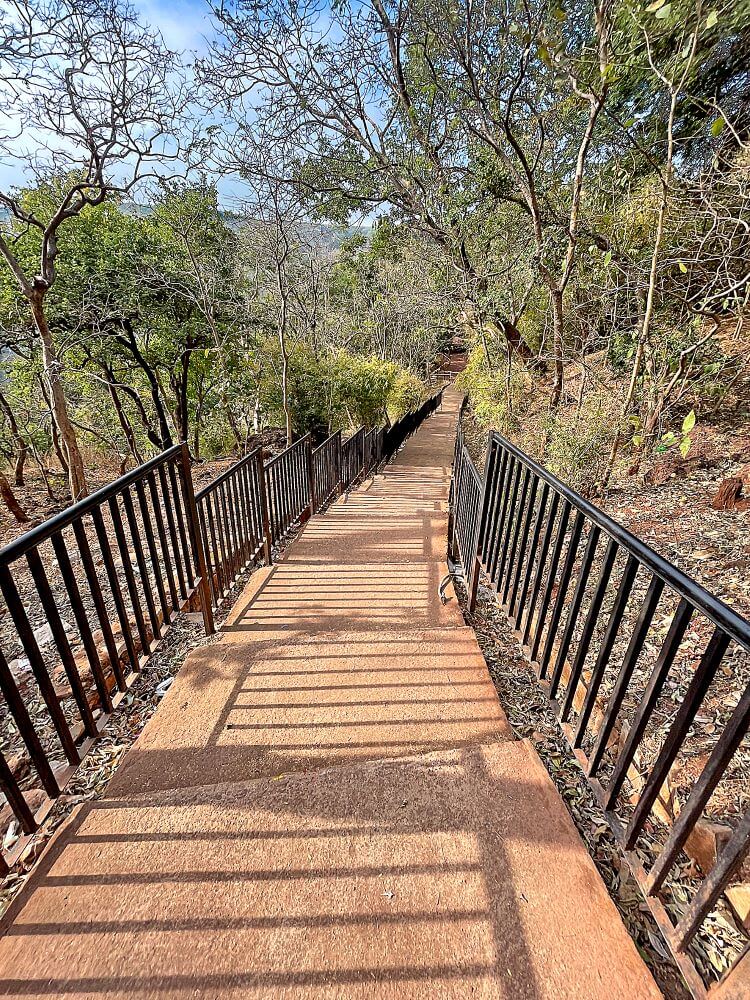
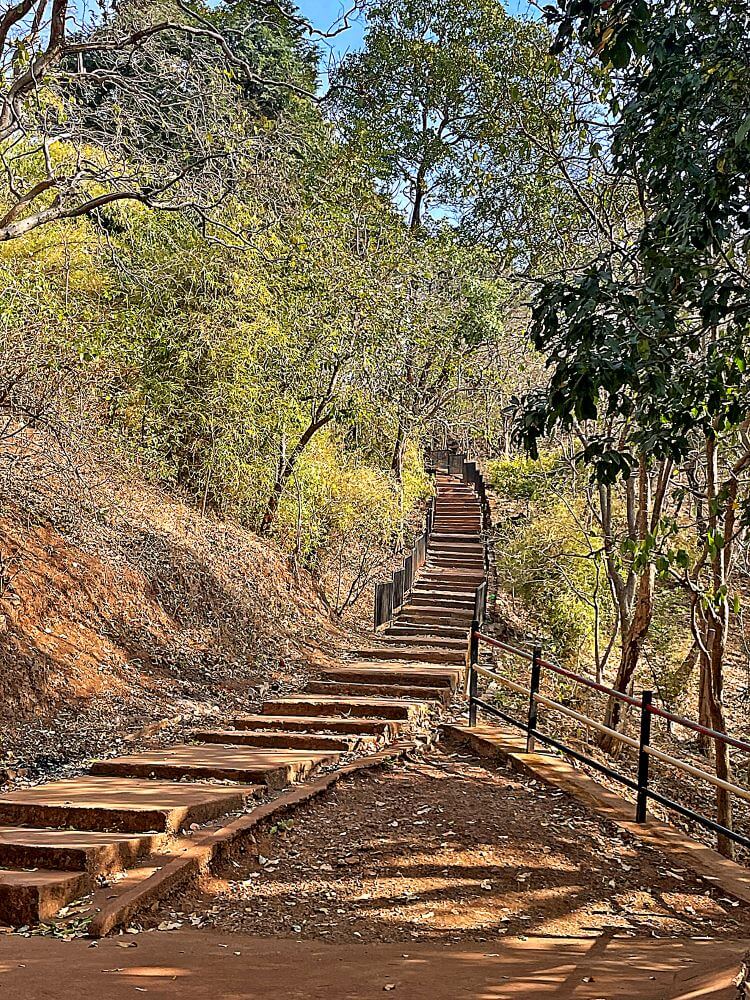
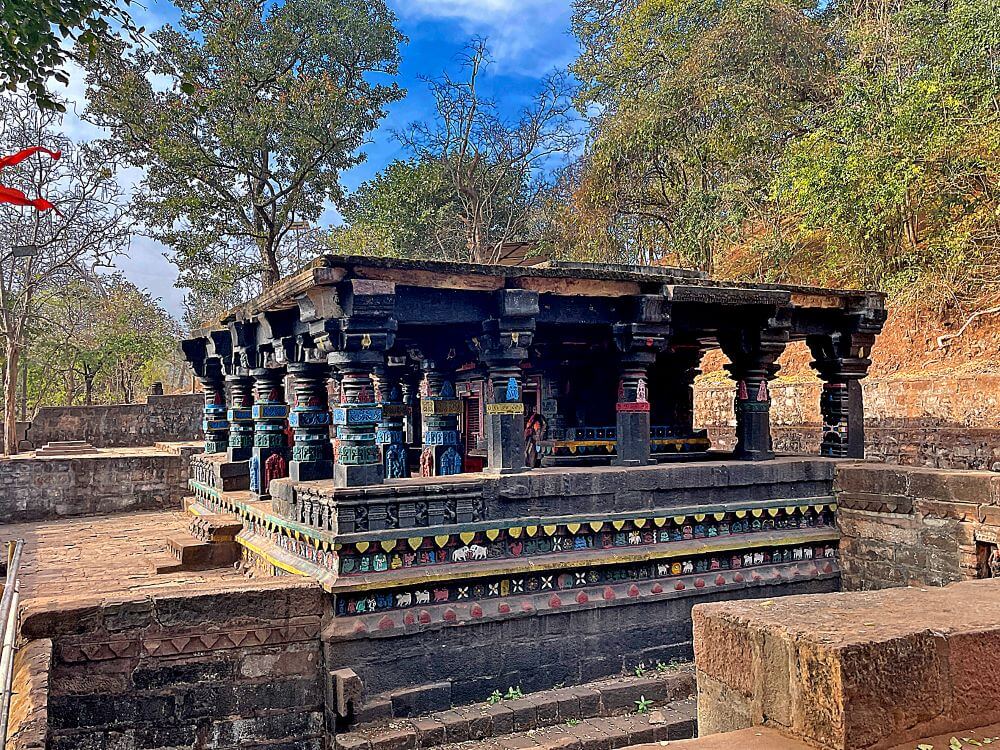
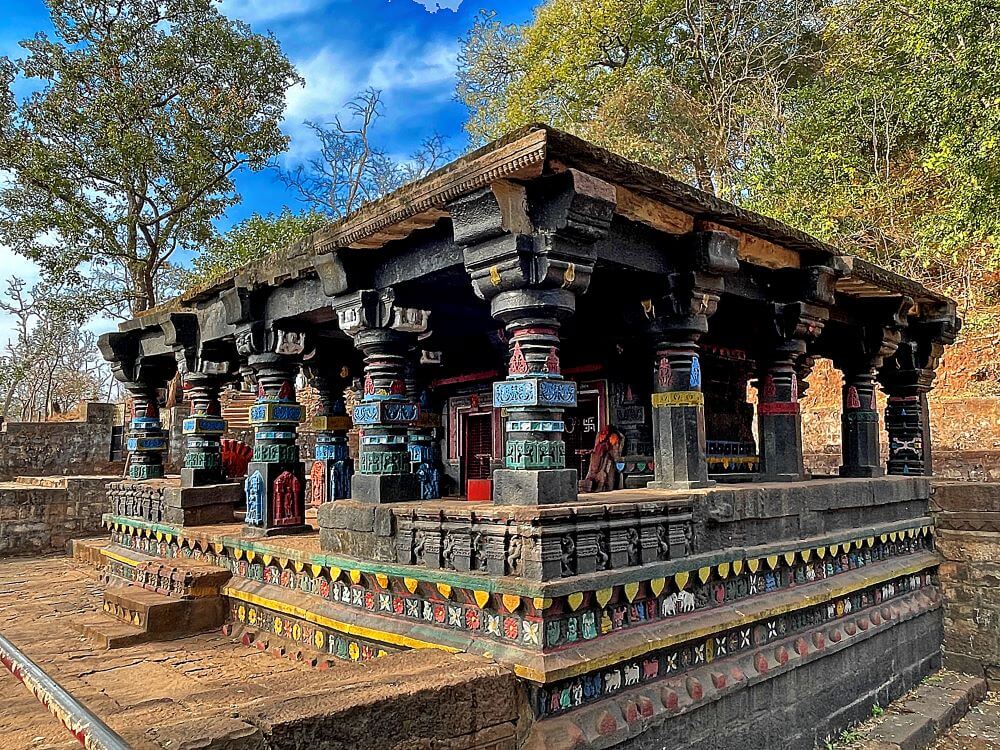
While traveling from Gadchandur towards Jivati, one reaches the foothills of Manikgad Fort after crossing a large mountain pass. There is a Forest Department checkpoint here; from there, the path to the right leads to Manikgad Fort, while the path to the left leads downwards to the ancient Vishnu Temple. To reach the temple from the checkpoint, one must descend about १५० steps. Upon entering the temple premises, one realizes it is situated on a mountain slope. The temple is constructed of black stone in the Hemadpanti style. Surrounded by dense forest, this temple, situated in the heart of the woods, has no spire or walls. Yet, the temple appears unique due to the intricate carvings on its plinth (foundation) and pillars.
The temple is located on a flat area on a mountain slope, so the temple premises are not very large. There is a mountain cliff at the back and ramparts on three sides. There is a deep valley in front of the temple. After entering through the gateway of the ramparts, one first sees the tank located next to the temple. Inside this large tank, which is about ८ to १० feet deep, there is another small tank measuring approximately ५ feet by ५ feet. This tank contains water throughout the year and never dries up. Many devotees in this area take water from this tank as holy water (Teerth). The water in this small tank is the only source of water here. However, during the monsoon season, because the large tank is completely filled with water, the small tank below is not visible.
The temple stands on a large plinth about ४ feet above the ground, located above the tank. There is unique carving on the ५ horizontal layers of this plinth. The first ४ layers feature various flowers and decorative patterns, while the ५th layer is carved with numerous erotic sculptures. Facing east, this temple has २ entrances, one from the east and one from the north. The assembly hall (Sabhamandap) of the temple is large and contains २१ ornate stone pillars. There is a roof over these pillars, but it does not have a spire or finial (Kalash) like other temples. The lower part of the pillars is square, while the middle part features various sculptures. Load-bearing Yaksha figures are carved on the upper part of the pillars. Many sculptures of deities are carved on the lower part of the pillars near the northern entrance. Since there are no walls connecting these pillars on the outside, this assembly hall is completely open.
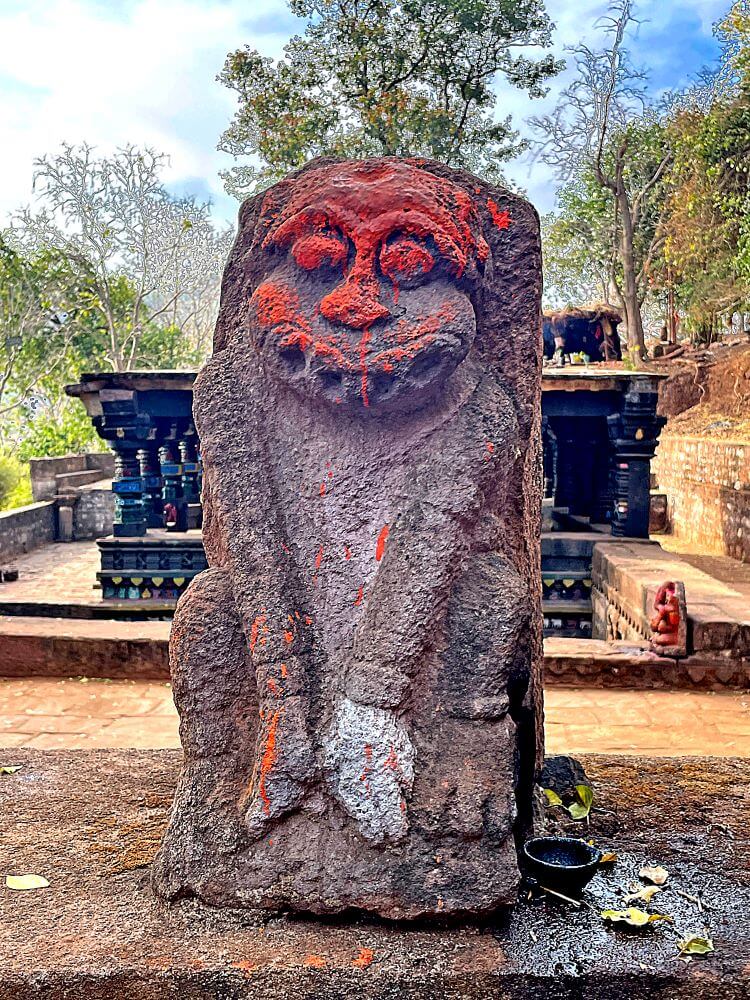
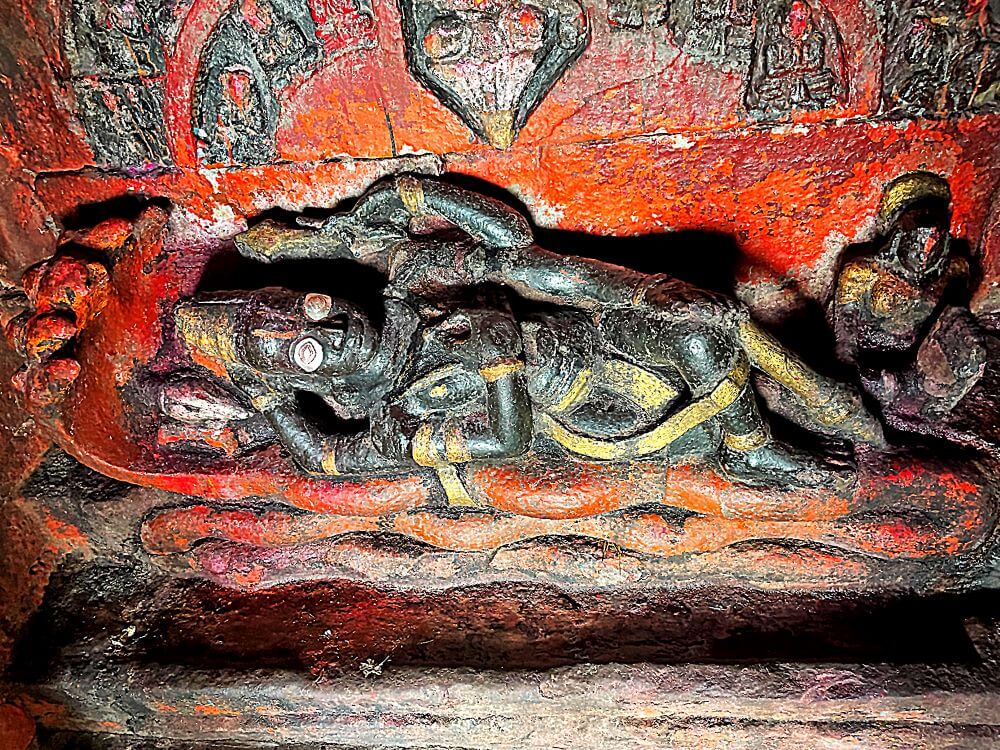
There are २ sanctum sanctorums in the center of the assembly hall. One of them houses a statue of Lord Vishnu in the Sheshashayi posture, approximately ५ feet in length. Above this statue, Lord Brahma and the Dashavatara are carved. The second sanctum contains a Shiva Linga. Since the doors of both these sanctums face east, the sun’s rays fall directly into the inner chambers during the morning. There are many ancient statues and various sculptures in the temple courtyard. The beauty of the pillars and the sculptures on them is further enhanced by the paintwork. Every year, a week-long festival (Saptah) is held here on the day of Margashirsha Amavasya. Hundreds of devotees are present at this time. Due to the limited space around the temple, various religious programs of the Saptah are celebrated in the open space on the hill to the south of the temple. As this entire area is under the jurisdiction of the Forest Department and wild animals frequent the area, entry into the temple is not permitted in the evening or at night.
Close to this temple is the Manikgad Fort. Situated at an altitude of ५०७ meters above sea level, this fort is spread over about ७५ acres of land. Entry is granted here upon payment of a fee at the Forest Department checkpoint. Since the Government of Maharashtra has granted this fort the status of a tourist destination, many facilities have been provided for tourists here. The ramparts of the fort have been reconstructed, and iron railings have been installed in many places for the safety of tourists.
There is unique carving on both sides of the fort’s entrance, including the royal emblem of the Gond power—a lion mounted on an elephant—along with various Vyala (mythical creatures), Naga sculptures, and many other carvings. There is an image of Lord Ganesha on the door frame. Apart from this, one can see cannons, bastions, various statues on the bastions, a basement, a subterranean well, the Queen’s Palace (Rani Mahal), and the Queen’s Lake (Rani Talav) in the fort. Along with this, one can experience the abundant forest wealth rich in biodiversity.
This sacred temple stands as a testament to deep spiritual devotion, ancient architectural grandeur, and rich local cultural traditions.
The sanctum sanctorum houses the divine idol consecrated according to ancient Vedic traditions, surrounded by serene courtyards and traditional temple architecture.
Navratri, Maha Shivratri, Annual Temple Jatra & Deepotsav
Compare and book flights, secure top-rated local hotels near the temple, hire reliable guides, and rent cars instantly.
Extend your pilgrimage by visiting other highly sacred temples located nearby.


Add ₹999 more to unlock FREE SHIPPING!
Your sacred cart is currently empty.
Shop Photo FramesFill in your delivery details below to place your order.
Add comment