
Add ₹999 more to unlock FREE SHIPPING!
Your sacred cart is currently empty.
Shop Photo FramesAround 300 years old, the temple of Shri Devbhairi, the presiding deity (*Gramdaivat*) of Ratnagiri, is considered a *Jagrut Devasthan* (divinely active shrine) in the city. A sacred place of faith for thousands of devotees, Lord Devbhairi is the deity of the 12 *wadas* (settlements) and 22 communities here, and devotees firmly believe that He rushes to answer everyone’s call. In 1731 CE, Sakhoji Angre, son of Kanhoji Angre, arrived in Ratnagiri with his naval fleet. Accompanying him were five families from the Gujar community, who constructed a large temple for Shri Devbhairi here. It is said that this sacred abode of Devbhairi has existed here since the 12th century. The Shimgotsov (Holi festival) celebrated here is the grandest festival.
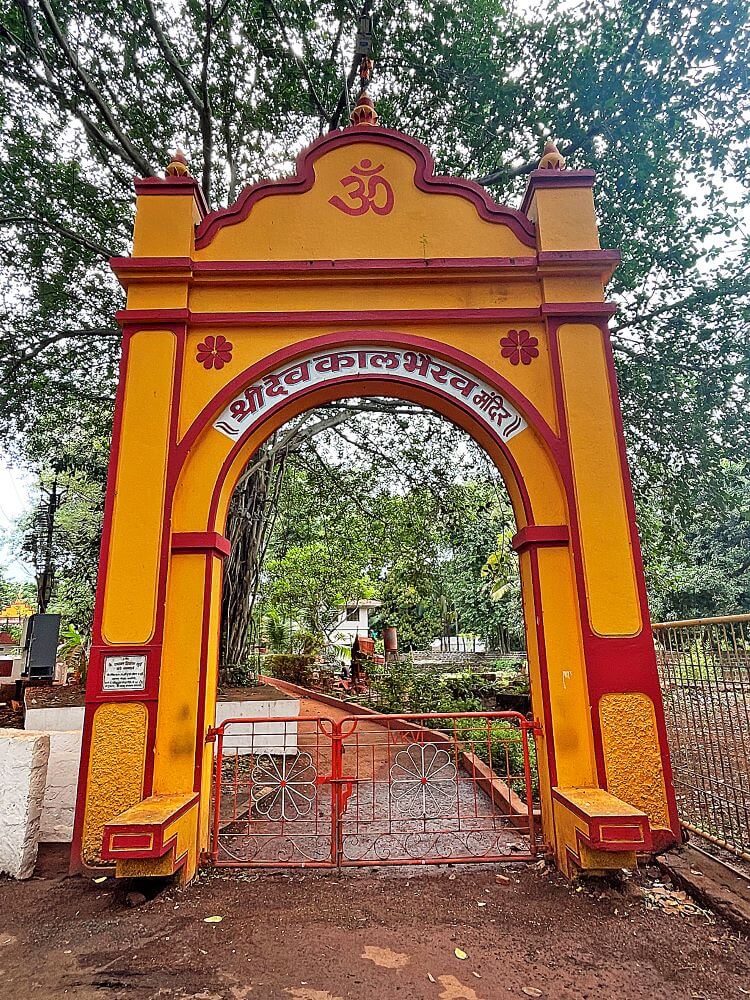
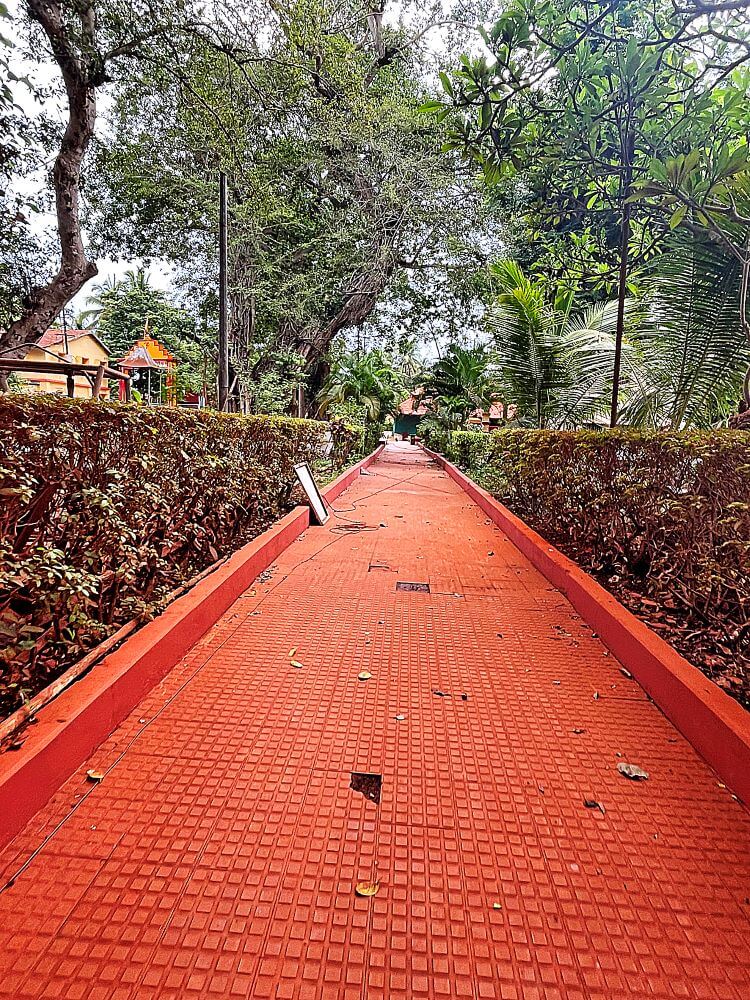
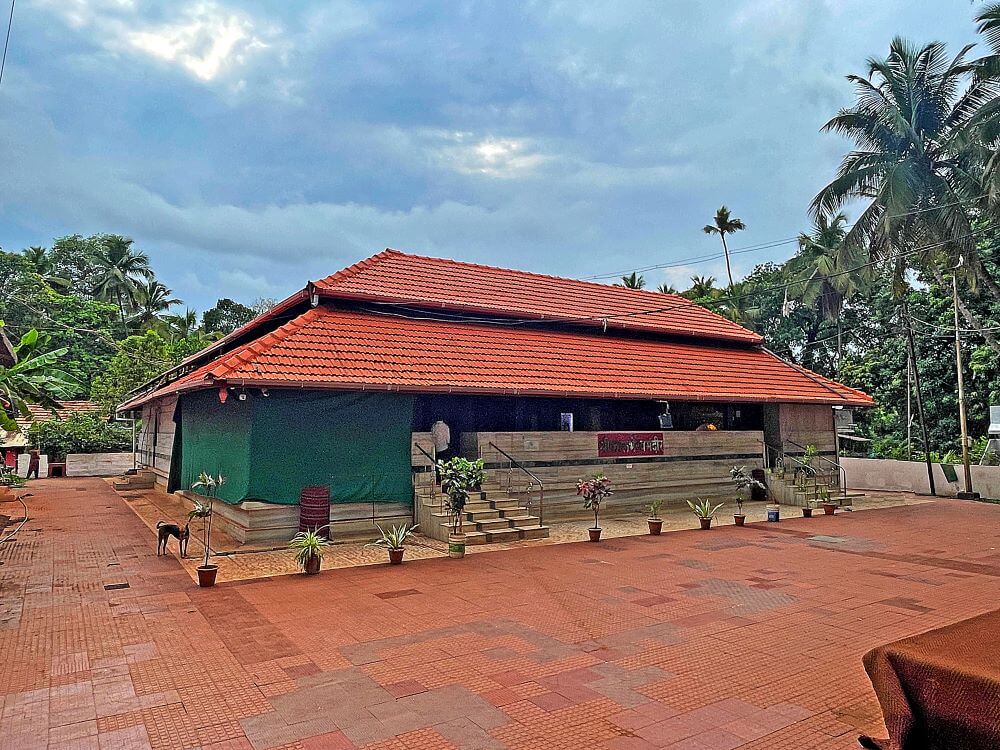
Located a short distance from the Ratnagiri bus stand, the Gramdaivat Devbhairi Temple is situated in the heart of the city. One enters the temple courtyard through an arched gateway set within a fortified wall. The temple complex is surrounded by various ornamental plants as well as ancient, shady canopy trees. In the courtyard, there are shrines dedicated to South-facing Lord Hanuman and Lord Dattatreya (Shri Datta). In front of the temple, there are two water ponds, whose uniquely constructed steps bear testimony to the temple’s antiquity. Facing the temple entrance stand four tall *deepmalas* (lamp towers)—three on the right side and one on the left. This two-storied temple is built on a plinth approximately four to five feet high. Like other traditional temples in Konkan, its architectural design features wooden pillars, rafters, tiled roofs, and sloping eaves.
The main temple comprises three sections. Upon entering, on the left, one first reaches the Trunbindukeshwar Temple. The temple structure consists of a *Sabhamandap* (assembly hall), *Antarala* (vestibule), and *Garbhagriha* (sanctum sanctorum). The *Sabhamandap* is designed as a semi-hall (*ardhamandap*), with stone bench seating (*kakshasnas*) about two feet high along its walls. The doorframe (*dwarshakha*) of the *antarala* is intricately carved with figures of birds, animals, flowers, and *dwarpals* (gatekeepers). An idol of Lord Ganesha graces the *lalatabimba* (lintel center). The *antarala* here is spacious, and facing the sanctum is a Nandi idol carved out of a single stone monolith. On the left of the sanctum’s doorway is a beautiful marble idol of Lord Ganesha, and inside the sanctum rests a Shiva Lingam carved in black stone. Adjacent to the sanctum of Trunbindukeshwar, one can access the Jambukeshwar Temple. The sanctum of Jambukeshwar also houses a Shiva Lingam, alongside idols of Lord Ganesha, Goddess Haritalika, Lord Vishnu, and Suryanarayan (Sun God). This ensemble is renowned as the Jambukeshwar Panchayatana. A rare and distinct idol of Goddess Haritalika is enshrined here—carved in black stone, two-armed, and wearing a *ghagra* (traditional skirt).
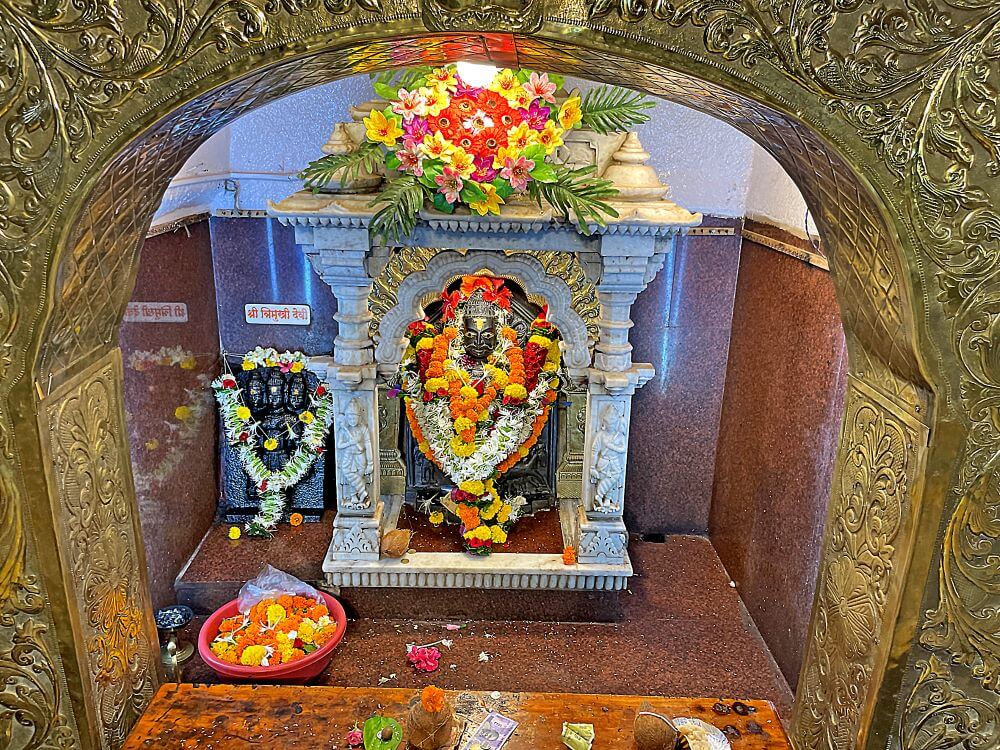
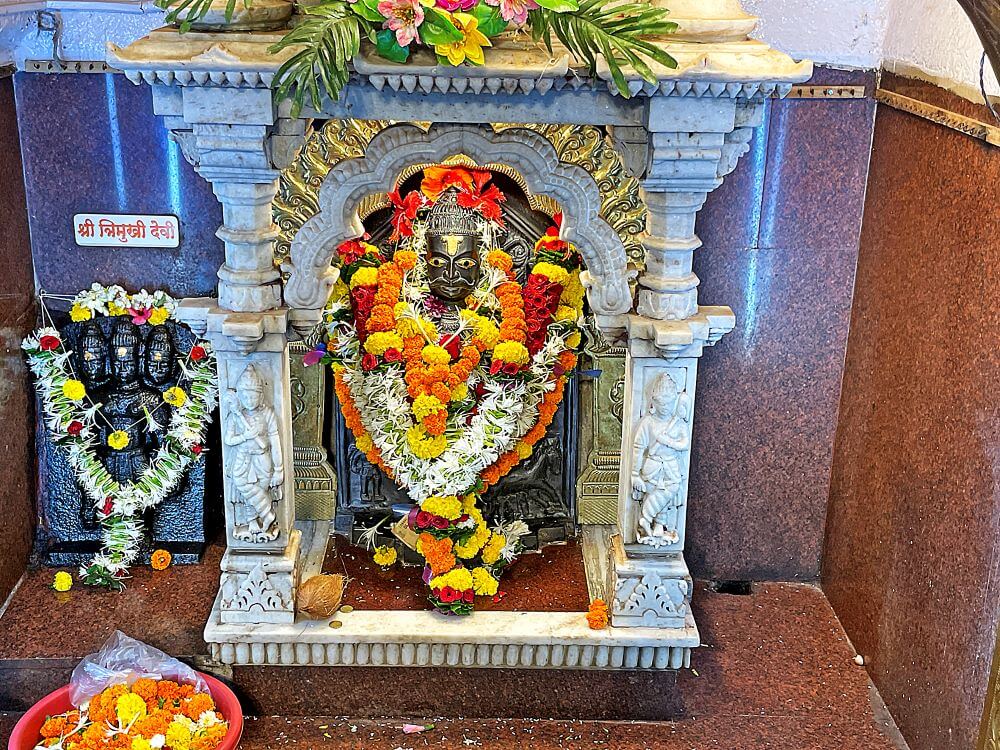
It is customary to offer prayers to Shri Devbhairi after visiting all these deities. Through a door located near the sanctum of the Jambukeshwar Temple, one reaches the main sanctum of Shri Devbhairi. The *sabhamandap* in front of this sanctum features exquisite woodwork, adorned with nine to ten large brass bells hanging from above. The 12 pillars in this hall symbolize the 12 *manakaris* (traditional dignitaries). Inside the main sanctum, idols of Shri Devbhairi and the three-faced Goddess (*Trimukhi Devi*) are enshrined within a marble *makhar* (ornate canopy). Along the circumambulatory path (*pradakshina marga*), there are numerous ancient stone idols and hero stones (*veergals*).
Konkan shares a deeply special bond with the festival of Shimga (Holi). The Shimga festival here is celebrated with immense fervor starting from *Phak Panchami* (Phalguna Shuddha Panchami) until around Gudi Padwa. Devotees from all over Ratnagiri, across the 12 settlements and 22 communities, gather for the *palkhi* (palanquin procession) of Bhairibuwa. On the day of Rangpanchami, around 1:00 PM, amid the reverberating beats of *dhol-tasha*, the palanquin of Shri Devbhairi rises from its sacred pedestal (*sahana*) to play with colors. As per tradition, the palanquin is first accorded a salute by the police department, followed by joyful chants of *”Hura re hura… aani aamchya Bhairibuwacha sonya cha tura… re holiyo…”* (“Hura re hura… and the golden crest of our Bhairibuwa… re holiyo…”) and *”Karvat karvat re karvat… aani aamcha Bhairibuwa challa mirvat… re holiyo…”* (“Karvat karvat re karvat… and our Bhairibuwa moves in a grand procession… re holiyo…”). During this time, palanquins of village deities from neighboring villages also arrive to meet Lord Devbhairi. Among them, Goddess Shri Devi Navalai-Pawnai, the sister of Devbhairi from Mirya village, arrives to meet her brother. Thousands of devotees gather to witness this holy reunion of brother and sister.
Being a *jagrut devasthan*, hundreds of devotees arrive daily from morning till evening for the divine *darshan* of Lord Devbhairi. Before commencing any auspicious work or new venture, devotees visit the temple to seek the divine blessings of Devbhairi and pray for success in their endeavors. Devotees can have *darshan* of Shri Devbhairi at this temple every day from 6:30 AM to 10:00 PM.
This sacred temple stands as a testament to deep spiritual devotion, ancient architectural grandeur, and rich local cultural traditions.
The sanctum sanctorum houses the divine idol consecrated according to ancient Vedic traditions, surrounded by serene courtyards and traditional temple architecture.
Navratri, Maha Shivratri, Annual Temple Jatra & Deepotsav
Compare and book flights, secure top-rated local hotels near the temple, hire reliable guides, and rent cars instantly.
Extend your pilgrimage by visiting other highly sacred temples located nearby.


Add ₹999 more to unlock FREE SHIPPING!
Your sacred cart is currently empty.
Shop Photo FramesFill in your delivery details below to place your order.
Add comment