
Add ₹999 more to unlock FREE SHIPPING!
Your sacred cart is currently empty.
Shop Photo Frames
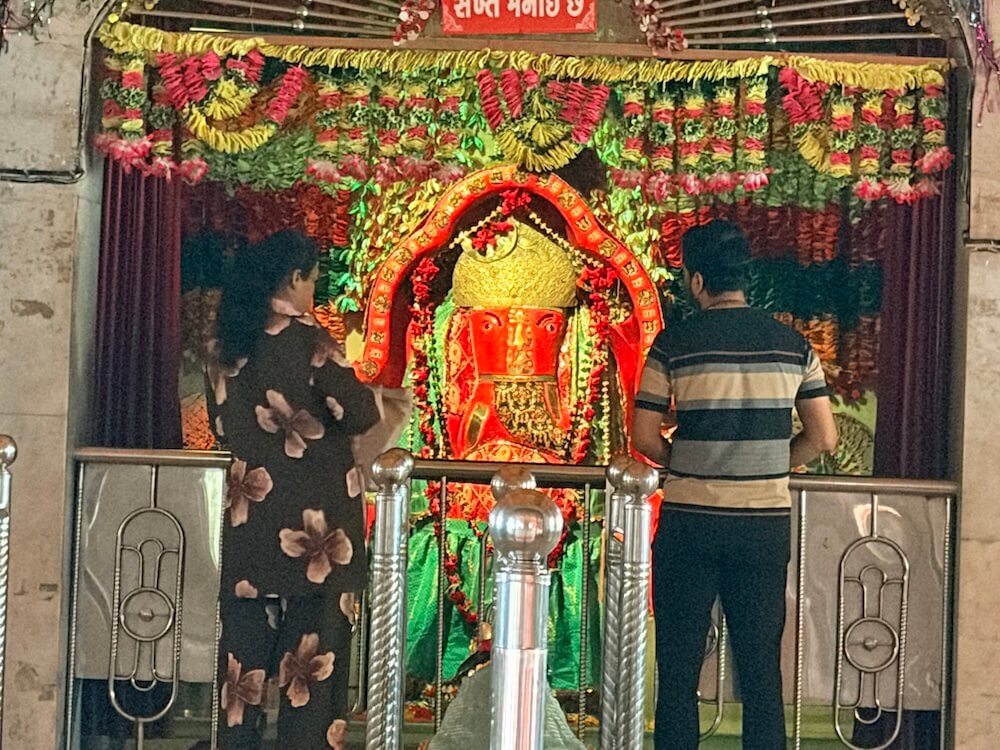
Within Hinduism, the Ganapatya sect maintains a distinct tradition alongside the Shaiva, Vaishnava, and Shakta paths. Every auspicious endeavour commences with the worship of Lord Ganesha. India counts one hundred and eight primary seats of Ganesha. Mirroring the Ashtavinayak of Maharashtra, Mumbai’s Siddhivinayak, and the Siddhivinayak of Mahemdavad in Gujarat, the Shri Ganesh Temple stands in Popatpura. Located near Godhra city, the shrine at Popatpura remains a focal point of local devotion. The idol is believed to be awake and alive. It fulfills the deepest wishes of its devotees. Rooted in the eleventh century, this historic temple hosts a grand fair during Ganesh Jayanti.
Revered across numerous nations in Asia, Lord Ganesha is the deity of intellect. He is the leader of the ganas and the remover of obstacles. For this reason, the scriptures bestow upon Ganesha the honour of primordial worship. Ganesha also rules as the deity of knowledge and the arts. Concurrently, he waged war on various occasions to vanquish demons. This valiant son of Lord Shiva and Rawal (Jaysingh) was the Khichi Chauhan ruler. After defeating him, Mahmud Begada reconstructed Champaner and renamed it Muhammadabad. For a period, he shifted the capital of the Gujarat Sultanate to Champaner. During this era, the Ganesha idol in this temple at Popatpura vanished into the earth. Later, priests performed a ‘Ganesh Yag’ ritual here. The power of this sacrifice caused the idol to manifest once more. It is said that the sacrificial pit within the temple is the same one used for this ritual.
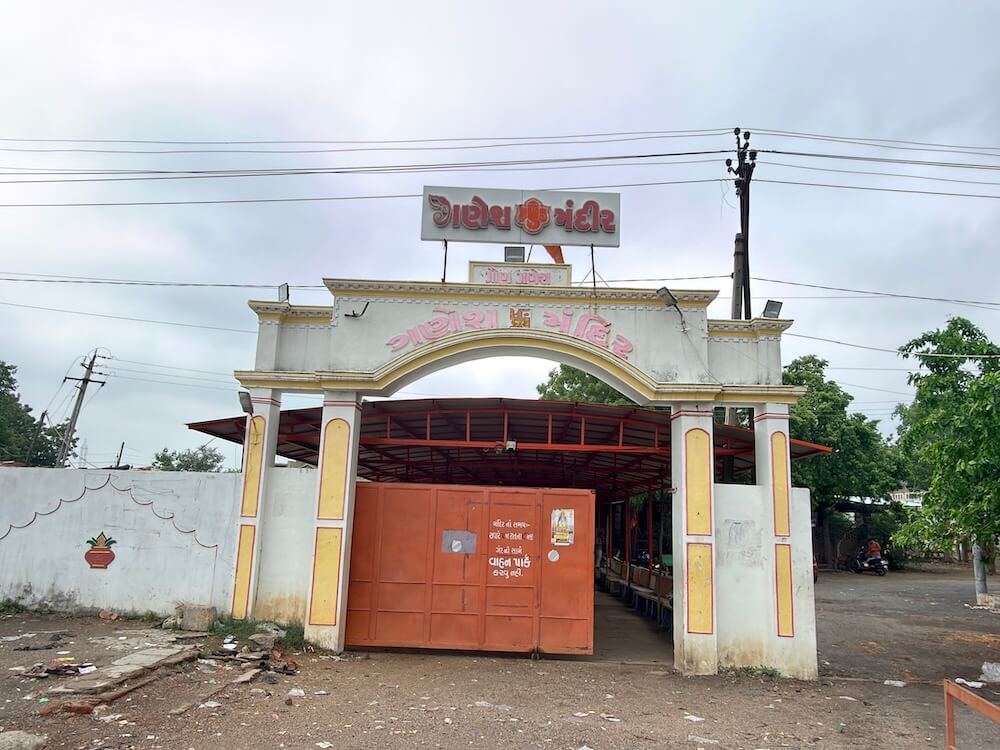
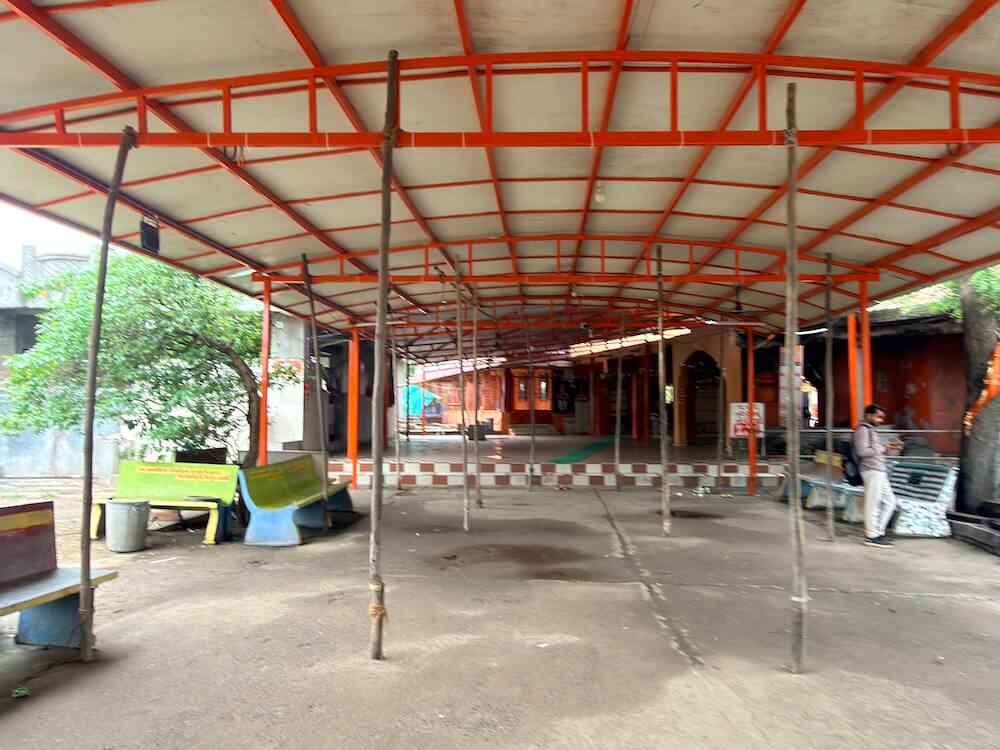
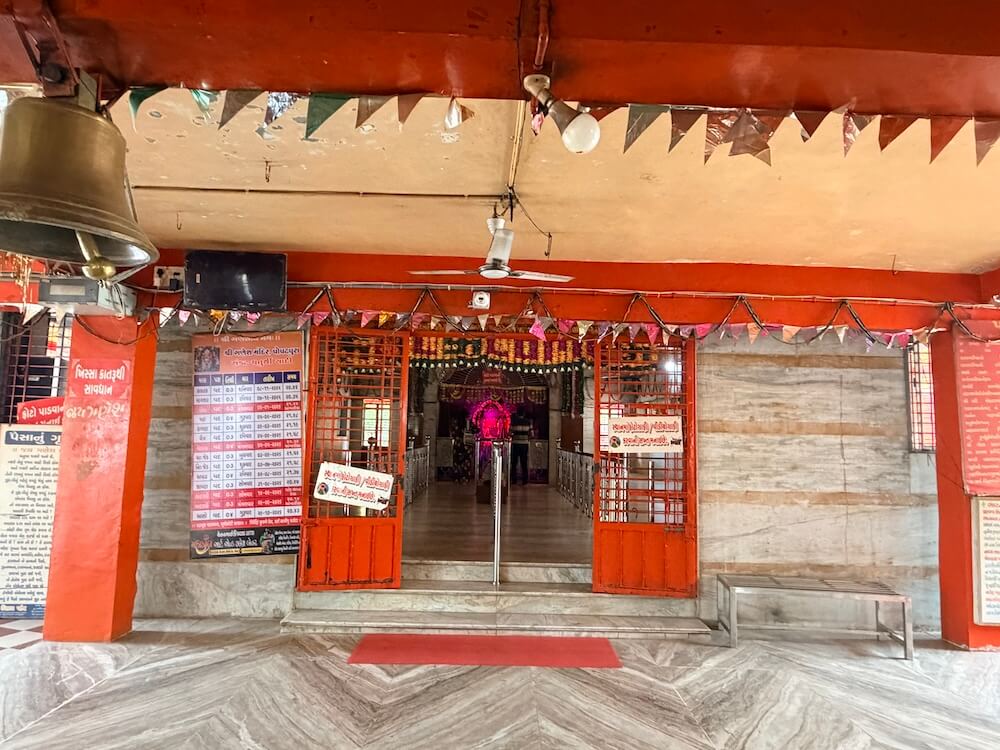
A spacious car park lies ahead of the Popatpura temple. A welcome arch and gateway pierce the surrounding fortification wall. Stepping inside, shops selling ritual offerings line the courtyard. A tin-roofed assembly hall stands before the main shrine. The architectural plan comprises a congregation hall, an antechamber, and the sanctum sanctorum. The congregation hall remains semi-open. Inside the antechamber, a stone sculpture of the mouse sits on a stone pedestal facing the sanctum door. The sanctum houses a self-manifested stone idol of Ganesha with a right-turning trunk. Idols of Riddhi and Siddhi flank the main deity. Fine vestments, ornaments, and silver crowns adorn these figures. A circumambulatory path envelopes the antechamber and the sanctum. A domed spire crowns the inner shrine.
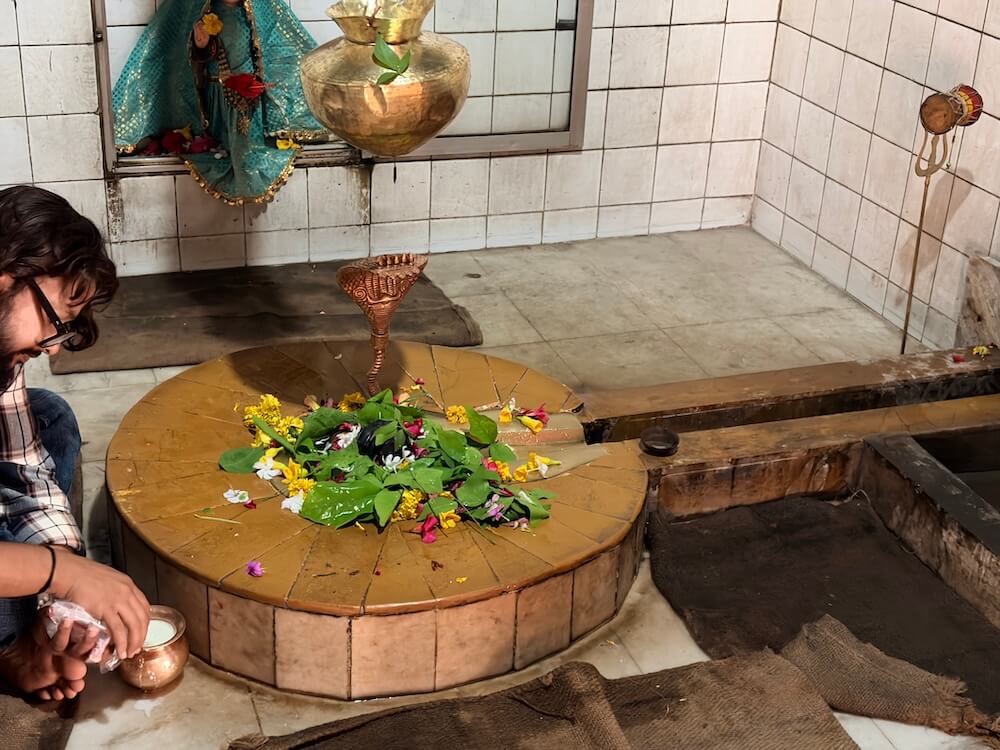
A separate temple dedicated to Lord Shiva stands opposite the Ganesha shrine. Its layout includes a congregation hall and a sanctum sanctorum. In the hall, a stone sculpture of Nandi rests on a pedestal facing the sanctum entrance. Niches accent the walls on either side of the sanctum doorway. These niches house idols of Ganesha and Hanuman. A Shivalinga rests on the ground at the centre of the sanctum. A brass serpent canopy shields this Linga. Water drops continuously onto it from a pot suspended from the ceiling. A niche in the rear wall of the sanctum holds an idol of Goddess Parvati. A domed spire featuring vertical fluted patterns rises above the sanctum. Goddess Parvati achieved universal adoration by annihilating the wicked and malicious. The elephant-headed Ganesha serves as the commander-in-chief of the gods. He commands the foremost position not only on the battlefield but also in the realm of art. He remains the primary custodian of all arts, including music, dance, and drama. We worship him precisely because he reigns as the supreme lord of these virtues. Vedic tradition mandates the worship of Ganesha since antiquity. The ‘Rigveda’ mentions Brahmanaspati and Ganapati. In ancient Indian culture, Ganesha worship began to ensure the smooth completion of new tasks. Historical records confirm the consecration and adoration of Ganesha idols during the reigns of the Satavahana, Rashtrakuta and Chalukya kings.
According to local legends, this temple is connected to the ruling dynasties of Champaner. Champaner was an exceptionally vital city in the history of medieval Gujarat, with its past tracing back to at least the eighth century. Local lore suggests that the name Champaner was derived from the Bhil king of the region, Champa Bhil. Folk legend dictates that King Champa Bhil suffered under the malevolent influence of Saturn in his horoscope. Consequently, he once grabbed the hand of a married woman who had visited the Ganesh temple for worship. Due to this misdeed committed by the king, the Ganesha idol vanished into the earth, and his kingdom collapsed. However, according to most historians, Vanraj Chavda founded this town and named it after his commander, Champa (Champaraj).
During the eleventh and twelfth centuries, this region was under the suzerainty of the Chalukya (Solanki) kings. According to the temple’s legend, the Chalukya king Bhimdev (I) established this shrine. The reign of Bhimdev (I) spanned from 1022 to 1064 AD. Based on this, the temple was founded sometime during these 42 years between 1022 and 1064. Later, in the latter half of the thirteenth century, the Khichi Chauhan Rajputs established their rule over the Pavagadh-Champaner area. They expanded and fortified the Pavagadh fort. In 1482 AD, the Sultan of Gujarat, Mahmud Begada, besieged Pavagadh. Following a siege of approximately 20 months, he conquered Pavagadh on 21 November 1484. At that time, Patai Rawal (Jaysingh) was the Khichi Chauhan ruler. After defeating him, Mahmud Begada reconstructed Champaner and renamed it Muhammadabad. For a period, he shifted the capital of the Gujarat Sultanate to Champaner. During this era, the Ganesha idol in this temple at Popatpura vanished into the earth. Later, priests performed a ‘Ganesh Yag’ ritual here. The power of this sacrifice caused the idol to manifest once more. It is said that the sacrificial pit within the temple is the same one used for this ritual.
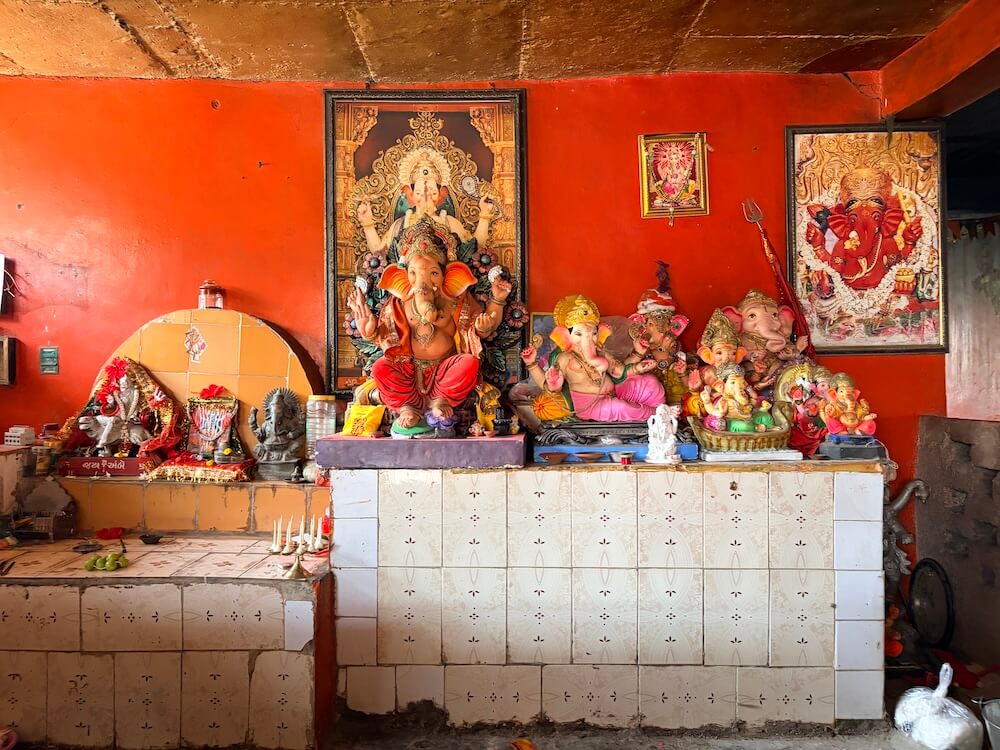
A sacrificial pavilion stands adjacent to the main temple. A central fire pit is surrounded by idols of various deities alongside clay Ganesha figurines. Supported by pillars, the square roof of this pavilion is divided into two tiers. The temple premises host a pilgrim rest-house, a community kitchen and the dining hall. The management provides lodging and boarding facilities for visiting devotees.
Ganesh Jayanti remains the principal annual festival here. On this day, the processional idol of Lord Ganesha is placed in a palanquin for a grand procession. Devotees from Gujarat, Rajasthan and Madhya Pradesh join the festivities. The procession circumambulates the entire village. The ten-day Ganesha festival is celebrated during the month of Bhadrapada. A fair congregates here on Angarki Chaturthi. Furthermore, occasions like Sankashti Chaturthi, Mahashivratri, Nag Panchami, Krishna Janmashtami, Shravan Mondays, Dussehra, Diwali and Navratri are observed with fervour. Ritual fires, sacrifices, devotional singing, discourses and community feasts are organised during these celebrations. Devotees throng the complex every Tuesday, Sunday and Monday. Ritual prayers and food offerings occur daily in the morning, afternoon, and evening. Devotees can seek blessings from 5:00 am until 8:00 pm daily.
Navratri, Maha Shivratri, Annual Temple Jatra & Deepotsav
Compare and book flights, secure top-rated local hotels near the temple, hire reliable guides, and rent cars instantly.
Extend your pilgrimage by visiting other highly sacred temples located nearby.


Add ₹999 more to unlock FREE SHIPPING!
Your sacred cart is currently empty.
Shop Photo FramesFill in your delivery details below to place your order.
Add comment