
Add ₹999 more to unlock FREE SHIPPING!
Your sacred cart is currently empty.
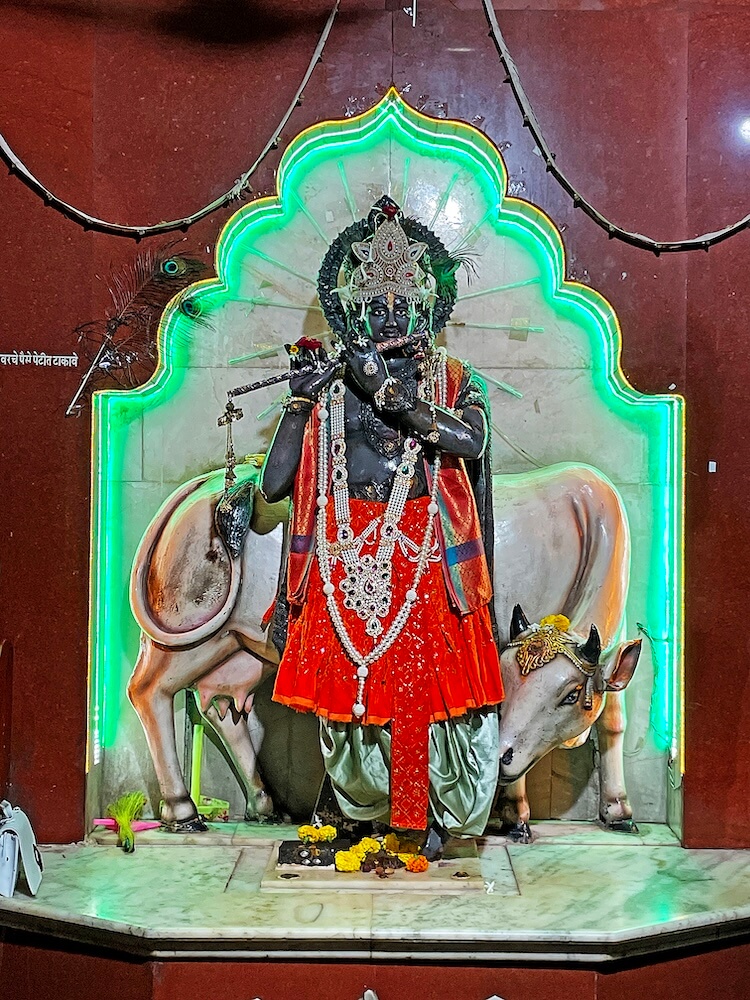
Shop Photo FramesShri Chakradhar Swami, a great reformist saint of Maharashtra and the founder of the Mahanubhava sect, who is considered an incarnation of Shri Krishna, frequently traveled through the Vidarbha region. Even today, there is a large number of followers of the Mahanubhava sect in this area. The temple of Shri Krishna, the presiding deity of this Mahanubhava sect, is situated in Akot. This is considered a ‘Mandlik Sthan’ (regional sacred site) of the Mahanubhava sect. A beautiful idol of Lord Shri Krishna, carved out of black stone, is enshrined here. Along with the followers of the Mahanubhava sect, people from various other sects in the region visit the temple in large numbers for darshan.
Maharashtra is the land of work for Shri Chakradhar Swami, the founder of the Mahanubhava sect, who was an incarnation of Shri Krishna. He had instructed his followers to ‘be Maharashtrian’ and also bestowed the status of a religious language upon the Marathi language. He traveled and resided in various places across Maharashtra. The places touched by his lotus feet are as sacred as pilgrimage sites for the Mahanubhavas. Such places are called ‘Charankit Sthan’ (places marked by his feet) in the Mahanubhava sect. Places that are traditionally associated with the five supreme deities (Panch-Parameshwar) of the Mahanubhava sect, or are located near Charankit Sthan, are called ‘Mandlik Sthan’. The Shri Krishna Temple in Akot is one such place.
The period of Sarvagya Chakradhar Swami dates back to the twelfth century. He witnessed the reigns of Yadava kings Kanharadeva, Mahadeva, Anandadeva, and Ramadeva of Devagiri. It is the belief of the sect that he was an incarnation of Shri Krishna. After he departed for the ‘Uttarapanthe Prayan’ (journey to the north), his chief disciple Nagadevacharya described the various events (Leelas) of his life, as well as the philosophy and knowledge he expounded, which were recorded by Mhaimbhat. Along with this, Mhaimbhat visited all the places where the Swami had been and compiled his Leelas. This work continued until the middle of the twelfth century of the Shaka era. From this, the first biographical work in Marathi, ‘Leelacharitra’, was created. According to this text, Chakradhar was born in Bharuch, Gujarat.
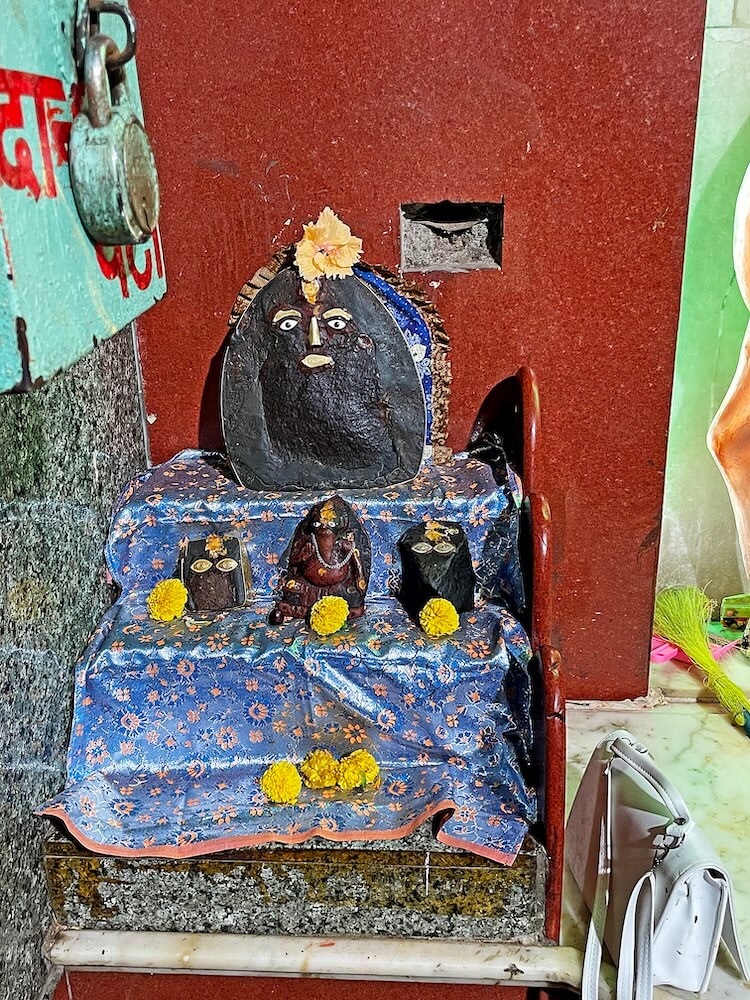
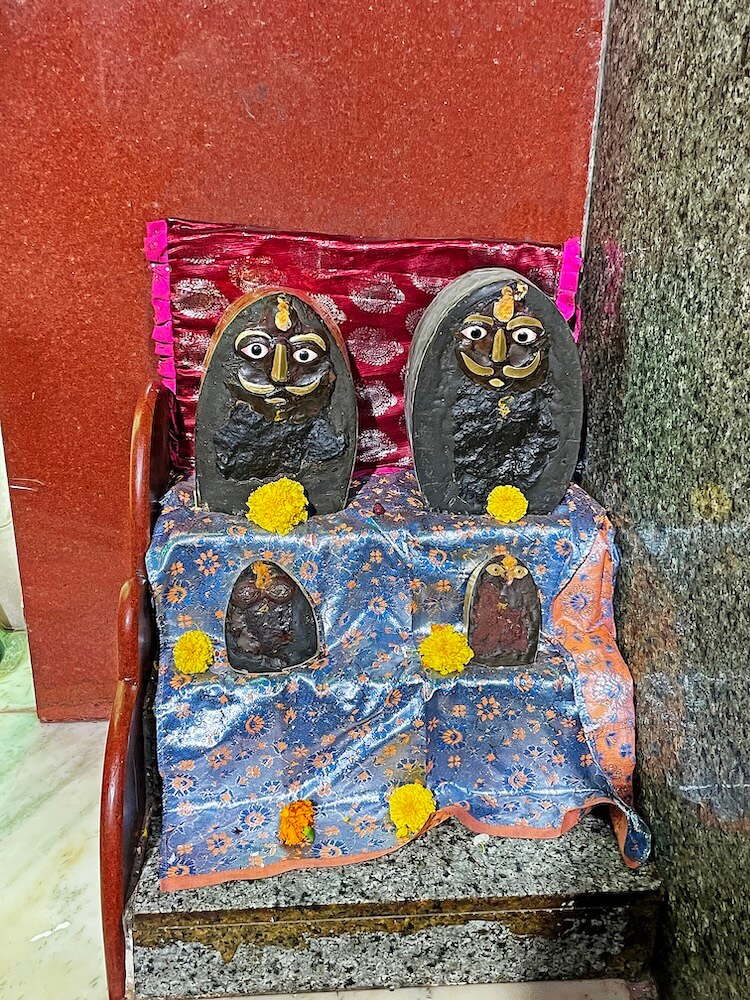
There are records of him visiting Vidarbha many times during his travels in Maharashtra. In the 174th Leela of the first part of ‘Leelacharitra’, it is mentioned that ‘he traveled from there to Manglaur’. In the 87th and 146th Leelas of the first part, it is mentioned that he stayed in Alegaon. Manglaur, which is today’s Mangrul, is in Barshitakli taluka, and Alegaon is in Balapur taluka. Both these places are within a distance of 125 km from Akot. According to the traditions of the Mahanubhava sect, a ‘Sambandhi’ stone—a stone sanctified by the touch of any of the five supreme deities, namely Shri Krishna, Dattatreya, Changdev Raul, Govindaprabhu, and Chakradhar Swami—or an idol carved from such a stone, is installed. According to the sect’s belief, the object touched by the divine incarnation possesses both the grace and the illusory power of the Lord. Such a stone or an idol made from it is referred to as ‘Vishesh’ (special). The Krishna idol in the Akot temple is ‘Vishesh’ in this way. This idol was installed in the temple on the auspicious occasion of Gudi Padwa on 17 March 1991. ‘Vishesh’ (sacred stones) from Mahur, Govardhan Mountain, Riddhapur, and Domegram were used while carving this idol. Therefore, according to Mahanubhava principles, this idol is considered ‘Namaskari’, meaning worthy of worship. The idol was crafted by the ascetic Mahatma Panditraj Dada Karanjekar of the Mahanubhava Ashram in Rajapeth.
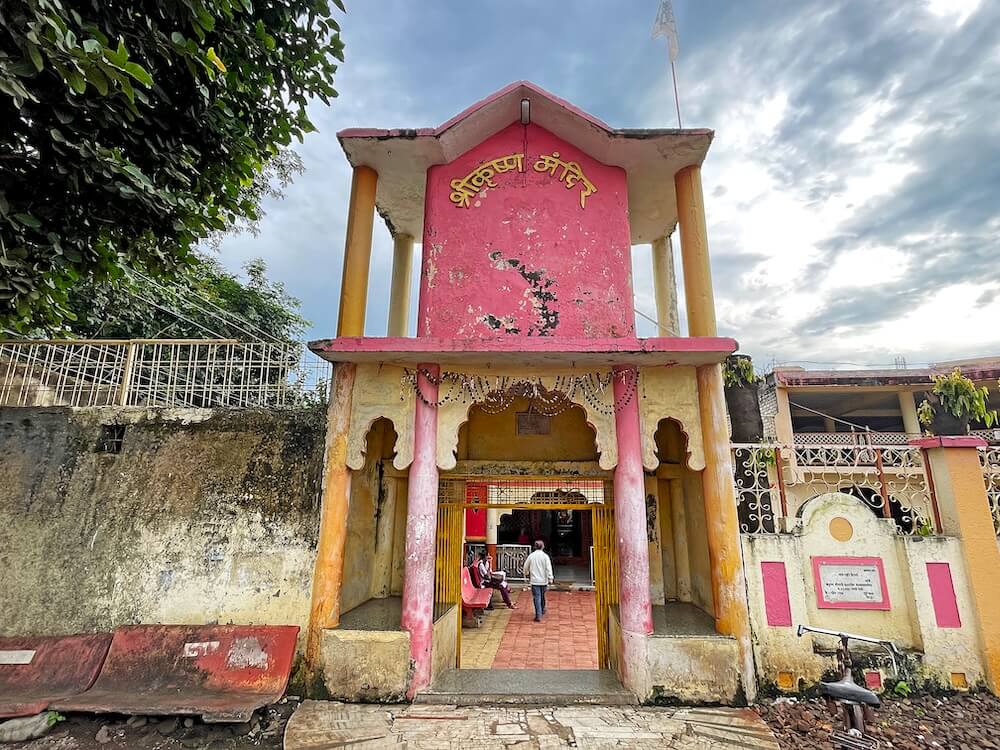
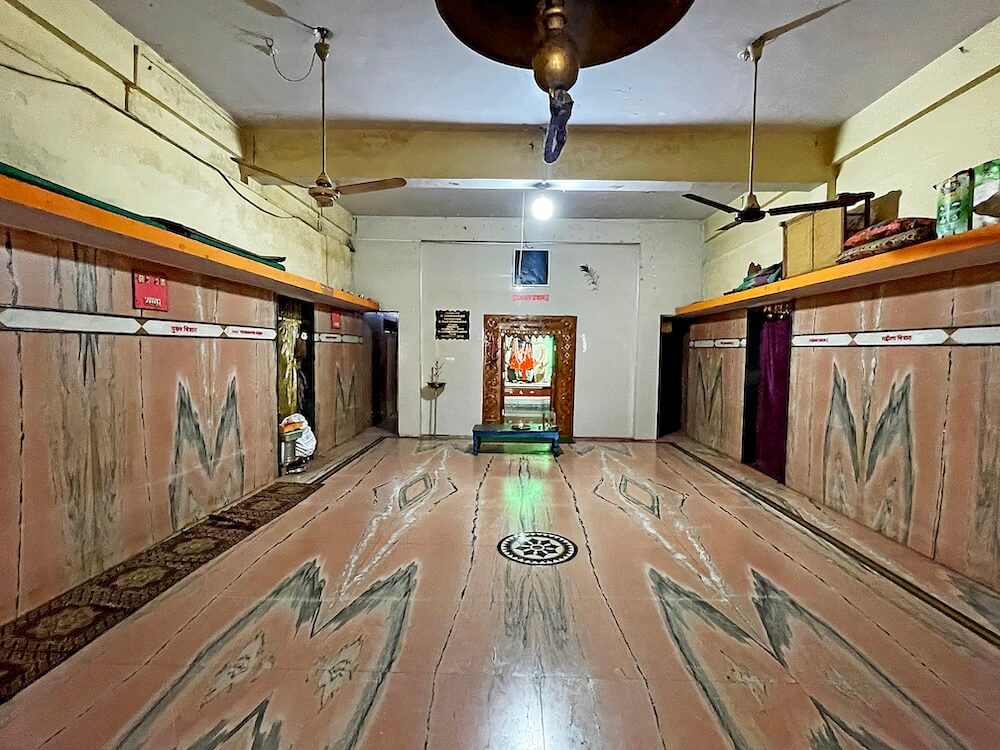
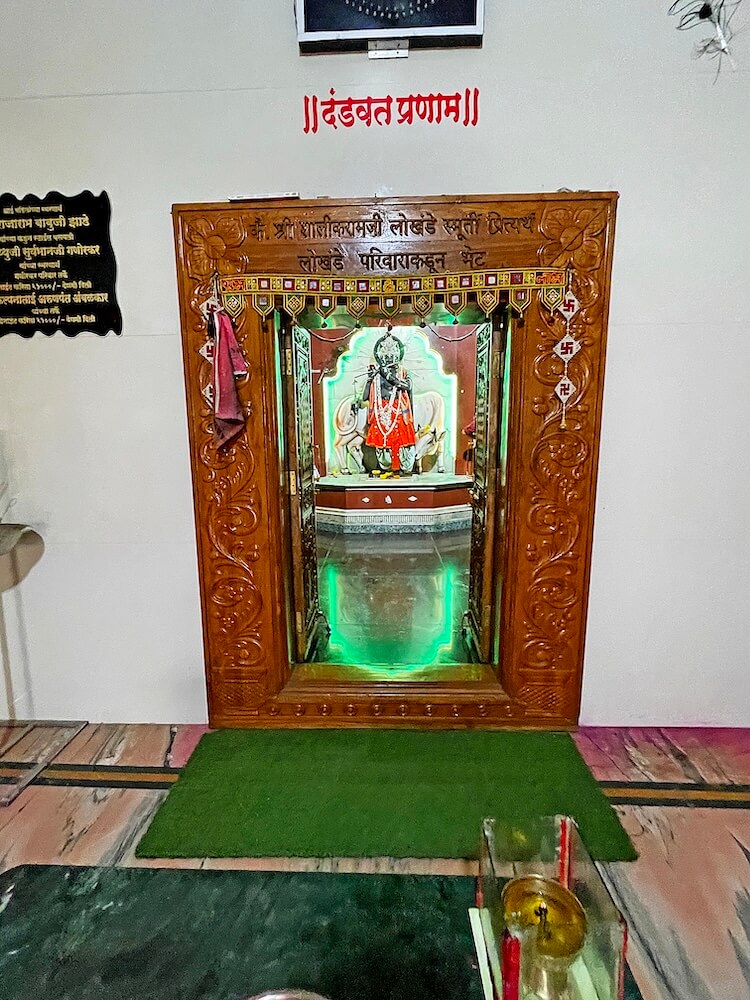
The temple is located in the central part of Akot city. There are two entrances in the perimeter wall surrounding the temple. The main entrance is double-storied. There are stone benches on both sides of this entrance. One enters the temple courtyard through this gate. There are seats for devotees in this courtyard, which is paved with paver blocks. The temple structure consists of a Sabha Mandap (assembly hall), Antaral (vestibule), and Garbhagriha (sanctum sanctorum). One enters the semi-open Sabha Mandap through an arched entrance. The Sabha Mandap has marble flooring throughout. From here, there is an entrance to the Antaral. The wooden door frame of the Antaral is intricately carved. Like the Antaral, the entrance to the Garbhagriha is adorned with carvings of auspicious pots (Kalash) and foliage. In the Garbhagriha, the idol of Shri Krishna playing the flute is placed on a high marble pedestal. The idol has a beautiful crown on its head and a cow behind it. Additionally, there are ‘Vishesh’ stones on both sides of the Krishna idol in the Garbhagriha.
Festivals like Krishna Janmashtami, Datta Jayanti, as well as Chakradhar Jayanti on the second day of the bright fortnight of Bhadrapada, and Govindaprabhu Jayanti on the thirteenth day of the bright fortnight of Bhadrapada are celebrated with great enthusiasm in this temple. During these times, a large number of devotees are present in the temple.
This sacred temple stands as a testament to deep spiritual devotion, ancient architectural grandeur, and rich local cultural traditions.
The sanctum sanctorum houses the divine idol consecrated according to ancient Vedic traditions, surrounded by serene courtyards and traditional temple architecture.
Navratri, Maha Shivratri, Annual Temple Jatra & Deepotsav
Compare and book flights, secure top-rated local hotels near the temple, hire reliable guides, and rent cars instantly.
Extend your pilgrimage by visiting other highly sacred temples located nearby.


Add ₹999 more to unlock FREE SHIPPING!
Your sacred cart is currently empty.
Shop Photo FramesFill in your delivery details below to place your order.
Add comment