
Add ₹999 more to unlock FREE SHIPPING!
Your sacred cart is currently empty.
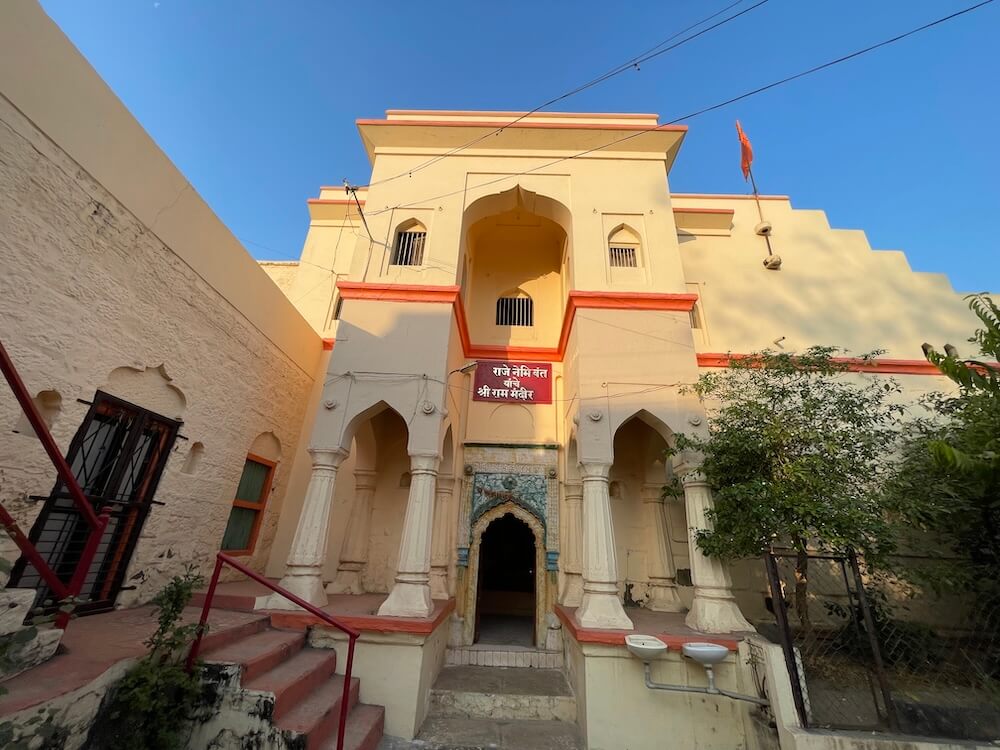
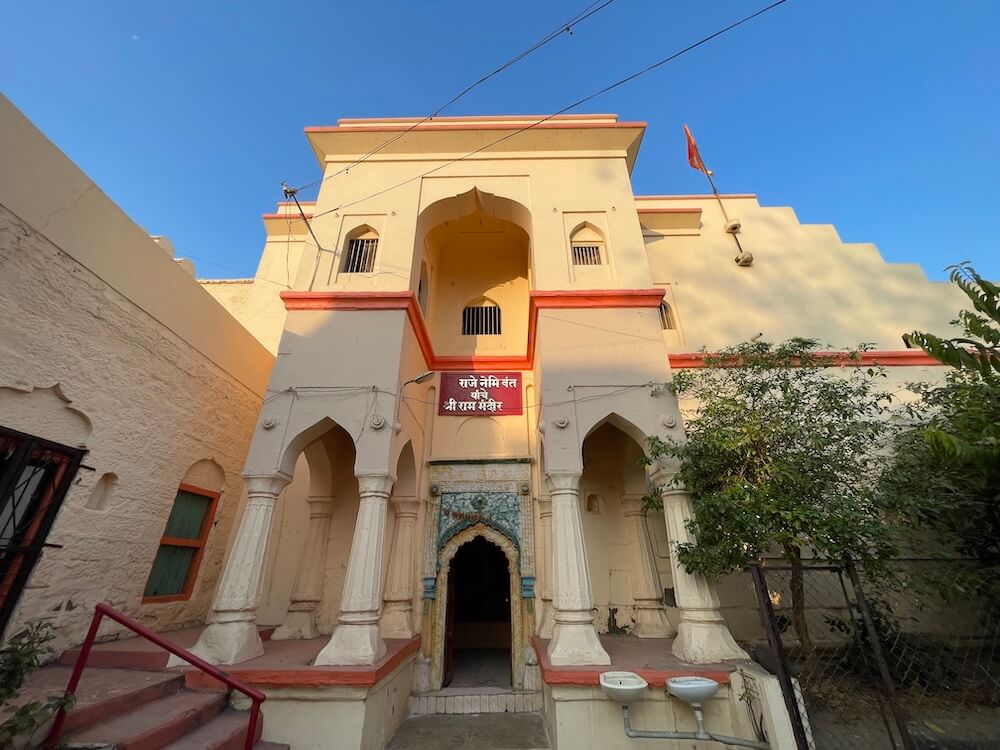
Shop Photo FramesRaje Nemivant’s Shri Ram Temple is famous in Malkapur, which is renowned as the gateway to Vidarbha. Located near the mansion of Raje Nemivant, this ancient temple houses the idols of Shri Ram, Lakshman, and Sita, along with the Shri Ram Yantra, Shri Yantra, and the holy sandals (Padukas) of Adi Shankaracharya. The idols of the Ram Panchayat here are replicas of those in the temple at Chitrakoot. There is an inscription in Marathi and Sanskrit on the lintel of the sanctum sanctorum’s entrance. The temple is built entirely of stone, and traditional worship rituals are still performed here today. Hundreds of devotees visit during the festivals of Ram Navami and Hanuman Jayanti.
Raje Nemivant, who built this temple, was the Jagirdar of Malkapur village during the Nizam’s era. He had two mansions in Malkapur; one was used as a residence, while the other was used for judicial purposes. The patriarch of the Raje Nemivant family, Harbhaji Govind Govardhan, was originally a resident of Dharangaon in Malkapur taluka. Harbhaji, who initially worked as a priest, earned fame and status through his own merit by acquiring the positions of Patil and Kulkarni. Being religious by nature, Harbhaji built a Dharamshala (pilgrims’ rest house) in Malkapur in the year 1800 and established the Shri Ram Temple within it. Harbhaji received a Jagir from the Nizam consisting of the villages of Devdhabe, Makodi, Savargaon, Wardha, and Kapardipur. He dedicated the entire income from the village of Kapardipur to this temple, a practice that continued until 1948. Even after India’s independence and the abolition of the Jagir system, the government continues to provide an annual grant of 1,640 rupees to this temple. As noted in the ‘Central Provinces and Berar District Gazetteers – Buldana District, Volume A’, the management of the temple still remains with the Nemivant family.
There is an inscription on the lintel of the main sanctum sanctorum’s entrance. Dr. V. B. Kolte, former Vice-Chancellor of Nagpur University and a renowned historian, has deciphered this inscription. The eight-line inscription, measuring 28 cm in height and 26 cm in width, has its first seven lines in Marathi and the final line in a Sanskrit shloka. It mentions that Harbhaji Govind Govardhan built the Ram temple and Dharamshala in Bhat Ali at the auspicious location of Malkapur in the Varad province so that people could have darshan and attain merit. The inscription provides brief information about Harbhaji.
Harbhaji Govind Govardhan was a practitioner of astrology (Joshipan). He held the hereditary position of Joshi for five villages: Dharangaon, Kund, Lehe, Hingne, and Tandulwadi. Additionally, he acquired the position of Pandey for three villages: Panher, Bahapur, and Anvarabad. He also obtained the Pandey position for Meminabad in the Chandur pargana of the same province. The inscription notes that he purchased land in Malkapur and completed the construction of the Shri Ram Temple and Dharamshala on Saturday, the tenth day of the bright fortnight of Magh, in the Shake year 1722, during the Raudra Samvatsara. The inscription contains occasional Sanskrit words like ‘Krutam’ and ‘Panch’. The government gazetteer also notes that the Marathi language in this inscription shows the influence of the Persian language, as evidenced by the use of words such as Pargane, Majkur, Majre, Kharidi, Mauje, Sakri, Mukadmi, and Subhe.
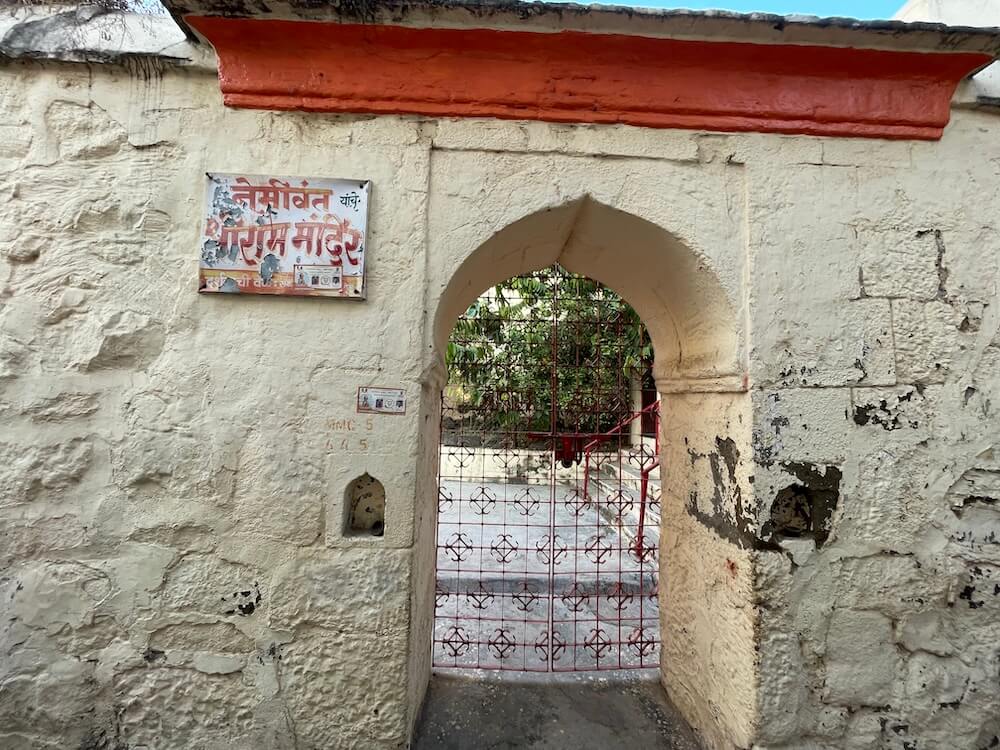
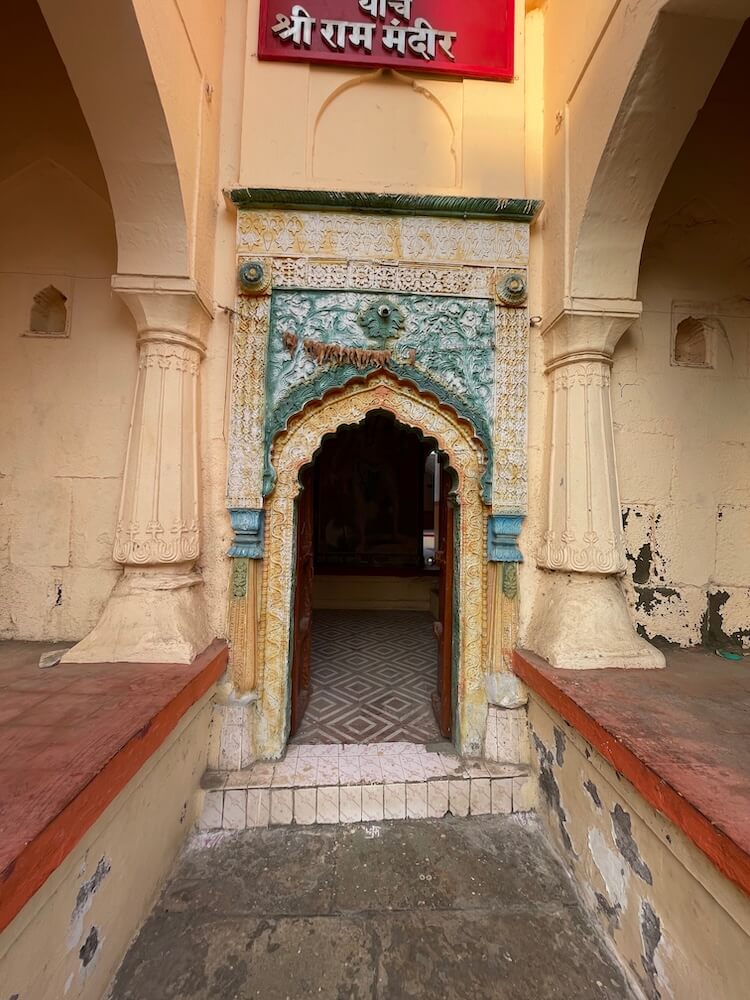
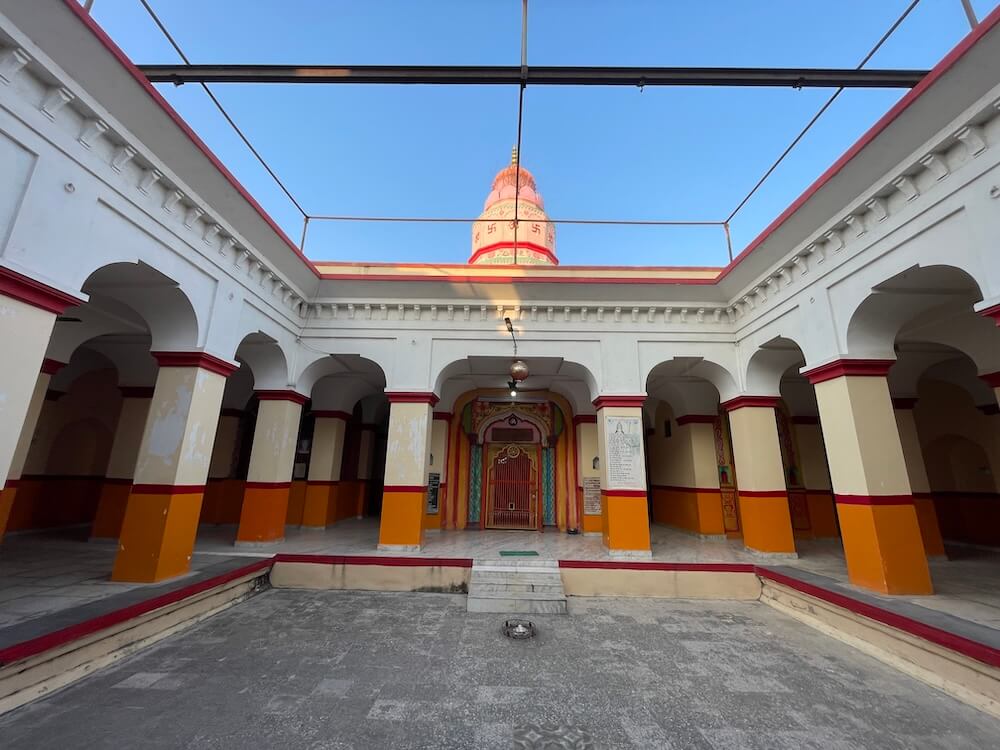
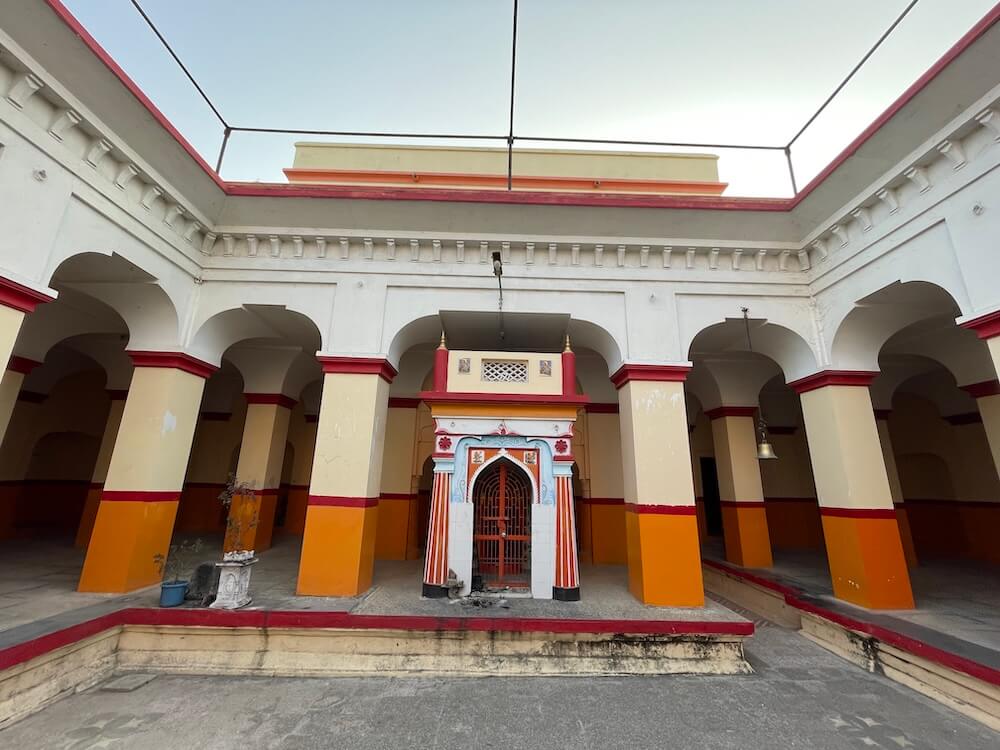
The temple is located in a densely populated area of the Durganagar locality in the city. Entering through the temple gate, one reaches a small courtyard. Directly in front is the main entrance of the temple, which features an arched gateway with beautiful carvings. Upon entering, one sees wide stone corridors. Here, in a stone dome supported by four pillars, is an idol of Das Maruti. This 1.23-meter-tall idol, carved from black stone, is coated with vermilion. The idol, in the Southern style with visible teeth, wears a tilak on its forehead and a golden crown. With both hands folded, the idol appears to be welcoming the devotees.
There are Padukas in front of the entrance to the sanctum sanctorum of Shri Ram. The inscription is on the lintel of the entrance. Inside the sanctum, on a large stone pedestal, are idols of Shri Ram, Lakshman, and Sita carved from black stone. Shri Ram and Lakshman are dressed in traditional Maharashtrian attire—white dhotis, shirts, and red stoles—with bows and arrows on their shoulders. They wear golden crowns. Mother Sita is draped in a nine-yard saree, wearing a nose ring (nath) and a mangalsutra. Hanuman is positioned near Shri Ram’s left foot. A Ram Yantra is installed in front of the idol of Shri Ram. The niches in the sanctum contain idols of various deities.
Near the main sanctum, in another room, is the idol of Rajrajeshwari Shri Lalita Mahatripurasundari Lalitambika Bhagwati Lakshmi. In front of this idol is a Shri Yantra, installed according to Tantra Shastra. In a nearby room, the Padukas of Adi Shankaracharya of the Sringeri Peeth are kept for darshan. Srinivasrao Nemivant of the Nemivant family was a virtuous, gifted, and learned practitioner of mantra vidya. He was a gurubhai (fellow disciple) of Shankaracharya Swami Chandrashekhar Saraswati of the Sringeri Peeth. It is said that Shankaracharya Swami Chandrashekhar Saraswati visited this temple and performed an abhishek on the Padukas of Adi Shankaracharya. This room also contains portraits of the disciples of Adi Shankaracharya and Srinivasrao Nemivant. An idol of Srinivasrao Nemivant is also present here. The main sanctum is topped by a beautiful shikhara.
The temple is open for darshan from 7 to 11 in the morning and 5 to 7 in the evening. Entry into the main sanctum is permitted only while wearing traditional silk garments (sovale). Various festivals such as Ram Navami, Hanuman Jayanti, and Deepavali are celebrated here. In the past, renowned singers like Bhimsen Joshi, Prabha Atre, Ajit Kadkade, and Hridaynath Mangeshkar have performed their art here during these festivals.
This sacred temple stands as a testament to deep spiritual devotion, ancient architectural grandeur, and rich local cultural traditions.
The sanctum sanctorum houses the divine idol consecrated according to ancient Vedic traditions, surrounded by serene courtyards and traditional temple architecture.
Navratri, Maha Shivratri, Annual Temple Jatra & Deepotsav
Compare and book flights, secure top-rated local hotels near the temple, hire reliable guides, and rent cars instantly.
Extend your pilgrimage by visiting other highly sacred temples located nearby.


Add ₹999 more to unlock FREE SHIPPING!
Your sacred cart is currently empty.
Shop Photo FramesFill in your delivery details below to place your order.
Add comment