
Add ₹999 more to unlock FREE SHIPPING!
Your sacred cart is currently empty.
Shop Photo FramesThe region of Dongarshelki is situated in the Udgir taluka of Latur district. The Shri Samarth Dhondu Tatya Samadhi Mandir located here is considered an important religious and tourist destination in this area. Through this temple, various initiatives for humanitarian service, spiritual growth, and rural development are implemented. The government has recognized this site as a ‘B’ grade tourist destination. This region is known among devotees as ‘Prati-Pandharpur’. It is a place of faith for thousands of devotees from the entire Marathwada region as well as the bordering areas of Karnataka and Telangana.
Latur district possesses an ancient history. Traces of Stone Age human civilization are found in the valleys of the Manjara and Terna rivers. In the seventh and eighth centuries AD, this entire region was under the suzerainty of the Badami Chalukya dynasty. Many ancient temples from the Chalukya period and the subsequent Yadava period of Devgiri can still be seen in this area today. The Bhuikot Fort of Udgir and the ancient rock-cut caves at Kharosa bear witness to that historical era.
This region is deeply influenced by the Warkari saint tradition. Shri Samarth Dhondu Tatya Maharaj was a saint of this very tradition. His Sanjeevan Samadhi at Dongarshelki is more than ninety years old. Dhondu Tatya Maharaj was born into a Warkari family. His mother’s name was Gangabai. In the year १८४६, due to family difficulties, his maternal uncle Bapu Rao Maharaj Mali Patil brought Dhondu Tatya and his mother to the village of Viral in Jalkot taluka. Since the uncle had no children of his own, he adopted Dhondu Tatya. Tatya served his mother, uncle, and aunt with complete devotion. Upon entering youth, he resolved to remain a lifelong celibate without falling into the attachments of worldly life. For physical and mental discipline, he practiced regular exercise, yoga, and Surya Namaskar daily. He would regularly chant the Gayatri Mantra twelve hundred times every day. Due to this conduct, he was compared to Bhishmacharya.
In his spiritual journey, he received guidance from great saints. His meeting with Saint Sakharam Maharaj accelerated his spiritual development. He began living on a hill near Udgir, chanting the name of Vitthal. It was there that he attained the realization of the Divine. Following a divine vision, he worked for the enlightenment of the people. He removed superstitions and evil practices from society and showed people the path of devotion and knowledge. He adopted the vow of serving the distressed and the needy throughout his life. For the welfare of the people, he sometimes performed miracles. Once, there was a severe drought in the area. People and cattle were suffering due to a lack of water. At that time, the Maharaj stepped on a spot and asked for a well to be dug there. People dug the well. As the well yielded abundant water, the thirst of the entire area was quenched. When the Maharaj practiced penance on the mountain, wild animals would sit peacefully around him. The illnesses of many devotees who came to seek the Maharaj’s blessings were cured simply by his grace.
A legend is told about the Ekadashi festival at Dongarshelki. Samarth Dhondu Tatya Maharaj, a supreme devotee of Vitthal, used to go on the Pandharpur Wari every year. In his old age, it became difficult for the Maharaj to undertake this pilgrimage. Pandurang could not bear the suffering of his devotee. He appeared to the Maharaj in a dream and said, “Do not come to Pandhari henceforth. Every Ekadashi, we ourselves will come to Dongarshelki.” Since then, the Ekadashi festival began to be celebrated at Dongarshelki every Ekadashi.
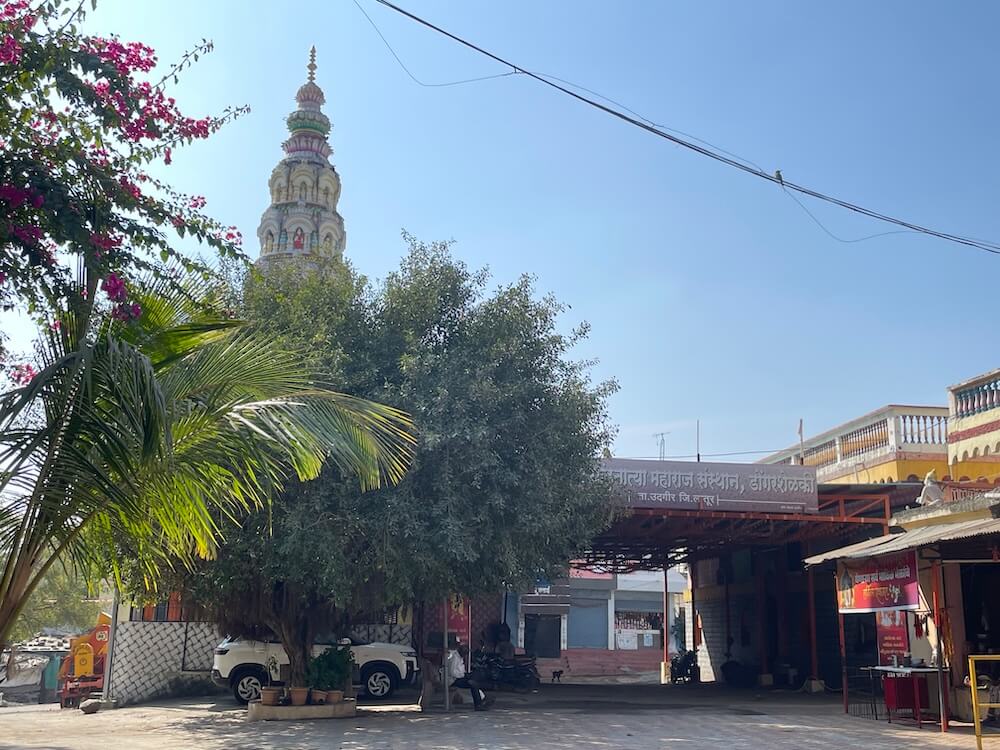
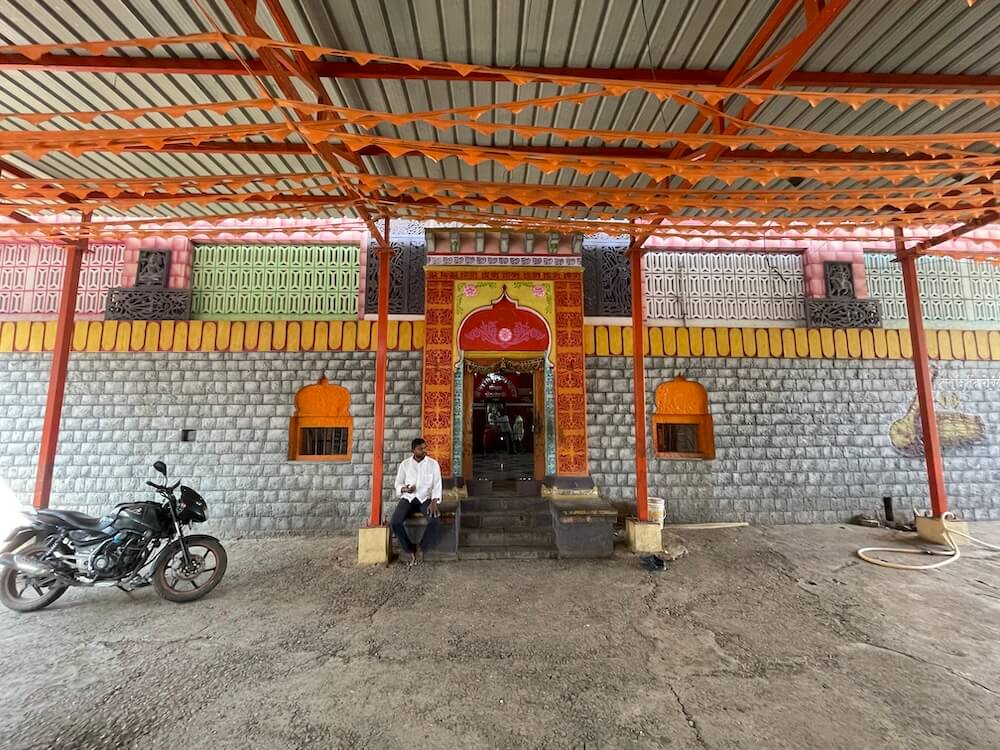
There is a welcome arch for the temple on the road leading from the highway to Dongarshelki village. In the canopy on the pillars of the arch, there is an idol of Samarth Dhondu Tatya. On both sides of it, sculptures of Saint Tukaram, Samarth Ramdas Swami, and other saints are carved. A short distance from here is the Samadhi Mandir shrine. There is a parking lot in front of the temple, and there are shops selling worship materials.
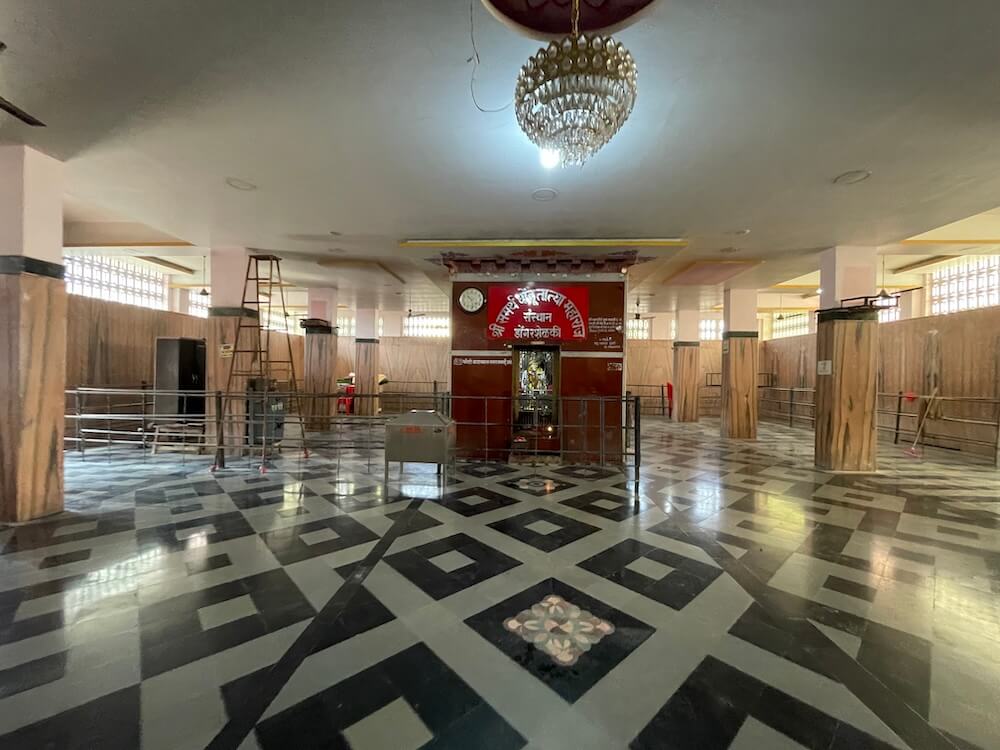
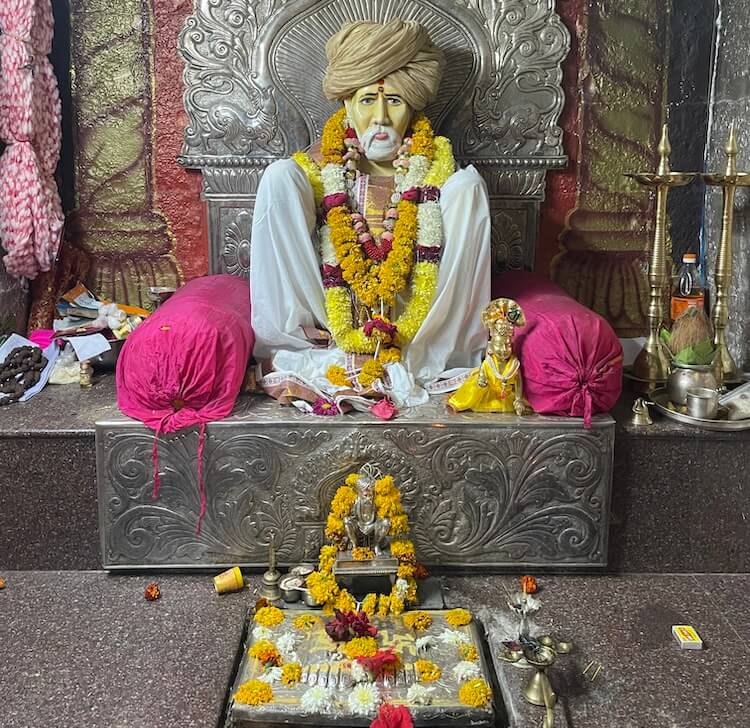
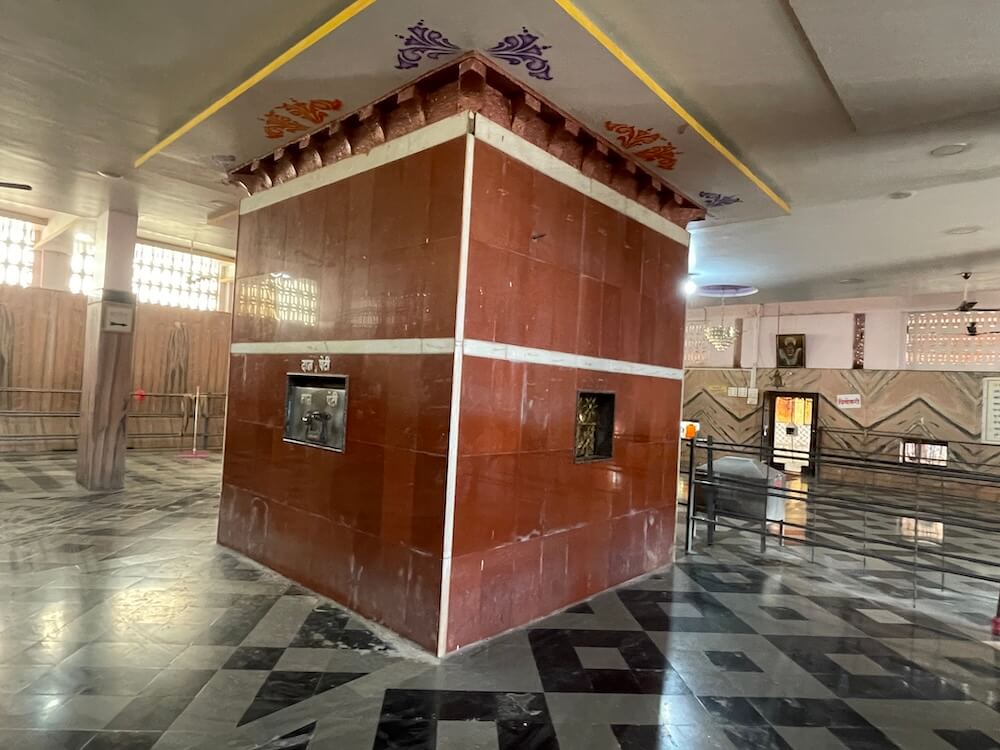
The structure of the Samadhi Mandir consists of a Sabha Mandap (assembly hall) and a Garbhagriha (sanctum sanctorum). The entrance to the Sabha Mandap, which is at a higher level than the courtyard, has three steps, and there are railings on both sides of the steps. The entrance has an ornate door frame and an arched toran above. Hundreds of devotees can sit in the Sabha Mandap at one time. The enclosed Sabha Mandap has walls on the outer sides and two rows of square pillars in the middle. The entrance to the Garbhagriha is elevated and has two steps. Inside the Garbhagriha is the pedestal of the Maharaj’s Samadhi. On the pedestal, there is a meditative idol of Dhondu Maharaj sitting in Sahajasana. The Maharaj, dressed in garments, wears a silk turban on his head. The pedestal of the Samadhi and the Prabhaval (halo) behind it are made of silver. It is intricately carved. There is a circumambulation path around the outer side of the Garbhagriha. On the roof of the Garbhagriha, there is a four-tiered circular spire that tapers towards the top.
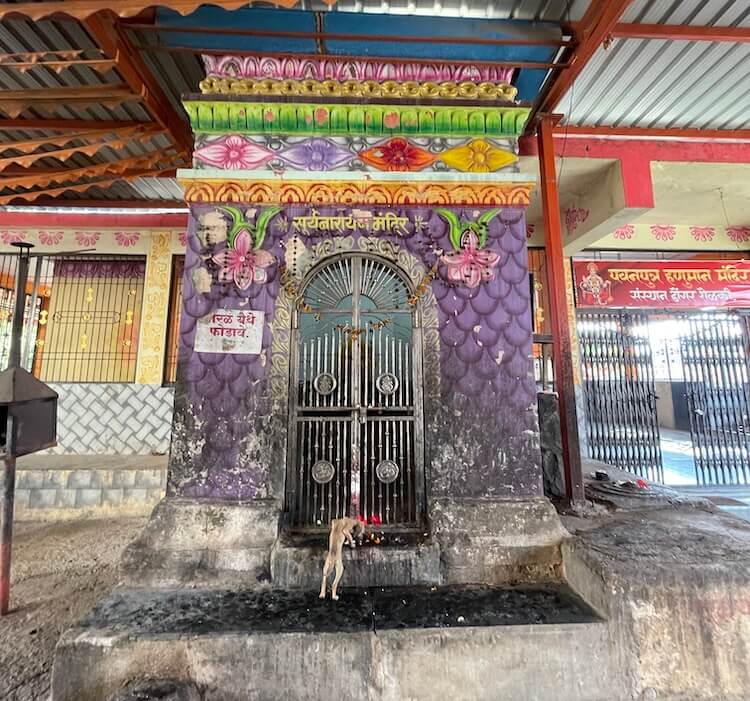
In the courtyard in front of the Samadhi Mandir is the Suryanarayan Mandir. In this temple, there is an idol of the Sun God mounted on a chariot with seven horses on a Vajra-peetha. Behind the Samadhi Mandir is the Hanuman Mandir. This temple is structured with a semi-open Sabha Mandap and a Garbhagriha in the center. Inside the Garbhagriha, a vermilion-smeared stone idol of Maruti is installed on a Vajra-peetha. The roof of the Garbhagriha has a four-tiered spire, and each tier of the spire has eight niches. Sculptures of deities are carved within them. In the courtyard, there are shrines for Mari-aai and Pochamma Devi. In the courtyard in front of the temple, there is a Mangal Karyalaya (wedding hall) building. On the welcome arch of the Mangal Karyalaya, there are elephant sculptures on both sides and an idol of Ganpati in the center. Food is served in the Annachhatra (free kitchen) from १० AM to ५ PM.
Ashadhi Ekadashi is the annual festival celebrated here. During this time, approximately two to two and a half lakh devotees arrive to seek the blessings of the Samadhi. Pilgrimage processions on foot from various villages reach Dongarshelki. The entire premises become filled with saffron flags and the chanting of “Jai Hari Vitthal”. On the day of the fair, the first official Mahapuja is performed at 5 o’clock in the morning by the local administrative head, the Deputy Collector, or the Tehsildar. During this Mahapuja, a message of social equality is conveyed by bestowing the honor of performing the puja upon a common couple from the Warkari sect. Special arrangements are made by the Udgir depot of the State Road Transport Corporation for the travel of pilgrims. Along with the temple administration, local social workers provide free snacks, tea, and drinking water for the pilgrims. Special programs of Bhajan and Kirtan are organized in the temple on Hanuman Jayanti, Sharadiya Navratri, Dussehra, Diwali, the month of Shravan, Kartiki Ekadashi, as well as on every full moon and Ekadashi of each month. Devotees can visit the Samadhi of Samarth Dhondu Tatya in this temple daily from 5:30 in the morning until 9 o’clock at night.
This sacred temple stands as a testament to deep spiritual devotion, ancient architectural grandeur, and rich local cultural traditions.
The sanctum sanctorum houses the divine idol consecrated according to ancient Vedic traditions, surrounded by serene courtyards and traditional temple architecture.
Navratri, Maha Shivratri, Annual Temple Jatra & Deepotsav
Compare and book flights, secure top-rated local hotels near the temple, hire reliable guides, and rent cars instantly.
Extend your pilgrimage by visiting other highly sacred temples located nearby.


Add ₹999 more to unlock FREE SHIPPING!
Your sacred cart is currently empty.
Shop Photo FramesFill in your delivery details below to place your order.
Add comment