
Add ₹999 more to unlock FREE SHIPPING!
Your sacred cart is currently empty.
Shop Photo FramesThe village of Shirkoli is situated in the Sahyadri mountain ranges along the banks of the Ambi River in the Velhe (Rajgad) taluka of Pune district. This village is known for its historical heritage. In Shirkoli village stands the historic temple of Shirkai Devi, a place of deep reverence for devotees. This shrine is considered the family deity (Kuldaivat) of Baji Pasalkar, the first Sarsenapati (Commander-in-Chief) of Swarajya, and his eighty-four Mavlas from the Mose Valley. According to historians and scholars, this is the original seat (Moolpith) of Shirkai Devi, who is also the village deity of Tardal in Kolhapur district. The temple is surrounded by the Sahyadri mountain landscape, with the waters of the Panshet Dam, also known as the Tanaji Sagar Reservoir, spread nearby. This site is nestled in the vicinity of the Rajgad, Torna, and Raigad forts.
The Shirkai Devi Temple possesses a rich historical background and legacy. It held special significance during the era of Chhatrapati Shivaji Maharaj. According to historical evidence, when Rajmata Jijau and Chhatrapati Shivaji Maharaj resided at Rajgad, the first capital of Swarajya, they would visit this place for darshan. Recognizing the importance of this temple, the expenses for its daily oil lamps and regular worship were provided from Rajgad during that period. In later times, these expenses were covered by the Chhatrapati’s throne in Satara. Around the year १६५२, Chhatrapati Shivaji Maharaj renovated this temple and granted permanent land (Inam) for the goddess’s festivals and rituals. Subsequently, renovation work was also carried out during the reigns of Chhatrapati Sambhaji Maharaj, Maharani Yesubai, and Chhatrapati Shahu Maharaj.
Around the year १९५७, the construction of the Panshet Dam, or Tanaji Sagar Reservoir, began on the Ambi River. The original Shiv-era village of Shirkoli and the Shirkai Devi temple were submerged in the dam’s catchment area. Even today, this original temple remains underwater for approximately eight to ten months of the year. Only during the summer months, when the water level of the dam recedes, does this architectural marvel, built of stone and lime, emerge from the reservoir. At such times, people come to catch a glimpse of the stone sanctum, the floral carvings on the ceiling, and the spire (kalash). After the original temple was submerged, it was decided in १९९३, with the cooperation of the government and local villagers, to relocate the temple above the flood level to ensure that the daily worship of the goddess would not be interrupted. Accordingly, the original eight-armed idol from the old temple was removed and re-consecrated in the newly constructed temple on the banks of the dam.
There are many folk tales and legends regarding the Shirkai Devi of Shirkoli. One such legend is related to the battle against the Koli King of Konkan. In earlier times, the local Mavlas of the Mose Valley were troubled by the invasions of the Koli King. To liberate the Mose Valley from this crisis, the Mavlas gathered and held a secret meeting under the leadership of Sarsenapati Baji Pasalkar. Before launching the campaign against the Koli King, all the Mavlas prayed to Shirkai Devi and sought her divine approval (Kaul). The Goddess gave them a positive sign, which filled the Mavlas with great enthusiasm. The Mavlas invited the Koli King to a ceremony at Vilalpur Mal in Shirkoli. As planned, the villagers of Shirkoli—the Pasalkars, Padwals, and Salekars—posed as wedding guests, and a pavilion (shamiana) was erected on the Vilalpur Mal. When the Koli King arrived at Shirkoli with his limited army and bodyguards, the Mavlas—Kedalkar, Bamugade, Kadu, and Nivangude—attacked him on the way. In this battle, they were supported by Mavlas such as Mankar, Taware, Narawade, Lokre, Sangde, and Harekar. The Koli King was defeated in this attack, and his army was destroyed. This victory liberated the Mose Valley from the tyranny of the Koli King. Because this campaign was successful, the Goddess came to be known as Shirkai Devi, who fulfills the vows (Navsala Pavnari) of her devotees. Since then, the annual fair (Yatra) of the Goddess has been celebrated.
Regarding the history of the temple’s priesthood, a legend associated with the Padwal family is told. In historical times, a pregnant Shirke woman gave birth to a boy behind some snake gourd (padwal) vines in the forest. Because he was born behind the padwal vines, the boy was given the surname Padwal. Since then, the honor of priesthood has remained with the Padwal family. This Goddess is the family deity of families in this region, including the Padwal, Pasalkar, Bhosale, Salekar, Bamugade, Nivangude, Kadu, Kumbhar, Kadam, Mankar, Rajeshirke, Borge, Heladkar, Mane, More, Taware, Lokre, and Narawade families. This same Goddess is also worshipped as the guardian deity (Gadswamini) on Raigad Fort. According to historical references, the original seat of the guardian deity of Raigad Fort is also believed to be linked to this Shirkai Devi.
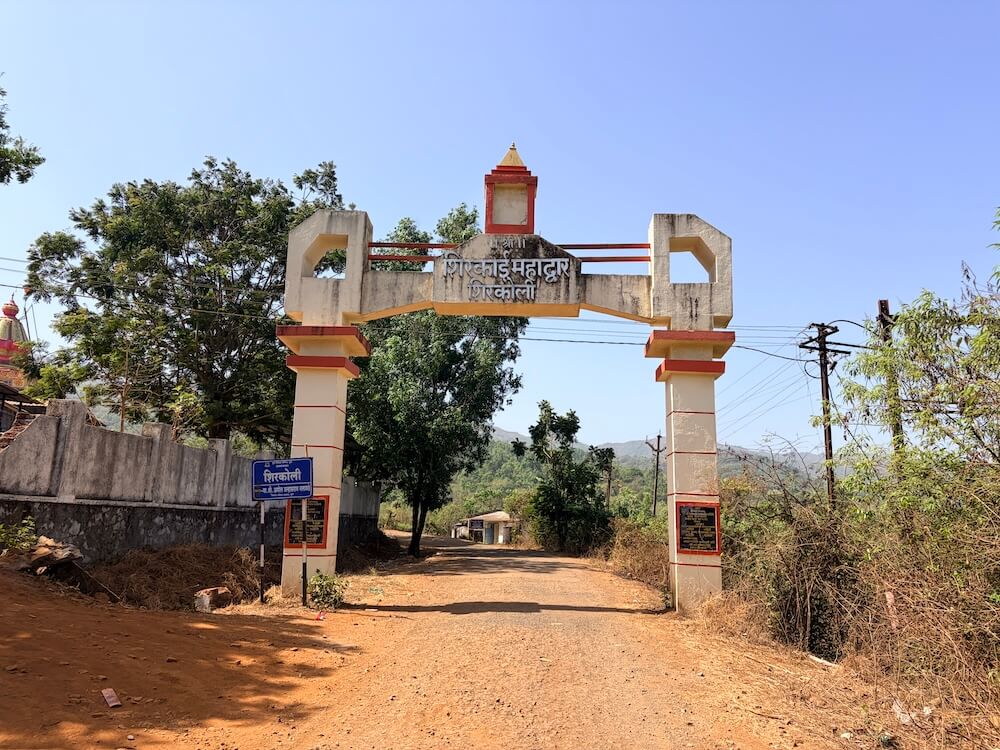
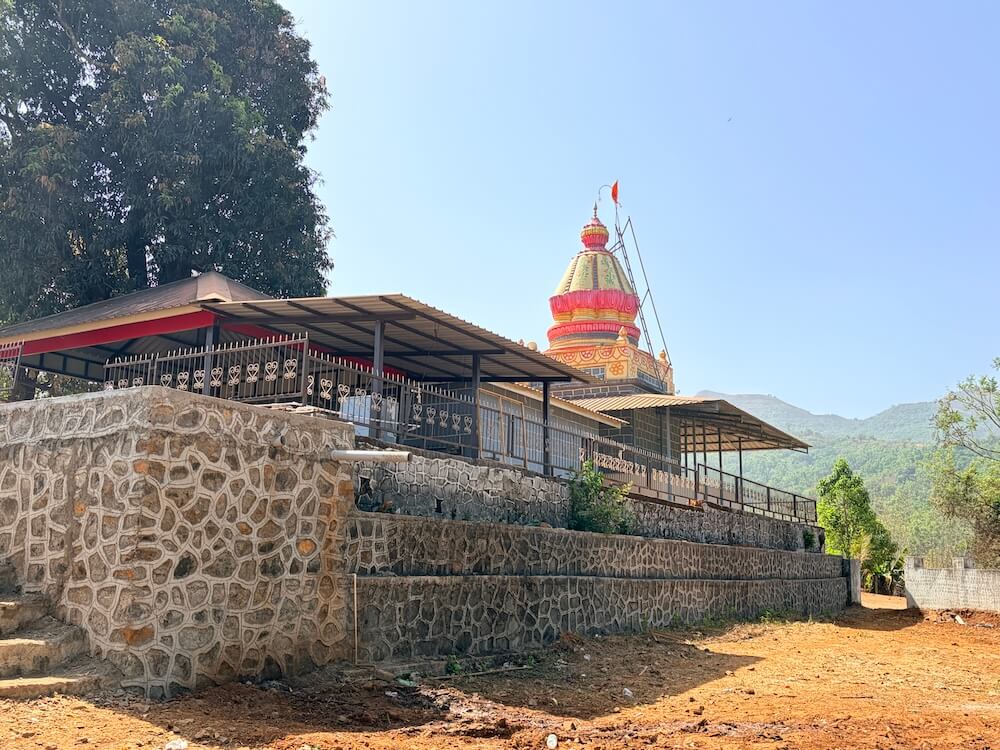
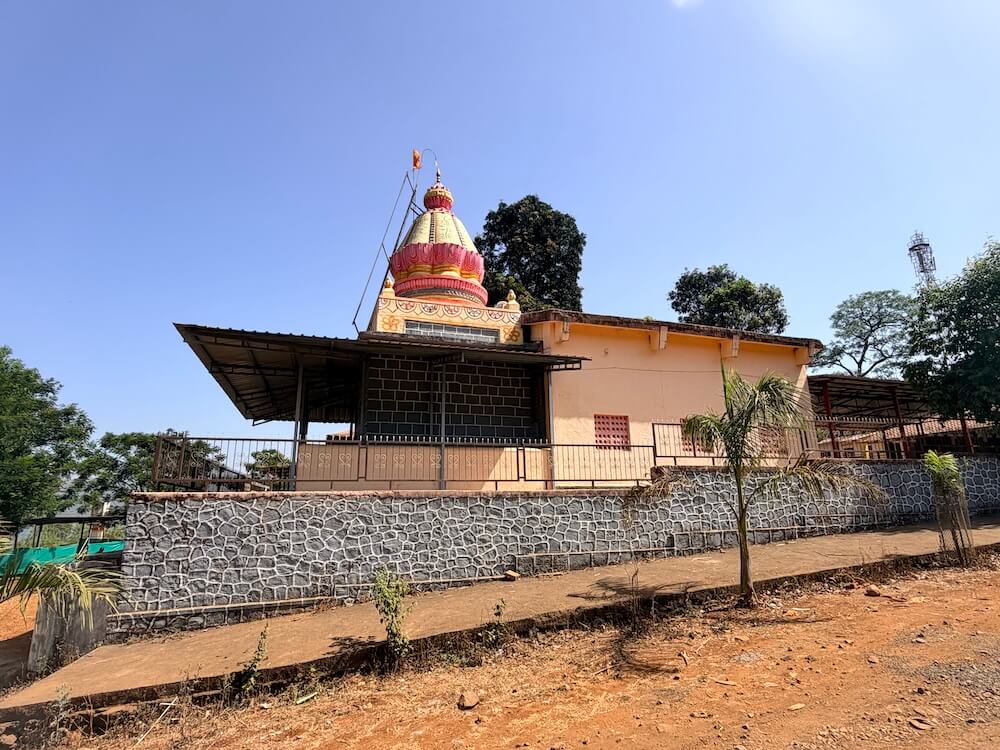
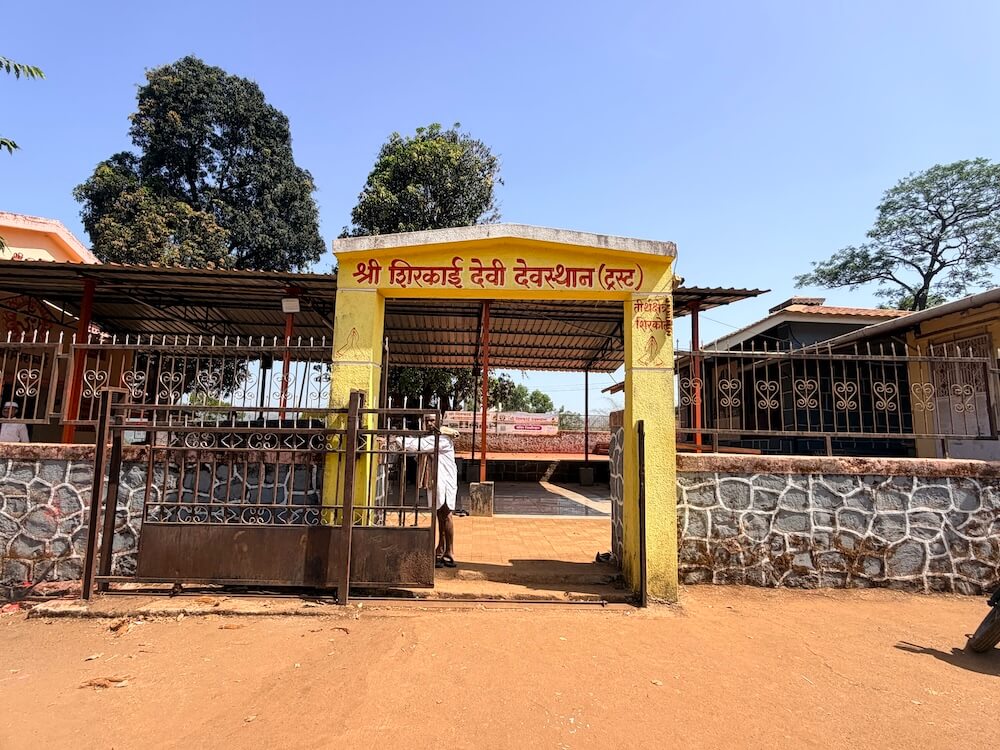
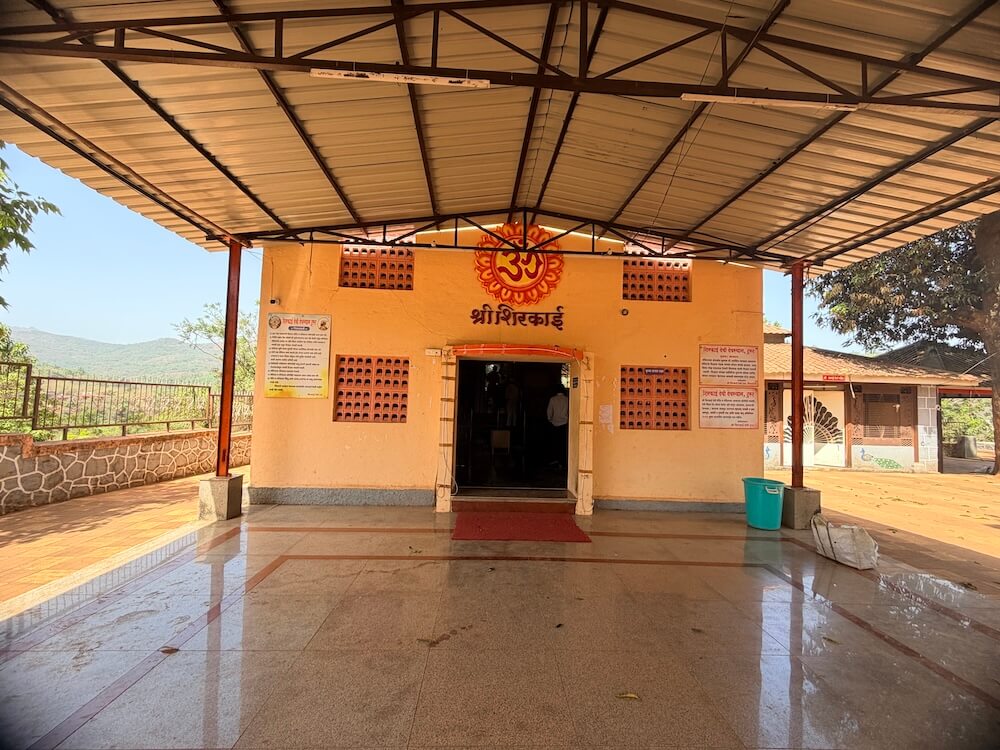
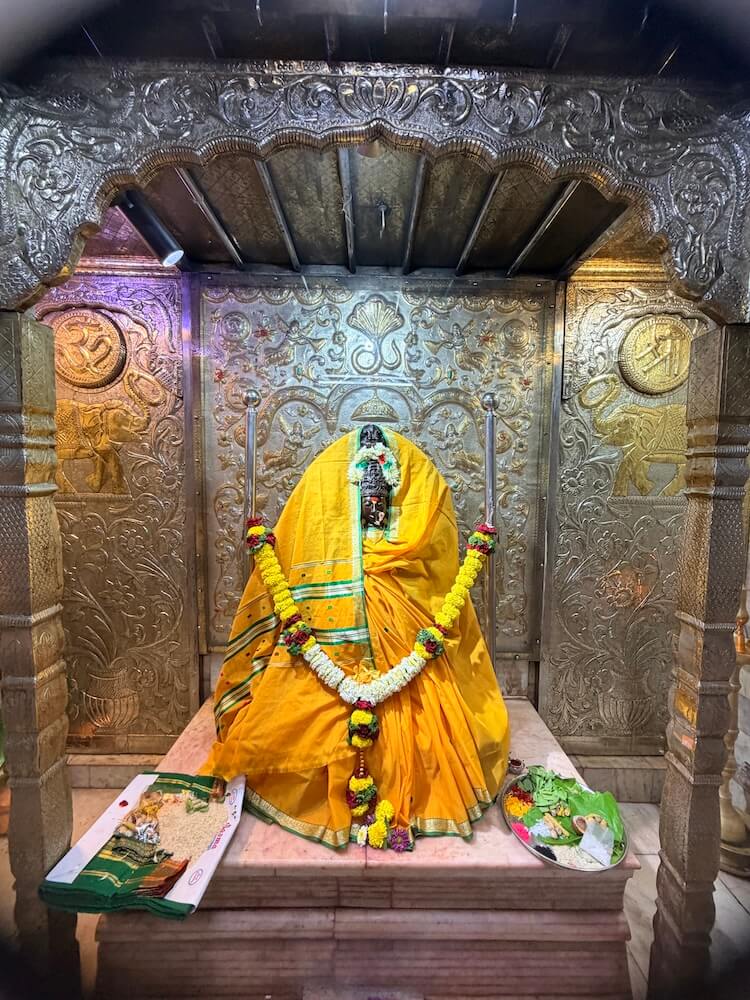
The new Shirkai Devi temple is built on a cliff at the edge of the dam, offering views of the water below and the surrounding Sahyadri mountain ranges. One can reach the temple through the entrance arch on the main village road. The temple courtyard is accessed through a gate in the perimeter wall surrounding the complex. In the courtyard, the Shirkai Devi temple is on the left, and the Waghjai Devi temple is on the right. Between these two temples lies a semi-open pavilion covered with a tin shed. The Shirkai Devi temple is structured with a assembly hall (sabhamandap) and a sanctum (garbhagriha). From the assembly hall, one climbs five steps to enter the sanctum, which is situated on a high pedestal. There are lamp niches (deepkoshtakas) on both sides of the sanctum entrance. The door frame is covered with silver plating, and an idol of Lord Ganesha is carved on the lintel (lalatbimba) of the door frame. Inside the sanctum, the idol of Shirkai Devi is housed in a silver shrine (makhar). This black stone idol is in the form of the eight-armed Mahishasuramardini. The Goddess holds the tuft of Mahishasura’s hair with one hand, while her left foot is planted firmly on the back of the buffalo-demon. In her other seven hands, she holds a conch, discus, trident, drinking bowl, dagger, bow, and arrow, respectively. These weapons are considered symbols of her power and the destruction of evil forces.
Another unique feature of this temple is that one can have the collective darshan of the Tridevi here. In the sanctum sanctorum of the temple resides Shirkai Devi, while on the left side of the temple is the temple of Manai Devi, and on the right side is the temple of Waghjai Devi. In the Manai Devi temple, along with the idol of Manai Devi carved in black stone, there are stone idols of various deities on the Vajrapitha. The idol of Waghjai Devi is situated on the Vajrapitha in the Waghjai temple, which stands on a high pedestal. Apart from this, there are ancient idols and some hero stones (Virgal) in the temple premises. For the convenience of the devotees, there is a Bhaktanivas facility in the temple premises.
Various festivals and traditional celebrations are observed throughout the year at the Shirkai Devi temple. Among these, the annual Chaitra Yatra, held on Chaitra Vadya Pratipada, is considered the major festival of this region. Many devotees, especially from the Rajeshirke and Pasalkar families, come to Shirkoli village for this Yatra. On the day of the Yatra, Mahapuja, Hom-Havan, and Yajna are organized in the temple. The Palkhi procession held during this Yatra holds great significance. According to ancient tradition, the first right to carry the Palkhi belongs to the Pasalkar family. On the day of the Yatra, Mahaprasad is distributed to many devotees throughout the day in the village. During this Yatra, the Bagad festival is also celebrated. In this festival, selected men from the village run carrying traditional garments, flags, and banners, and perform the Bagad ritual to fulfill their vows. People come from far and wide to witness this ceremony.
Apart from the Chaitra Yatra, the Sharadiya Navaratri festival celebrated in the month of Ashwin is the second most important festival here. During the nine days of Navaratri, an Akhand Nandadeep is lit, and Ghatasthapana, Mantra-Jagar, and various traditional programs are conducted in the temple. On the day of Ashtami, night vigils and Hom-Havan are performed in the temple. Hundreds of devotees are present to offer oblations in this Hom-Havan. There is special enthusiasm in the temple on the day of Dussehra. On this day, the tradition of ‘Sone Lutne’ (symbolic looting of gold) is performed, and Puran Poli is offered to the Goddess as Naivedya. On Dussehra, married women and daughters-in-law of the village offer a coconut shell tied to a string to the Goddess. This traditional practice is still preserved by the villagers today. During the festival period, the temple is specially decorated with flowers and lights. Devotees can have the darshan of the Goddess in this temple from early morning until late at night.
This sacred temple stands as a testament to deep spiritual devotion, ancient architectural grandeur, and rich local cultural traditions.
The sanctum sanctorum houses the divine idol consecrated according to ancient Vedic traditions, surrounded by serene courtyards and traditional temple architecture.
Navratri, Maha Shivratri, Annual Temple Jatra & Deepotsav
Compare and book flights, secure top-rated local hotels near the temple, hire reliable guides, and rent cars instantly.
Extend your pilgrimage by visiting other highly sacred temples located nearby.


Add ₹999 more to unlock FREE SHIPPING!
Your sacred cart is currently empty.
Shop Photo FramesFill in your delivery details below to place your order.
Add comment