
Add ₹999 more to unlock FREE SHIPPING!
Your sacred cart is currently empty.
Shop Photo FramesVishvi is the final temple in the circumambulation (Parikrama) of the seven Shiva temples established by the Saptarishis in Mehkar Taluka, which is completed before sunrise on the third Monday of the holy month of Shravan. Legend has it that Sage Vishwamitra installed the Shiva Linga here and performed penance. Situated near the Vishwamitri River, it is said that Lord Shriram and Lakshman arrived here to slay a demon who was creating obstacles during a Yajna performed by Sage Vishwamitra. Thousands of devotees visit for darshan during the Shravan Parikrama. On the day of Mahashivratri, the temple premises resonate with the chants of ‘Har Har Mahadev’.
In mythological history, Maharishi Vishwamitra is considered the embodiment of indomitable determination and extraordinary willpower. Originally, Vishwamitra was a powerful and public-spirited Kshatriya king named ‘Kaushik’. Once, while visiting the ashram of Maharishi Vashistha with his army, King Kaushik was mesmerized by the influence and power of the ‘Kamdhenu’ cow. He attempted to seize the cow using his power and military strength, but his Kshatriya might proved ineffective against the spiritual power (Brahmadanda) of Vashistha. This defeat led him to realize the truth of life. Recognizing that ‘spiritual power (Tapobal) is superior to Kshatriya might’, he renounced his kingdom and chose the path of penance.
Vishwamitra performed rigorous penance for thousands of years. The story of Indra sending Menaka to disrupt his penance is well-known. It was through his divine intellect that the ‘Gayatri Mantra’, considered the greatest in Hinduism, was created. That mantra is chanted in every household even today. Vishwamitra was highly short-tempered but equally committed to his vows. When King Satyavrata (Trishanku) was denied a place in heaven, Vishwamitra took up the challenge to create a ‘counter-creation’, a separate heaven, through his spiritual power. Vishwamitra holds a unique place in the Ramayana as well. It was Guru Vishwamitra who requested Shriram and Lakshman from Dasharatha, imparted knowledge of weaponry to them, and led them to destroy Tataka and other demons. He is also credited with taking Rama to Janakpuri for Sita’s Swayamvara.
In ancient times, Mehkar was part of the Dandakaranya forest. In this forest, the Saptarishis performed penance and established Shiva Lingas: Sage Bakdalabhya at Delap, Sage Valmiki at Varvand, Sage Vashistha at Vadali, Sage Gautam at Gomedhar, Sage Parashar at Pathardi, Sage Durvas at Durgbori, and Sage Vishwamitra at Vishvi. It is a belief in Hinduism that worshipping Lord Shiva during the month of Shravan brings happiness and prosperity. Therefore, thousands of devotees from the district perform the Parikrama of these seven temples before sunrise on the third Monday of Shravan.
On the third Sunday night of Shravan, all pilgrims gather at the Shiva temple in Vadali. Around midnight, after bathing under the Gomukh there and performing Jalabhishek to Mahadev, they begin the Parikrama with wet clothes. This journey concludes after the darshan of the Shiva Linga at the Vishvi temple. The Parikrama must be completed before sunrise on Monday. At all seven locations, streams of water flow from Gomukhs. Devotees believe that bathing under these streams grants the merit of a holy bath (Abhyang Snan).
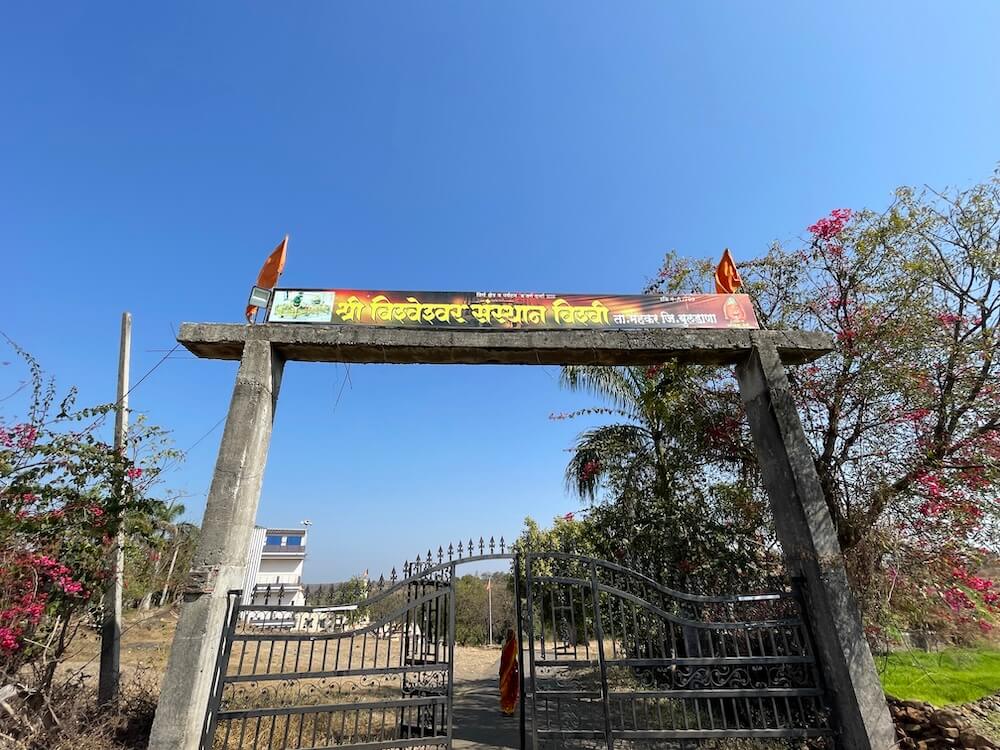
The village of Vishvi is located near the border of Akola and Buldhana districts. In the Treta Yuga, Sage Vishwamitra established the Shiva Linga here and performed penance for many years. Once, when he performed a Yajna here, a demon living in the area tried to disrupt it. Following the sage’s request, Shriram and Lakshman, who were residing in Dandakaranya during their exile, arrived and slew the demon. It is said that Mother Sita resided in a cave at Vasali (Taluka Patur), about 5 km away from here. Sita Nahani is also located there. The Vishveshwar temple in Vishvi has been renovated several times over the course of time. After a recent renovation, the temple attained its current form. The state government has granted this temple the ‘B’ grade status for pilgrimage and tourism.
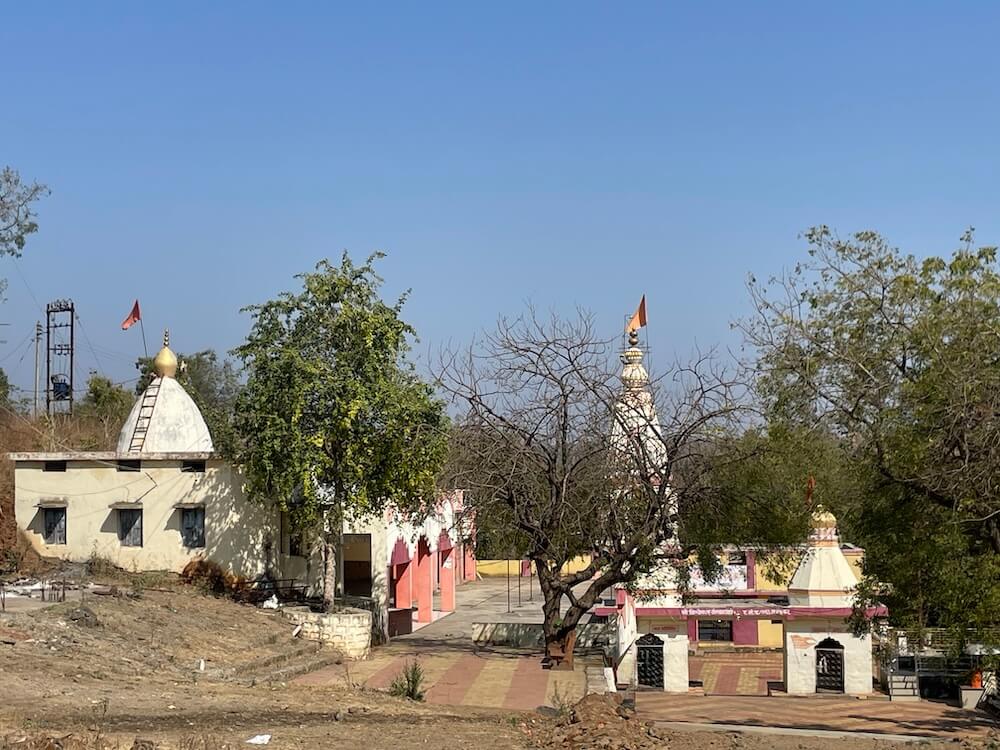
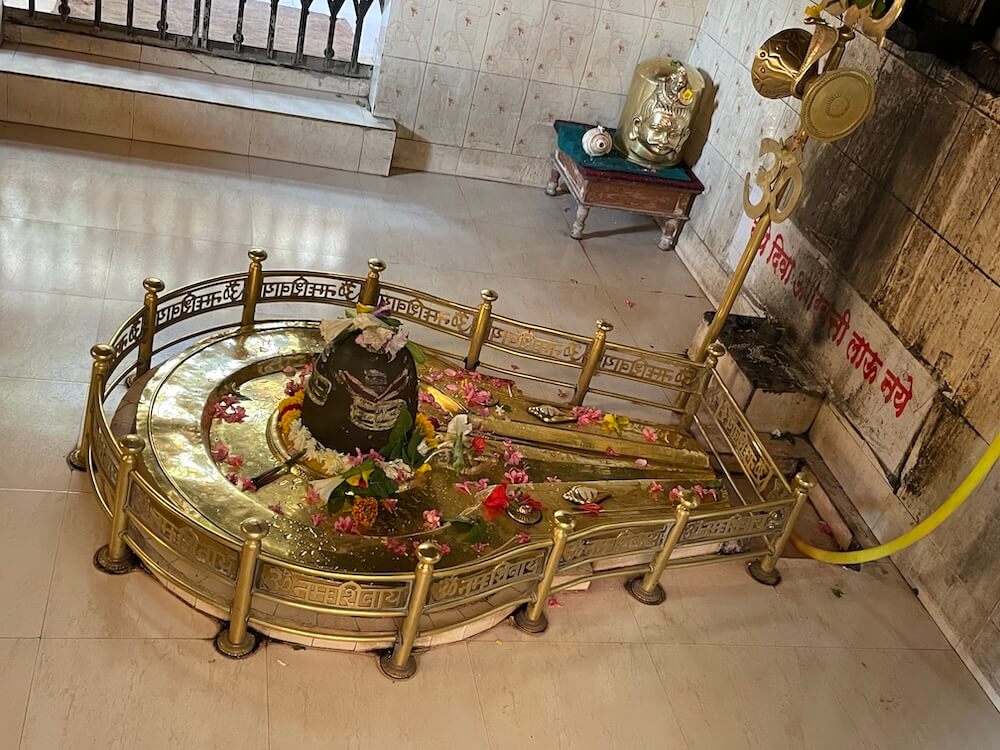
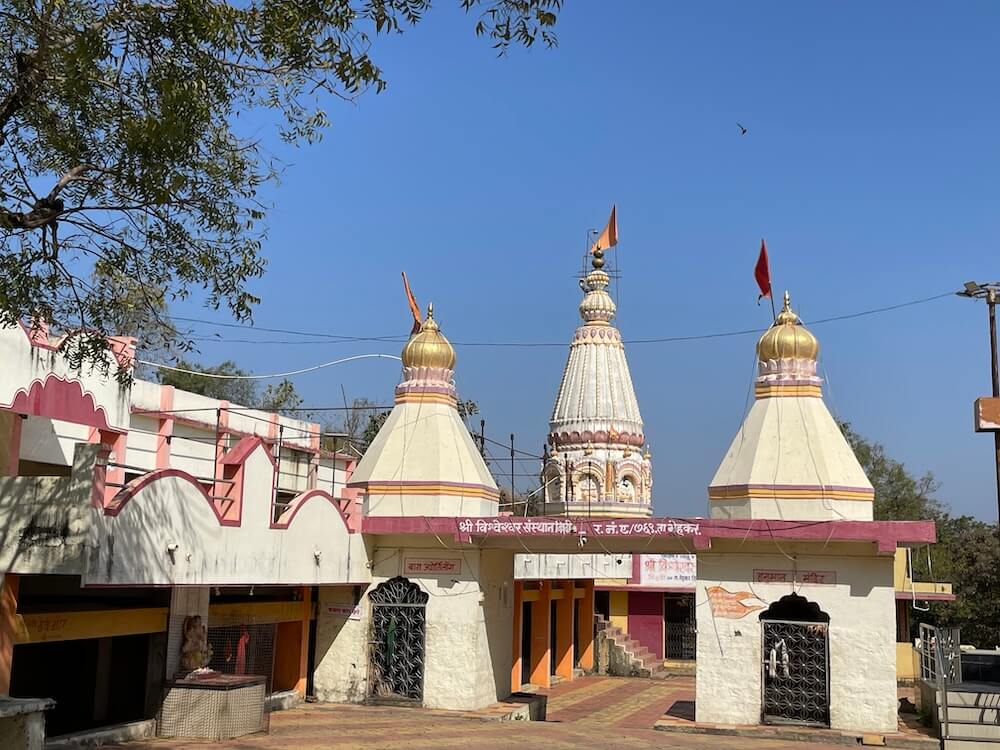
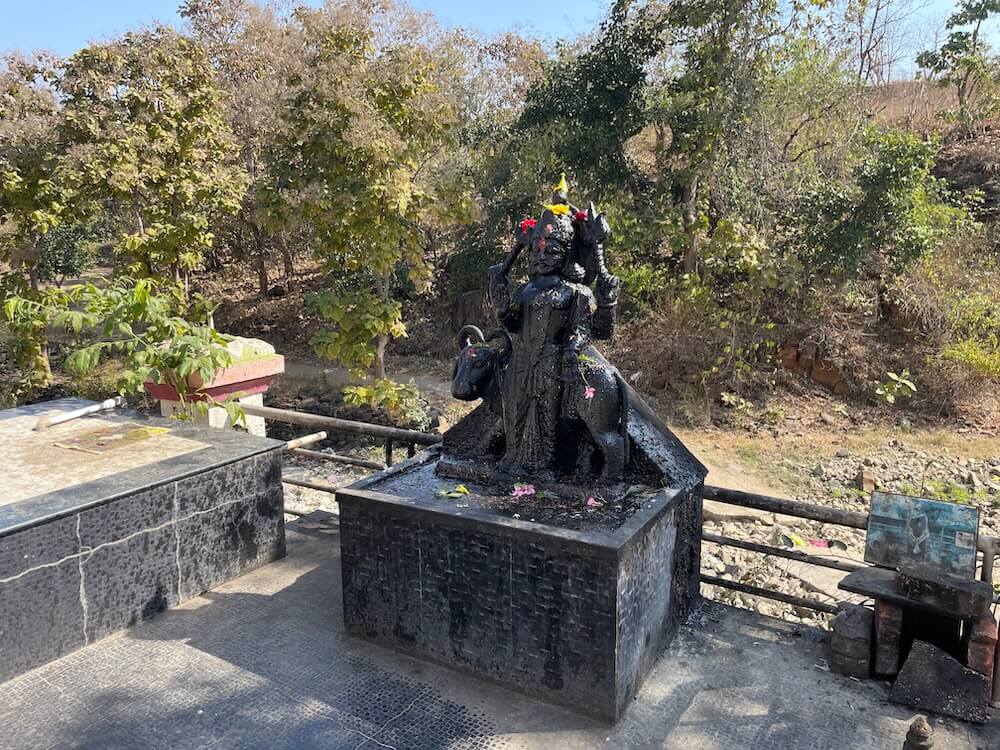
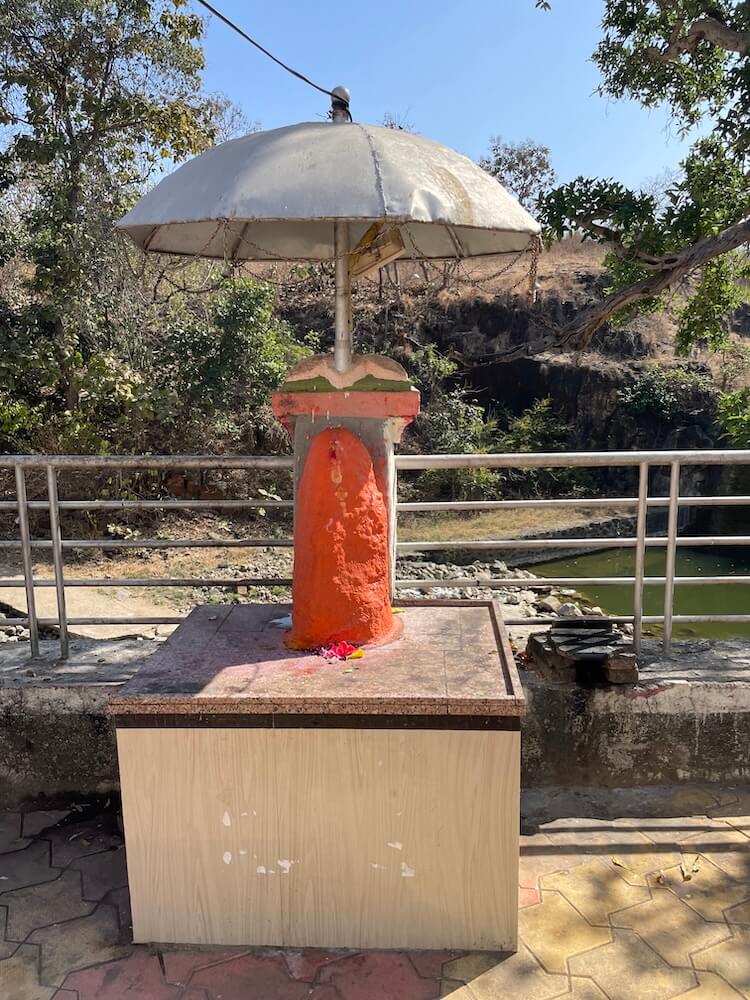
The temple is blessed with a nature-rich environment. The Vishwamitri River flows near the temple. The temple premises feature a large courtyard paved with paver blocks. Before entering the main temple, there is a temple of the twelve Jyotirlingas on the right, where twelve Shiva Lingas are arranged in a row. In one corner, there is a small idol of Nandi. Adjacent to the temple is a hall, and near its entrance, one can see an idol of Lord Ganesha. This hall is used during various festivals. In the Hanuman temple on the right side of the courtyard, there is a vermilion-smeared idol of Pavansuta. Nearby, on a platform, is an idol of Shani Dev. An Audumbar tree is located close by. There is also a large courtyard in front of the main temple. The structure consists of a Sabhamandap and a central sanctum (Garbhagriha). The walls of the sanctum are tiled, and inside, the Vishveshwar Shiva Linga is placed in a large Shalunka. A Panchadhatu plate is installed over the stone Shalunka.
The temple complex houses an ancient temple of Mother Mahakali. One must climb a few steps to reach it. Here, there is a large vermilion-smeared stone (Tanda) of the Goddess, with eyebrows, eyes, nose, lips, and tongue carved onto it. A Bhakta Niwas (pilgrim lodging) has been built adjacent to this temple. One must descend a few steps to reach the Gomukh Kund located in the temple premises. During the Shravan Parikrama, devotees bathe in this Kund before having darshan of Vishveshwar Mahadev. Some ancient idols and Shiva Lingas can also be seen kept in one area of the temple premises.
Mahashivratri is the main festival here. During the week-long celebration, programs like Bhajans, Kirtans, and Bhagwat Katha recitals are held. A large fair is organized in the area on the day of Mahashivratri. Countless devotees from the surrounding five villages come for darshan, and queues form from early morning. Mahaprasad is also distributed to the devotees on that day. During the Saptarishi temple Parikrama in Shravan, arrangements for snacks and tea are made for the pilgrims. During the Sharadiya Navratri festival, Navratri is celebrated at the Mahakali temple here, and various religious programs are organized during this period.
This sacred temple stands as a testament to deep spiritual devotion, ancient architectural grandeur, and rich local cultural traditions.
The sanctum sanctorum houses the divine idol consecrated according to ancient Vedic traditions, surrounded by serene courtyards and traditional temple architecture.
Navratri, Maha Shivratri, Annual Temple Jatra & Deepotsav
Compare and book flights, secure top-rated local hotels near the temple, hire reliable guides, and rent cars instantly.
Extend your pilgrimage by visiting other highly sacred temples located nearby.


Add ₹999 more to unlock FREE SHIPPING!
Your sacred cart is currently empty.
Shop Photo FramesFill in your delivery details below to place your order.
Add comment