
Add ₹999 more to unlock FREE SHIPPING!
Your sacred cart is currently empty.
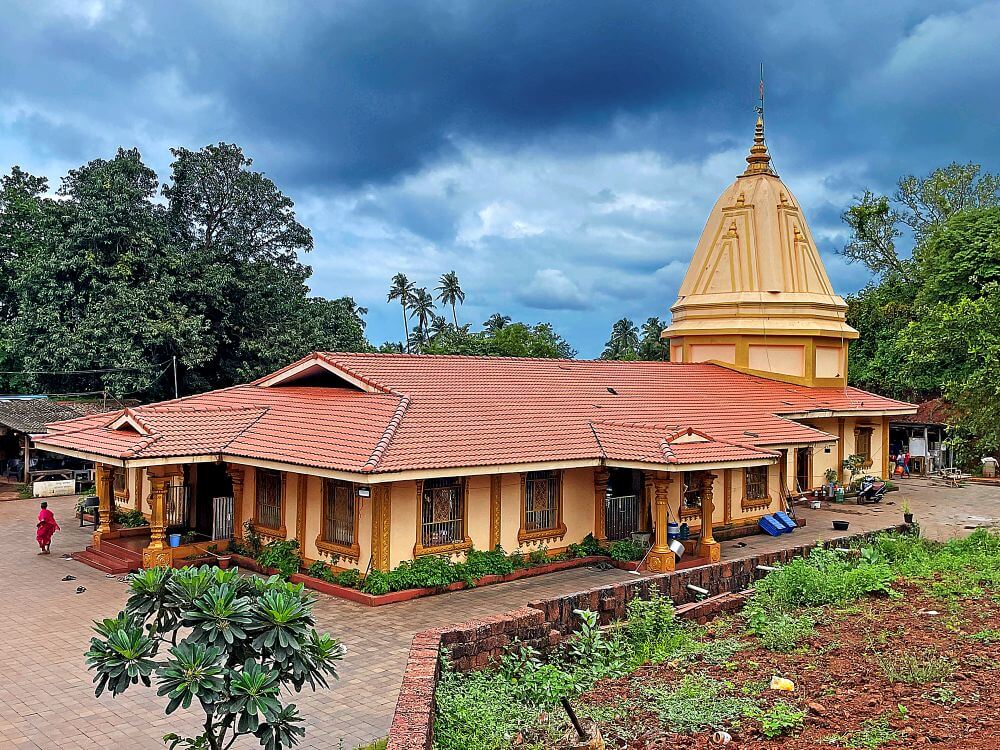
Shop Photo FramesIn ancient times, Redipattanam was known as an important port on the Arabian Sea. That port is the present-day Redi Port. Located in Redi, known as the last port of the Konkan region, is a large Ganpati temple built in the Konkan architectural style, situated a short distance from the seashore. Since devotion to Lord Ganesha is deeply rooted in the soil of Konkan, this temple is constantly crowded with devotees. As this temple is known as a ‘Jagrut Devasthan’ (an awakened place of divinity), many devotees make vows here for the fulfillment of their wishes. A unique feature of this temple is that the magnificent idol of Lord Ganesha is two-armed.
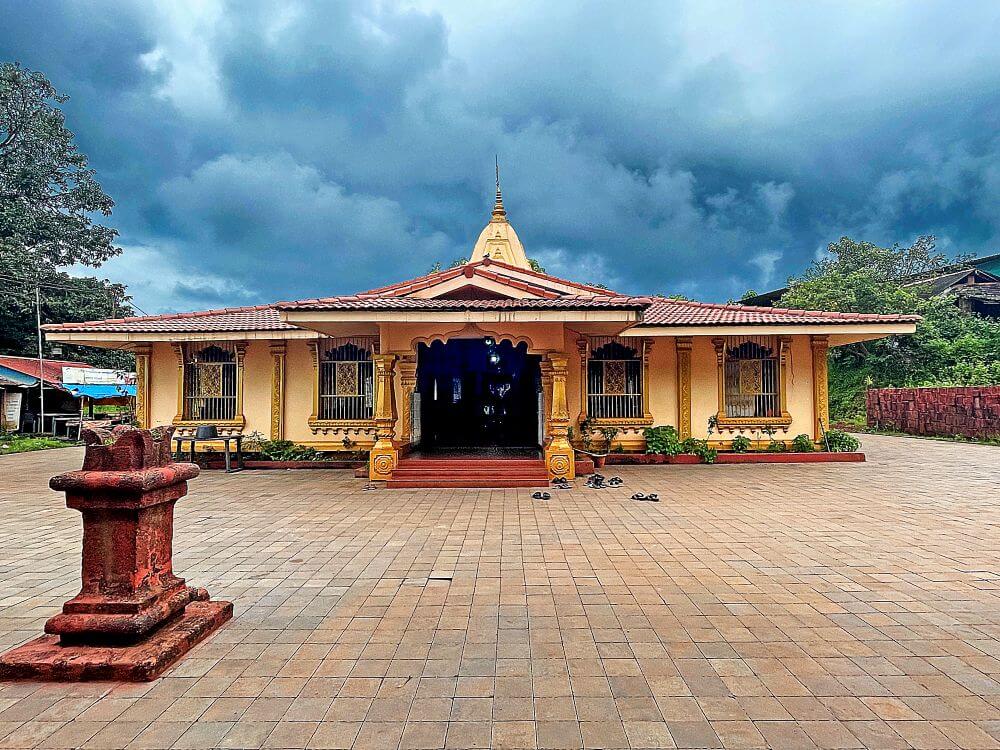
After entering through the arched gateway on the red-soil road of Redi, one finds shops selling offerings and flowers. From there, one descends about २५ steps to enter the courtyard of this Ganesha temple. The temple consists of a Mukhamandapa (front hall), a Sabhamandapa (assembly hall), and a Garbhagriha (sanctum sanctorum). The Mukhamandapa and Sabhamandapa have sloping tiled roofs, while the Garbhagriha is topped by a tapering Shikhara (spire). On all four sides of the Shikhara, two smaller spires are carved one above the other. Above these are the Griva (neck of the spire), the Amalaka, and the Kalasha. In the temple premises, there is a Tulsi Vrindavan made of laterite stone, and a short distance in front of it is an open Mukhamandapa. It features two beautifully carved pillars with intricate designs. One enters the Mukhamandapa by climbing three steps.
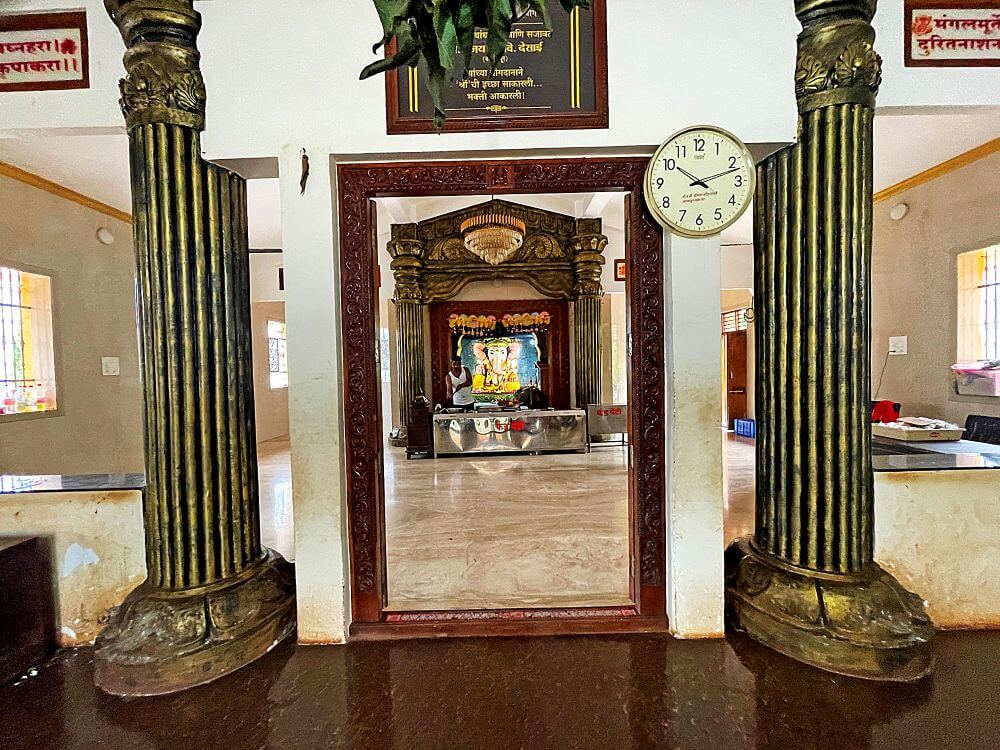
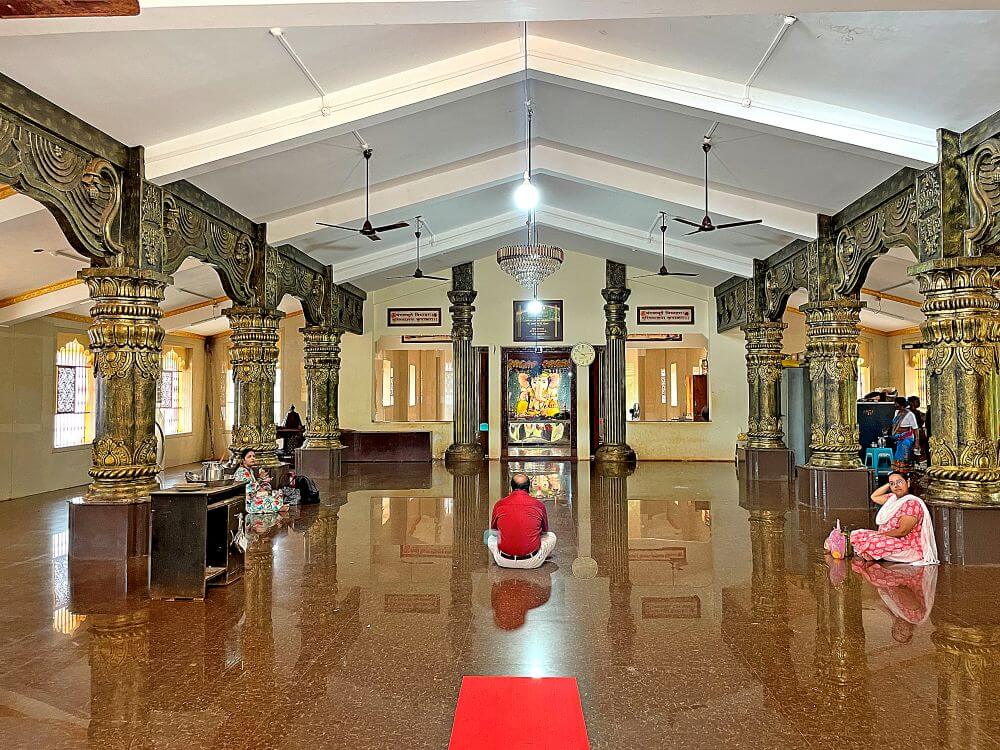
There are also two carved pillars on the sides of the entrance to the Sabhamandapa. These feature a ‘Kamalshirsha’ (lotus-head) design, where petals are carved like an inverted lotus at the top of the pillar. The floor of this spacious Sabhamandapa is paved with granite tiles. The Sabhamandapa has square-based pillars that transition into circular shapes. These pillars are adorned with Kamalshirsha and Ghatapallava (vase and foliage) carvings. Above them is the ‘Palagai’, a flat, square, low-height section larger than the pillar itself. These pillars are connected to each other by decorative arches. One can have a divine view of the magnificent idol of Lord Ganesha even while sitting in this Sabhamandapa.
There are also two circular pillars in front of the entrance to the Antarala (vestibule). This entrance is made of wood and is double-doored, featuring beautiful carvings. The Antarala houses the Palkhi (palanquin) and other items required for processions. Due to the large windows, the Antarala, like the Sabhamandapa, is airy. The Garbhagriha of the temple is decorated with three successive arched doorways. Inside, the two-armed idol of Lord Ganesha is seated on a small Vajrapitha (diamond pedestal). The idol is in a seated position with one leg folded. One hand holds a Modak, while the other is in the Varada Mudra (gesture of bestowing blessings). These arches make the idol appear as if it is seated in a grand shrine. In front of the idol, on one side, is Lord Ganesha’s vehicle, the Mushaka (mouse). There is a circumambulation path around the Garbhagriha.
The legend regarding this temple is that there are iron ore mines near the Redi coast. A young man named Sadanand Nagesh Kambli from Nagolawadi in Redi worked there as a truck driver. Once, his truck, loaded with iron ore, broke down at a specific spot. Since it was night, Sadanand slept there. In the early morning, Lord Ganesha appeared in his dream. He received a divine vision saying, “My existence is here; take me out.” That date was १८ April १९७६. After Sadanand shared this story with everyone, some people took the initiative and, with the help of some mine workers, began excavation at that spot. After digging a little, the ear and face of the Ganpati idol became visible. Everyone was astonished to see this. The idol was created within a cluster of laterite stone and was made of laterite stone itself. On १ May १९७६, the entire idol became visible. The idol was two-armed and elegant. The height of the idol was ६ feet and the width was ४ feet. During the excavation, some ancient artifacts were also found. A month and a quarter later, a large stone-carved Mushaka idol was found in the same area. According to the oracle (Kaul) of the village deity, Mauli Devi, it was decided that the temple should be built at this very spot. Accordingly, the temple was constructed in १९७८. Recently, this temple has been renovated. This Ganpati is famous for granting the wishes of his devotees.
It is said that there is a remarkable resemblance between the Ganesha idol carved on the doorway of the nearby Yashwantgad Fort and this Redi Ganpati idol. Given this similarity, it is believed that this idol had been worshipped here for over ३०० years. It may have been kept underground to protect it from the attacks of foreign invaders.
Devotees gather in large numbers at this temple on Maghi Ganesh Jayanti, Sankashti Chaturthi, and Angarki Chaturthi. The Ganesh Utsav is celebrated here with great enthusiasm. Since the famous Redi beach is near this temple, many tourists also come to enjoy boating there.
This sacred temple stands as a testament to deep spiritual devotion, ancient architectural grandeur, and rich local cultural traditions.
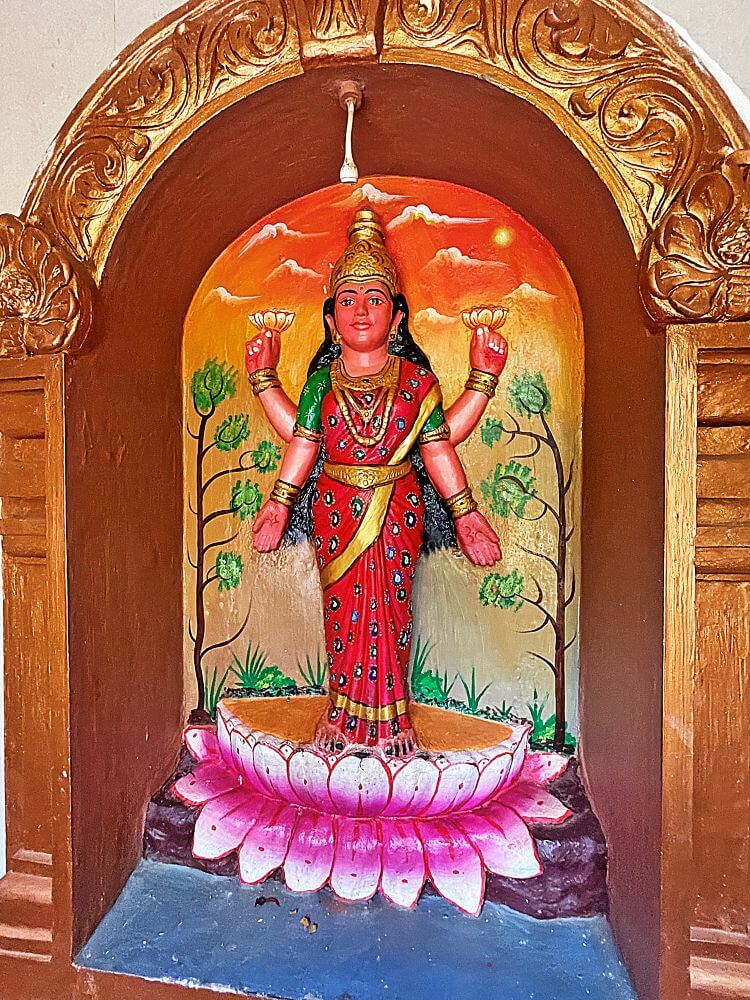
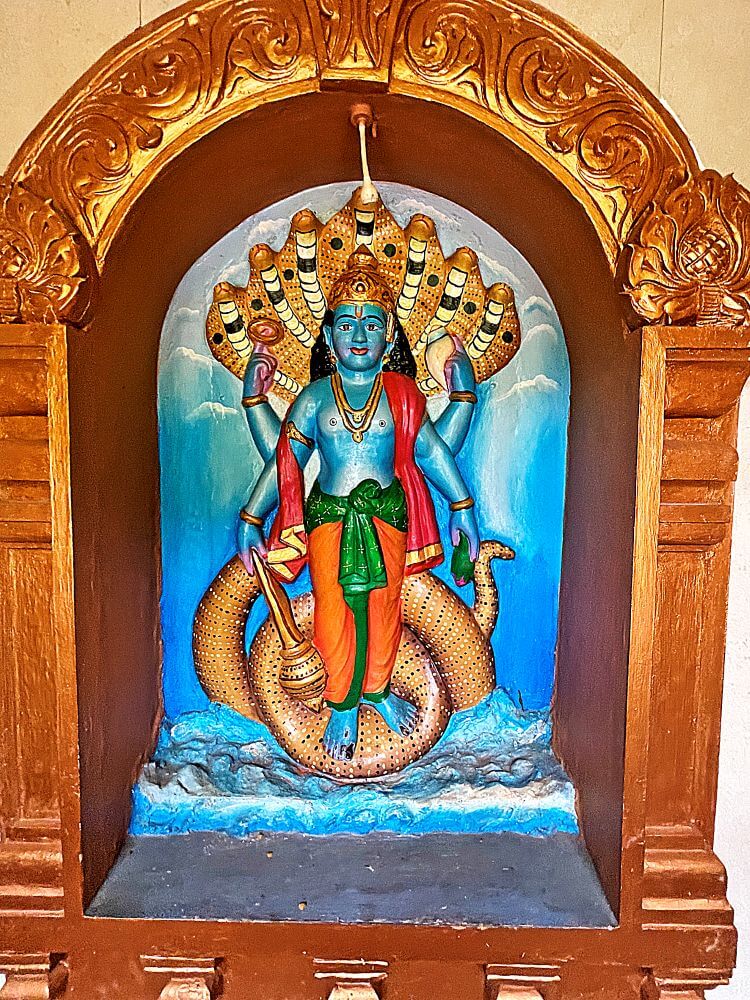
The sanctum sanctorum houses the divine idol consecrated according to ancient Vedic traditions, surrounded by serene courtyards and traditional temple architecture.
Navratri, Maha Shivratri, Annual Temple Jatra & Deepotsav
Compare and book flights, secure top-rated local hotels near the temple, hire reliable guides, and rent cars instantly.
Extend your pilgrimage by visiting other highly sacred temples located nearby.
Add ₹999 more to unlock FREE SHIPPING!
Your sacred cart is currently empty.
Shop Photo FramesFill in your delivery details below to place your order.
Add comment