
Add ₹999 more to unlock FREE SHIPPING!
Your sacred cart is currently empty.
Shop Photo FramesSatara district is famous for the hill station of Mahabaleshwar, which is known as the paradise of Maharashtra. Starting from Shrimant Chhatrapati Shahu Maharaj, it was the capital city of the Maratha Empire. The city mentioned as ‘Viratnagari’ in religious texts is the nature-rich city of Wai today. The Mahaganpati temple, also known as Dholya Ganpati, located on the Ganpati Ghat along the Krishna River here, is the presiding deity of the residents of Wai and a place of devotion for lakhs of devotees.
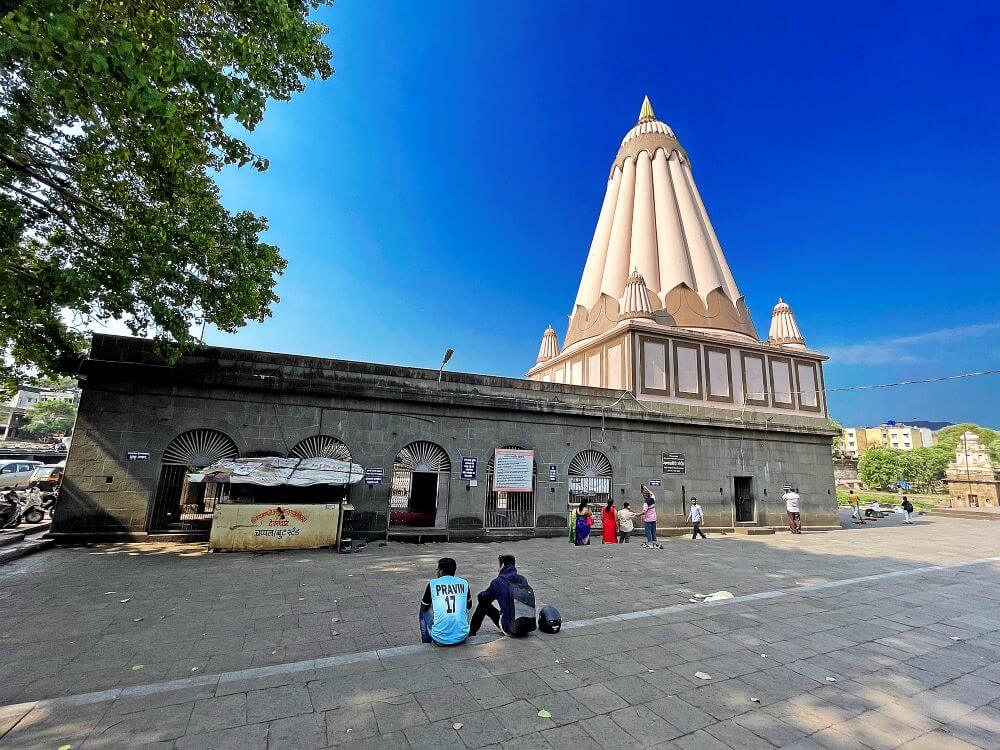
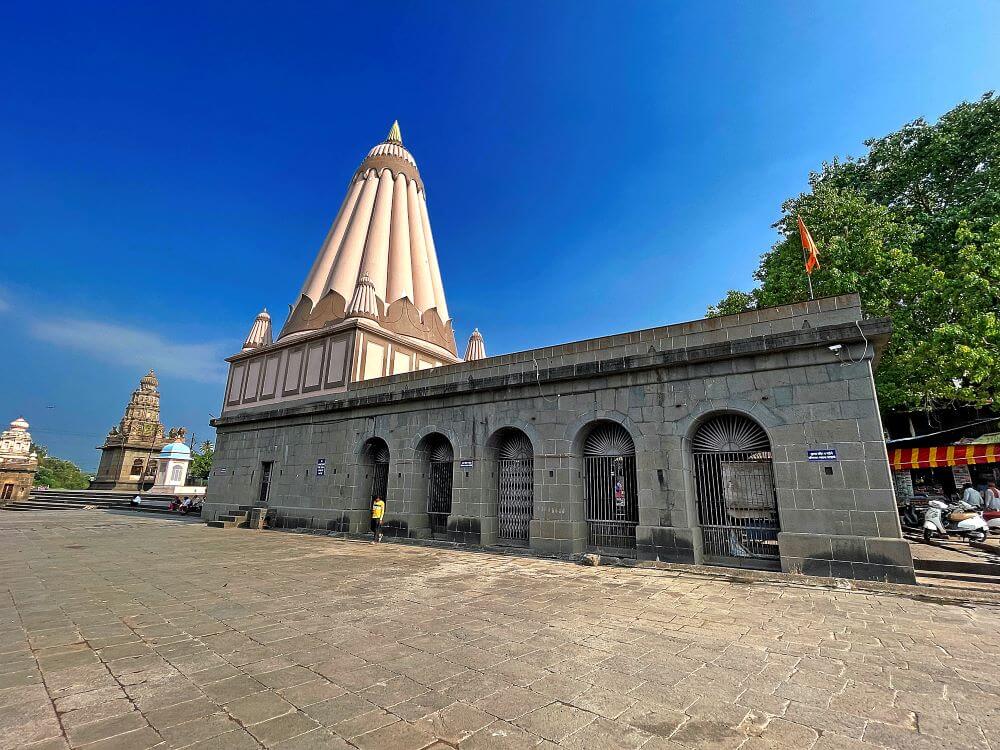
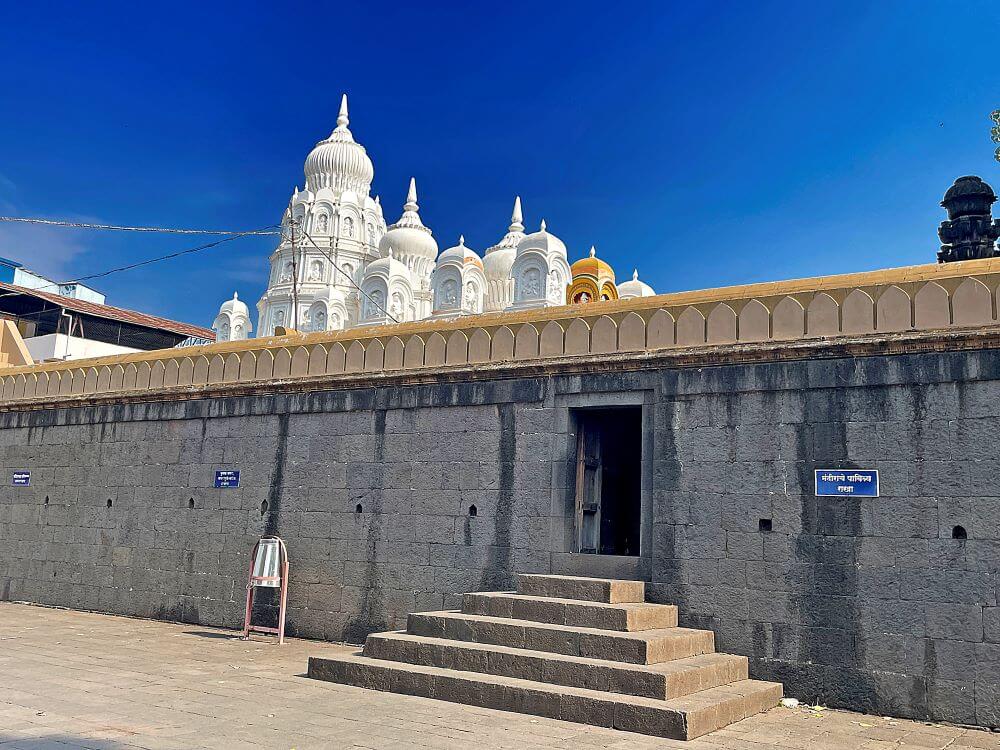
This Mahaganapati temple in the city of Wai was built in 1762 by Ganpatrao Bhikaji Raste, a Sardar of the Peshwas. Sardar Raste was the father-in-law of Peshwa Balaji Bajirao. Historical records mention that an expenditure of one and a half lakh rupees was incurred for building this temple at that time. A unique architectural feature of this temple, situated right on the banks of the Krishna River, is that its rear side is triangular, resembling the shape of a boat. The reason behind this is said to be that due to such a shape, whenever the Krishna River floods, the river water gets divided, reducing the water pressure and thereby protecting the temple.
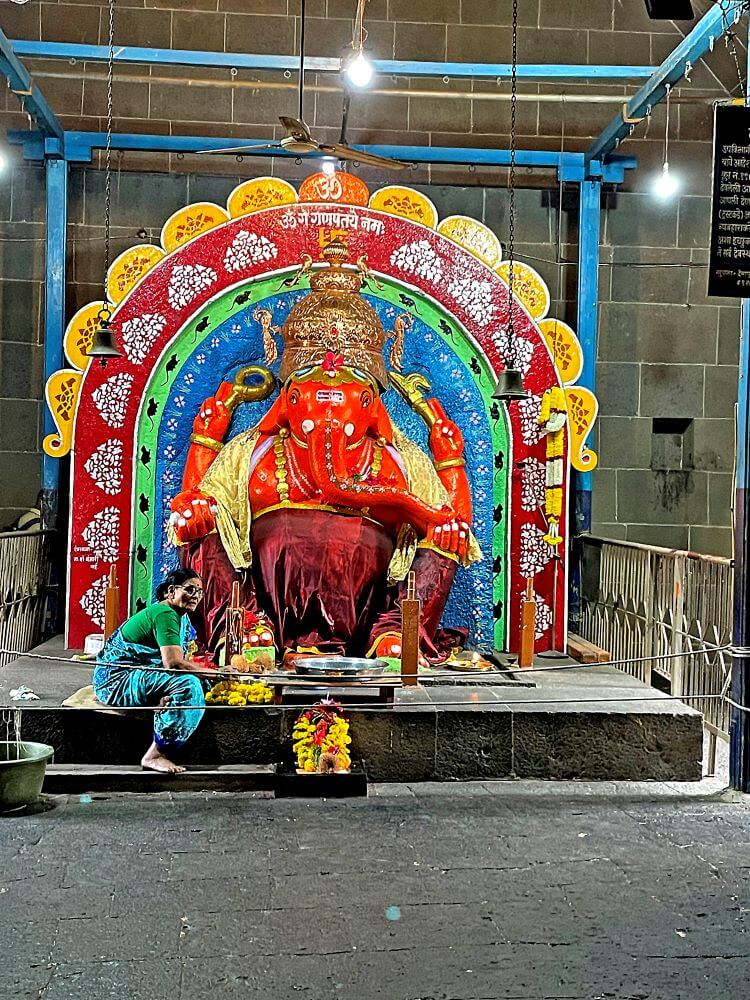
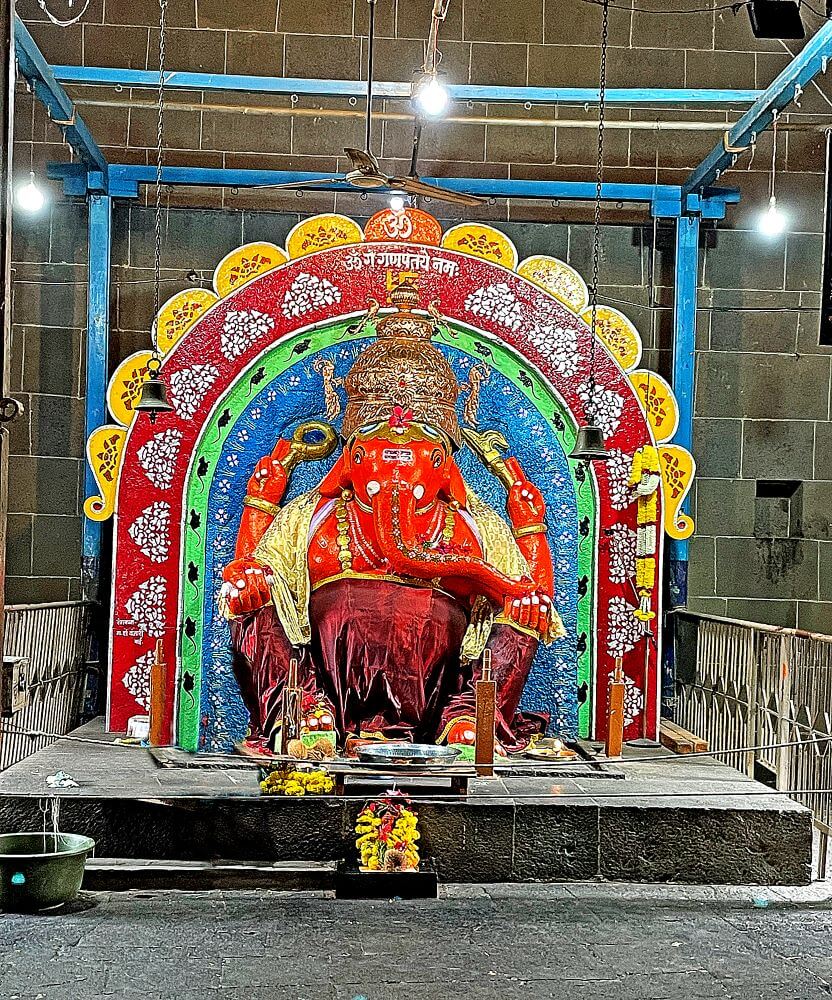
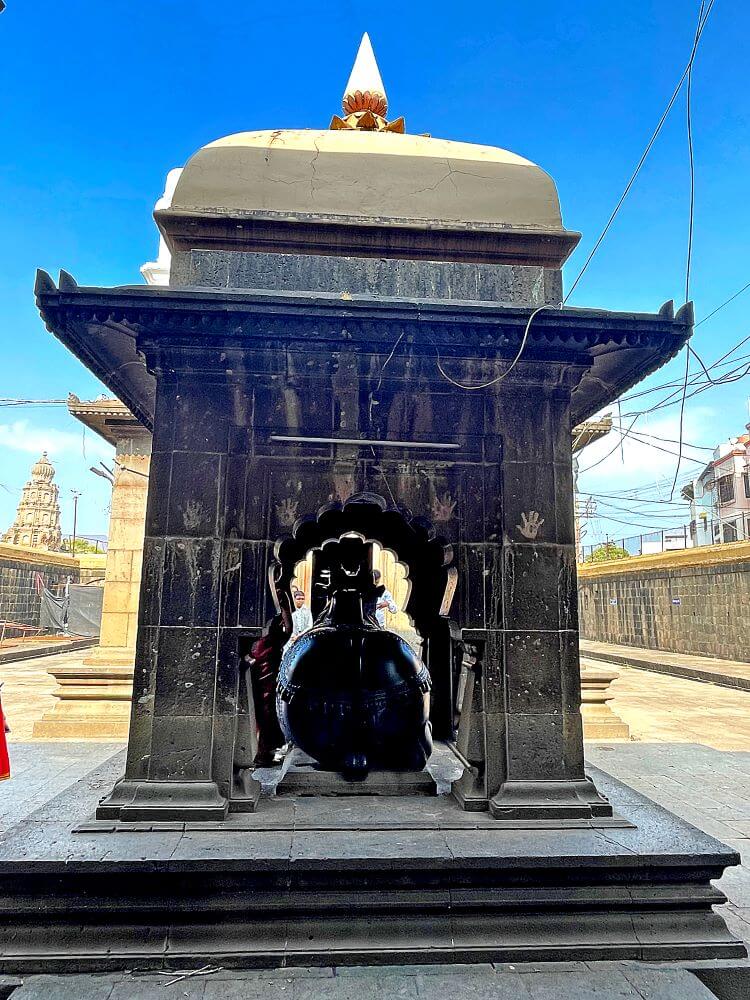
The magnificent idol of Lord Mahaganapati in the Mahaganapati Temple is carved out of a single stone. It is said that the special black stone used for this idol was brought from Karnataka. The architecture of this spacious temple consists of a assembly hall (sabhamandapa) and a sanctum sanctorum (garbhagriha). The sanctum sanctorum here is thirty feet long and thirty feet wide. In it, upon a large platform, is a six-feet-tall and seven-feet-wide idol of Lord Ganesha sculpted from a single, unbroken piece of stone. Because of this magnificent idol, this Ganesha is known as Dholya Ganpati.
The benevolent expression of the Mahaganapati idol and the divine radiance upon it are captivating. This idol is in a seated posture, and its eyes appear luminous. The idol of Mahaganapati is adorned with a sacred thread (janava), a garland around the neck, armlets (bajuband), and anklets (tode) on the feet. On occasions such as Sankashti Chaturthi, Angarki Chaturthi, and Ganesh Jayanti, this idol is adorned with numerous ornaments. Behind the idol is a crescent-shaped halo (prabhaval). Among all the temples in Wai city and its surrounding areas, the spire of the Dholya Ganapati Temple is the tallest, with a height of २४ meters from the base. The villagers here begin every auspicious task by worshiping this Mahaganapati. Because of the renowned belief that Mahaganapati is a living, conscious presence (jagrut) who grants the vows of devotees, thousands of pilgrims come here for darshan every day. During festival days, this number reaches between ५०,००० to ७५,०००. Along with devotees, tourists visiting Mahabaleshwar and Panchgani also make it a point to visit and seek the darshan of Mahaganapati. Devotees can have darshan of Mahaganapati every day from 5.30 AM to 9.30 PM. The anniversary celebration of the consecration of Mahaganapati is celebrated here with great enthusiasm on Vaishakh Shuddha Trayodashi. The festival of lights (Deepotsav) held at this temple and along the river ghat on Tripurari Purnima is very famous, during which the entire area lights up with thousands of flickering lamps.
Next to the Mahaganapathi Temple is the Krishnamai Temple. The Krishnamai Festival celebrated here, encompassing this temple complex and the seven ghats of the Krishna River, is widely renowned. This festival lasts for approximately one and a half months, starting from Magha Shukla Pratipada. It is said that Wai is the only place in the state where a river festival is celebrated. According to some scholars, Chhatrapati Shivaji Maharaj himself started this festival.
According to historical records, the camp of Afzal Khan, who had come with the intention of killing Chhatrapati Shivaji Maharaj, was stationed in Wai for many days. During this time, the Mughal army had created terror here, causing great distress to the villagers of Wai. At that time, the villagers of Wai had earnestly prayed to Goddess Krishnamaata for the success of Maharaj in the historic meeting between Chhatrapati Shivaji Maharaj and Afzal Khan at the foothills of Pratapgad. Upon learning that Shivaji Maharaj had achieved victory and Afzal Khan had been slain, thousands of villagers in Wai performed the worship of Goddess Krishnamaai. Ever since then, this festival has been observed continuously without interruption. On this occasion, amidst the resounding beats of dhol-tasha, a palanquin procession departs from the temple of Goddess Krishnamaai. The entire route of the palanquin is decorated with rangolis and various flowers. Nearly every household in Wai offers anoti of silk sari fabric and coconut to the Goddess. To witness this grand festival, thousands of devotees and tourists flock to Wai every day during this period. Furthermore, natives of Wai who live elsewhere for employment or business specially make it a point to visit for the darshan of the Goddess during this time.
This sacred temple stands as a testament to deep spiritual devotion, ancient architectural grandeur, and rich local cultural traditions.
The sanctum sanctorum houses the divine idol consecrated according to ancient Vedic traditions, surrounded by serene courtyards and traditional temple architecture.
Navratri, Maha Shivratri, Annual Temple Jatra & Deepotsav
Compare and book flights, secure top-rated local hotels near the temple, hire reliable guides, and rent cars instantly.
Extend your pilgrimage by visiting other highly sacred temples located nearby.


Add ₹999 more to unlock FREE SHIPPING!
Your sacred cart is currently empty.
Shop Photo FramesFill in your delivery details below to place your order.
Add comment