
Add ₹999 more to unlock FREE SHIPPING!
Your sacred cart is currently empty.
Shop Photo FramesBavdhan, a village in Wai Taluka famous for its Bagad Yatra, is considered to be of special importance from historical, religious, and tourism perspectives. This village was part of the jagir of Rajaram Bhosale from the Chhatrapati royal family of Satara. The Sonjai Devi temple located on the Sonjai hill here and the Kalbhairavnath temple at its foothills are both places of deep faith for the devotees. Apart from this, the village of Bavdhan is famous for its Kalubai temple, Buddhist caves, and Bhimache Khore. Along with devout pilgrims, a large number of tourists also visit this place.
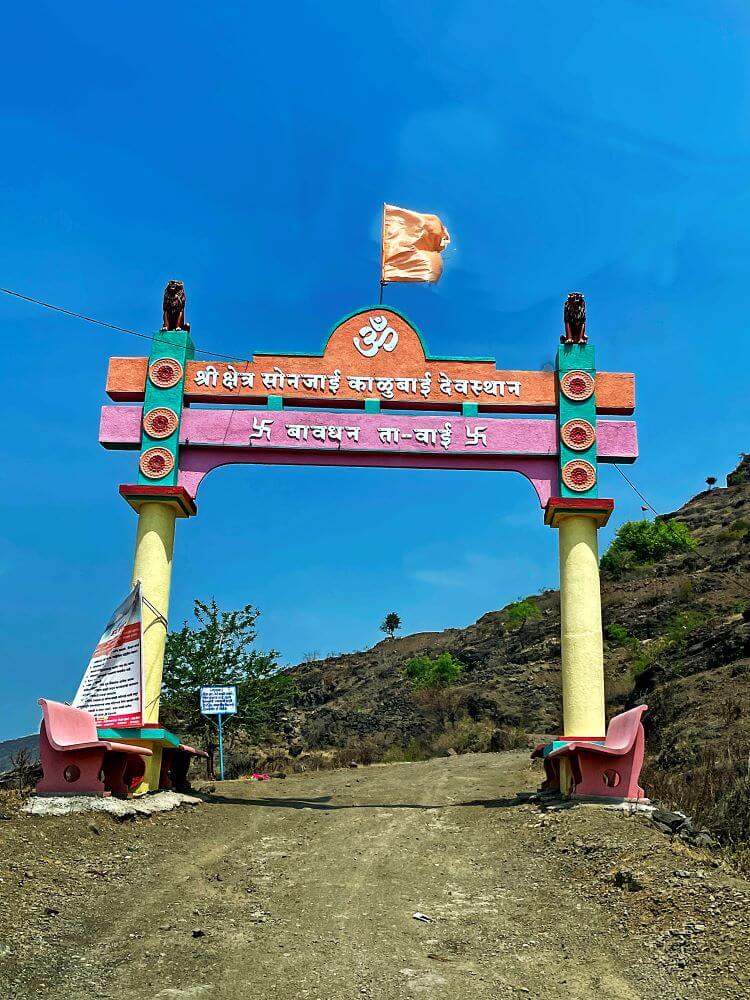
Bawdhan, a town-like village situated in the Sahyadri mountain range to the south of Wai, has been famous since the era of Chhatrapati Shivaji Maharaj. Previously, this entire village was surrounded by fortifications; however, although the fortifications have disappeared due to urbanization, two gates of that wall still exist today. At the foothills of the Sonjai mountain, which is adjacent to Bawdhan village, lies the ancient temple of Kalbhairavnath. From the arch of the Shri Kshetra Sonjai-Kalubai temple located a short distance away, there is a steep, winding mountain pass leading towards the Sonjai temple. Two-wheelers or small cars can travel further along this route for another one kilometer. Beyond that point, vehicles are prohibited, and one must walk for approximately one and a half kilometers.
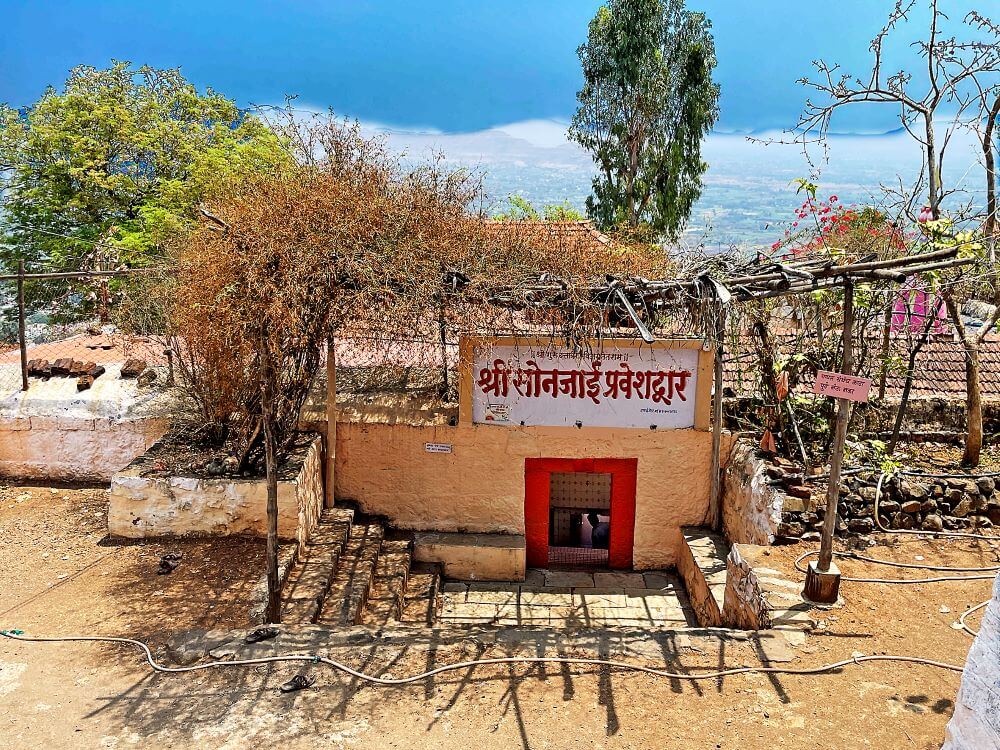
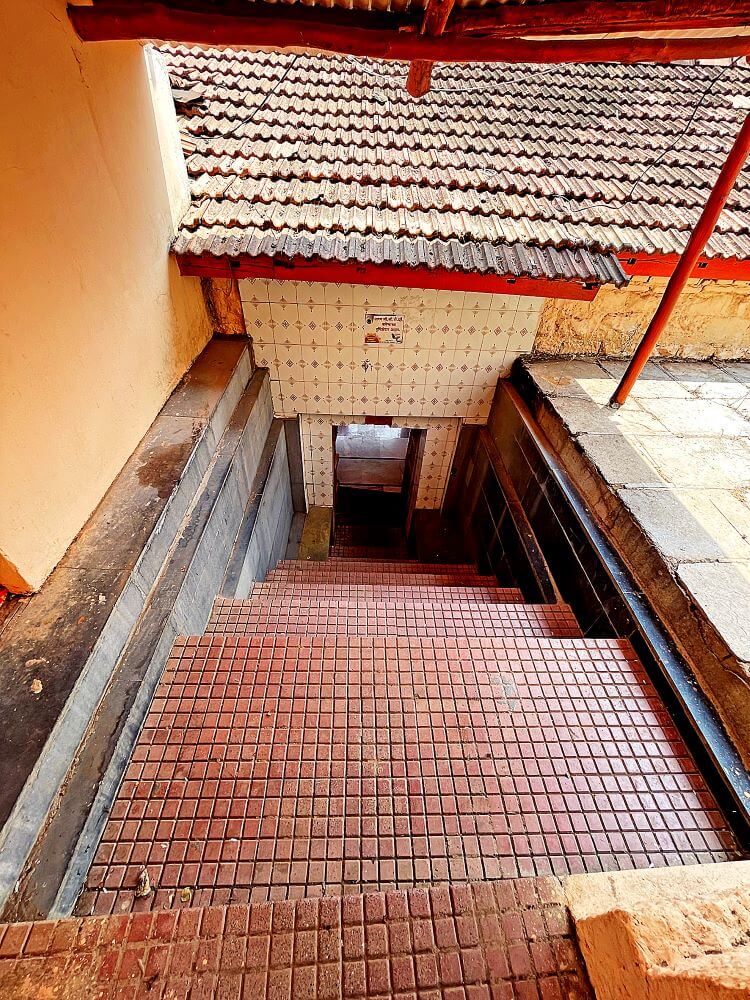
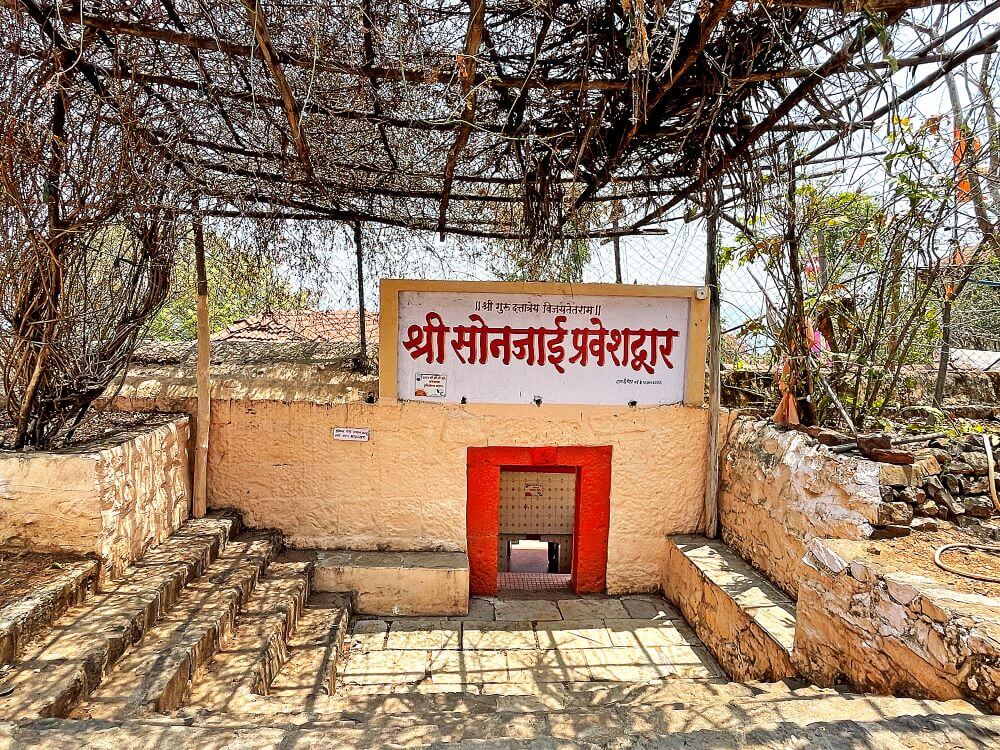
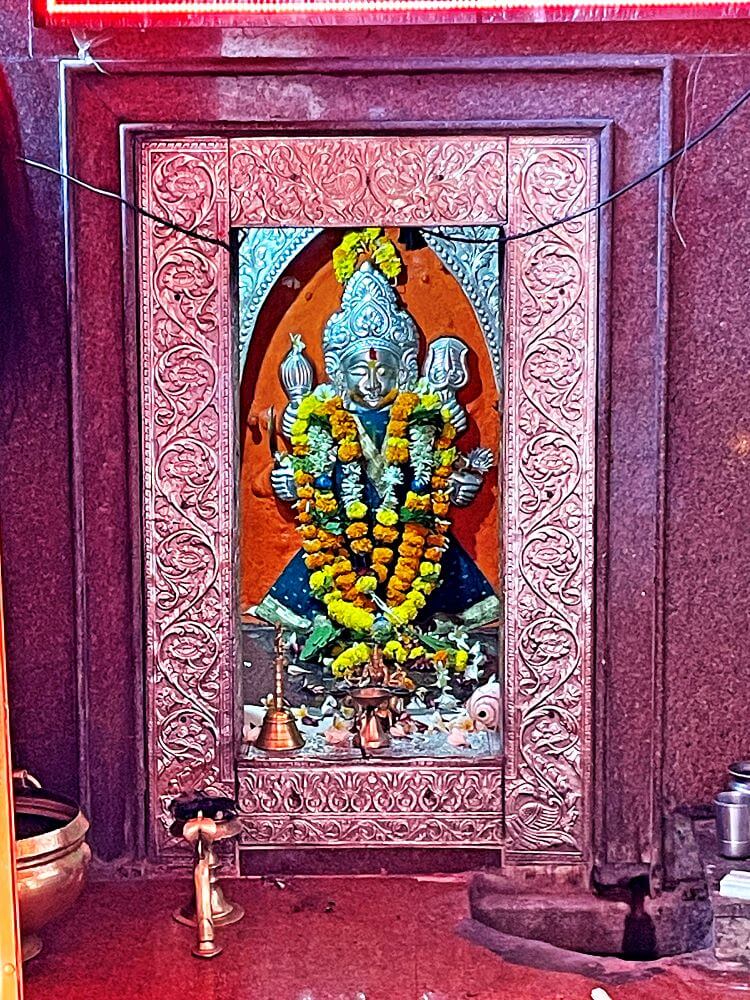
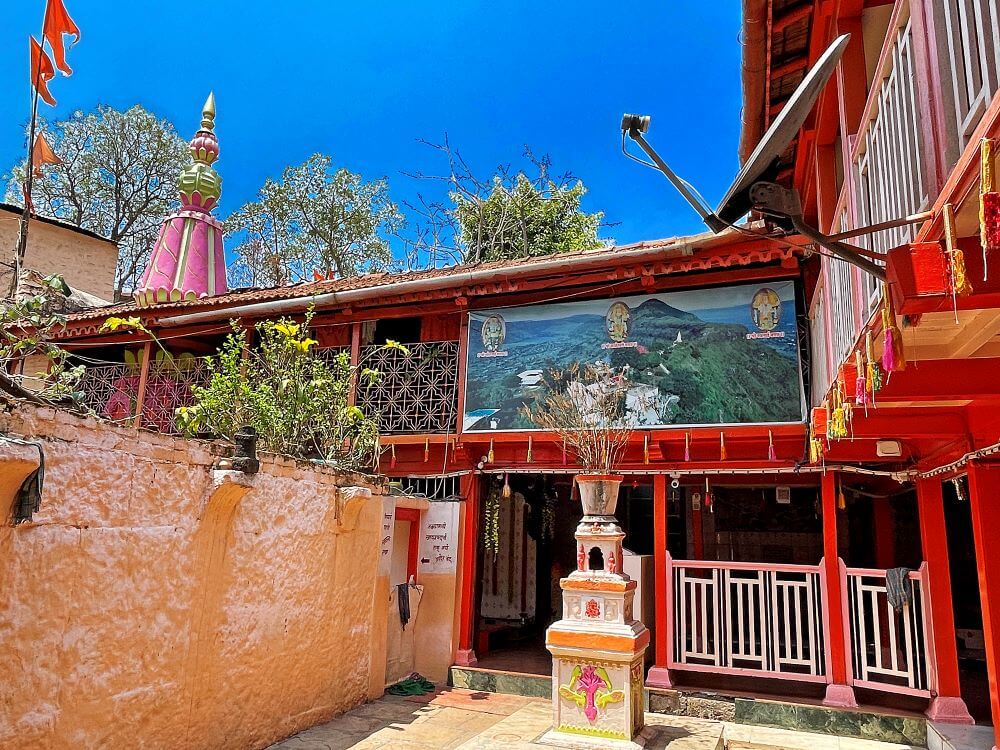
A short distance ahead from here, one can see an idol of Lord Ganapati carved in stone. Near the large lake that follows, there is an ancient temple of Goddess Sonjai. On the towering peaks of the Sahyadri range, facing each other, stand the temple of Goddess Sonjai on one mountain and the temple of Goddess Kalubai of Mandhargad on the opposite mountain at the same altitude. The temple of Goddess Sonjai is situated at an elevation of approximately 3,000 feet above sea level. Upon reaching the mountain ridge, one enters the temple by descending 10 to 12 steps through the main entrance. Only the sanctum sanctorum of the main temple features a spire, while the rest of the temple structure is roofed with traditional clay tiles. The idol of Mother Sonjai is consecrated in the sanctum sanctorum. This entire idol is covered with silver plating. Adorned with various ornaments and a saree, the beauty of the idol shines forth brilliantly.
Adjacent to the sanctum sanctorum of the temple is a small sacred pond. This pond contains water throughout all twelve months of the year. That water is used here for drinking purposes. Apart from this, facilities such as cloisters for the accommodation and performance of worship rituals by devotees, and pavilions containing numerous sacrificial fire pits for performing Homa-Havan are available here. The premises of the Sonjai Temple span approximately twenty acres.
For many years, there has been a tradition of celebrating the Navratri festival of Goddess Sonjai with great enthusiasm. On this occasion, various religious rituals are organized. During these nine days, the schedule includes Kakada Aarti at four in the morning, Puja Aarti at five in the morning, Saptashati recitation and Havan from six to nine in the morning, Bhagavata Katha from ten in the morning to twelve-thirty in the afternoon, lunch and rest from twelve-thirty to four in the afternoon, Kirtan and Sandhya Aarti from four to six in the evening, and the Jagran of the Goddess from nine to ten at night. During this period, Mahaprasad is distributed by the temple committee to the thousands of devotees who visit.
The temple of Kalubai Mata is located at a distance of 100 meters from the Sonjai Mata temple. Behind the Kalubai Temple lies a vast plateau (Table Land). Nature has bestowed its bounty generously upon this entire region. From here, one can behold a panoramic view of parts of Wai taluka, the forts of Pandavgad and Kenjalgad, the Nagewadi and Dhom dams, and the mountain of Mandhar Devi. Adjacent to this plateau is the famous Bhimache Khore (Bheema’s Valley). The legend of Bheema’s Valley states that Bheema had resolved to divert the natural course of the Krishna River to flow southwards through Bavdhan. However, Goddess Kalubai had placed a condition upon Bheema that this task must be completed before the rooster crowed. Accordingly, Bheema struck the ground once, creating a valley, just as the rooster crowed. Consequently, Bheema’s resolve could not be fulfilled. The place where it is said that Bheema struck the ground has now become a deep gorge.
The temple of Kalbhairavnath, situated at a slight elevation from the foothills of Sonjai Hill, is ancient, and an old stone stairway leads up to this temple. The height of this temple is approximately 2,490 feet above sea level and about 246 feet from the foothills. This temple is nestled in a crevice of the hill.
In this village, there is an ancient temple of Bhairavnath. Its construction is of stone, and the spire is made of bricks. In the sanctum sanctorum of the temple, there is the main idol of Kalbhairavnath, along with the idol of Hanuman and a Shivling.
The legend of the Kalbhairavnath Temple states that a devotee from the Dhangar community named Thombre used to travel to Sonai every day to seek the blessings of Bhairavnath. Due to his old age, he was no longer able to endure the daily journey.
Therefore, Bhairavnath appeared in a dream and said, “I myself will accompany you to your village.” Accordingly, the next day, Bhairavnath came along with that devotee up to this Sonjai mountain and disappeared there. The place where he disappeared is where this temple stands today. The pilgrimage of Bhairavnath takes place on Phalguna Krishna Panchami. It is famous as the Bagad Yatra.
In this procession, a ‘Bagad’ is placed on a chariot and taken out in a grand parade. Thousands of devotees gather here at this time to witness the ‘Bagad’ and to seek the blessings of Bhairavnath.
This sacred temple stands as a testament to deep spiritual devotion, ancient architectural grandeur, and rich local cultural traditions.
The sanctum sanctorum houses the divine idol consecrated according to ancient Vedic traditions, surrounded by serene courtyards and traditional temple architecture.
Navratri, Maha Shivratri, Annual Temple Jatra & Deepotsav
Compare and book flights, secure top-rated local hotels near the temple, hire reliable guides, and rent cars instantly.
Extend your pilgrimage by visiting other highly sacred temples located nearby.


Add ₹999 more to unlock FREE SHIPPING!
Your sacred cart is currently empty.
Shop Photo FramesFill in your delivery details below to place your order.
Add comment