
Add ₹999 more to unlock FREE SHIPPING!
Your sacred cart is currently empty.
Shop Photo FramesWai in Satara district is renowned as a city of temples. There are over 100 temples in this taluka town. Among them is a 12th-century temple dedicated to Lord Dhundi Vinayak, for which Chhatrapati Shivaji Maharaj himself granted an annual allowance (Varshasan) of 57 rupees for the daily lighting of lamps—a tradition that continues to this day! It is said that Chhatrapati Shivaji Maharaj personally visited this temple to seek the divine blessings (darshan) of Lord Ganesha.
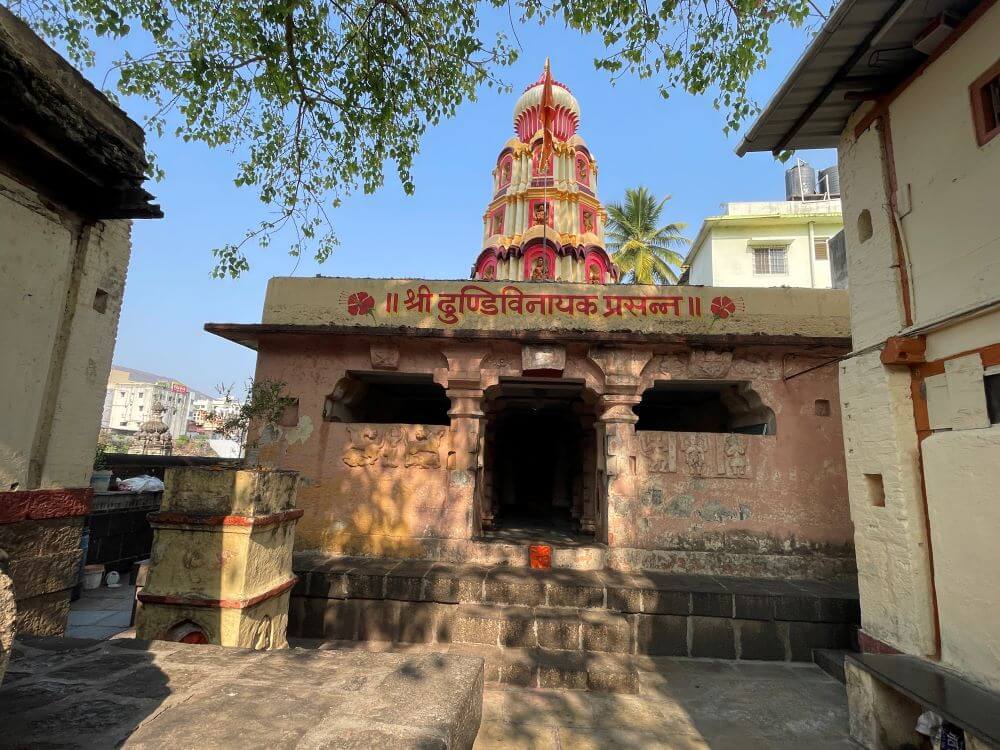
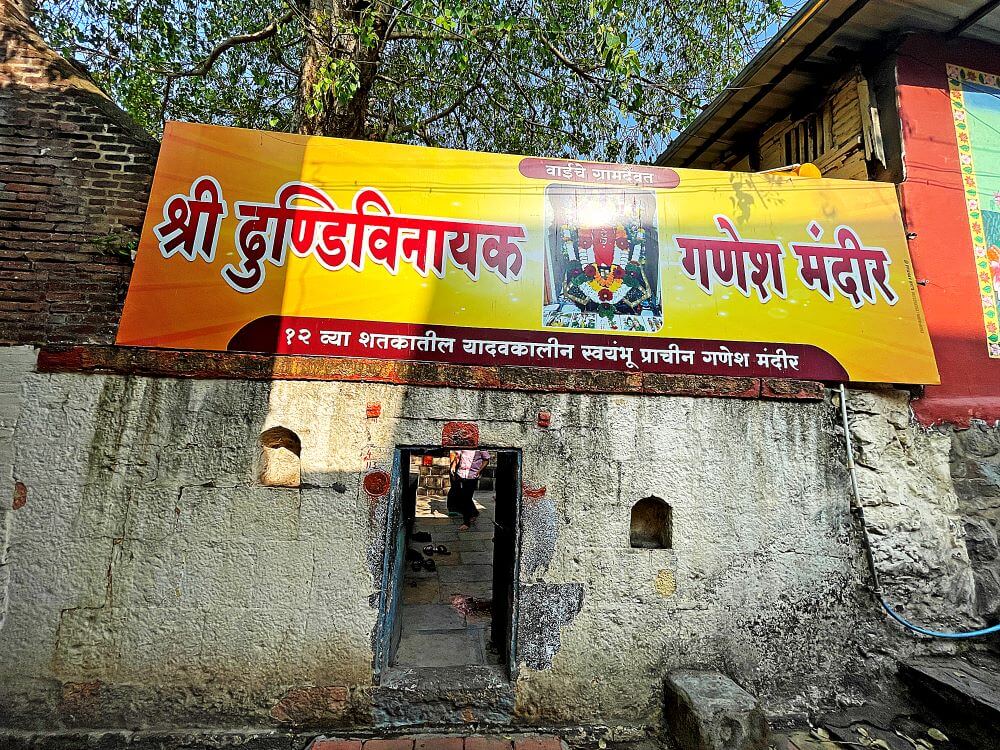
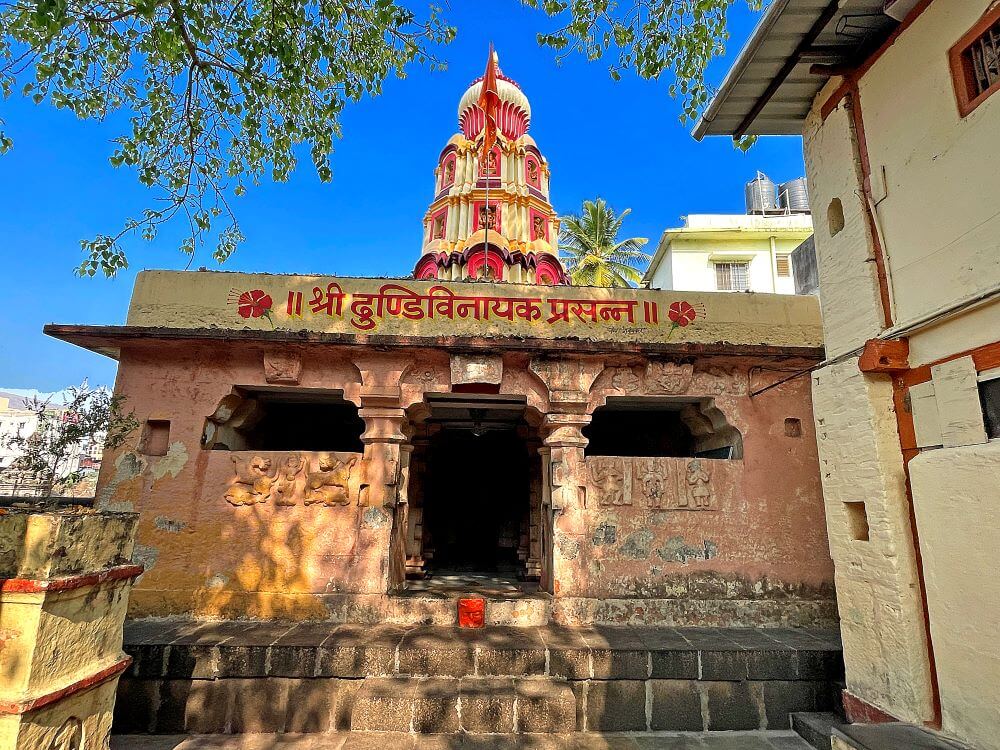
Located in the Brahmanshahi area of Wai town, the Dhundivinayak Temple holds special historical and religious significance among the ancient temples of Satara district. The temple is believed to have been constructed during the Yadava period. The idol of Lord Ganesha here is Swayambhu (self-manifested), and devotees hold a deep faith that this Ganesha fulfills all earnest vows. For any wedding taking place in Wai village, the first wedding invitation card and the sacred grains of rice (Akshata) are placed before Lord Dhundivinayak before being offered to one’s family deity (Kuldaivat). This custom has been continuously observed for hundreds of years. Owing to this, Lord Ganesha here has long been fondly known as ‘Akshata Ganapati’.
According to temple legend, before the historic meeting between Chhatrapati Shivaji Maharaj and Afzal Khan at the foot of Pratapgad, Shivaji Maharaj made a heartfelt vow (Navas) to Lord Dhundivinayak, promising to provide for the daily lighting of lamps in the temple if he succeeded in his noble cause for Swarajya. As destined, Shivaji Maharaj emerged victorious by slaying Afzal Khan during that encounter. To fulfill his sacred vow, Maharaj sent a letter through the local fort commander (Killedar) for this temple, confirming an annual provision of 57 rupees for the temple’s illumination. Following Chhatrapati Shivaji Maharaj, this annual grant was maintained during the reign of Chhatrapati Shahu Maharaj and was continued even through the British period. Today, the Government of Maharashtra still provides 57 rupees annually to this temple for the daily lighting of lamps. The Sanad (official charter) confirming that Chhatrapati Shahu Maharaj continued the grant instituted by Chhatrapati Shivaji Maharaj, along with historic documents showing its continuation by the British, are still carefully preserved at the temple.
According to another legend, when Afzal Khan was stationed in the Wai region, his troops destroyed many temples in the surrounding area. Afzal Khan even demolished several ancient temples to use their stones for constructing his grand mansion (Wada); however, despite repeated attempts, he was unable to destroy the Dhundivinayak Temple due to the divine presence and power of the Lord. From that time onward, throughout his stay in Wai, a daily offering of Naivedya was sent for Lord Ganesha directly from Afzal Khan’s mansion.
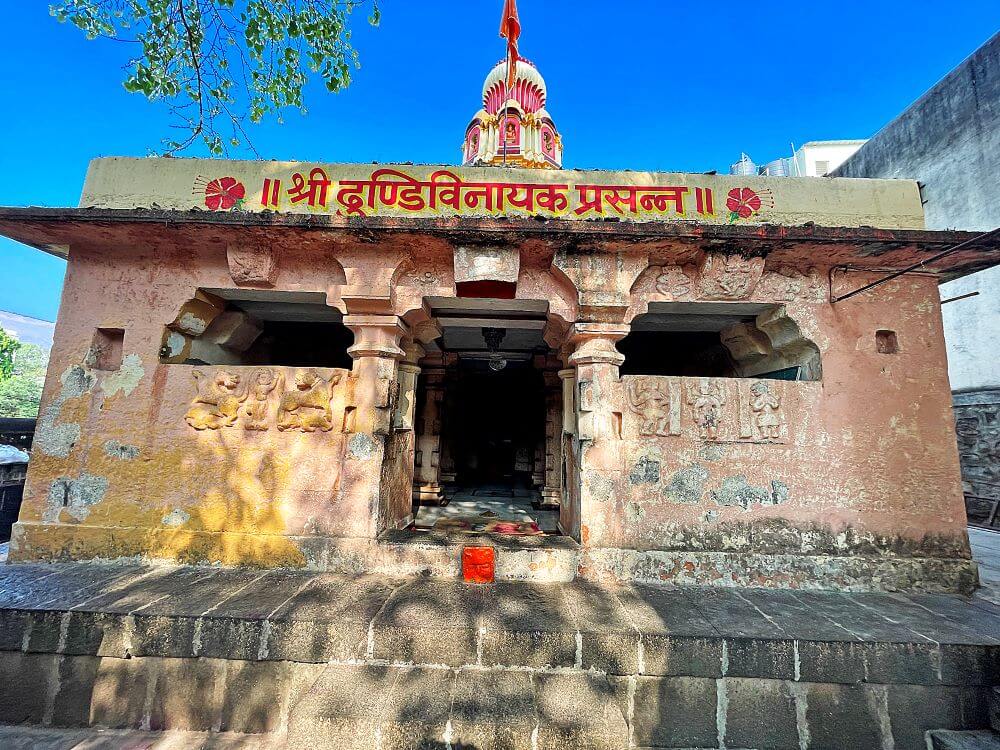
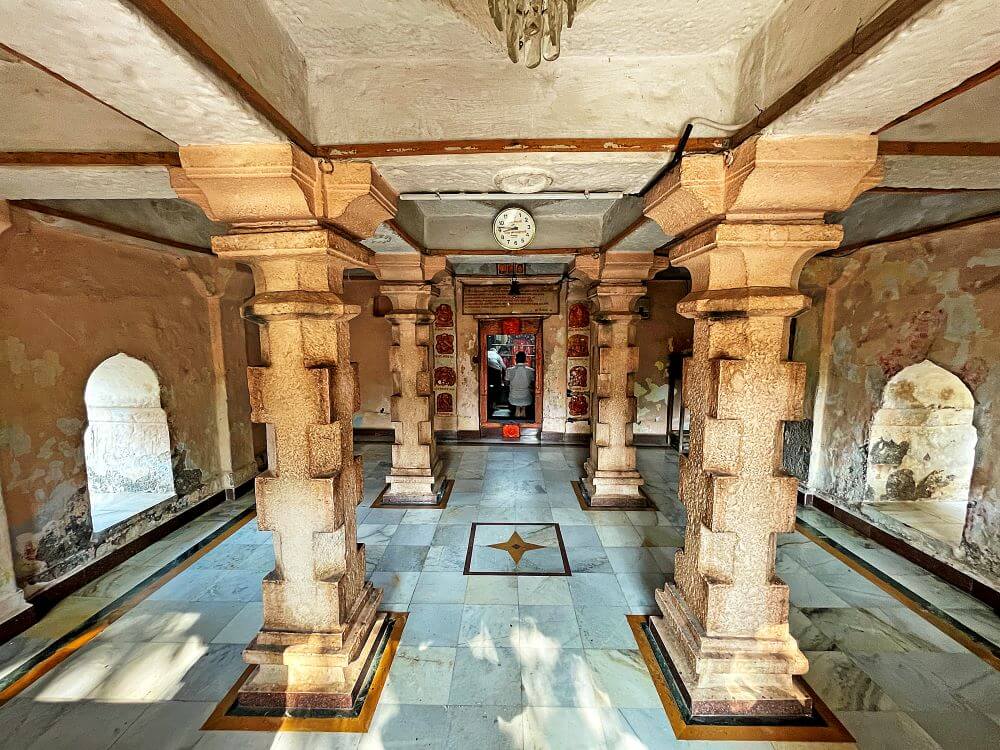
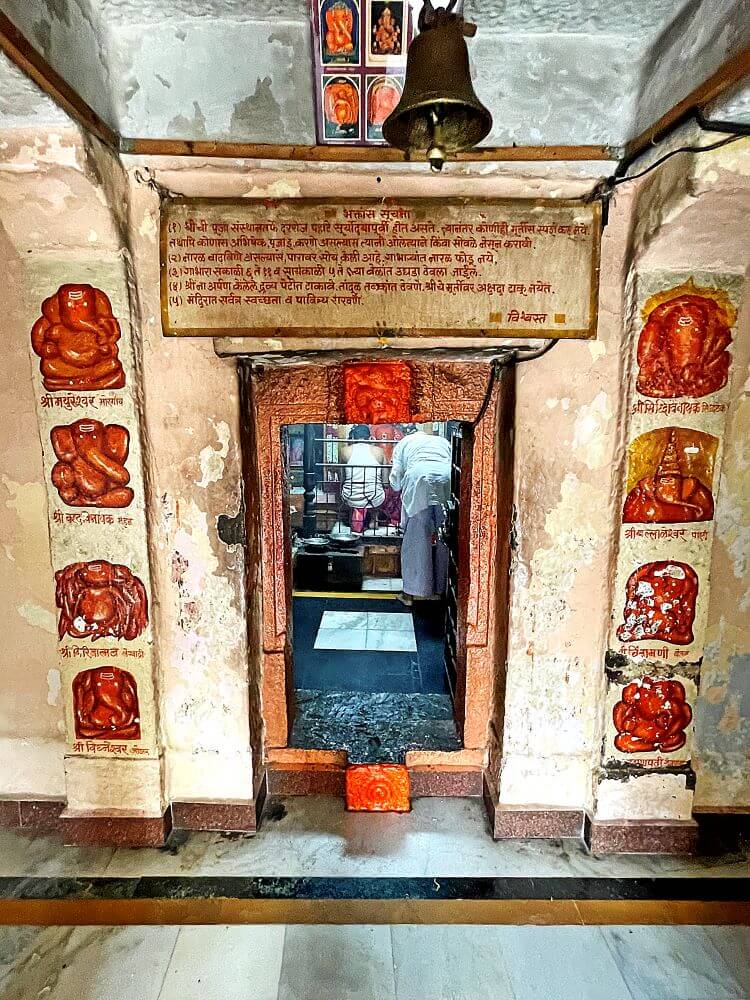
The Dhundivinayak Temple is built in the classic Hemadpanti style of architecture. Entry to the temple courtyard is through a small doorway in the surrounding stone enclosure wall. The temple is built on a raised plinth about two to three feet above the ground. The lower structure of the temple is made of stone, while bricks and lime mortar were used for the spire (Shikhara). The temple comprises an assembly hall (Sabhamandap) and a sanctum sanctorum (Garbhagriha). The Sabhamandap features stone pillars, and on either side of the entrance to the Garbhagriha, idols of the Ashtavinayakas are sculpted. Additionally, a motif of Lord Ganesha is carved on the lintel (Lalatabimba) above the doorway.
Inside the Garbhagriha, a vermilion-coated (Shendur-adorned) idol of Lord Ganesha is enshrined within a decorative shrine (Makhar). Red diamonds are embedded in the two eyes of the idol and in the chakra below the forehead. Along the circumambulation path (Pradakshina route) around the temple, there are sculptures of Lord Hanuman, yogis, ascetics, and tigers holding elephants in their paws. Within the temple premises stand four Sanjeevan Samadhis. It is said that these belong to the holy yogis who served Lord Ganesha here. These Samadhis are shaped like sacred Tulsi Vrindavans. The same Naivedya offered daily to Lord Ganesha is also placed near these Samadhis. The temple spire (Shikhara) is three-tiered and features niches (Devdeya) containing sculpted idols of various gods and goddesses.
A grand festival is celebrated at this temple on Maghi Ganesh Jayanti. On this occasion, the temple complex is decorated grandly. Mahaprasad is distributed to nearly 50,000 to 55,000 devotees on this auspicious day. Furthermore, a sacred Ganeshyag ritual is performed at the temple, which includes special Yagnas and rituals conducted for young men and women aspiring to get married. Devotees can enter the Garbhagriha to seek the direct darshan of Lord Dhundivinayak daily between 6:00 AM and 11:00 AM, and from 5:00 PM to 8:00 PM. Outside these hours, the Garbhagriha remains closed, during which time devotees can take darshan from the Sabhamandap.
This sacred temple stands as a testament to deep spiritual devotion, ancient architectural grandeur, and rich local cultural traditions.
The sanctum sanctorum houses the divine idol consecrated according to ancient Vedic traditions, surrounded by serene courtyards and traditional temple architecture.
Navratri, Maha Shivratri, Annual Temple Jatra & Deepotsav
Compare and book flights, secure top-rated local hotels near the temple, hire reliable guides, and rent cars instantly.
Extend your pilgrimage by visiting other highly sacred temples located nearby.


Add ₹999 more to unlock FREE SHIPPING!
Your sacred cart is currently empty.
Shop Photo FramesFill in your delivery details below to place your order.
Add comment