
Add ₹999 more to unlock FREE SHIPPING!
Your sacred cart is currently empty.
Shop Photo FramesPalasdev is an ancient and historic village situated on the banks of the Bhima River in the Indapur Taluka of Pune District. After the construction of the Ujjani Dam on the Bhima River was completed in 1975, the old village of Palasdev was completely submerged under its reservoir. Due to the displacement of the village, the citizens established a new Palasdev village on the riverbank. Along with the village, the Palasnath Temple, which possessed a heritage of medieval architecture, was also submerged due to this dam. This temple remains underwater for many months of the year. It only becomes visible outside the reservoir when the water level in the Ujjani Dam recedes during the summer. According to historical references, the ancient name of Palasdev was ‘Ratnapur’. In those days, this village was famous as a major trade and market center. Palasdev was the old capital of King Nalahansa. Important information regarding the construction of these temples is obtained from an inscription in the assembly hall (Sabhamandap) of the Vishnu temple here. According to this inscription from the era of the Kalyani Chalukya kings, dated Shaka 1079, or 1157 AD, Dandanayaka Changadeva built this Vishnu temple. It is believed that Basavana Upadhyaya planned the construction of this temple. For this temple, 1000 gold coins and 100 gold mohurs in the name of a son were offered during that period. Tax-free land was also donated for the maintenance of the temple. In later times, around the 17th and 18th centuries, Baburao Jahagirdar Nimbalkar of Phaltan renovated this temple and carried out new construction here. The British Gazetteer also mentions the construction of this temple and the dharmashalas (rest houses) in the area around 1680. The Palasdev temple is also known as ‘Sardeshwar’ in this area. Behind this name lies a mythological legend that in ancient times, King Nahusha had to become a chameleon due to a curse and fell at this very spot. This place also holds great significance in the spiritual realm. Saint Dnyaneshwar Maharaj has mentioned this place as ‘Palashitirtha’ in the ‘Dnyaneshwari’, which clarifies the antiquity of this region. This area is situated on the northward-flowing channel of the Bhima River. The presence of temples of both Shiva and Vishnu side by side here is considered a symbol of ‘Harihara’ unity. At that time, an attempt was made to achieve a confluence of devotion and power by installing deities at the confluence of the Bhima River. The journey to the temple begins from Bhigwan village on the Pune-Solapur highway. A short distance from Bhigwan, one finds the turn-off for Palasdev village. The unpaved road going from here reaches directly into the Ujjani dam basin. One can walk to the temple only when the dam water is low. If there is water in the basin even in summer, one has to travel by a small boat to the temple visible above the water. In this temple complex, along with the main Palasnath temple, there are Sati stones, Veergal (hero stones), broken idols, and the remains of a lamp tower (Deepmala). Directly in front of the temple is a spacious dharmashala built in the 17th century. In this dharmashala with its octagonal and circular roof, accommodation was previously provided for devotees and travelers. Although there are two temples, Kashivishveshwar and Someshwar, near the ghat, they remain underwater for most of the time.
This temple is an excellent example of the Bhumija architectural style of the pre-Yadava period. The lower 8 feet of the 28-foot-high Palasdev Shiva temple is built of stone, and the upper part is made of bricks. This west-facing temple is divided into a Mukhamandap (entrance hall), Sabhamandap (assembly hall), Antarala (vestibule), and Garbhagriha (sanctum sanctorum). This Bhumija-style spire is still in good condition and features an Amalaka and Stupika on top. The five-branched entrance of the temple is carved with Vyala (mythical creatures), lotus leaves, Gandharvas, and various intricate designs. On the 27 carved pillars in the assembly hall, fine carvings of chains and small bells can be seen. If some of these pillars are struck with a light object, they produce the seven notes of music (Saptasur). On the outer walls of the Vishnu temple, scenes from the Ramayana such as the Vali-Sugriva battle, the meeting of Sita and Hanuman, and the construction of the bridge (Setu Bandhan) are carved. In these carvings, even the fish in the sea are seen to be carved with great detail. On the walls of the temple, there are sculptures of 16 and 32 types of Surasundaris (celestial beauties). Figures of women in poses such as Darpana (mirror), Putravallabha (child-loving), and Karpuramanjari can be seen.
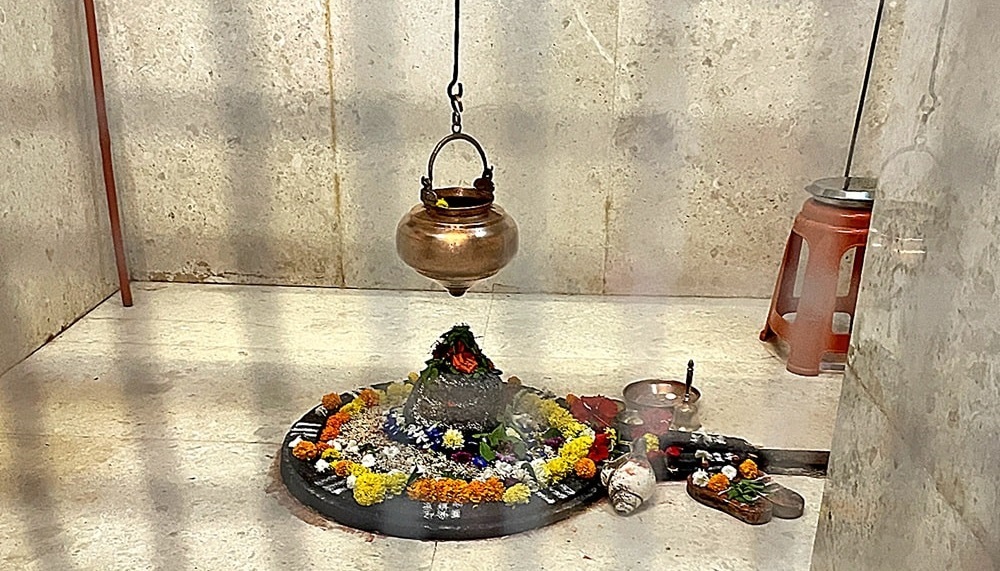
After the village of Palasdev was submerged in 1975, the nature of the festivals there changed. The historic Shiva Linga and the idol of Sheshashayi Vishnu from the original temple are now in the temple in the new village. A spacious temple has been built on the riverbank in the village.
Since then, all festivals of the original temple are celebrated in this new temple. A grand festival is celebrated here on Mahashivratri. On this day, thousands of devotees from the surrounding area come for darshan. Even though the old temples are underwater, devotees come here for darshan when the water recedes in summer.
This area has now become famous for eco-tourism along with religious festivals. Every year in winter, thousands of flamingos, storks, herons, and various water birds come to the catchment area of Ujjani. This proves to be a great treat for bird watchers.
This sacred temple stands as a testament to deep spiritual devotion, ancient architectural grandeur, and rich local cultural traditions.
The sanctum sanctorum houses the divine idol consecrated according to ancient Vedic traditions, surrounded by serene courtyards and traditional temple architecture.


Navratri, Maha Shivratri, Annual Temple Jatra & Deepotsav
Compare and book flights, secure top-rated local hotels near the temple, hire reliable guides, and rent cars instantly.
Extend your pilgrimage by visiting other highly sacred temples located nearby.


Add ₹999 more to unlock FREE SHIPPING!
Your sacred cart is currently empty.
Shop Photo FramesFill in your delivery details below to place your order.
Add comment