
Add ₹999 more to unlock FREE SHIPPING!
Your sacred cart is currently empty.
Shop Photo FramesLocated near the famous pilgrimage center of Jejuri in Purandar taluka of Pune district, the Lavathaleshwar Temple is considered one of the important pilgrimage sites in the district. This place holds special significance because during his stay at the temple to eradicate superstitions from society, Samarth Ramdas Swami composed the famous aarti of Lord Shiva, “Lavathvati Vikrala…”, here. Carved into stone below ground level, this temple is known for its distinctive architectural style.
Blessed with a historical heritage dating back to the early seventeenth century, this Lavathaleshwar Temple has preserved numerous footprints of history. The seven-line inscription carved on the stone steps at the entrance of this temple is considered the most significant proof of the antiquity of this structure. Commencing with clear letters such as ‘Shri Ganeshay Namah Shri Swasti Shake ۱۵۳۰’, this inscription dates back to the year ۱۶۰۸ of the Common Era. This period predated the birth of Chhatrapati Shivaji Maharaj, and at that time, the Nizamshahi dynasty held rule over this region. During the era of Chhatrapati Shivaji Maharaj’s establishment of Swarajya, this region gained immense significance.
It is a popular folklore in this region that Moropant Pingale, the first Prime Minister of Swarajya, and Chhatrapati Shivaji Maharaj had their first historical meeting right here. When Maharaj made some critical remarks about Swarajya to test Moropant’s loyalty, Moropant replied with utmost dignity and firmness. Impressed by his unwavering loyalty to Swarajya, Maharaj inducted him into the service of Swarajya. Although solid written documents of this event are not available, the historical atmosphere here evokes the memories of the valor of the Shiv period. Inscriptions mentioning individuals like Baji Dharmaji Kate shed light on the contributions of local sardars. This region has been a witness to many wartime events and political developments from ancient times.
According to the description in the eighteenth chapter of the text ‘Martand Vijay’, an extremely devoted disciple of Lord Shiva’s strict disciplinarian devotee, Sage Durvas, named ‘Lava’, resided in this region. Sage Lava had a deep desire to sit in a secluded place and perform uninterrupted penance of Lord Shiva. Witnessing the devotion of his disciple, Sage Durvas consecrated this entire area through the power of his penance. He permanently freed this region from the wandering of demons, shakinis, dakinis, and ghosts-goblins. The place where Sage Lava sat and performed fierce penance, and where he installed a Shivalinga, appropriately came to be known as ‘Lavathaleshwar’. In the Krutayuga, two cruel demons named Mani and Malla wreaked havoc on the Manichula mountain. At that time, Sage Narada suggested that the families of the Saptarishis there take refuge in the consecrated premises of Lavathaleshwar to remain safe.
While residing here, Samarth Ramdas Swami demonstrated immense courage to dispel the fear of death from the minds of the people. At that time, a superstition was prevalent in society that anyone who stayed overnight in this temple would die. To eradicate this fear, Samarth stayed here and, standing right before this very Shivalinga, composed hymns describing the fierce form of Lord Shiva. Because the words that emerged from His mouth—’Lavathavati Vikrala, Brahmandi Mala… Vishe Kantha Kala, Trinetri Jwala’—are associated with the name of the deity here, this composition gained immense popularity.
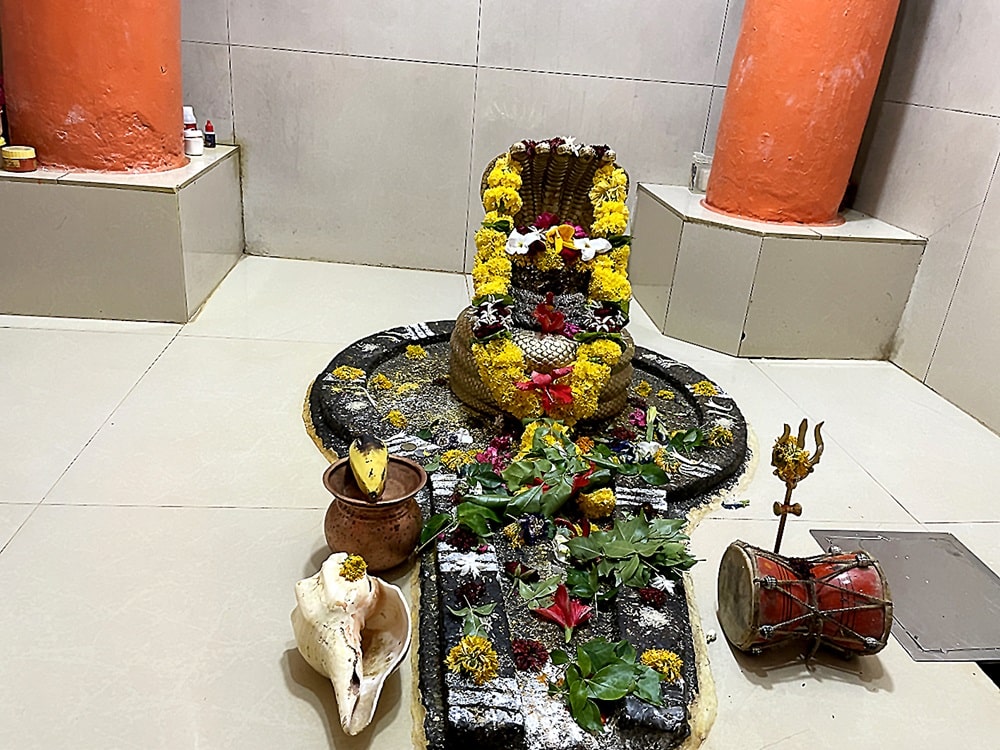
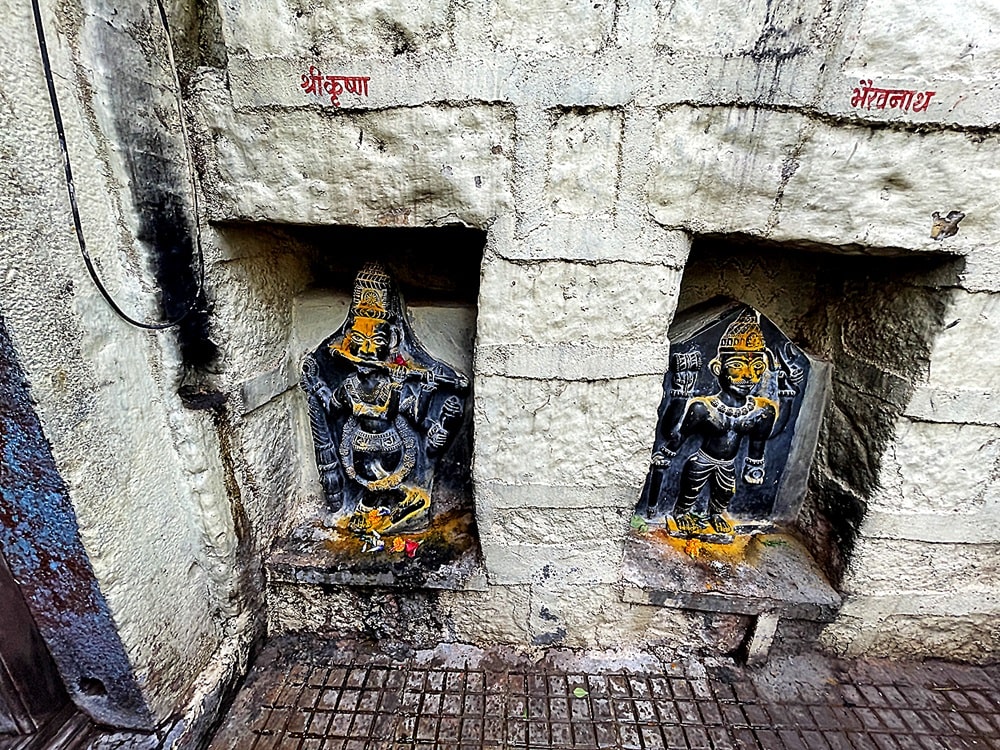
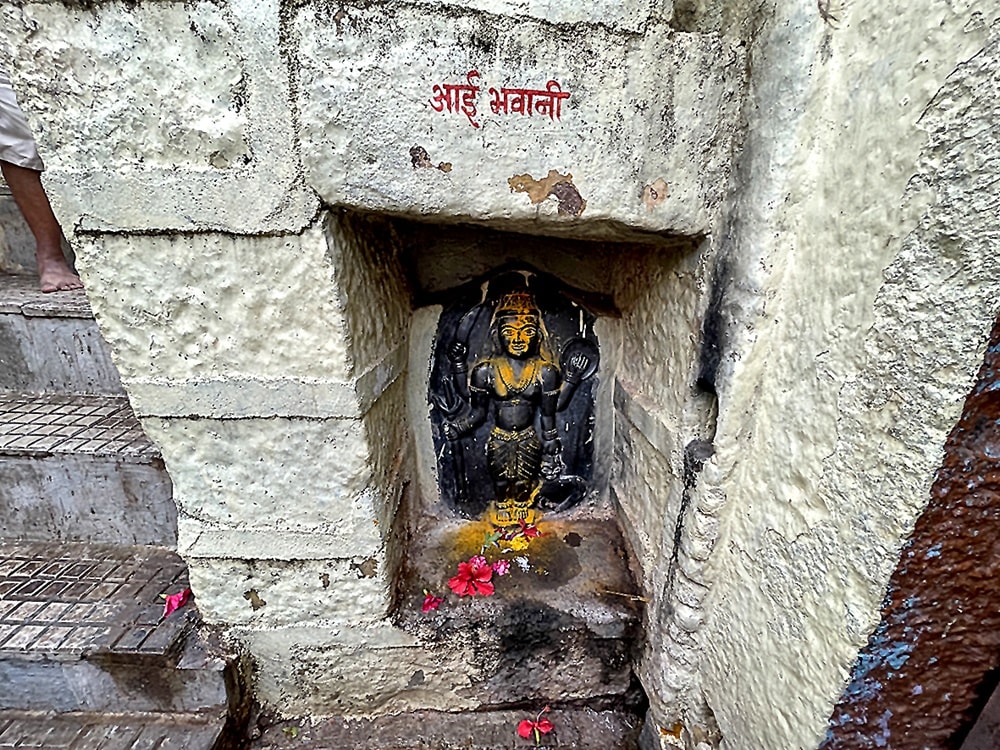
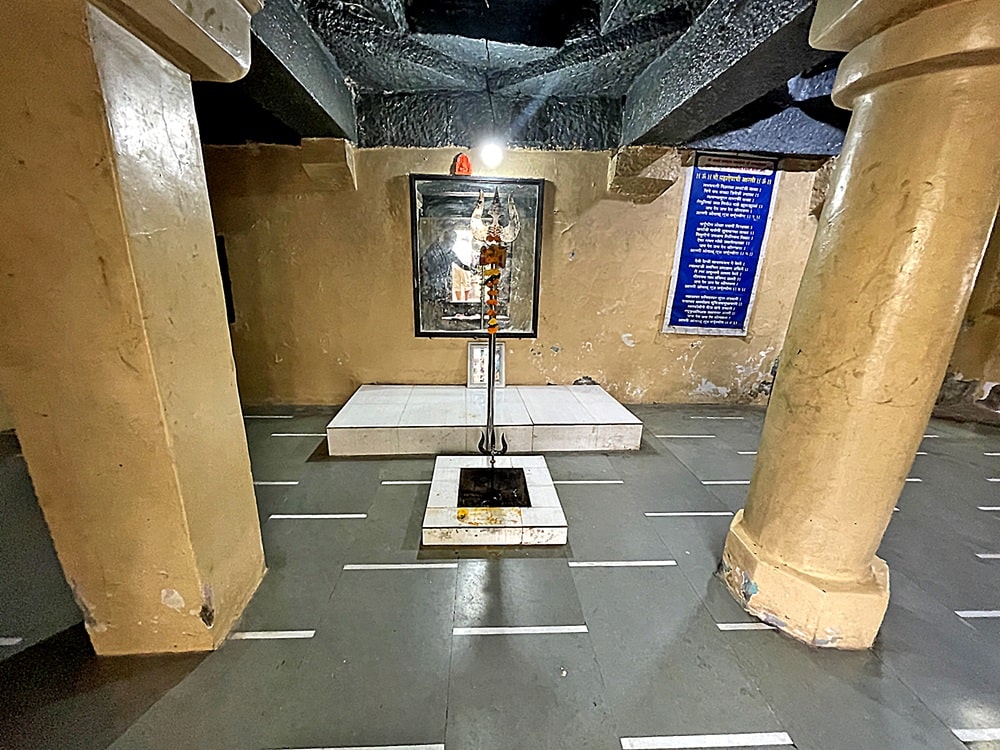
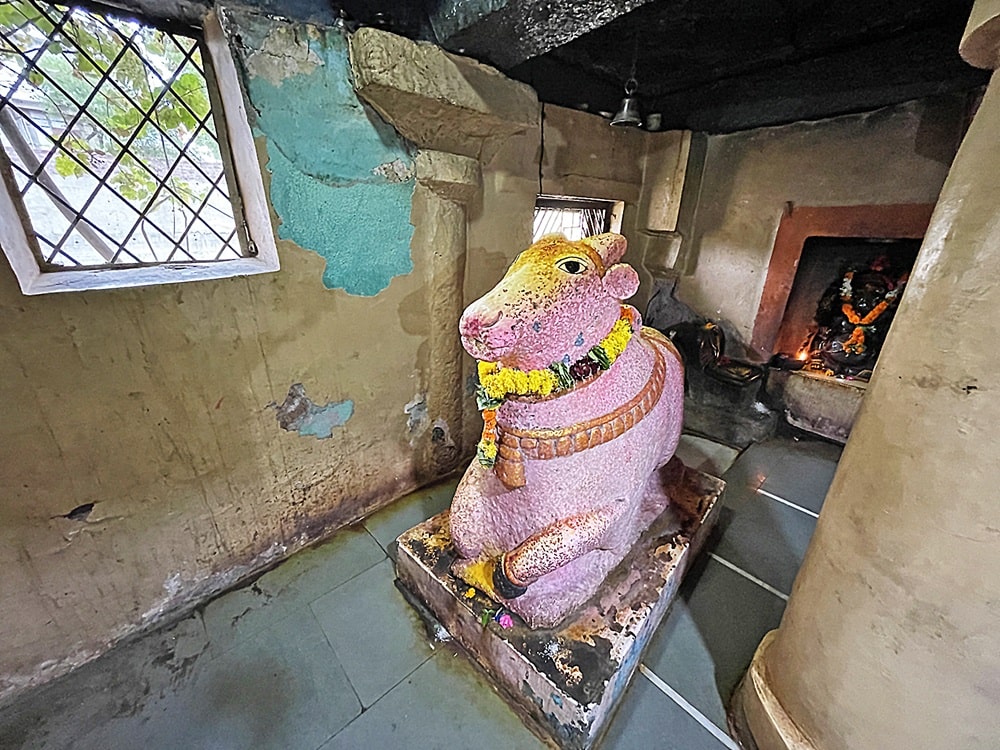
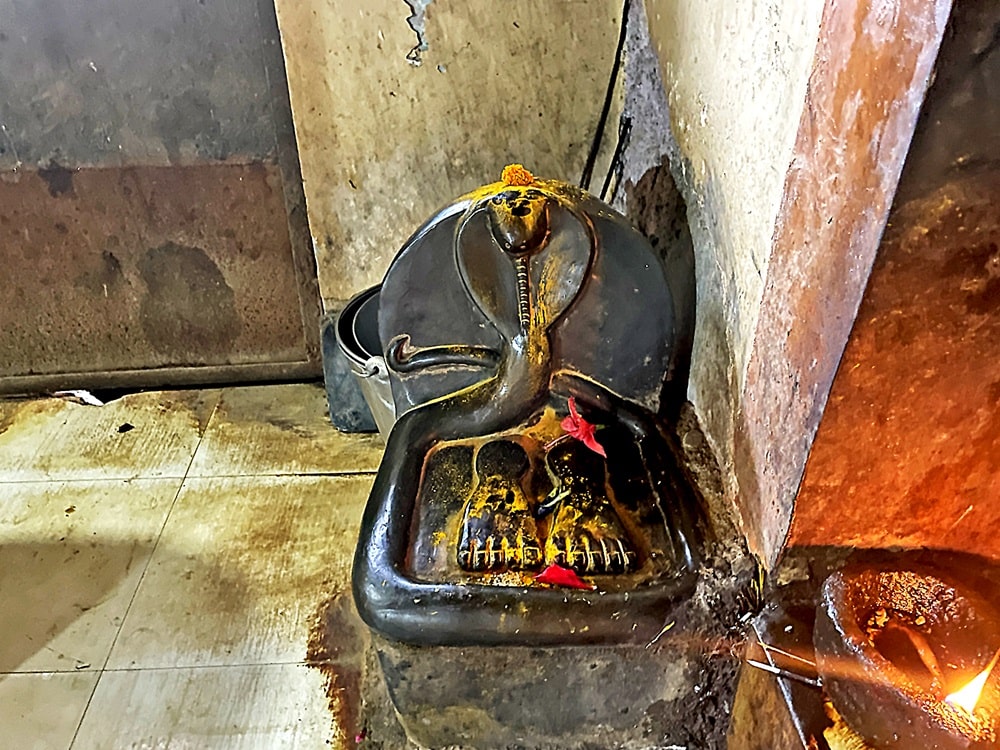
This pilgrimage site, located on the Pune-Saswad-Jejuri route, is situated in a barren expanse. While traveling from Saswad towards Jejuri, this temple is situated on the right side under a massive and ancient banyan tree. Situated on the banks of the Karha River, this temple is eight feet below ground level. It is not easily visible from a distance. From the barren land surrounding the temple, the fort of Jejuri and the mountain ranges of Purandar Fort can be seen. Due to its special underground architecture, the temperature here remains constantly cool. Influenced by the Deccan rock-cut architecture style, this temple is carved with great skill into the underground stone. One enters the courtyard through the gateway in the compound wall surrounding the temple. Descending a few stone steps from the courtyard, an inscription on the right side of the steps comes into view. An inscription in the Devanagari script provides information about the structure here. Walking down the steps further ahead, there is a Nandi Mandapa in front. Near the Nandi idol inside the Mandapa, idols of Ganapati and Naga are installed. The Sabha Mandapa of the temple features stone pillars. In the Garbhagriha here is the Shiva Linga installed by Lava Rishi. The special feature of this Shiva Linga is that it is not in a straight line with the entrance, but is positioned at a slight right angle. Idols of Lord Hanuman and Lord Krishna are carved on the walls of the temple. Along with these, there is also a ‘Viragal’ (hero stone) here. Battle scenes are carved on this hero stone, which is 162 centimeters in height. The temple does not have a traditional high shikhara (spire). Instead, there is a special dome-shaped structure resembling a Shiva Pindi on the roof. Images of 95 elephants and 108 pillars are carved on the walls of the temple.
Various programs are organised throughout the year at the Lavathaleshwar Temple. Mahashivratri is the biggest annual festival of this temple, on which day the *Panchamrit Abhishek* and *Puja-archana* on the *Shivling* begin from early dawn. Thousands of devotees from Jejuri and Purandar taluka come here for *darshan* on this day. At this time, the entire temple premises reverberates with the chants of ‘Har Har Mahadev’. Programs of *Harikirtan* and *Jagaran* are organised at night. The *Aarti* composed by Samarth Ramdas Swami is sung here with deep devotion. Special worship and decorations of *Belpatra* are done here on every Monday in the month of Shravan. There are long queues of devotees here on *Shravani Somwar*. On the occasions of Datta Jayanti and the death anniversary (punyatithi) of Samarth Ramdas Swami, programs of *Dasbodh* reading and *bhajans* are held here. The water from the ancient *pushkarini* (temple tank) near the temple is used for the *abhishek* of the *Shivling*. During the festival times, this tank is decorated with lamps. This region has been recognised as a ‘C’ grade tourist destination by the State Government.
This sacred temple stands as a testament to deep spiritual devotion, ancient architectural grandeur, and rich local cultural traditions.
The sanctum sanctorum houses the divine idol consecrated according to ancient Vedic traditions, surrounded by serene courtyards and traditional temple architecture.
Navratri, Maha Shivratri, Annual Temple Jatra & Deepotsav
Compare and book flights, secure top-rated local hotels near the temple, hire reliable guides, and rent cars instantly.
Extend your pilgrimage by visiting other highly sacred temples located nearby.


Add ₹999 more to unlock FREE SHIPPING!
Your sacred cart is currently empty.
Shop Photo FramesFill in your delivery details below to place your order.
Add comment