
Add ₹999 more to unlock FREE SHIPPING!
Your sacred cart is currently empty.
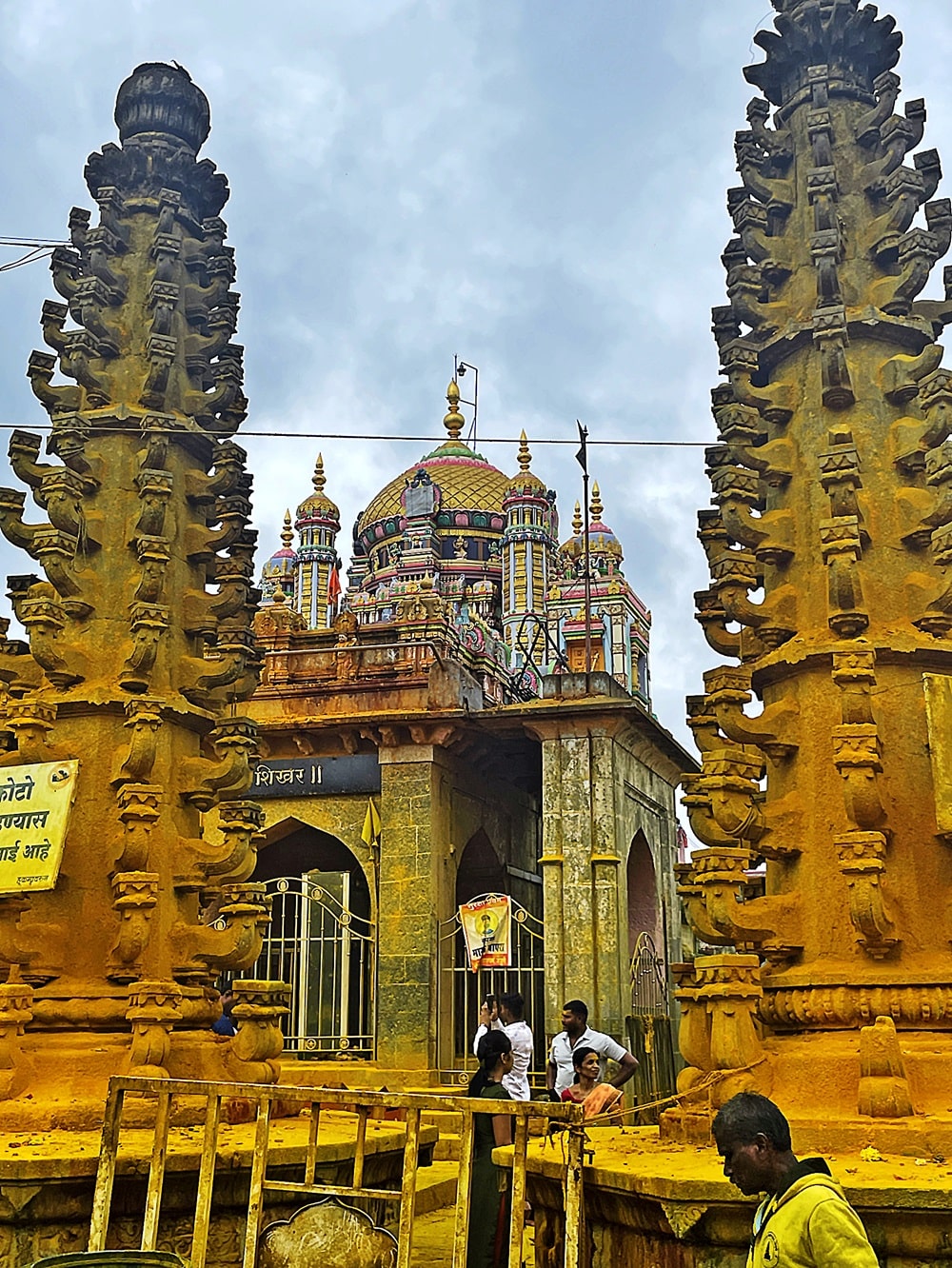
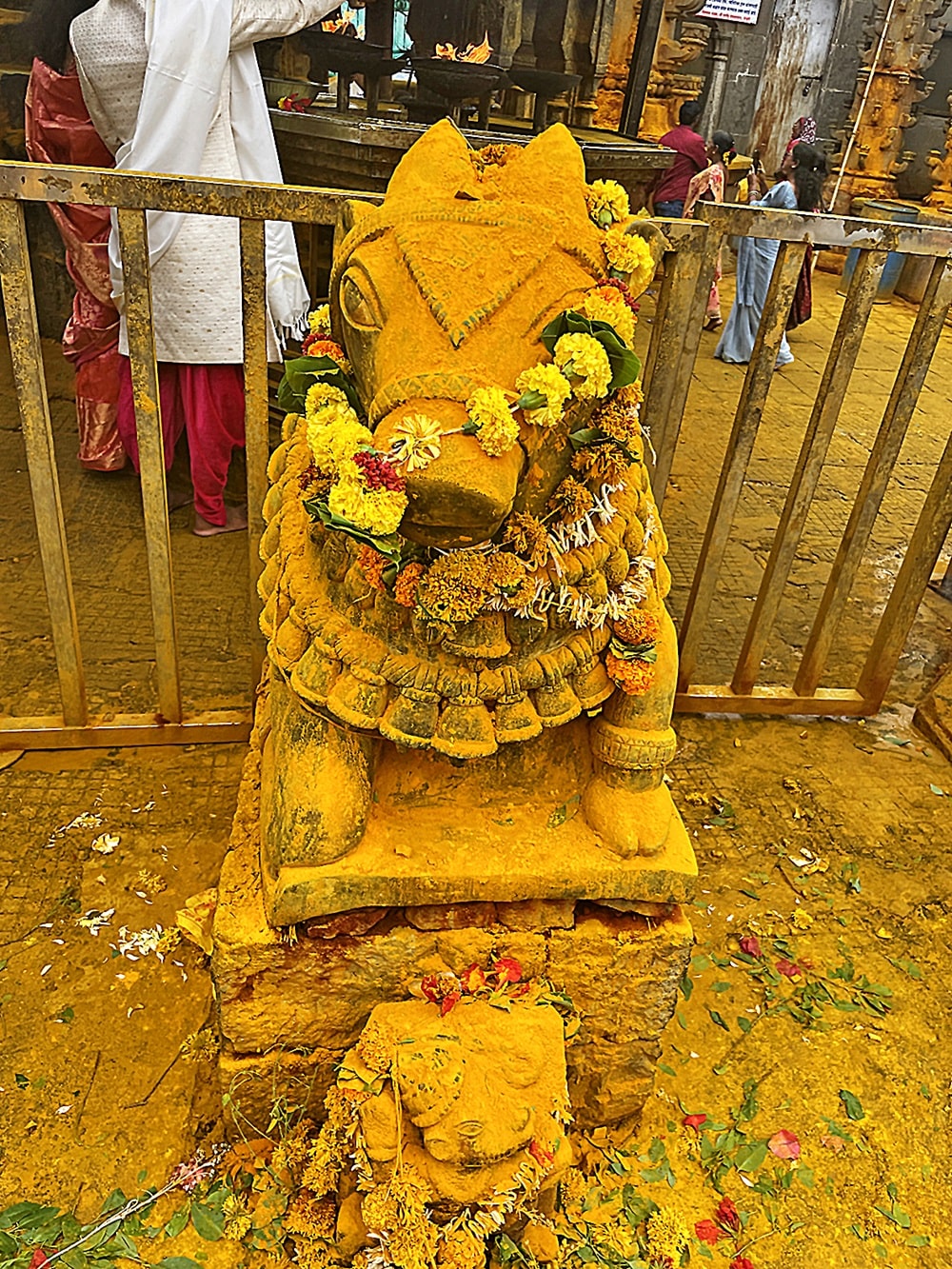
Shop Photo FramesThe Martand Devasthan at Jejuri, near Pune, is the sacred site whose glory was sung in the thirteenth century by Saint Narhari Sonar in the words: “The Jejurgad mountain is in the form of a Shiva Linga; it is the second Kailash peak on this mortal earth.” It is considered one of the most significant and spiritually vibrant places of worship in all of Maharashtra. The atmosphere, resonating with the chant “Yelkot Yelkot Jai Malhar,” appears golden-yellow due to the showering of Bhandara (turmeric powder). Thousands of devotees visit this fort daily to seek the blessings of Khandoba, the family deity of the Bahujan community and many heroic lineages. A tradition still observed today involves newlywed couples applying Bhandara to each other’s foreheads, and the groom carrying his bride while ascending the steps of the Jejuri fort.
Various historical references clarify that this temple has existed since the eighth century. An ancient inscription mentions that kings named Virpal and Virmalla fortified the Jejuri fort in the year 1248 CE. This historical inscription, located outside the main temple’s assembly hall (Sabhamandap), is no longer legible due to the passage of time. The temple underwent significant expansion between the sixteenth and seventeenth centuries, with many new structures added. The main temple was renovated in 1608 CE, and a new temple was constructed here in 1712 CE. During the Maratha era, this temple received special royal patronage. Thorle Bajirao Peshwa and Chimaji Appa played a vital role in the development of this temple. Notably, Chimaji Appa offered large bells here that were captured from the Portuguese during the Vasai campaign. The credit for the modern appearance of Jejuri primarily goes to the Holkar dynasty. Malharrao Holkar was a devout follower of Khandoba. In 1742 CE, he erected grand stone pillars in the temple, and by 1770 CE, he completed the construction of the strong fortification around the fort and the water tanks. Punyashlok Ahilyadevi Holkar oversaw the comprehensive development of this region. Structures such as the historical Holkar Lake, the expansive tamarind orchard, and the Chilavati Kund still bear witness to her work.
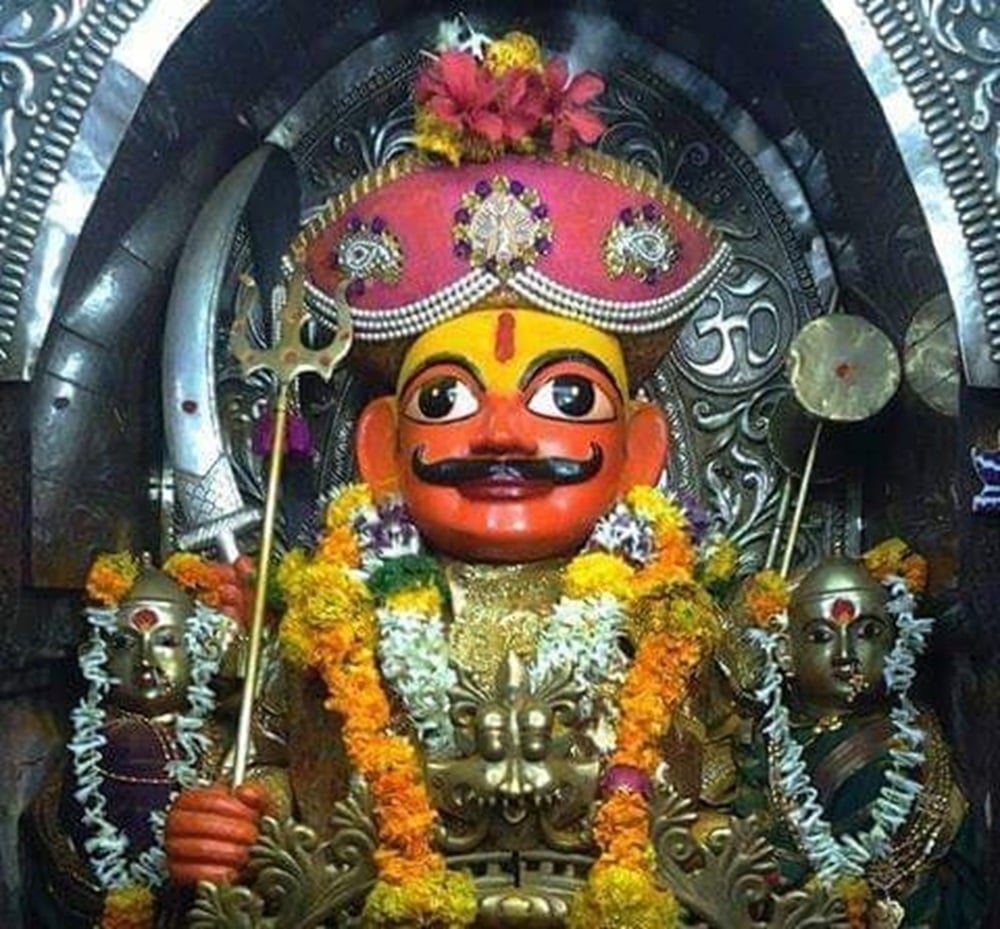
According to mythological accounts, Khandoba is considered an avatar of Lord Shiva. Known also as Martand Bhairav and Malhari, this deity incarnated to slay the two demons, Mani and Malla. The demons Mani and Malla had obtained a boon from Lord Brahma and wreaked havoc on earth. To liberate the sages from the torment of these demons, Shiva assumed the form of Martand Bhairav. In this form, with a body glowing like gold smeared with turmeric and holding a weapon called ‘Khanda’, he fought a fierce battle against the demons for six days. At the end of the war, the demon Mani expressed repentance and offered his white horse to Khandoba, who granted him a permanent place at his feet. Even today, the head of Mani can be seen carved under the feet of Khandoba in the main sanctum sanctorum of the temple. However, Khandoba beheaded the arrogant demon Malla, and in memory of this victory, the chant “Yelkot”—meaning the leader of one crore gods—began.
Among Khandoba’s two primary wives, Mhalasa Devi is considered an avatar of the Adi Shakti, Parvati. She was born as the daughter of a merchant from Nevase. The second wife, Banai, belongs to the Dhangar community. She is the daughter of Lord Indra himself and was raised in the home of a Dhangar on earth. Since Khandoba slew the demon on the day of Champa Shashthi, this day has acquired special significance as ‘Malhari Navratri’. The continuous showering of Bhandara during this period is a symbol of Khandoba’s victory celebration.
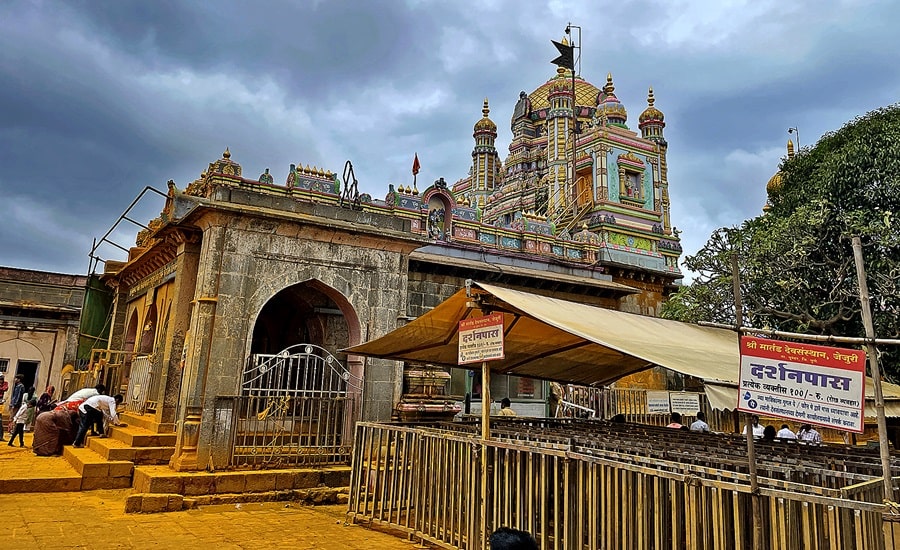
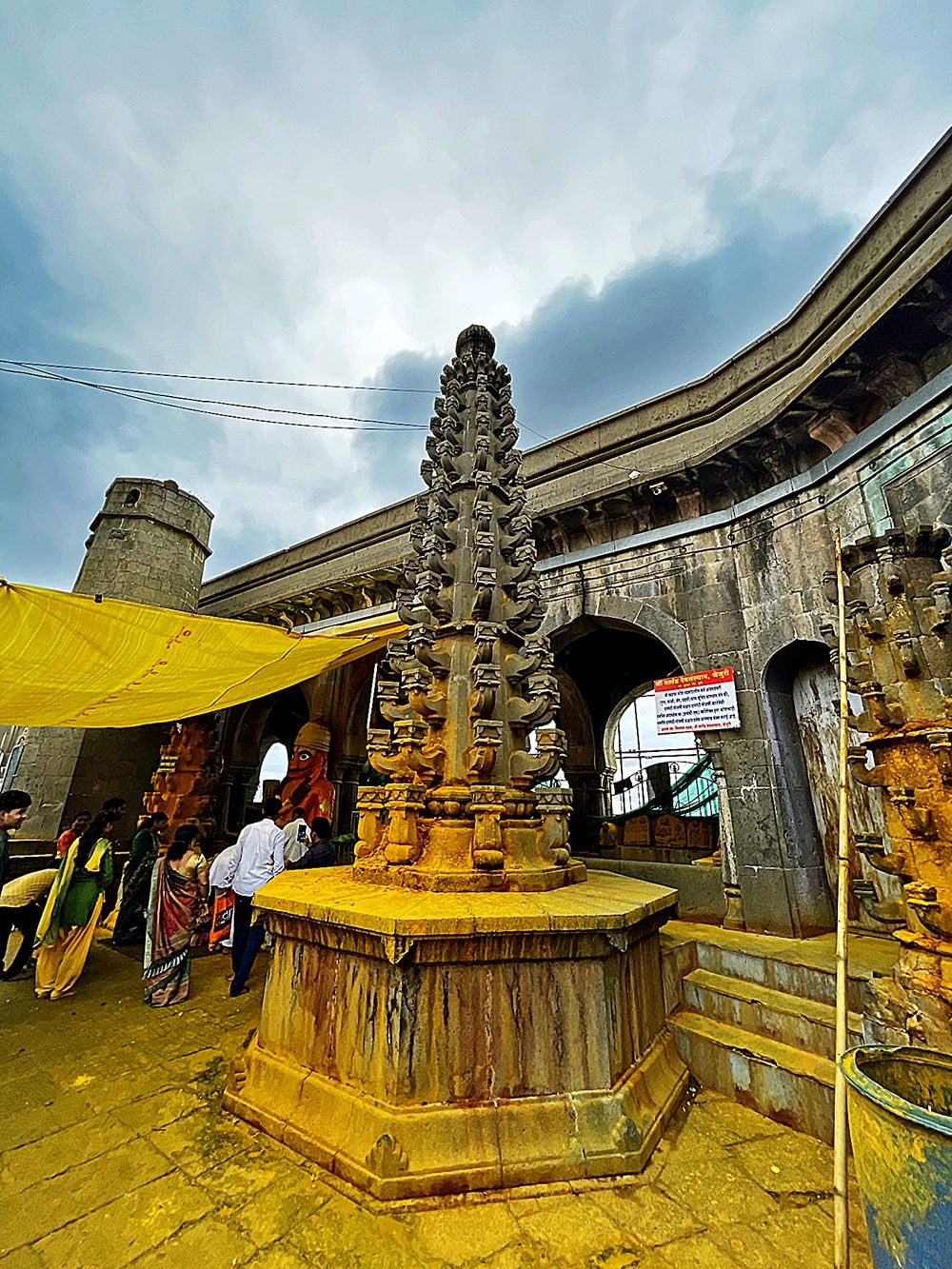
Situated at an altitude of 718 meters in the sub-ranges of the Sahyadri, this fort is located in a nature-rich area. There are mainly three routes to reach the fort. Among them, the northern staircase route is considered the busiest and most convenient. At the beginning of the staircase route is the main gate of the temple. This fortress-like entrance is about fifty feet high, with guard rooms on both sides. The Nandi Mandap is located here, where devotees offer Bhandara and begin their pilgrimage. There is a tradition where a newlywed husband must carry his bride on his shoulders and climb the first five steps. For this reason, the first five steps are called the ‘Mana-chya Payrya’ (the honorable steps). One must climb a total of 385 steps to reach the fort. In folklore and folk songs, these steps are referred to as the ‘Nine Lakh Steps’. This reference may have originated from the number of stones used for the steps. In front of the steps are many ancient lamp towers (Deepmalas). It is said that these lamp towers were built by Sardars, Jahagirdars, and wealthy families who had made vows. After climbing a few steps from here, on the right side, is the stable for Khandoba’s horse. The horse that dances in front of Khandoba’s palanquin is kept here. The honor of maintaining this horse has been held by the Khan family for generations. Climbing a few more steps, one finds a full-length armed statue of the freedom fighter and Khandoba devotee, Umaji Naik. On the staircase route, there is an idol of the deity Virbhadra in an ancient shrine.
On one side of the steps, there is a sculpture depicting the meeting between Chhatrapati Shivaji Maharaj and Shahaji Raje. It is said that this historical event took place on the Jejuri fort. Upon reaching the middle of the staircase route, on the right side, is the ancient temple of Banai. The temple consists of an assembly hall and a sanctum sanctorum. Inside the sanctum is a stone idol of Banai. In front of the temple are stone sculptures of sheep. After their vows are fulfilled, devotees offer sheep sculptures here. Near this temple is an inscription carved by Malharrao Holkar in Shake 1617, i.e., 1695 CE. Devotees believe that Khandoba still comes here after midnight to meet Banai.
After climbing a few more steps, one reaches the temple of Khandoba’s commander, Hegadi Pradhan. Although Hegadi Pradhan was the brother of Khandoba’s queen, Mhalasa Devi, he was a devoted follower of Khandoba. In the temple, there is a stone idol of Hegadi Pradhan on a Vajra-peetha. A short distance from this temple, on a high platform, stands a full-length statue of Punyashlok Ahilyadevi Holkar. From here, one can climb a few more steps to reach the main entrance of the temple. Beside the entrance is a small shrine with a sculpture of Yashwantrao. When the army of the Mughal Emperor Aurangzeb attacked the Jejuri fort and the temple, Yashwantrao sacrificed his life to protect the fort and maintain the sanctity of the temple. It is believed that he attained martyrdom while fighting to defend the fort.
On the upper floor of the fort’s main two-story entrance gate is the Nagarkhana (drum house). The entrance gate features various sculptures, and there are guard rooms on the inside. From here, one enters the temple courtyard of the fort. The temple is surrounded by strong fortifications on all four sides, with stairs provided to reach them. Along the fortifications are covered galleries (ovaris). Rituals such as Gondhal, Jagaran, and others are performed here. There are four lamp towers (Deepmalas) in the courtyard. Situated on octagonal pedestals, these massive lamp towers taper towards the top and are crowned with spires. The lamp towers are carved with sculptures of deities, animals, birds, and flowers. During Tripurari Purnima and other festivals, these lamp towers are illuminated with oil lamps. Beside the lamp towers are stone idols of the demons Mani and Malla. Nearby is the Khandoba Bagad. Devotees used to hang from this Bagad to fulfill their vows; however, these practices have now been prohibited. Beside the Bagad pavilion, an eternal lamp (Divti) remains lit. Devotees visiting the deity offer oil to this lamp. In the courtyard, there is a large brass tortoise sculpture. Beside it is a stone Nandi sculpture. Also located here is the pavilion for performing the Tali-Bhandara ritual. In front of the temple is the deity’s Khanda (sword). Devotees attempt to lift this heavy sword with one hand.
Further ahead is the Khandoba temple. To the right and left of the temple, iron railings have been installed to manage queues. One of these queues is for paid Darshan. The temple consists of a Sabha Mandap (assembly hall) and a Garbhagriha (sanctum sanctorum). The temple stands on a platform about four feet high. There are six steps at the entrance of the Sabha Mandap. The Sabha Mandap has four pillars in the front, with arches atop them. The Sabha Mandap has two additional entrances on the left and right sides. Devotees are admitted through these entrances. The entrance features ornate door frames with a sculpture of Lord Ganesha on the lintel. The Sabha Mandap contains many ornate stone pillars and an idol of Khandoba riding a horse.
Further ahead is the entrance to the Garbhagriha. The entrance has ornate wooden shutters. Inside the Garbhagriha, near the back wall, is a four-armed stone idol of Khandoba seated on the demon Mani-Malla. In front are two idols each of Khandoba and Mhalsa. On the floor in front of the idols are the Swayambhu (self-manifested) stone Pindis of Khandoba and Mhalsa. Adjacent to the Garbhagriha are two chambers on the left and right. The left chamber serves as the deity’s bedroom, while the basement of the right chamber houses the secret sanctum of Khandoba. The roof of the Sabha Mandap features a dome-shaped spire. On all four sides of the spire are several smaller Urushringi-style spires. Their tops are adorned with Amalakas and Kalashas. The main spire is topped with a Stupika and a Kalasha.
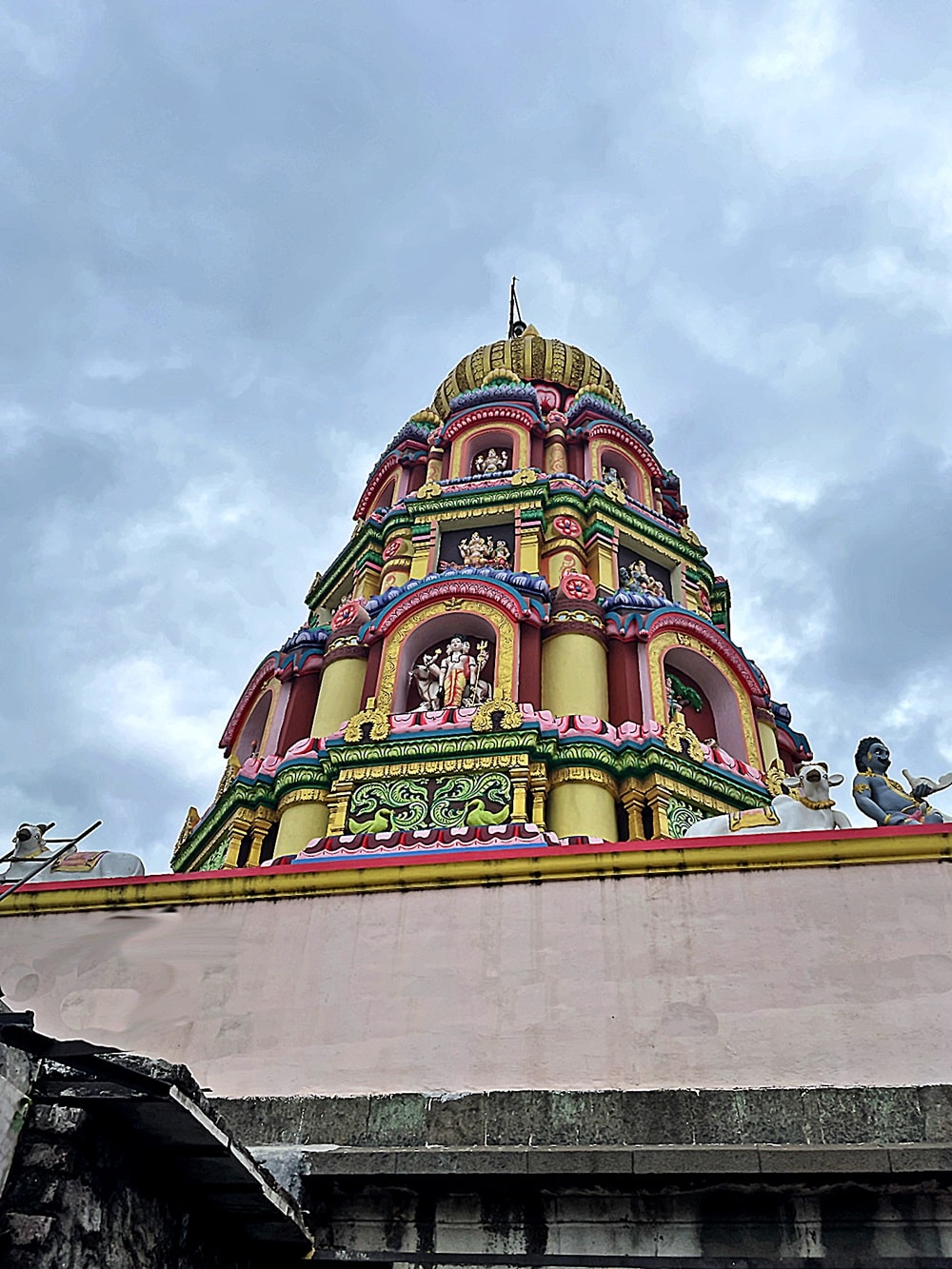
Behind the Khandoba temple is the temple of Goddess Mhalsa. This temple, which also consists of a Sabha Mandap and a Garbhagriha, houses a stone idol of Goddess Mhalsa in the form of a slab. The Goddess is adorned with a brass mask. The roof of this temple’s Garbhagriha has a five-tiered spire. Each tier of the spire contains niches for deities. The top tier of the spire is dome-shaped and topped with a Stupika and a Kalasha. Behind the Jejuri fort lies the Kadepathar shrine, which is the original abode of Khandoba. There are about 700 steps from the base to reach Kadepathar.
Various festivals and celebrations are held with great enthusiasm at Jejuri fort throughout the year. The largest fair is held on Somvati Amavasya, the new moon day that falls on a Monday. On this day, Khandoba’s palanquin is taken from the fort to the Karha River for a holy bath. Thousands of devotees participate in this procession, chanting “Yelkot” and showering turmeric (Bhandara) freely. The processional idols of the deity are given a holy bath at the Papanashan Tirtha of the Karha River, after which the palanquin returns to the fort. The Champa Shashthi festival in the month of Margashirsha lasts for six days. On this day, the deity is offered a Naivedya of eggplant mash (Bharit) and millet bread (Rodga). On Mahashivratri, the Shiva Linga in the temple’s Kalasha and the secret Linga in the basement are opened for Darshan. On Paush Purnima, the wedding ceremony of Khandoba and Goddess Mhalsa is celebrated with great grandeur. A large fair is also held here on Chaitra Purnima. On the day of Dussehra, a sword-lifting competition is organized on the fort. Devotees fulfill their vows by performing rituals such as ‘Tali Bharne’ and ‘Jagaran-Gondhal’.
This sacred temple stands as a testament to deep spiritual devotion, ancient architectural grandeur, and rich local cultural traditions.
The sanctum sanctorum houses the divine idol consecrated according to ancient Vedic traditions, surrounded by serene courtyards and traditional temple architecture.
Navratri, Maha Shivratri, Annual Temple Jatra & Deepotsav
Compare and book flights, secure top-rated local hotels near the temple, hire reliable guides, and rent cars instantly.
Extend your pilgrimage by visiting other highly sacred temples located nearby.


Add ₹999 more to unlock FREE SHIPPING!
Your sacred cart is currently empty.
Shop Photo FramesFill in your delivery details below to place your order.
Add comment