
Add ₹999 more to unlock FREE SHIPPING!
Your sacred cart is currently empty.
Shop Photo FramesIn ancient tribal societies, various elements of nature and the five primordial elements (Panchamahabhutas) were deified and worshipped. It was a common belief among the people that various epidemics were caused by divine wrath. From this belief, deities of these diseases were conceptualized, and rituals were created to appease them. In the past, every village had a village guardian deity (Gram-rakshak Devata), and similarly, goddesses of diseases were installed at the village boundaries. Marubai, the village deity of Matunga, is considered the guardian deity of this village. There is a popular belief that she is the goddess who removes the illnesses of her devotees. A beautiful temple of this goddess is situated in the eastern part of Matunga, near King’s Circle.
The history of Marubai, who is the presiding deity (Aradhyadevata) for many families here, is linked to the development of Matunga. Until the latter half of the nineteenth century, the Matunga area was a barren wilderness. King Bimbadev, also known as Bhimdev Yadav, the fourth son of Ramdevrao Yadav of Devgiri, ruled here in the thirteenth century. In the year ১২৯৫, he established his capital at Mahim (Bimbasthan). It is said that this king had a large elephant stable (Gajashala) in the Matunga area. In Sanskrit, an elephant is also called Matanga. From this, the area came to be known as Matangalaya. It is believed that the name Matunga may have been derived from the corruption of the words Matanga and Matunga. According to some, there was a settlement of the Matang community here during the time of King Bimbadev for the maintenance of the elephants, which may have given the area the name Matunga.
According to mythological legends, the sage Matanga resided in this area, and it is also said that the name Matunga originated from him. In the past, there were salt pans in this area. In some places, grain was cultivated, but a large part was marshland. Overall, there were widespread epidemics on the islands of Mumbai. It is recorded that the epidemic that struck Mumbai in ১৬৯২ ‘wiped out most of the British military’ here. Dr. John Fryer, who visited during that period, stated that the people on the island of Mumbai were suffering from diseases such as flu, dropsy, scurvy, constipation, fever, and medicine (mudshi). The situation improved somewhat after the British built the Worli embankment between the years ১৭২০ and ১৭২৮. At the beginning of the nineteenth century, the Matunga area emerged as a station for British artillery. A large military camp was established here, but in ১৮৩৫, an epidemic broke out again. Due to an outbreak of waterborne guinea worm disease, the camp was shifted to Pune, and this area became completely desolate. Only a few settlements of laborers from these camps remained in the area. It is said that once, while a waterborne epidemic was spreading in this area, Marubai appeared in a Peepal tree at King’s Circle. People began to worship this goddess to eradicate the diseases and calamities in the area. Just like Mari Mata, people believed this goddess cured diseases like chickenpox and smallpox, and thus they began calling her Marubai or Marumata. A small temple of the goddess was built there. It is said that the tree from which Marubai first appeared still stands in Maheshwari Udyan today.
Later, between the years ১৮৯৬ and ১৯০৬, Mumbai was gripped by a bubonic plague epidemic. According to a report submitted by Municipal Commissioner P. C. H. Snow on ২ October ১৮৯৭, ‘Plague rats thrived due to poorly constructed buildings, clogged drains, damp houses, flooded areas, and rotting grain in warehouses.’ Efforts were made on a war footing to curb this epidemic. As part of this, on ১৪ February ১৮৯৮, Lord Sandhurst introduced the ‘City of Bombay Improvement Bill.’ Consequently, on ৯ November ১৮৯৮, the ‘Bombay City Improvement Trust’ (B.C.I.T. or B.I.T.) was established. Under this, filthy and congested slums were cleared. The renovation of Matunga Five Gardens and the settlements in Sion took place during this very campaign. In the redevelopment plan for the Matunga area, British officials decided to relocate the goddess’s temple at King’s Circle for road widening. At that time, local citizens opposed this, fearing the wrath of Marubai. However, in the interest of public welfare, the British provided an alternative site for the temple, and it was relocated there. Today, the temple stands on that very site.
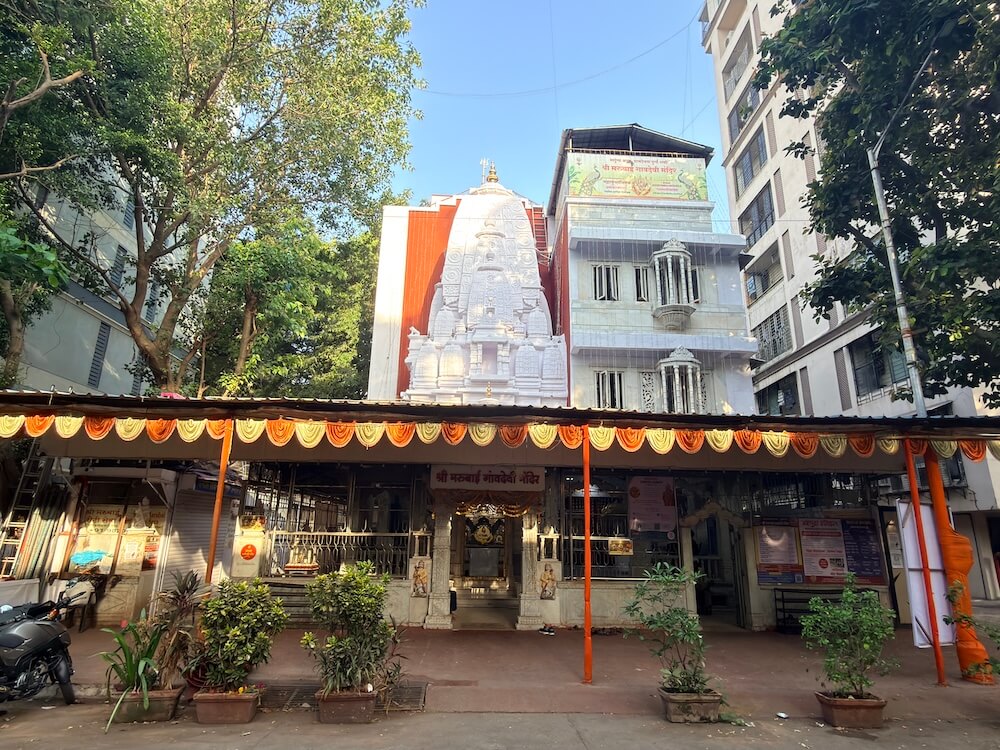
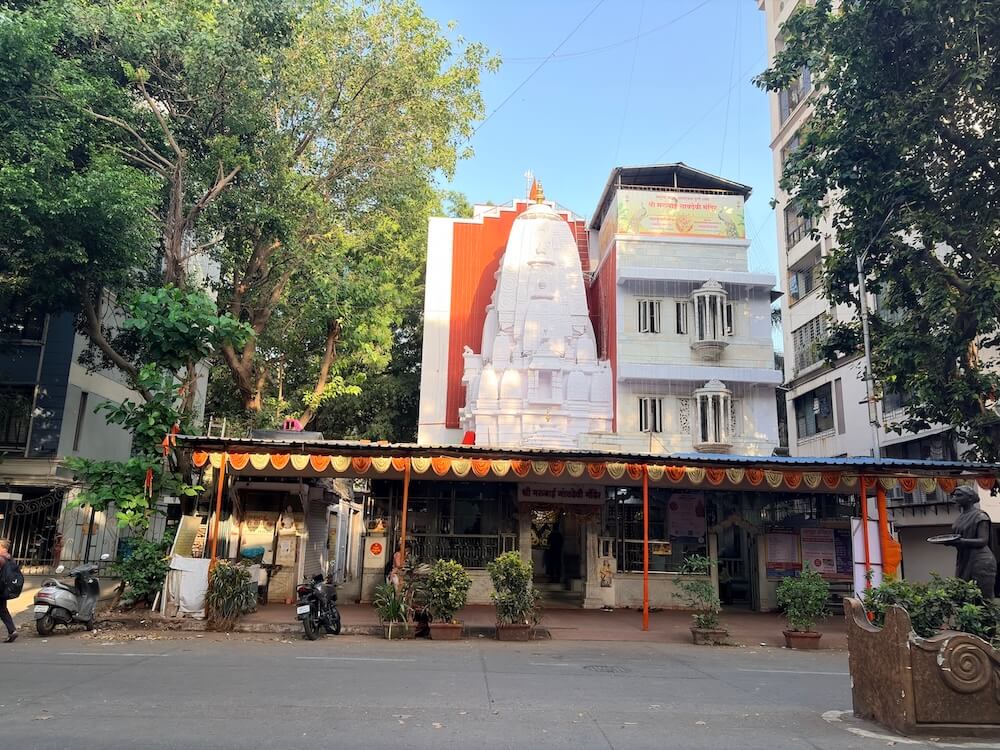
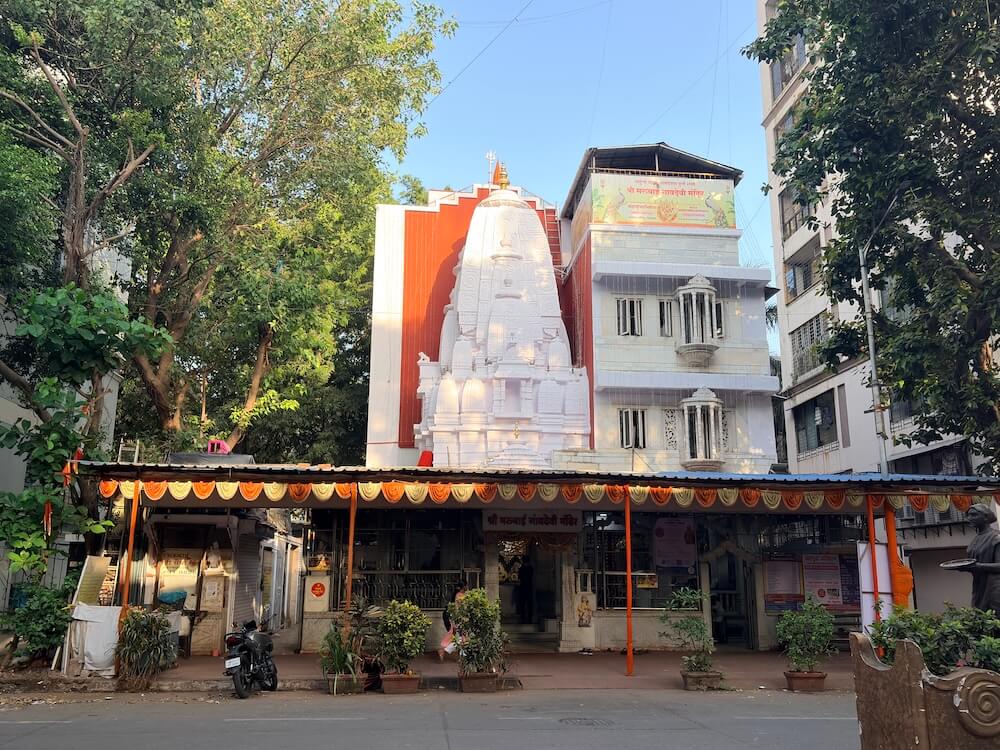
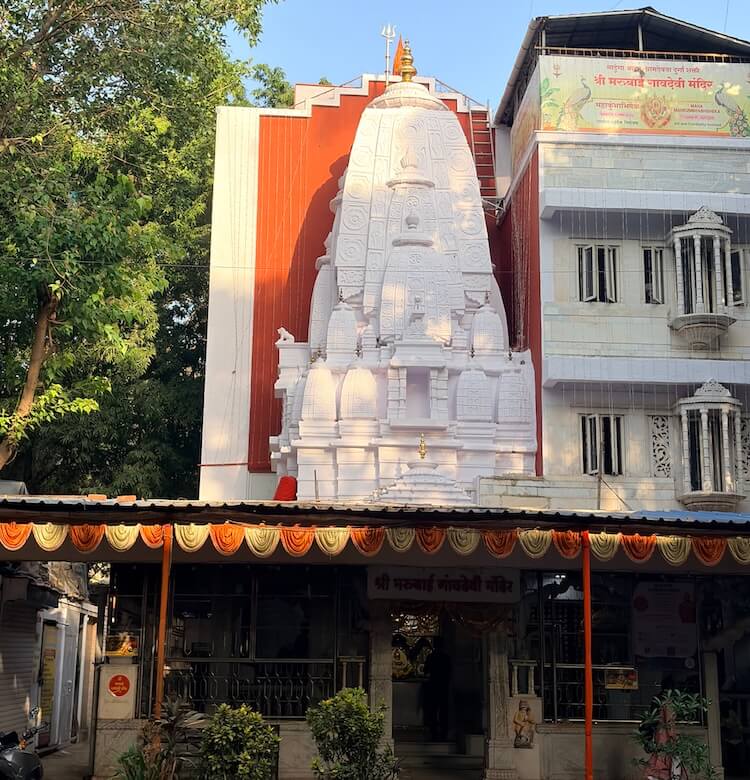
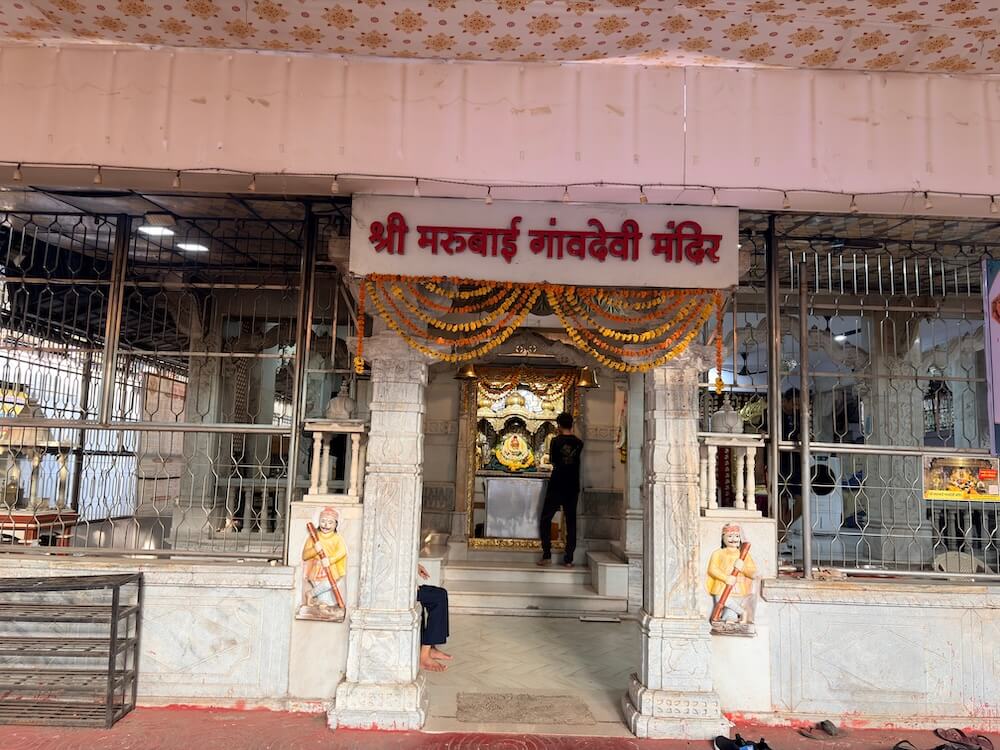
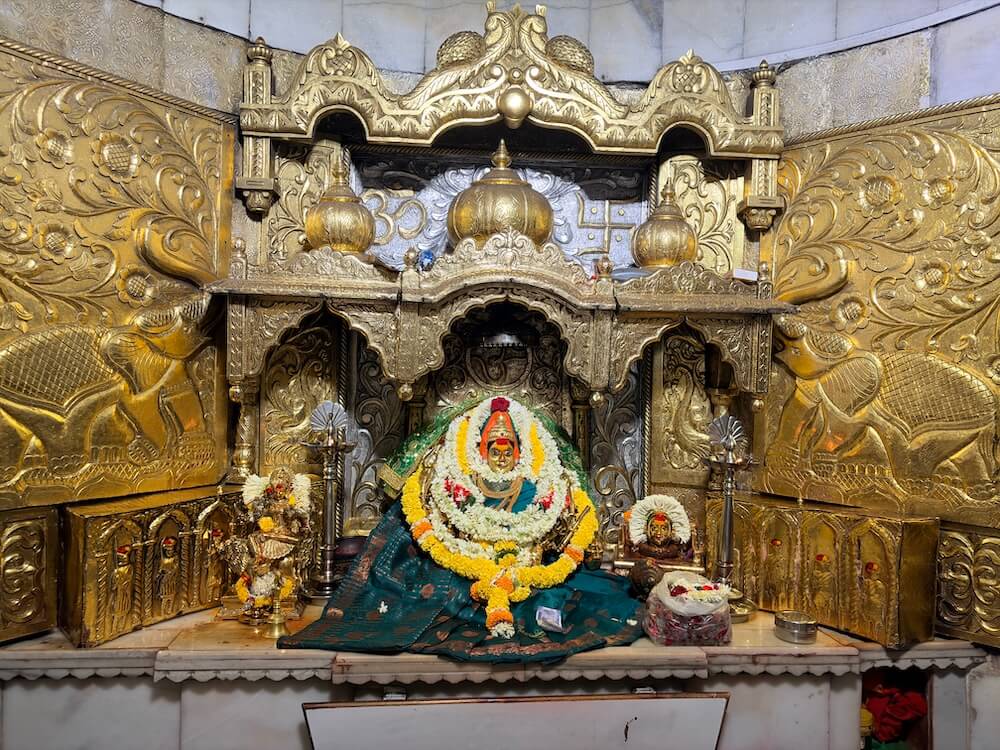
Previously, this temple was simple in nature. There was a tin-roofed porch with wooden pillars in front of the temple. The sanctum sanctorum had a dome-shaped spire. Later, on Magh Shuddha Shashthi, Shake ১৯২১, Friday, date ১১ February ২০০০, the temple was renovated. At that time, the Kumbhabhisheka and consecration of the idol (Kalash Pratishthapana) of this new temple were performed by Jagadguru Jayendra Saraswati and Shankar Vijayendra Saraswati of the Kanchi Kamakoti Peetham. The temple is situated in the square known by the name of Matunga’s Marubai Gavdevi. There is a shed for devotees in the small courtyard in front of the temple. The temple, built entirely of marble, consists of a Sabhamandapa (assembly hall) and a Garbhagriha (sanctum sanctorum). There is a small pyramid-shaped spire over the Sabhamandapa. Over the Garbhagriha, there is an Urushringa-type spire built in marble stone in the Nagara style. It is topped with a circular Amalaka and a golden finial (Kalash). Adjacent to the temple stands the four-story building of the Marubai Gavdevi Trust. The Sabhamandapa of the temple is wide and semi-open in style. The Sabhamandapa has an entrance with carved marble pillars. On both sides, there are sculptures of staff-bearing door guardians. On one side, there is a large image of Tirupati Balaji as well as Marubai. Directly in front is the Garbhagriha of the goddess. The Garbhagriha is built on a high platform (Jagati). It has an entrance with carved pillars and an ornate Makartorana (archway). Inside, on a high marble altar, there is a large Makhar (shrine frame). This Makhar is adorned with intricate carvings and gold plating. In this Trikuta-style Makhar, the two-foot-tall idol of Marubai Gavdevi is seated in the center. The idol is adorned with garments, ornaments, and flower garlands. The goddess has a brass mask. Wearing a nose ring (Nath) and a crown on her head, the goddess here is east-facing, armed with weapons, and has a pleasant countenance.
Devotees can seek the blessings of the Goddess at this temple from 4:30 AM to 12:30 PM, and from 4:00 PM to 9:30 PM. At 4:30 AM, a ritualistic Abhishekam is performed for the Goddess amidst the chanting of mantras. The Aarti of the Goddess is performed daily at 6:00 AM and 8:00 PM, while the Saptashati Nitya Path is recited at 9:00 AM. The Temple Trust organizes various religious and social activities throughout the year. Special pujas are held during festivals such as Gudi Padwa, Vat Purnima, Nag Panchami, Gokulashtami, Ganesh Jayanti, Holikotsav, and Sankrant. Similarly, the temple also celebrates ‘Aadi Masam’, a festival observed by South Indians during July-August. During this period, Durga Abhishekam is performed on all four Fridays of the month. Navratri is the grandest festival celebrated at this temple. During this time, the temple premises take on the atmosphere of a fair. Thousands of devotees from Matunga participate in these festivities with great enthusiasm.
This sacred temple stands as a testament to deep spiritual devotion, ancient architectural grandeur, and rich local cultural traditions.
The sanctum sanctorum houses the divine idol consecrated according to ancient Vedic traditions, surrounded by serene courtyards and traditional temple architecture.
Navratri, Maha Shivratri, Annual Temple Jatra & Deepotsav
Compare and book flights, secure top-rated local hotels near the temple, hire reliable guides, and rent cars instantly.
Extend your pilgrimage by visiting other highly sacred temples located nearby.


Add ₹999 more to unlock FREE SHIPPING!
Your sacred cart is currently empty.
Shop Photo FramesFill in your delivery details below to place your order.
Add comment