
Add ₹999 more to unlock FREE SHIPPING!
Your sacred cart is currently empty.
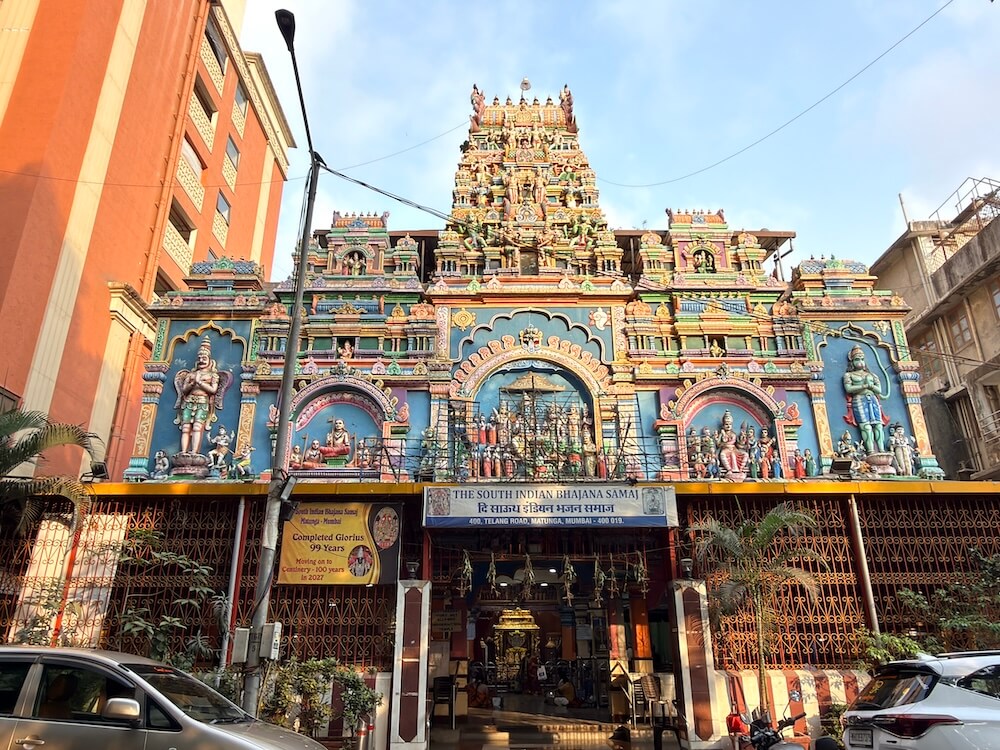
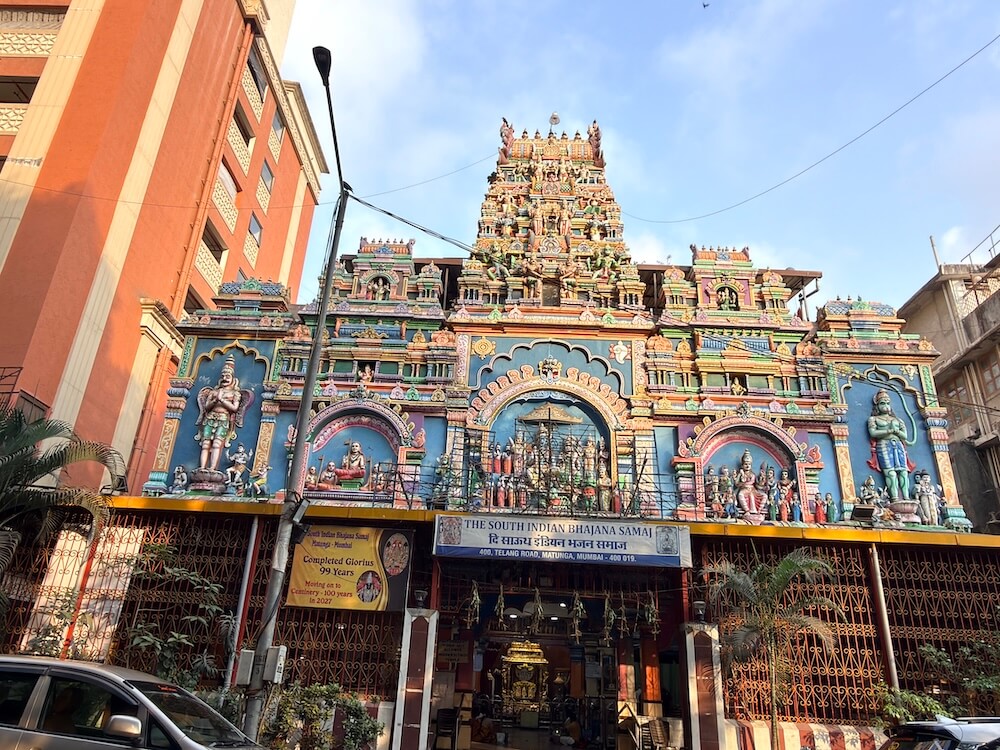
Shop Photo FramesThe South Indian Bhajan Samaj temple is recognized as a prestigious center for South Indian devotional traditions, spirituality, and culture in Mumbai. Located in Matunga, which is considered the home of South Indians in Mumbai, this temple has stood for nearly a century. Built in the South Indian architectural style, this temple is primarily dedicated to Lord Shriram, Lakshman, and Sita. Along with them, the idol of Goddess Rajarajeshwari is also consecrated here. Ram Navami and Navratri festivals are celebrated here with great enthusiasm. Thousands of South Indian devotees participate in these festivals.
The history of the Matunga area is linked to Bimbadev Yadav, who ruled Mumbai in the thirteenth century. Mahim, or Mahikavati, was Bimbadev’s capital. According to historical legends, he had a grand elephant stable in the Matunga area. In Sanskrit, an elephant is called ‘Matang’, and from this, the area was referred to as ‘Matangalaya’. It is believed that the words ‘Matanga’, ‘Matunga’, and ‘Matunga’ are likely corruptions of this term. Some believe that during the reign of King Bimb, there was a settlement of the Matang community here for the care of elephants, which is why the area was named Matunga. According to mythological legends, this area was the residence of Sage Matanga, from which the name Matunga originated. During the British era, the development of this area began on a large scale, roughly from the beginning of the twentieth century. After the plague epidemic of 1896, the British government attempted to give Mumbai a planned structure. In this process, Matunga was developed as one of the first planned suburbs of Mumbai. Due to the industrial and economic development of Mumbai, waves of migrants from all over India arrived here. At the beginning of the twentieth century, the South Indian community settled here in large numbers. This community, primarily working in factories, trading firms, and government offices, made diligent efforts to preserve their religious culture and traditional way of life here as well. The South Indians in the Matunga area started a tradition of gathering in the evenings for Bhajans and Sankirtan. From this, in 1927, some prestigious and devout members of the South Indian community established the ‘Bhajan Samaj’ institution. The journey of this society, which began by gathering in a small space for Bhajans and chanting, later transformed into a grand and prestigious temple institution. Today, this temple is known as a major spiritual and cultural center in Mumbai. For the past 99 years, this institution has kept the flame of South Indian religious traditions, rituals, and culture alive here.
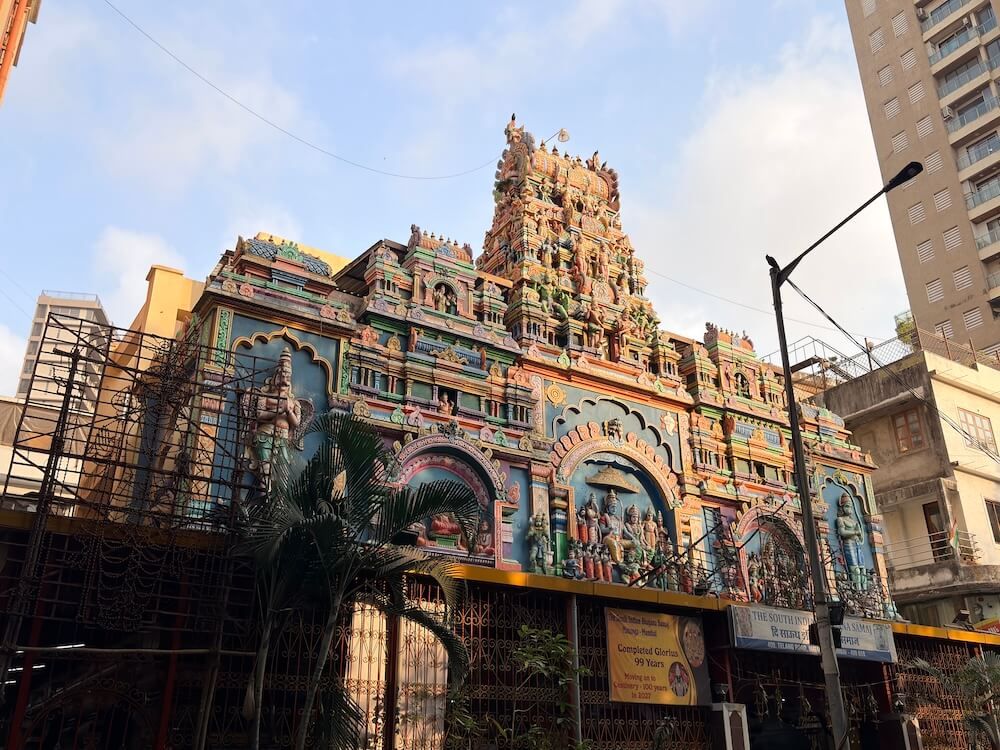
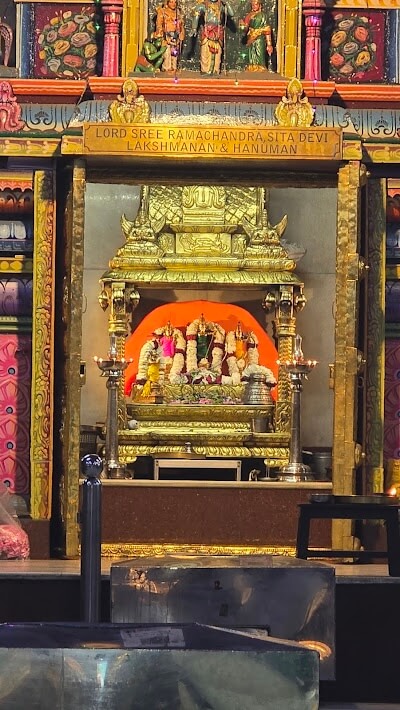
In Matunga, which bears the imprint of South Indian culture, this temple of the Bhajan Samaj is situated near the Shankar Matham, Astika Samaj Temple, and Kanyaka Parameshwari Devi Temple. This temple, in the traditional Dravidian style, has a grand and sculpture-rich Rajagopuram that catches everyone’s attention from afar. In the high level above the entrance of this five-tiered Gopuram, there is a relief sculpture of the Shriram Panchayatan. On the walls beside the Gopuram, known as the Salai Gopuram, there is an idol of Adi Shankaracharya in the niche on the left, while there is an idol of Shri Lakshmi on the right. An upright idol of Garuda is situated on the far left, and an upright idol of Hanuman is on the right. Apart from this, the niches in the Rajagopuram contain idols of various gods and goddesses, including Ganesha, Shankar, Hanuman, and Dattatreya, as well as Yakshas and Gandharvas. Due to its grandeur, exquisite sculptures, and enchanting color scheme, this Rajagopuram has become a center of attraction for devotees. The Sabha Mandap (assembly hall) of the temple is very spacious. There are many wide, carved pillars in the Sabha Mandap. This hall is specially built for Bhajans, Kirtans, and Carnatic classical music concerts. These programs take place in the open space between the rows of pillars on both sides in front of the sanctum sanctorum. The sanctum sanctorum here is open from the front. There are two large pillars on both sides of it, and there is an arched gateway between them. In the upper part of this arch is the idol of Lakshmi-Narayana. Beside the pillars are two traditional South Indian door guardians (Dwarapalas). Inside, there is a large golden Mandapam on a marble pedestal. Next to the pillars in front of it are tall ‘Yali’ (mythical beast) statues. The Mandapam has a Dravidian-style Shikhara. Inside, the idols of Lord Shriram, Lakshman, and Mother Sita are seated. Adorned with garlands, these idols have golden crowns on their heads. An idol of Hanuman is also seated near these idols. Similarly, there are Panchadhatu (five-metal) idols of Ganesha, as well as Nataraja and Parvati here. Along with these main idols, the idols of Goddess Rajarajeshwari and the Navagrahas are consecrated in the decorated niches of the temple’s Sabha Mandap.
Devotees can have Darshan at this temple from 5.30 to 11 in the morning and from 4.30 to 9 at night. Ram Navami is the biggest and most important festival here. During this festival period, various religious and cultural programs such as discourses on the Ramayana, Veda chanting, and Carnatic classical music concerts by renowned artists, as well as Yagnas, are organized. Thousands of people participate in the Rathotsav (chariot procession) held on Ram Navami. During the Sharadiya Navratri festival, religious programs such as Chandi Mahayagnam, Chandi Parayanam, Chandi Kalash Puja, Chandi Moolamantra Homam, Navagraha Puja, and Mahapurnahuti are performed here. During this time, food is also donated to the poor. Festivals like Skanda Sashti, Gokulashtami, Ganeshotsav, and the beginning of the New Year are also celebrated here with great fervor and in a highly religious atmosphere.
This sacred temple stands as a testament to deep spiritual devotion, ancient architectural grandeur, and rich local cultural traditions.
The sanctum sanctorum houses the divine idol consecrated according to ancient Vedic traditions, surrounded by serene courtyards and traditional temple architecture.
Navratri, Maha Shivratri, Annual Temple Jatra & Deepotsav
Compare and book flights, secure top-rated local hotels near the temple, hire reliable guides, and rent cars instantly.
Extend your pilgrimage by visiting other highly sacred temples located nearby.


Add ₹999 more to unlock FREE SHIPPING!
Your sacred cart is currently empty.
Shop Photo FramesFill in your delivery details below to place your order.
Add comment