
Add ₹999 more to unlock FREE SHIPPING!
Your sacred cart is currently empty.
Shop Photo FramesThe historic village of Dighol (Deshmukh) is situated on the border of Parbhani and Beed districts. An ancient temple of Mother Renuka is located on a hill in this village. It is a place of deep faith for many devotees from the surrounding areas as well as those who travel from afar. This site is also recognized as a sub-shaktipeeth of Mother Renuka of Mahur. The unique feature of this temple is that one can have the darshan of three goddesses—Renuka Mata of Mahur, Ranubai of Ranisavargaon, and Tulja Bhavani of Tuljapur—at a single location. Due to this confluence, the site is also known as the ‘Trividha Devi Temple’. Devotees hold a firm belief that the Goddess here is extremely awakened and grants the wishes of those who pray with devotion.
Precise historical information regarding the construction of this ancient temple and when these three goddesses were established together is not available. However, several ancient legends are associated with this place. According to these, Mother Renuka of Mahur and Goddess Tulja Bhavani of Tuljapur are considered sisters. There is an old belief that these two sisters used to meet on the plains of nearby Ranisavargaon to play a game of dice. There is no concrete evidence as to when these three deities were brought to the temple at Dighol (Deshmukh). However, a popular legend states that Samarth Ramdas Swami performed the first renovation of this temple in the seventeenth century. The history of the management of this temple is directly linked to the Nizam era of Hyderabad. During the Nizam’s rule, a nobleman named Bajirao Deshmukh lived in this region. At that time, he held the jagir of sixty villages in this area. He used to visit this temple regularly for darshan. During the Sharadiya Navratri festival, on the day of Vijayadashami, before departing for the Seemollanghan ritual, Bajirao Deshmukh held the honor of performing the first main aarti of the Goddess. Since then, the tradition of performing the aarti has been passed down to his descendants. Even today, the entire responsibility for the maintenance of this temple, which has continued since the Nizam era, rests with the Deshmukh family of the village.
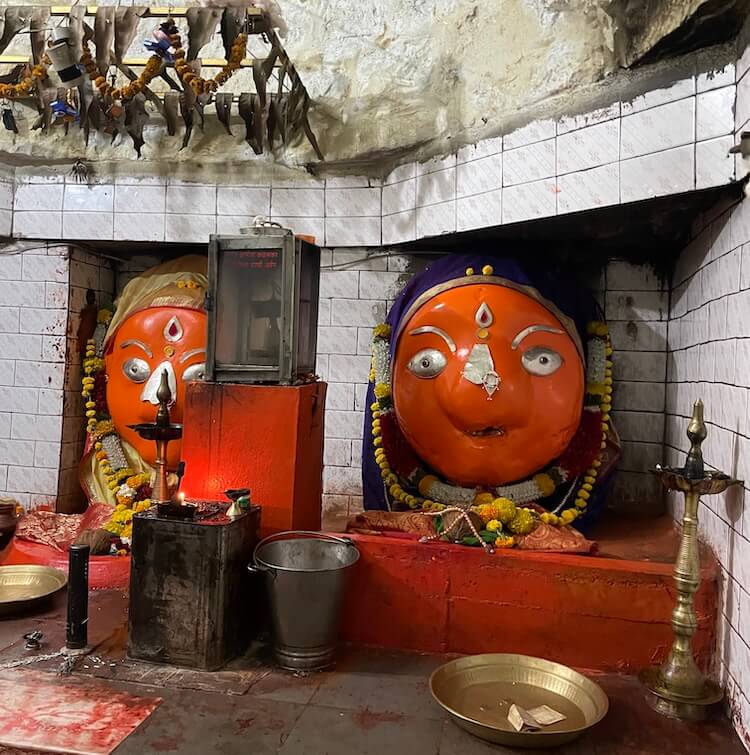
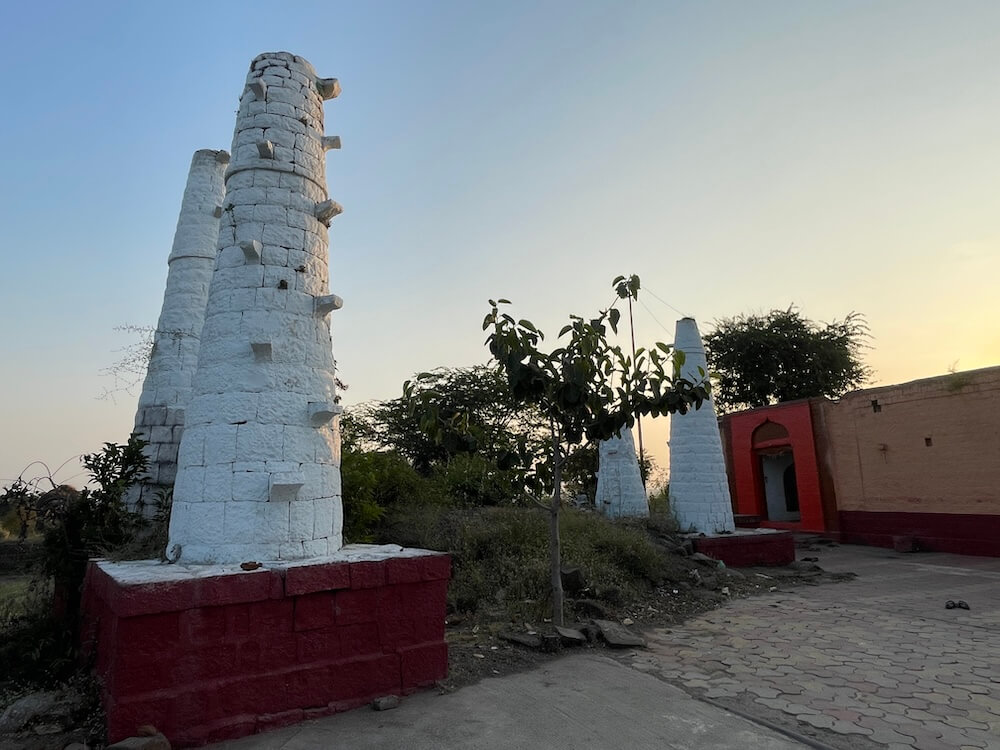
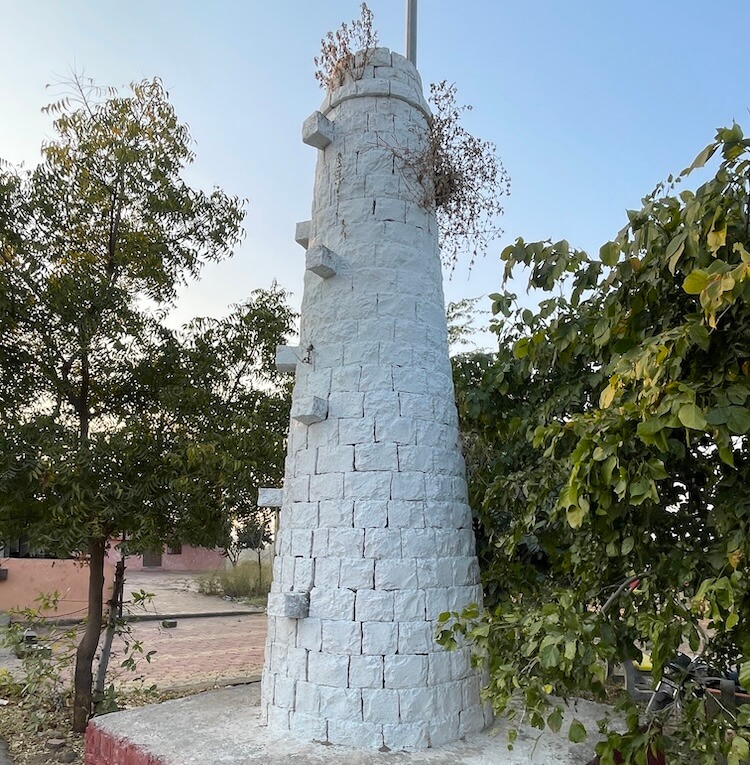
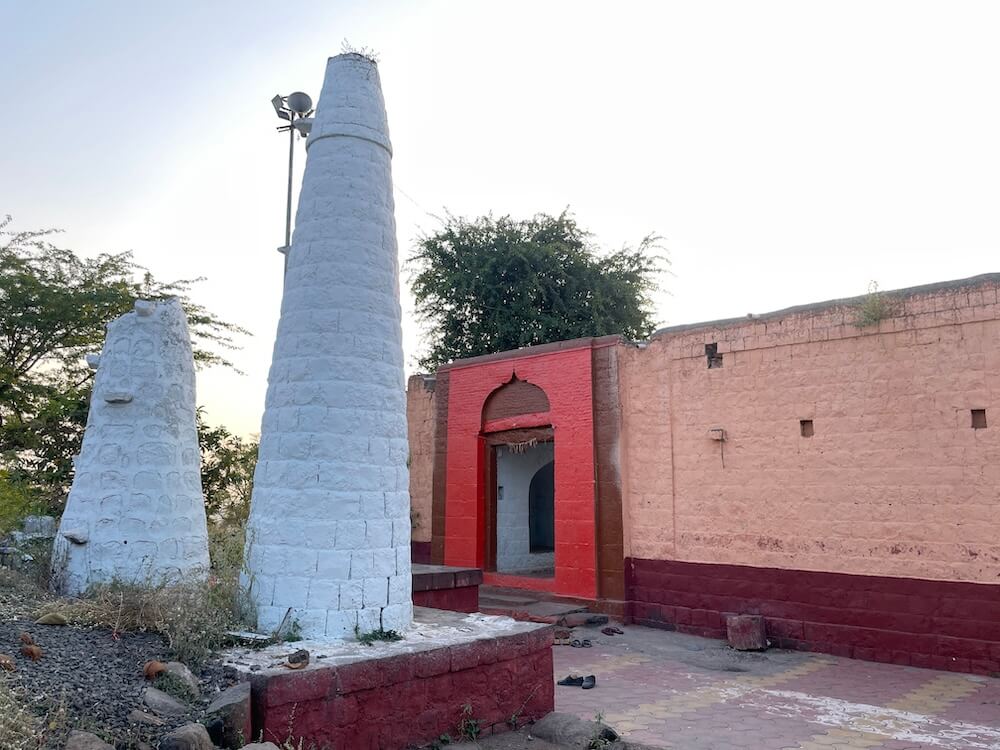
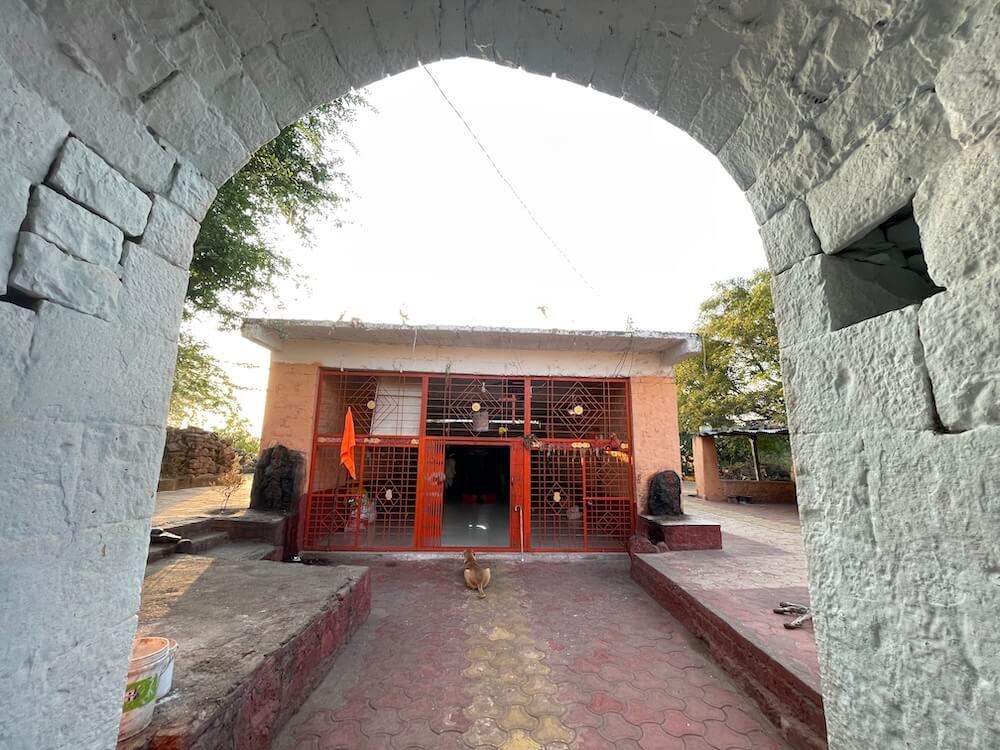
The temple is built in the Hemadpanti architectural style on a hilltop about ten kilometers from the town of Sonpeth. There are five stone lamp pillars (deepmalas) in the temple premises. There is a grand stone gateway constructed for the protection of the temple. Upon entering through this gateway, one sees the temple structure, which consists of a sabhamandap (assembly hall) and a garbhagriha (sanctum sanctorum). The sabhamandap has been renovated in recent times. In the center of the sabhamandap, there is an octagonal sacrificial altar (yagnakund). In the sanctum sanctorum, on a high pedestal, the sindoor-anointed stone idols (tandale) of Renuka Mata and Ranubai of Ranisavargaon are consecrated. The eyebrows, eyes, nose, and lips of the Goddess are carved onto these stones, which are plated with silver. Vermilion is always applied to the foreheads of both deities. Outside the sanctum sanctorum, there is a black stone idol of Goddess Tulja Bhavani. On both sides of the main temple, Kaloba and Toloba stand in the form of idols as protectors of the Goddesses. There is a dome-shaped shikhara above the sanctum sanctorum.
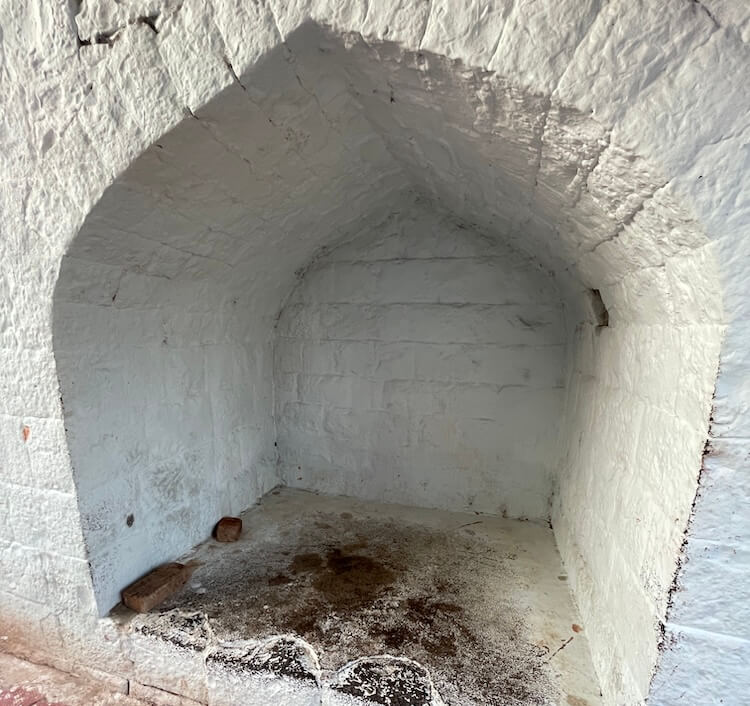
There are two water tanks in the temple premises, which are locally called ‘Kallol’. In earlier times, there was no other water facility available on this hilltop. Therefore, devotees used to bring their own food (bhaji-bhakri) when visiting the temple for darshan. After having darshan of the Goddess, devotees would sit near these ‘Kallols’ to eat and use the water from these tanks for drinking.
Various religious rituals and ceremonies are organized in the temple throughout the year according to tradition. As the Goddesses here are renowned for granting wishes, many devotees make vows and come here to fulfill them. Among the programs held here, the traditional application of turmeric to the stone idol of Renuka Mata takes place on Chaitra Shuddha Navami. Following this, the wedding of Renuka Devi and Sage Jamadagni is performed here on the day of Chaitra Vadya Ashtami. On the day after the wedding, i.e., on Navami, ‘Mahaprasad’ is distributed to all the devotees who come for darshan. Among all these programs, the Sharadiya Navratri festival is the main event here. During this festival, countless devotees from Parbhani and Beed districts come for the darshan of the Goddess. During this time, the hill area becomes bustling with the crowd of devotees. Various religious programs are organized here during the nine days of Navratri. At midnight on the day of Ashtami, a Purnahuti Homa is performed in the yagnakund of the sabhamandap. On this day, programs such as Maha-aarti, Gondhal, Bhajan, Kirtan, and Haripath are held in the temple. During the Navratri festival, food is provided daily for the devotees who come for darshan. Devotees can visit for darshan every day from seven in the morning until six in the evening.
This sacred temple stands as a testament to deep spiritual devotion, ancient architectural grandeur, and rich local cultural traditions.
The sanctum sanctorum houses the divine idol consecrated according to ancient Vedic traditions, surrounded by serene courtyards and traditional temple architecture.
Navratri, Maha Shivratri, Annual Temple Jatra & Deepotsav
Compare and book flights, secure top-rated local hotels near the temple, hire reliable guides, and rent cars instantly.
Extend your pilgrimage by visiting other highly sacred temples located nearby.


Add ₹999 more to unlock FREE SHIPPING!
Your sacred cart is currently empty.
Shop Photo FramesFill in your delivery details below to place your order.
Add comment