
Add ₹999 more to unlock FREE SHIPPING!
Your sacred cart is currently empty.
Shop Photo FramesThe tradition of Shaiva worship in India is extremely ancient, and Shaiva devotees form a distinct sect. The Vaijnath Temple in Parli, one of the twelve Jyotirlingas, is world-renowned. Consequently, the Parli taluka has the highest number of temples dedicated to Lord Mahadeva. Among the many names of Mahadeva, Someshwar is a highly popular one. An ancient and famous temple of Someshwar is situated on the hill of Jirewadi in Parli taluka. Devotees hold a firm belief that the awakened Mahadeva here grants their prayers. Someshwar Mahadeva is considered the brother of Parli’s Vaijnath.
This sacred site is self-manifested (Swayambhu). Local priests state that it dates back thousands of years. It is said that the self-manifested Shiva Linga within the temple and the natural water source flowing from it must be hundreds of years old. Contemporary to the Parli Vaijnath Temple, this temple has also maintained a long-standing tradition of Palkhi processions and Harinam Saptah.
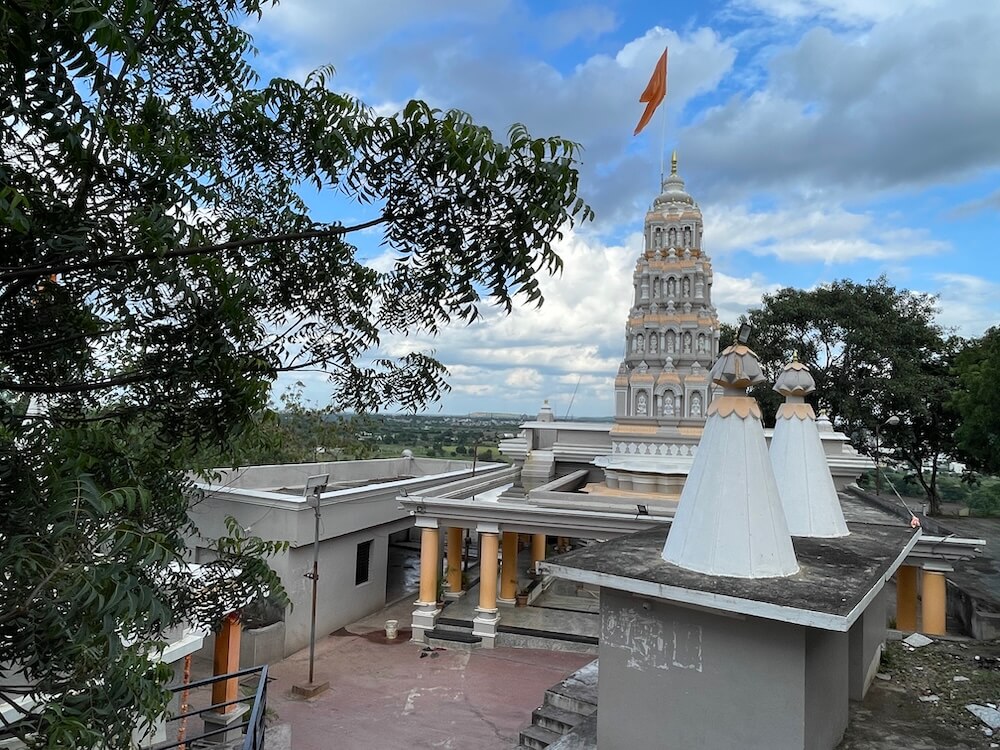
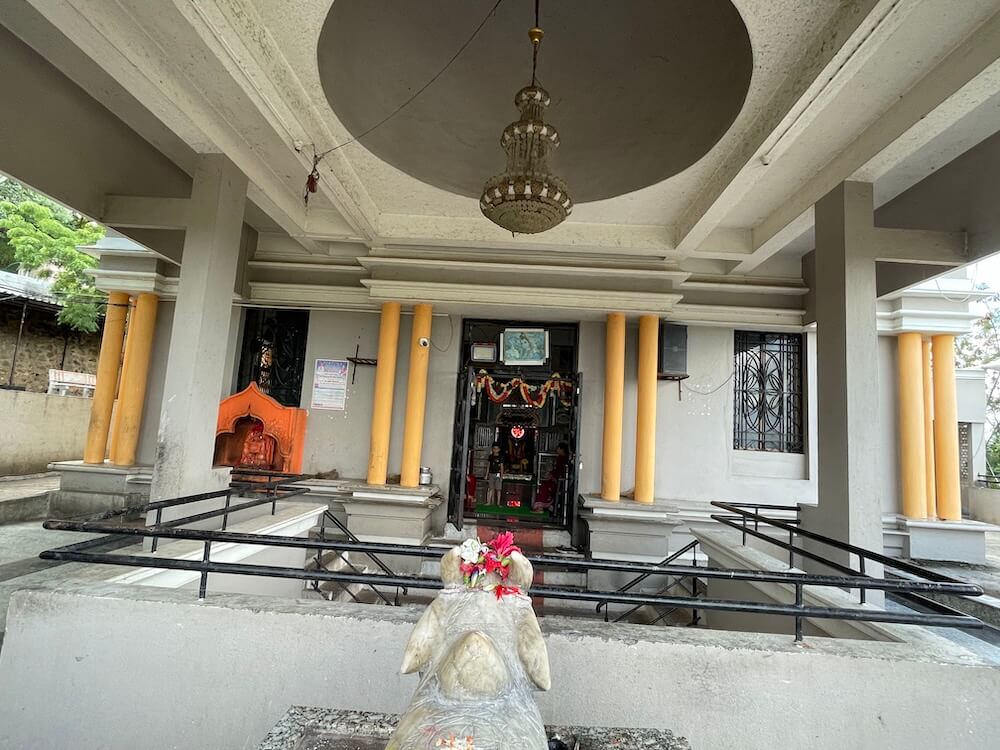
This temple is located on a high hill at some distance from the village. There are two options to reach the temple: a road and a stairway. Private vehicles can reach the temple on the hill directly via the road. There is a spacious parking area near the temple. From there, one can reach the temple courtyard by descending about twenty steps. However, many devotees prefer to use the stairway. At the base of the hill, at the beginning of the stairway, there is a simple welcome arch. From here, one can reach the main entrance of the temple by climbing about fifty steps. Safety railings are installed on both the right and left sides of the stairway. A canopy has been erected here to protect devotees from the sun and rain. In front of the temple is a two-story main entrance (Mahadwar). On both sides of it, there are two pillars each, topped with a roof. A similar structure is seen on the upper floor.
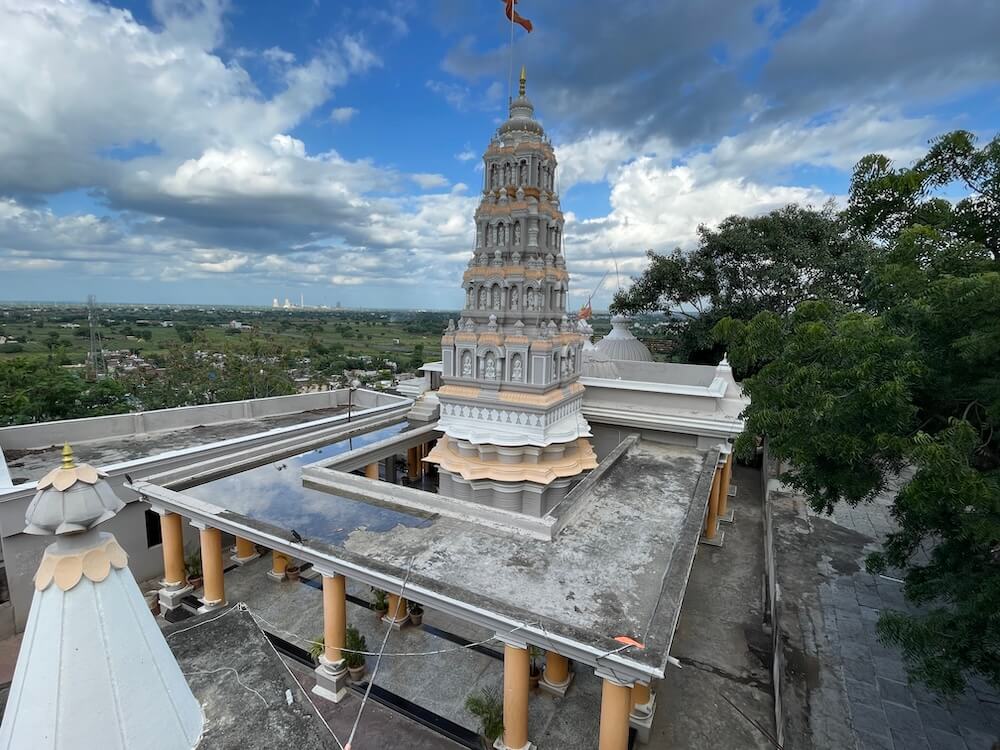
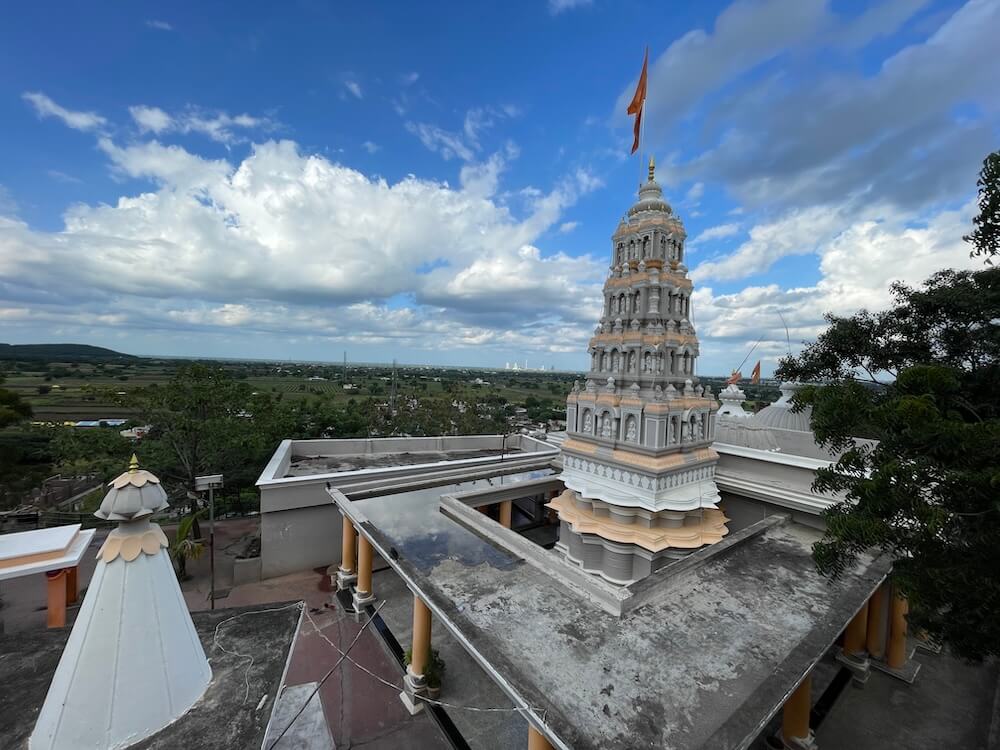
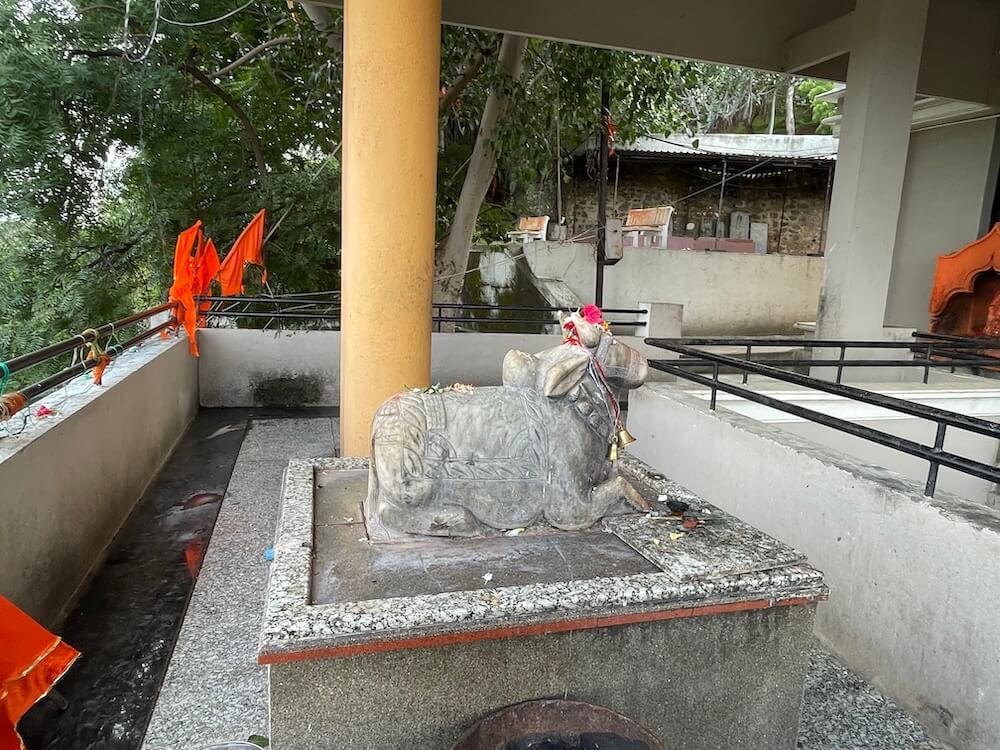
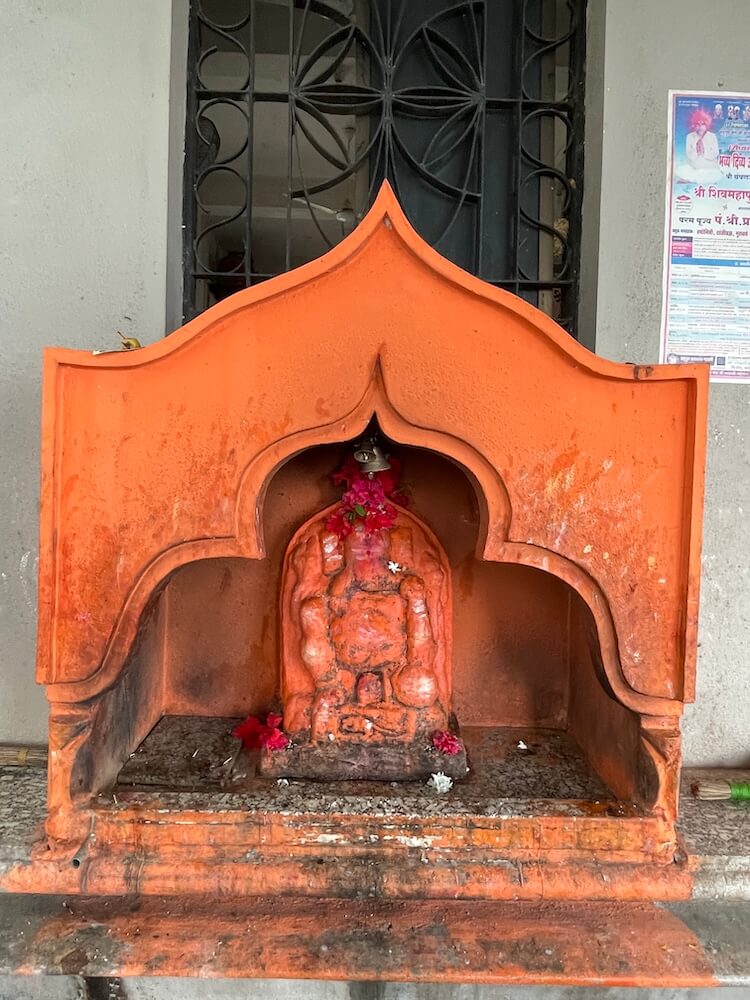
From here, one enters directly into the Sabha Mandap (assembly hall). The hall is managed with queues using stainless steel railings. There are doors on the right and left sides of the Sabha Mandap, as well as on both sides of the sanctum sanctorum. Due to the arrangement of windows in the Sabha Mandap, the environment is airy and well-lit. Further ahead is the sanctum sanctorum (Garbhagriha) built in the Hemadpanti style. The entrance to the sanctum, which is at a higher level than the Sabha Mandap, has one step. The door frames feature vertical carvings, and there is a sculpture of Lord Ganesha on the lintel. The entrance has ornate wooden shutters, which are covered with decorative silver plating. Inside the sanctum, the self-manifested Shiva Linga is in the center on the floor. A continuous and natural source of water flows alongside the Shiva stone. Near the back wall of the sanctum, on a pedestal, is a silver idol of Someshwar Mahadeva. The deity wears a turban on his head. There is a circumambulation path (Pradakshina Marg) around the exterior of the sanctum. This path has circular pillars on both sides, topped with an elephant-back (Gajapristha) shaped roof. The temple roof is protected by railings on all four sides. Above the sanctum is a four-tiered, square-shaped Dravidian-style spire (Shikhara). Each tier of the spire features Kuta and Shala structures, as well as niches containing various divine idols. At the pinnacle of the spire is a stupika, topped with a finial (Kalash) and a flag (Dhvajapataka). In the temple courtyard, to the left of the stairway leading to the parking area, are two small temples. The temple on the left houses an ancient idol of the four-armed Bhairavnath on a pedestal. The deity holds a trident, a damaru, and a drinking vessel, and there is a dog near his feet. The temple on the right houses an idol of Sai Baba on a pedestal. Both temples have circular, tapering spires, topped with an amalaka and a finial.
To the right of the stairway is a small temple of Jogeshwari and Bhairavnath. In this temple, there are vermilion-smeared stone idols of the deities on a pedestal. The temple has a dome-shaped spire, topped with an amalaka and a finial. Behind the temple, adjacent to the parking area, is a small temple containing vermilion-smeared stones of local deities. The temple courtyard includes a pilgrim residence (Bhaktaniwas), a rest house, quarters for temple staff, and other structures.
Maha Shivratri is the main annual fair celebrated here with great enthusiasm. During this time, the Palkhi of Lord Someshwar goes to visit Parli’s Vaijnath. Later, the Palkhi performs a village circumambulation. The Palkhi returns to the temple late at night. The Sharadiya Navratri festival is the second annual event here. This festival concludes on the day of Dussehra with a Palkhi procession. On this occasion, the deity is seated in the Palkhi and goes to the riverbank for the Seemollanghan (crossing the border) ritual. In the month of Phalguna, a Harinam Saptah is organized at the temple. The Saptah concludes on Amli Barshi with the deity’s Palkhi procession. Hundreds of devotees come here to participate in all three Palkhi processions. Amidst the sound of drums and the showering of gulal, devotees participate in the deity’s Palkhi procession. On the occasion of festivals, programs such as Bhajans, Kirtans, discourses, and music are organized at the temple.
Every Monday, Thursday, and Saturday, community meals (Nagarbhojan) are organized at the temple. Since there is a tradition of making a vow to offer food to the deity, Mahaprasad is organized on behalf of the devotees to fulfill their vows. Throughout the year, festivals such as Dussehra, Diwali, Shravan month, Nag Panchami, Makar Sankranti, Chaitra Padwa, Hanuman Jayanti, and Ram Navami are celebrated at the temple. There is a large crowd of devotees coming for the deity’s Darshan. Devotees coming for the Darshan of Parli’s Vaijnath invariably visit this temple.
This sacred temple stands as a testament to deep spiritual devotion, ancient architectural grandeur, and rich local cultural traditions.
The sanctum sanctorum houses the divine idol consecrated according to ancient Vedic traditions, surrounded by serene courtyards and traditional temple architecture.
Navratri, Maha Shivratri, Annual Temple Jatra & Deepotsav
Compare and book flights, secure top-rated local hotels near the temple, hire reliable guides, and rent cars instantly.
Extend your pilgrimage by visiting other highly sacred temples located nearby.


Add ₹999 more to unlock FREE SHIPPING!
Your sacred cart is currently empty.
Shop Photo FramesFill in your delivery details below to place your order.
Add comment