
Add ₹999 more to unlock FREE SHIPPING!
Your sacred cart is currently empty.
Shop Photo FramesParli Vaijnath in Beed district, known as the Kashi of Marathwada, is one of the twelve important and awakened Jyotirlinga shrines. Consequently, devotion to Lord Shiva is deeply rooted throughout this region. It is believed that during their exile, Lord Ramachandra resided in this area. For his daily worship, he established several Shiva Lingas in various places here. Among these, the Ratneshwar Temple at Tokwadi, near Parli, is renowned. Hidden under the earth for centuries, this site was rediscovered one hundred and fifty years ago and has today become a major center of faith for devotees.
The legend regarding the temple states that while Shri Ram, Sita, and Lakshman were in exile, they stayed on this hill. At that time, Ram established a Shiva Linga here for his daily worship. While worshipping the Shiva Linga, a gem from Sita’s earring fell onto it; hence, the deity came to be addressed as “Ratneshwar,” and this hill became known as Ratneshwar Hill. Over the course of time, this Shiva Linga was buried under the soil. About one hundred and fifty years ago, when the village women went into the forest to collect firewood, they saw a Shiva Linga slightly protruding from the earth. Out of curiosity, they dug the ground and realized it was a Swayambhu (self-manifested) Shiva Linga. They informed the villagers, and together they built a temple at this site and commenced worship. In the year 2006, the temple underwent renovation, which gave it its modern appearance.
There is a paved road leading up to this temple situated on the hilltop. Since this hill falls under the jurisdiction of the Forest Department, the department has developed a children’s park in front of the temple. The park is equipped with various types of play equipment such as swings and slides for children. Replicas of various animals and birds have also been placed there. An observation deck with safety railings and seating has been constructed on the edge of the hill in the park. Looking down from here, one can see a lush green panoramic view. There is a large hall for auspicious ceremonies in front of the temple where wedding celebrations are organized. Various types of trees are present in the temple courtyard.
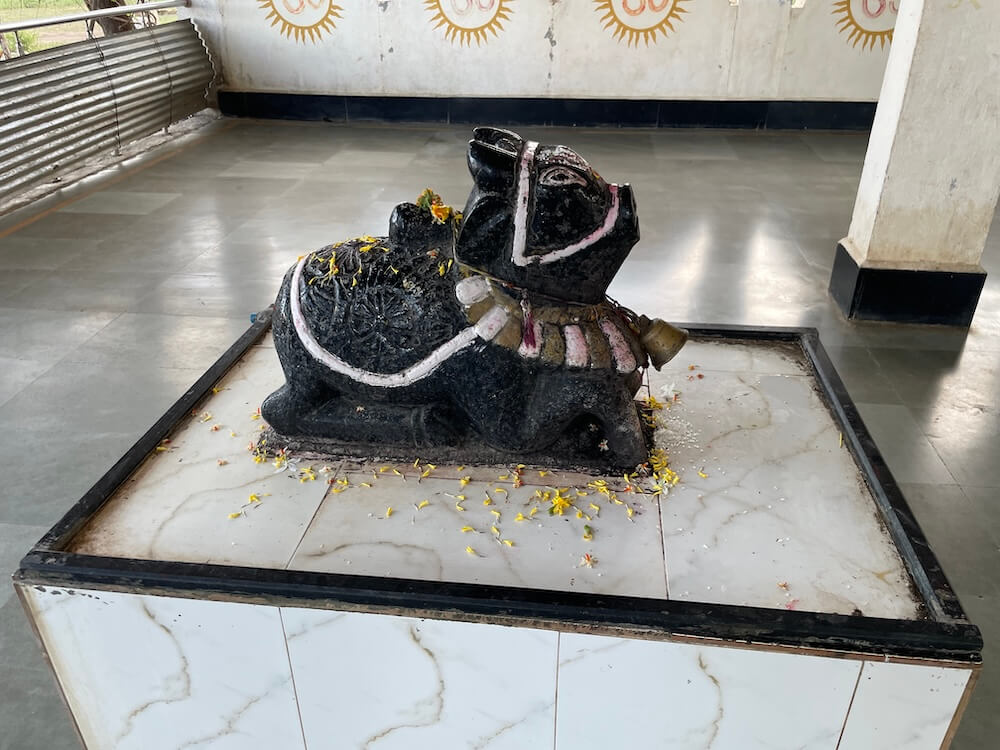
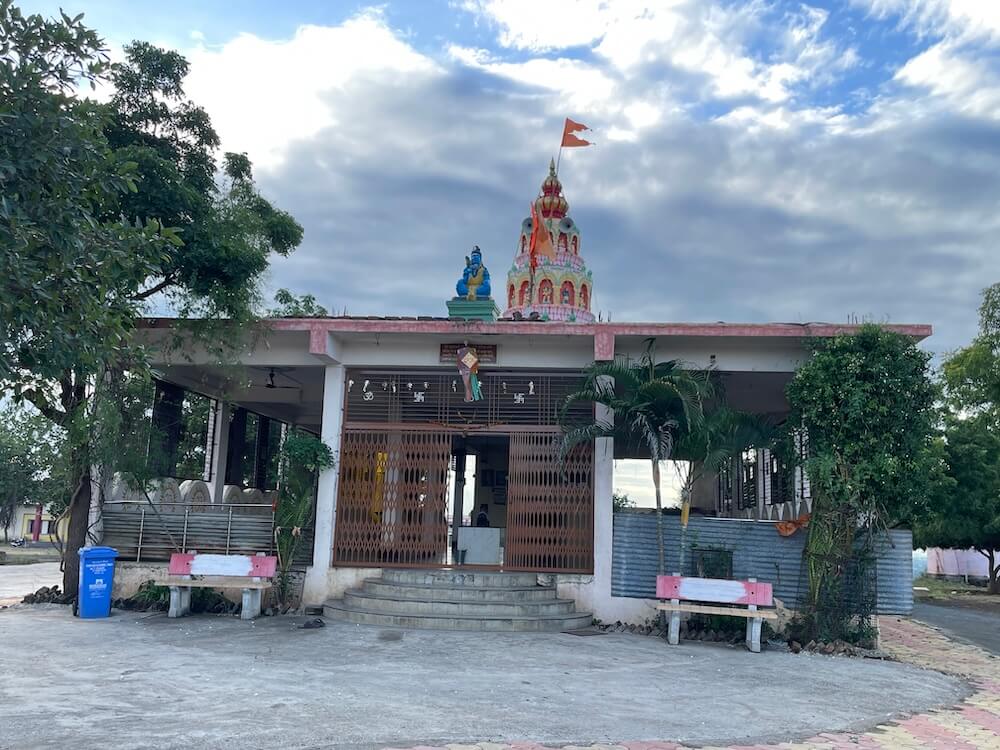
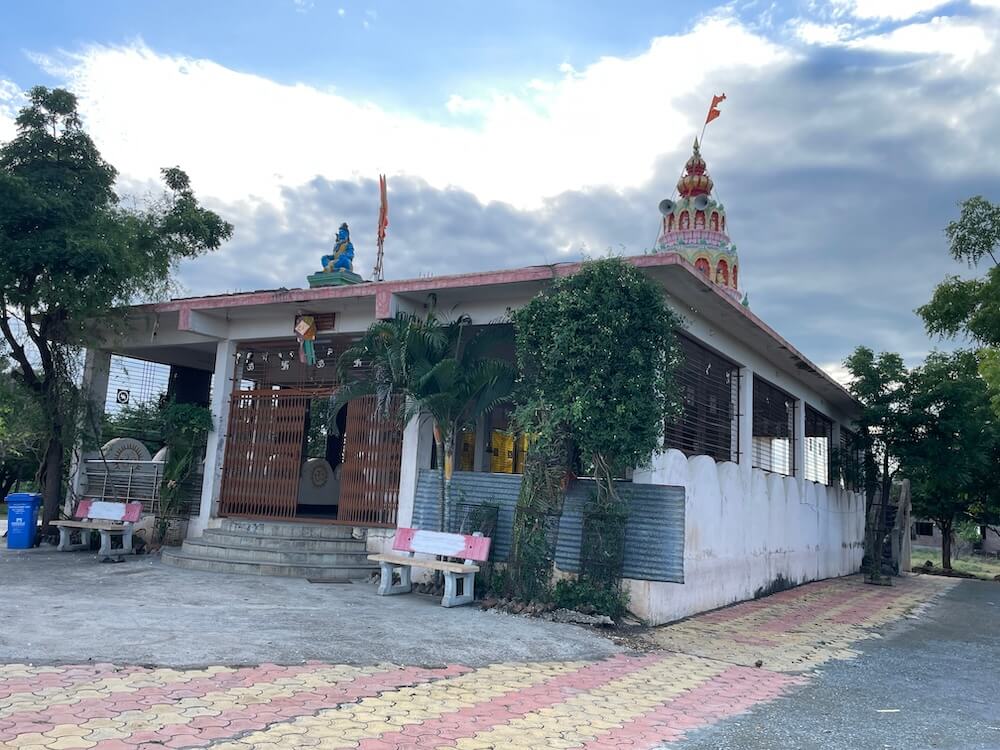
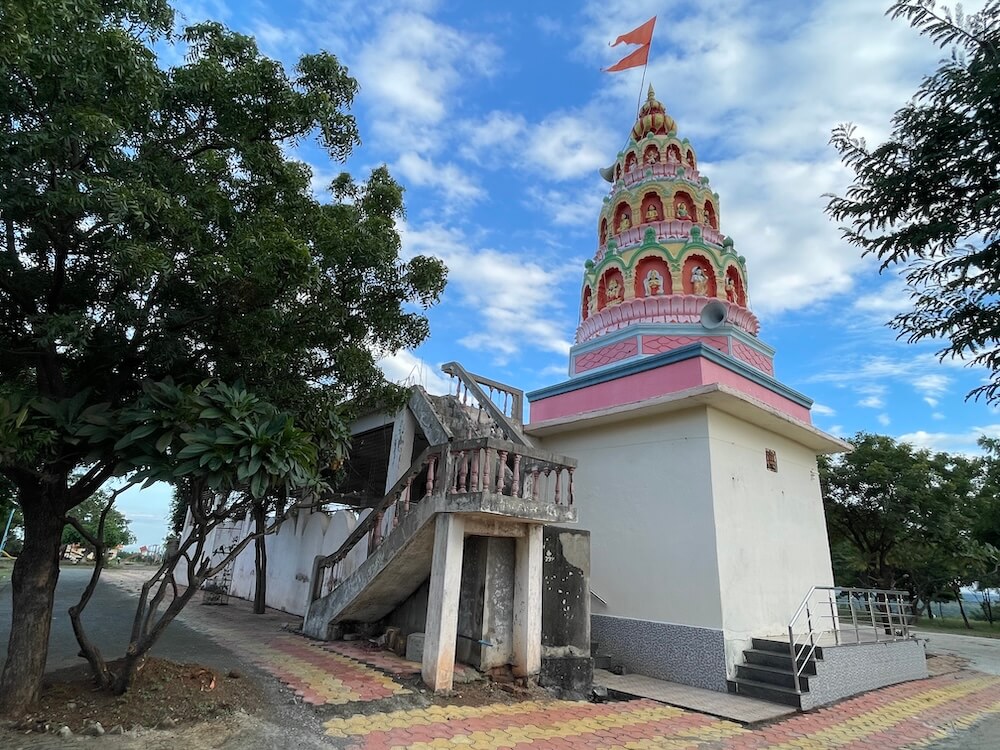
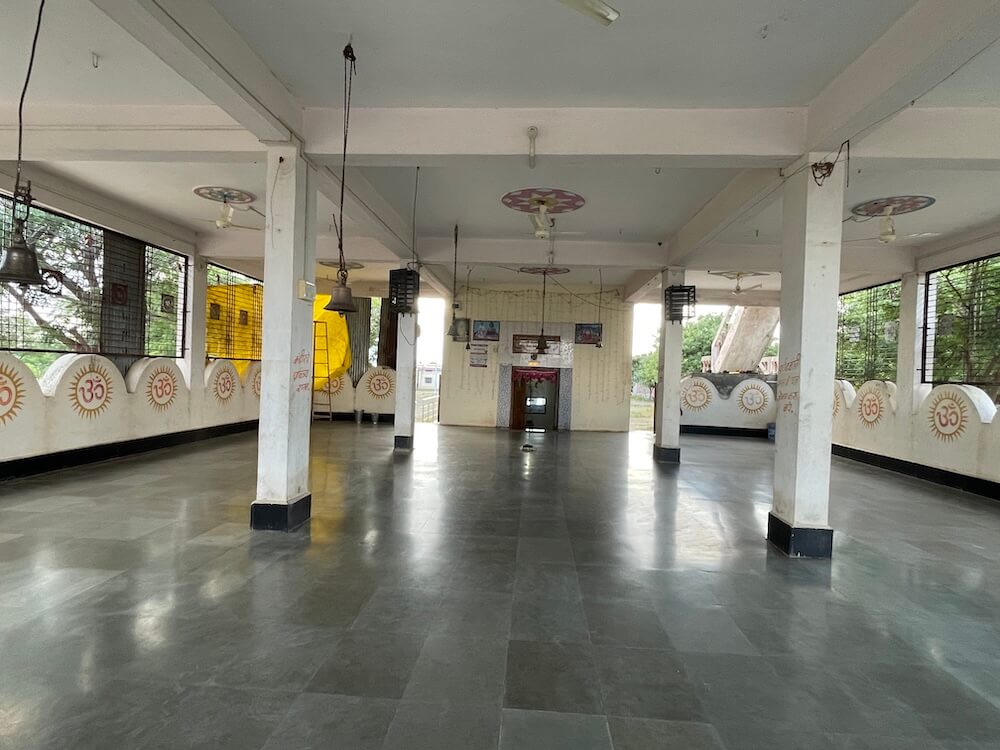
The temple structure consists of a Sabhamandap (assembly hall) and a Garbhagriha (sanctum sanctorum). Since the Sabhamandap is at a higher level than the courtyard, there are four semi-circular steps to ascend. The semi-open Sabhamandap has a decorative railing on the outer sides. Inside the Sabhamandap, there are four rows of four ornate square pillars each. The outer pillars are integrated into the railing. All pillars stand on square bases. Brass bells are hung from the ceiling, and the canopy features circular carvings. Further ahead is the entrance to the Garbhagriha. The door frame is adorned with vine carvings, and there is a sculpture of Lord Ganesha on the lintel. The entrance has decorative wooden doors. One descends five steps from the Sabhamandap to enter the Garbhagriha. In the center of the floor of the Garbhagriha lies the Swayambhu Shiva Linga. A brass cobra hood is held over the Shiva Linga. A copper vessel for pouring water is hung from the ceiling above the Shiva Linga. Near the back wall of the Garbhagriha, there are stone idols of local deities on a pedestal. The enclosed Garbhagriha has vents for air and sunlight. There is another door on the left side of the Garbhagriha. There is a circumambulation path (Pradakshina Marg) around the exterior of the Garbhagriha. Behind the Garbhagriha, there is a staircase to reach the roof of the temple.
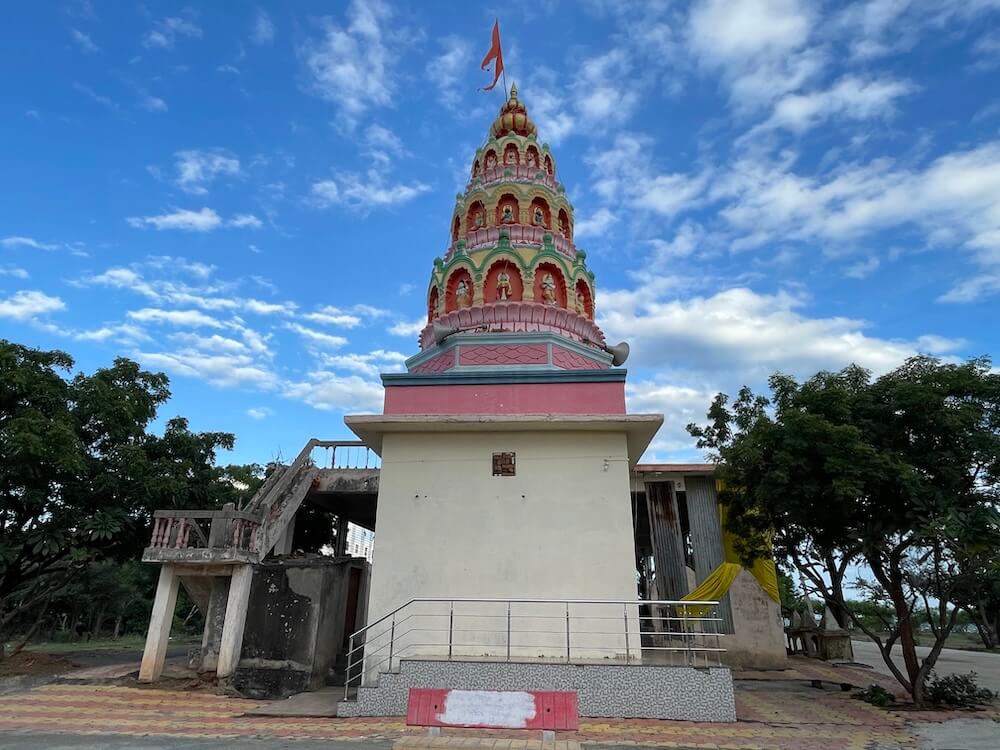
On the roof of the Garbhagriha, there are idols of various forms of Mahadeva at all four corners. In the center, there is a four-tiered circular Shikhara (spire). Each tier of the Shikhara contains twelve niches with idols of various deities. At the top of the Shikhara, there are two Amalakas stacked one above the other, topped with a Kalash and a flag.
Mahashivratri is the main annual festival celebrated here with great enthusiasm. On this occasion, thousands of devotees from the surrounding areas come for the deity’s darshan and to fulfill their vows. Programs such as Bhajans, Kirtans, music, and Mahaprasad are organized at the temple. There is a large influx of devotees during the month of Shravan. All festivals and occasions like Chaitra Padwa, Dussehra, Diwali, Tripuri Purnima, Kojagiri Purnima, and Nag Panchami are celebrated in the temple. There is a special crowd of devotees at the temple during all festivals. The number of devotees visiting the temple for darshan is also high on Mondays, Purnima, and Amavasya.
This sacred temple stands as a testament to deep spiritual devotion, ancient architectural grandeur, and rich local cultural traditions.
The sanctum sanctorum houses the divine idol consecrated according to ancient Vedic traditions, surrounded by serene courtyards and traditional temple architecture.
Navratri, Maha Shivratri, Annual Temple Jatra & Deepotsav
Compare and book flights, secure top-rated local hotels near the temple, hire reliable guides, and rent cars instantly.
Extend your pilgrimage by visiting other highly sacred temples located nearby.


Add ₹999 more to unlock FREE SHIPPING!
Your sacred cart is currently empty.
Shop Photo FramesFill in your delivery details below to place your order.
Add comment