
Add ₹999 more to unlock FREE SHIPPING!
Your sacred cart is currently empty.
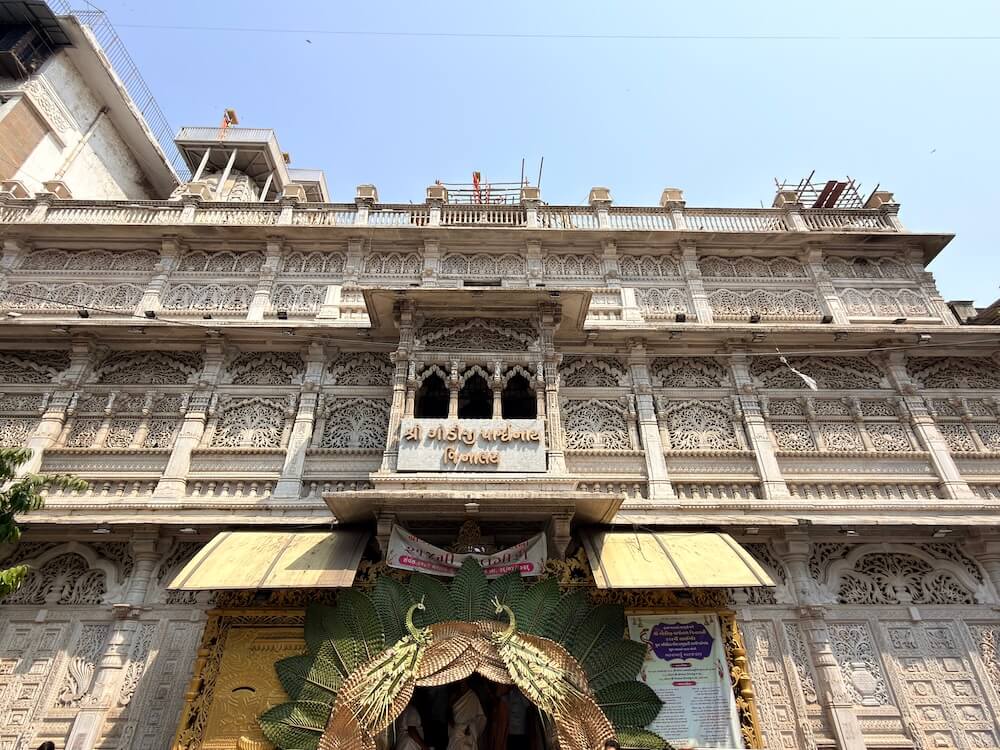
Shop Photo FramesThe Shri Godiji Parshwanath Temple in the Pydhonie area of Mumbai is considered an important part of the city’s historical and cultural fabric. Dedicated to Lord Parshwanath, the twenty-third Tirthankara of the Shwetambar Jain community, this temple was established in 1812 AD. With a religious legacy spanning over two centuries, this site is held in high esteem within the Shwetambar Jain sect. It is the most prominent among the many temples named after Godiji Parshwanath. The heritage of this temple structure is linked not only to Jain religious traditions but also to the geographical history of Mumbai.
The history of the name ‘Pydhonie’ is directly connected to the geographical layout of Mumbai and the state of its coastline. The word ‘Pydhonie’ is derived from the original Marathi words ‘Pay’ (feet) and ‘Dhone’ (to wash). Literally, it means a place to wash one’s feet. In historical times, the city of Mumbai was composed of seven islands, with many creeks and water channels flowing between them. During high tide, water would flow in through the ‘Great Breach’ that separated the islands of Worli and Mumbai, and through the Umarkhadi area between the islands of Mazgaon and Mumbai. At the mouth of this creek, when the water level was low, people would wash their feet before entering the city, and for this reason, the place came to be known as Pydhonie. According to historical records, the Pydhonie area is one of the earliest parts of Mumbai to be permanently reclaimed from the sea. The consolidation of Mumbai’s seven islands took place towards the end of the 18th century. During this process, the geographical importance of Pydhonie grew steadily. The Jain community has preserved its religious and cultural presence in this area since the 18th century.
The Shri Godiji Parshwanath Temple possesses a historical legacy spanning several centuries. The name ‘Godiji’ originally comes from the ancient pilgrimage site of Godipur in the Sindh province. This Godipur is currently in Pakistan. In the medieval period, the temple at Godipur was a highly renowned Jain pilgrimage site. Today, only the ruins of the temple remain, but the craftsmanship there is still worth beholding. According to references in Jain literature, in Samvat 1228, Acharya Hemchandra installed a Parshwanath idol in Patan, Gujarat. This idol was commissioned by Seth Godidas. Over time, due to the fear of foreign invasions, the idol was buried underground for safety. In Samvat 1432, i.e., 1375-76 AD, a Jain merchant named Meghsha discovered this idol and brought it to Godipur in the Sindh province. There, he built a magnificent temple, and the work was completed in Samvat 1444. This temple came to be known as the original Godiji Parshwanath Tirtha. In the 18th century, this pilgrimage site was very famous, and in 1716, the locals moved the idol to a fort for protection. It is recorded that the British-era Magistrate, Captain Stanley Napier Raikes, visited this temple in 1854.
The history of the temple in Mumbai begins in the early 18th century. Seth Amichand from Khambhat settled in Mumbai and built a private shrine (Griha Jinalaya) in his residence in the Fort area of Mumbai. Here, he installed the idol of Godiji Parshwanath, which had been brought from the Sirohi district of Mirpur, Rajasthan. In Samvat 1859, i.e., 1803 AD, a massive fire broke out in the Fort area of Mumbai. This fire raged for about 72 hours. Many houses and properties were reduced to ashes in this inferno. Consequently, the Jain community decided to leave the Fort area and migrate to the Pydhonie locality. This fire is referred to in Mumbai’s history as ‘The Great Fire of Bombay,’ which led to the complete restructuring of the entire Fort area. Seth Amichand’s sons, Nemchand and Motichand Shah, purchased land in Pydhonie from Avichaldas Govindji Bhansali and built a new temple there in 1812. Initially, this temple was constructed of wood and bricks. In 1868, the idol was consecrated in a new, spacious temple. In 1989, this old wooden structure was renovated into a magnificent three-story marble temple. In 2012, the temple completed 200 years since its establishment.
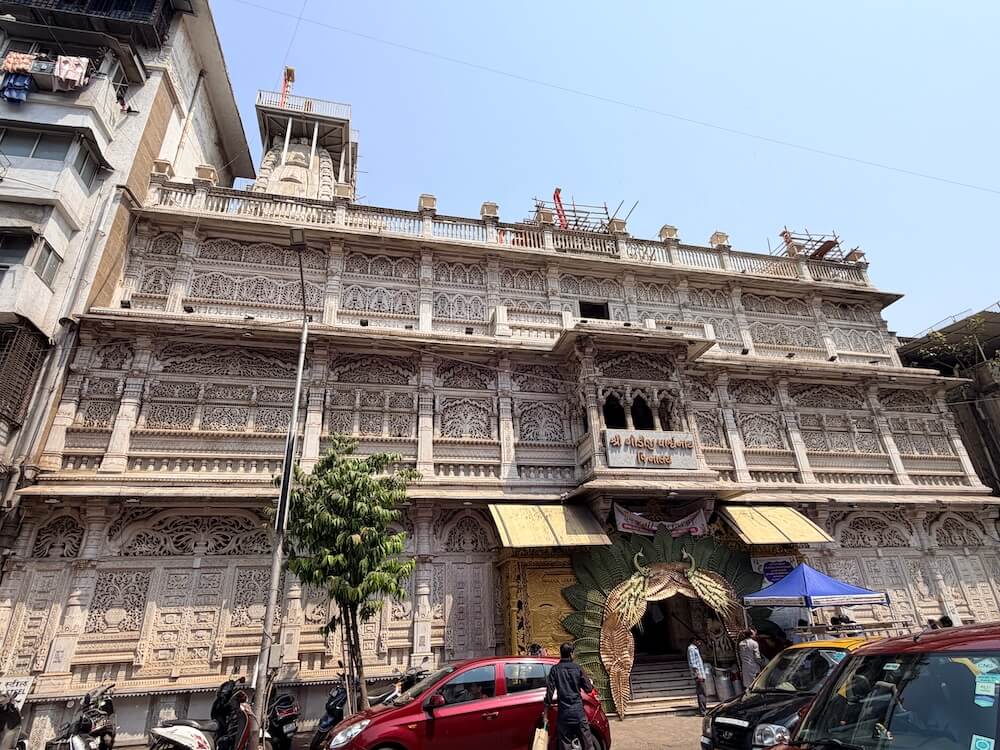
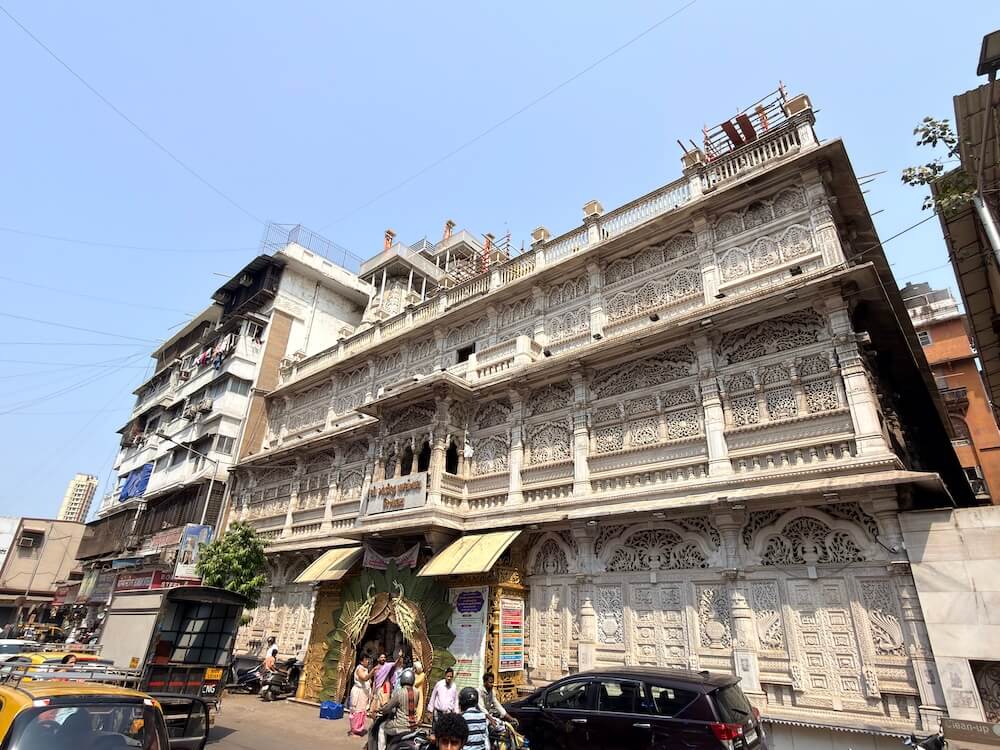
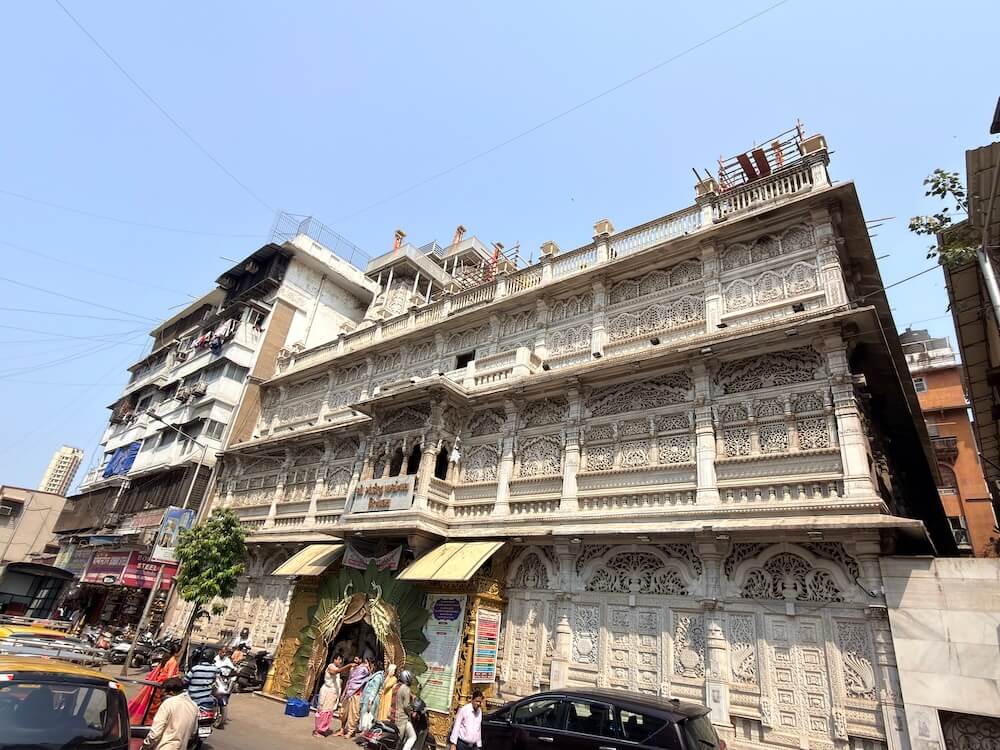
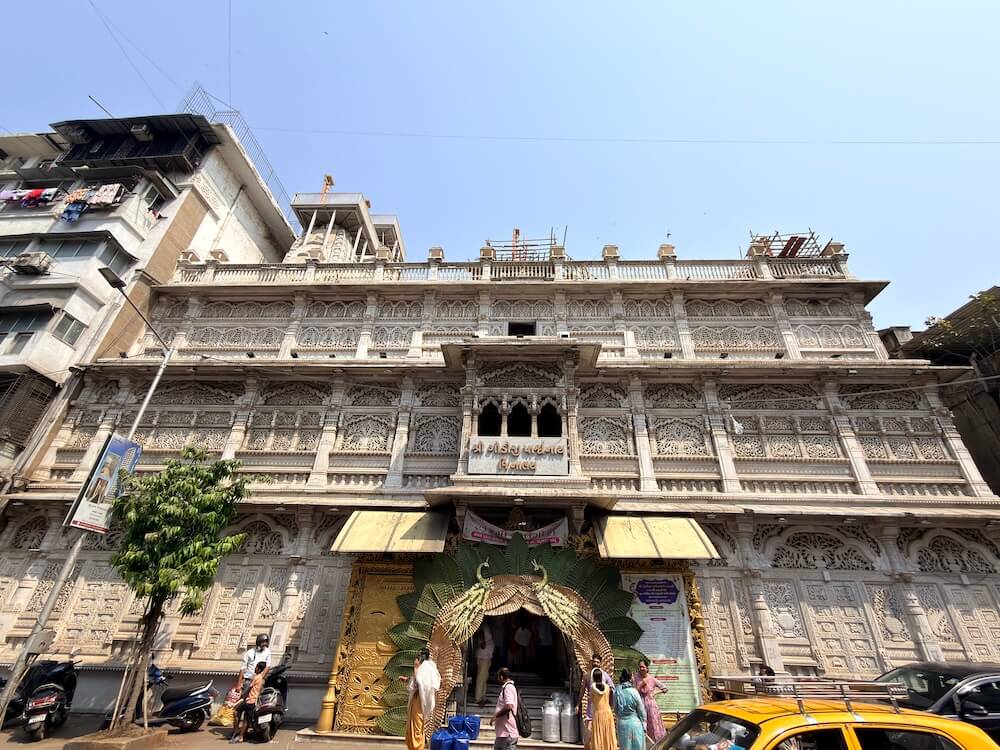
The architecture of the Shri Godiji Parshwanath Temple is an excellent example of the Nagara style of Indian temple architecture. The influence of the Solanki or Maru-Gurjara architectural style of Western India is clearly visible in the design of this temple. The current three-story structure is crafted entirely in white Makrana marble. The temple’s design is based on the ‘Bavan Jinalaya’ (52 shrines) concept, where the main temple is surrounded by 52 smaller shrines. The temple at Pydhonie has 16 sub-shrines containing idols of various Tirthankaras. The Bavan Jinalaya concept is predominantly found in Jain temples across Rajasthan and Gujarat. The base of the temple (Adhisthana) features distinctive carvings. These include sculptures of elephants, lions, cows, and traditional Jain symbols. The walls above the base, known as the Jangha section, display extremely delicate carvings. These include depictions of Goddess Mahalakshmi, elephants, and traditional lamp towers (Deepmalas).
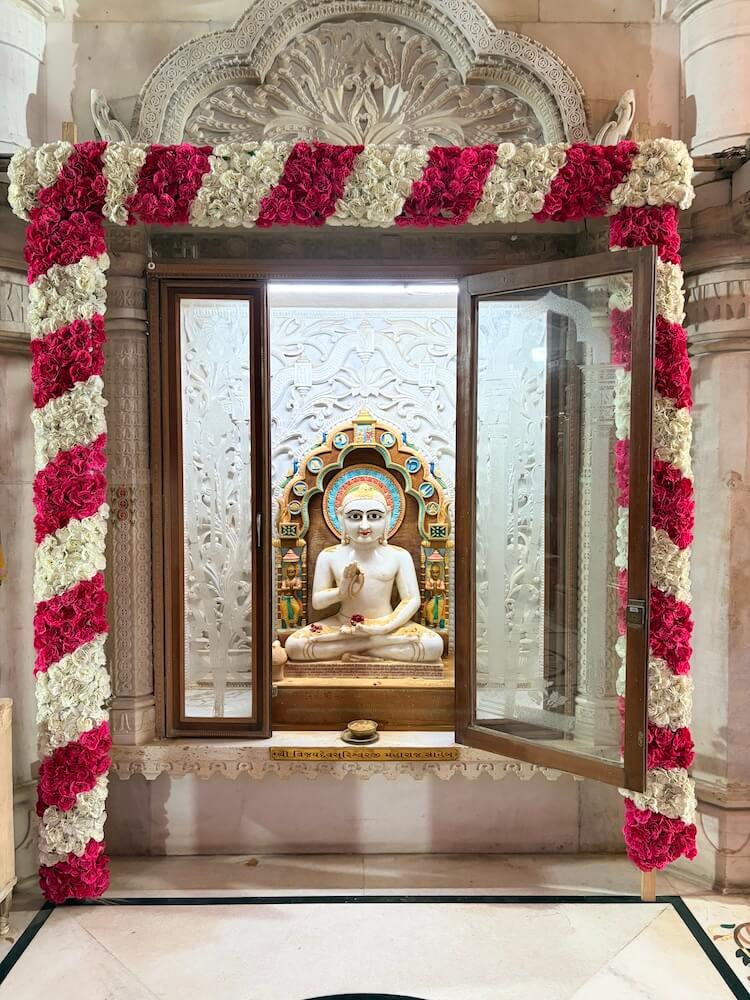
The temple is designed with a spacious Sabha Mandap (assembly hall) and a Garbhagriha (sanctum sanctorum). Devotees perform collective prayers and bhajans in this hall. The domed ceiling of the Sabha Mandap features beautiful intricate work. In front of the Sabha Mandap is the entrance to the Garbhagriha, adorned with carved pillars and arches. This design is considered a hallmark of Solanki architecture. The idol of the Moolnayak, Lord Parshwanath, is enshrined in the Garbhagriha. The main idol is extremely serene and is crafted from white marble. The most significant feature of Lord Parshwanath’s idol is the seven-hooded serpent canopy over his head. It is believed that these hoods were spread by the Yaksha and Yakshini, Dharanendra and Padmavati, to protect Lord Parshwanath. The Shrivatsa symbol is carved on Parshwanath’s chest. The idol is in the Padmasana (lotus) posture, and the Tirthankara’s eyes are half-closed. The height of Lord Parshwanath’s idol is about one and a half feet. This idol was brought to Mumbai from Mirpur, Rajasthan. It is considered to be very ancient, and according to Jain belief, devotees trust that this idol possesses many miraculous powers.
Apart from the main idol, there are many other significant idols in this temple. On the upper floor of the temple, there are idols of Chintamani Parshwanath and Sharmila Parshwanath. There are a total of 155 idols in the temple, which include 86 marble idols, 2 crystal idols, and 76 small silver idols. Recently, a 31-inch tall Swarna Parshwanath (Golden Parshwanath) idol has been installed here. This idol is made of Panchdhatu (five metals) and is plated with 5 kilograms of gold. On both sides of the Parshwanath idol are the idols of Dharanendra Yaksha and Padmavati Devi. Dharanendra is the Serpent King, and Padmavati is his consort. These deities protect the governance of Lord Parshwanath. Additionally, idols of Lord Shantinath and Lord Vimalnath are also installed in the temple. Each Tirthankara has a unique emblem (Lanchana), and Lord Parshwanath’s emblem is a serpent, which is carved at the base of the idol.
There is a Sabha Mandap (assembly hall) on the upper floor of the temple. Marble lattices are installed around this hall, allowing natural light and air to enter. The number of pillars in the temple is significant, totaling 226, each featuring unique and intricate carvings. The temple has a total of nine Shikhars (spires). These spires are triangular in shape and are topped with golden Kalashas. The design of the spires rises in a stepped pattern. The marble carvings in this temple are reminiscent of the Vimal Vasahi temple in Mount Abu.
Many festivals are celebrated throughout the year at the Shri Godiji Parshwanath Temple. Paryushan Parva, the holiest festival in Jainism, is celebrated here annually for eight days. During this period, devotees observe fasting and meditation. Paush Dashami is celebrated as the Janma Kalyanak (birth anniversary) of Lord Parshwanath. On this day, special Puja and Abhisheka are performed in the temple. Festivals like Mahavir Jayanti, Diwali, and Mauni Ekadashi are also celebrated with great enthusiasm. According to historical records, large-scale charity is performed in the name of Godiji Parshwanath. Records from the 18th century indicate that a community feast was organized for eight hundred thousand people, for which over 1.34 lakh families were invited. In 2012, when the temple completed 200 years, sweets were distributed to about 1.5 lakh Jain families in Mumbai.
On this historic occasion, flag hoisting was performed simultaneously in over 850 Jinalayas and more than 350 Upashrayas across Mumbai. A grand chariot procession (Rath Yatra) spanning about seven kilometers was the main highlight of this celebration.
The Indian Postal Department also issued a special commemorative stamp on April 17, 2012, to mark this historic festival. The temple is open for Darshan daily from 5:00 AM to 10:00 PM.
This sacred temple stands as a testament to deep spiritual devotion, ancient architectural grandeur, and rich local cultural traditions.
The sanctum sanctorum houses the divine idol consecrated according to ancient Vedic traditions, surrounded by serene courtyards and traditional temple architecture.
Navratri, Maha Shivratri, Annual Temple Jatra & Deepotsav
Compare and book flights, secure top-rated local hotels near the temple, hire reliable guides, and rent cars instantly.
Extend your pilgrimage by visiting other highly sacred temples located nearby.


Add ₹999 more to unlock FREE SHIPPING!
Your sacred cart is currently empty.
Shop Photo FramesFill in your delivery details below to place your order.
Add comment