
Add ₹999 more to unlock FREE SHIPPING!
Your sacred cart is currently empty.
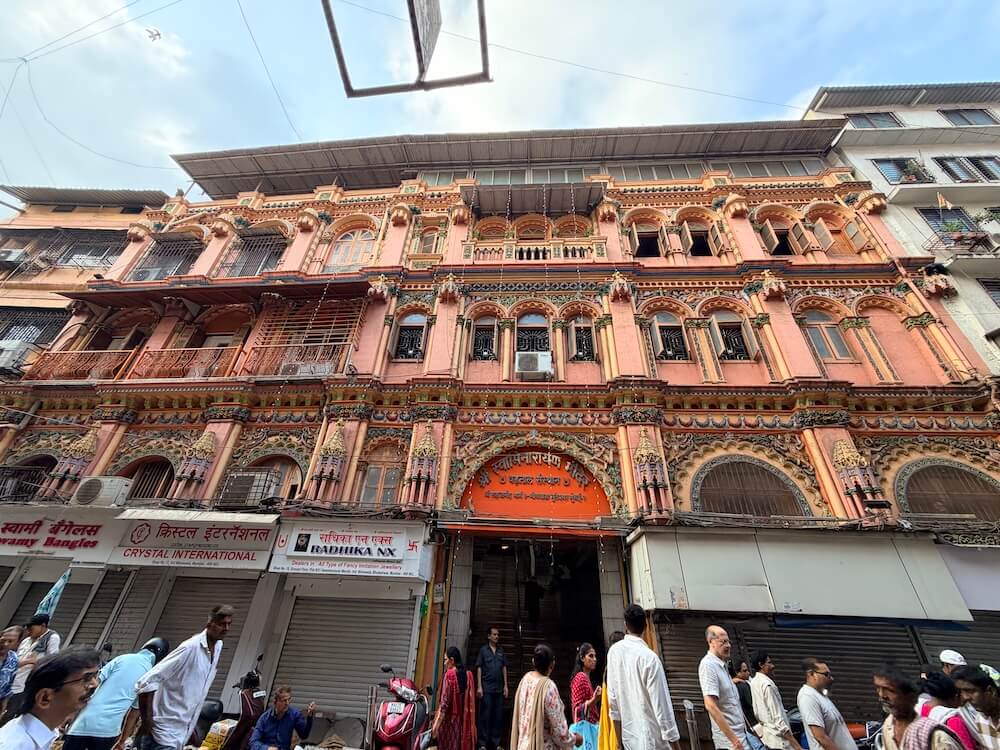
Shop Photo FramesThe Bhuleshwar area is defined by the bustling textile markets, the shimmering gold and silver jewelry shops, and the vibrant energy of old Mumbai. In this neighborhood, filled with crowds and clamor, the two human pursuits of Artha (wealth) and Dharma (righteousness) coexist in parallel. One of the most significant temples in this area, which houses many shrines, is the Bhagwan Shree Swaminarayan Temple. Built in the latter half of the nineteenth century, this temple stands as a witness to the transformation and commercial prosperity of Mumbai. Famous for its distinctive three-spire architecture, this temple is affiliated with the Laxminarayan Gadi Sansthan of the Swaminarayan Sampraday in Vadtal.
‘Swaminarayan’ is a renowned religious tradition in India. The founder of this tradition, Swami Sahajanand, was originally named ‘Ghanshyam Pande’. He was born into a Samavedi Brahmin family on the day of Ram Navami, 3 April 1781, in the village of Chhapaiya near Ayodhya in Uttar Pradesh. At the age of twelve, he renounced his home. Thereafter, he traveled across India for seven years and also performed penance in the Himalayas. During this period, he was known as ‘Neelkanth Varni’. After receiving initiation from Swami Muktanand in Mangrol, Saurashtra, in 1800, and later from his guru Ramanand in Piplana, he chose Gujarat as the field for his religious and social reform work. The name ‘Sahajanand’ was bestowed upon ‘Neelkanth Varni’ by Ramanand.
In 1801, ‘Sahajanand’ became the head of the ‘Ramanandi or Uddhav Sampraday’. Drawing upon the philosophies of Ramanujacharya’s Vishishtadvaita and Vallabhacharya’s Shuddhadvaita, Swami Swaminarayan propagated a harmonizing faith. He taught his followers to abandon social evils prevalent at the time, such as the practice of Sati and female infanticide, as well as the consumption of alcohol and meat, violence, animal sacrifice, theft, gambling, adultery, superstition, and the obscenity and vulgarity associated with festivals like Holi. Like the followers of Jainism, he emphasized non-violence and vegetarianism. He disapproved of the immorality in the relationships between men and women in some contemporary Hindu sects; therefore, he established strict rules regarding this within his own tradition. His teaching was that Swaminarayan is Bhagwan Shree Krishna himself, and people should seek refuge in Him. He preached that non-violence is transcendental. He was also opposed to violence in Yagnas (sacrificial rituals). Devotees believe that Sahajanand, also known as ‘Shreeji’ or ‘Neelkanth Varni’, is Swaminarayan, the avatar of the Divine. He attained Nirvana on 1 June 1830. Prior to this, in 1825, he established two administrative seats (Gadis) within his tradition. The first is known as the ‘Nar-Narayan Dev Gadi’ in Ahmedabad, and the second as the ‘Laxmi-Narayan Dev Gadi’ in Vadtal. He decreed that the Acharyaship of this sect should be hereditary. Accordingly, he appointed Ayodhyaprasad, the son of his elder brother Rampratap Pande, to the ‘Nar-Narayan Dev Gadi’ in Ahmedabad, and Raghuvir, the son of his younger brother Ichharam, to the ‘Laxmi-Narayan Dev Gadi’ in Vadtal.
Later, due to differences regarding this Acharyaship, Shastri Yagnapurushdas (‘Shastriji Maharaj’) founded a separate organization in Bochasan in 1905. This organization is known as the ‘Bochasanwasi Akshar Purushottam Swaminarayan Sanstha’ (BAPS). The organization believes that Swaminarayan remains present on Earth through the sect’s Gunatit gurus. Subsequently, in 1966, the ‘Gunatit Samaj’ was formed as an independent organization from BAPS. Additionally, the ‘Swaminarayan Gadi’ (Maninagar) was established in 1940 after separating from the Ahmedabad Gadi. During his lifetime, Swami Swaminarayan established six temples in Ahmedabad (1822), Bhuj (1823), Vadtal (1824), Dholera (1826), Junagadh (1827), and Gadhada (1828). The construction of the first temple built by Swaminarayan in Ahmedabad was supported by the British Collector of that time. Today, there are many temples belonging to various organizations of this tradition across the world. One of the temples under the jurisdiction of the Laxminarayan Gadi is located in Bhuleshwar.
The history of this temple is divided into two phases. On the auspicious occasion of Vaishakh Sud Ekadashi in 1868, Sheth Ranchhoddas Pranjivandas laid the foundation for this first Swaminarayan temple in Mumbai. The virtuous Ranchhoddas demolished his own residence to build this ‘Harimandir’ and dedicated his life’s earnings to the temple. At that time, the idols of ‘Harikrishna Maharaj’, ‘Golokvihari’, and ‘Radhika’ were consecrated in the temple by Acharya Maharaj Shree Bhagwatprasadji. Thirty-seven years later, in 1903, the temple was renovated and given its current grand form. ‘Rao Bahadur’ Karamsee Damji (1844-1918) made a significant contribution to the construction of this temple. Born into a poor family in Kutch, Karamsee came to Mumbai with his mother. He spent his early days on the footpaths. Through honest hard work, he achieved immense success in business. He demonstrated great social awareness during the 1893 Mumbai riots. He also performed commendable service during the plague epidemic of 1896. For his excellent work, the British government conferred upon him the title of ‘Rao Bahadur’. On Vaishakh Sud Dwadashi in 1903, the idols of ‘Ghanshyam Maharaj’ and ‘Laxmi-Narayan Dev’ were consecrated in this temple by the then Acharya of the Vadtal Gadi, Laxmiprasad Maharaj.
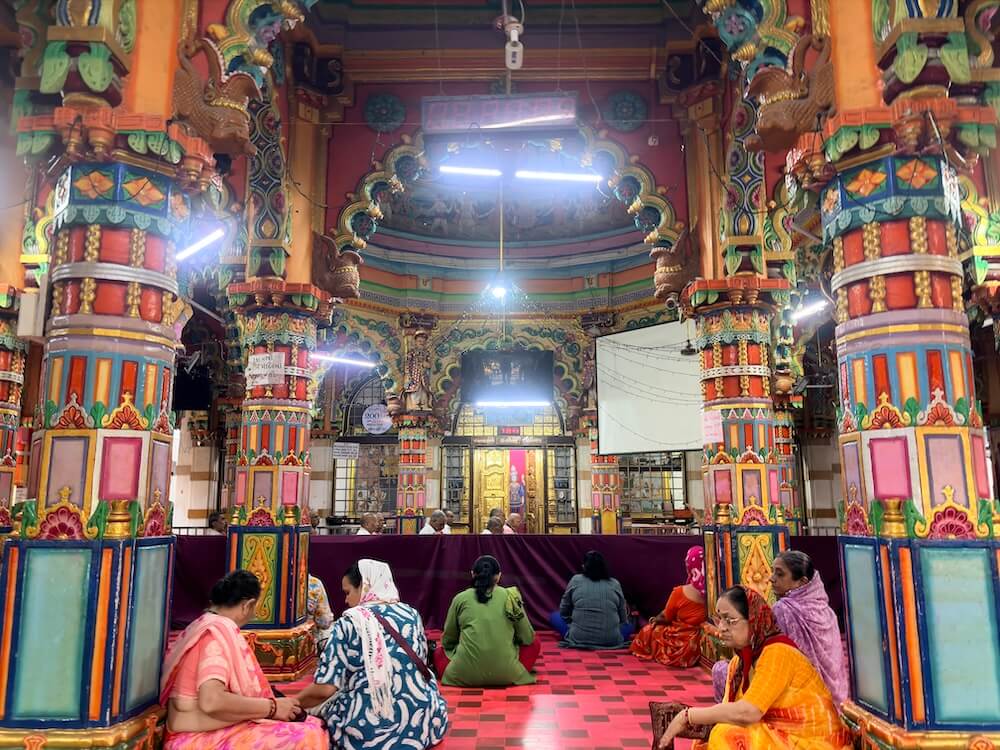
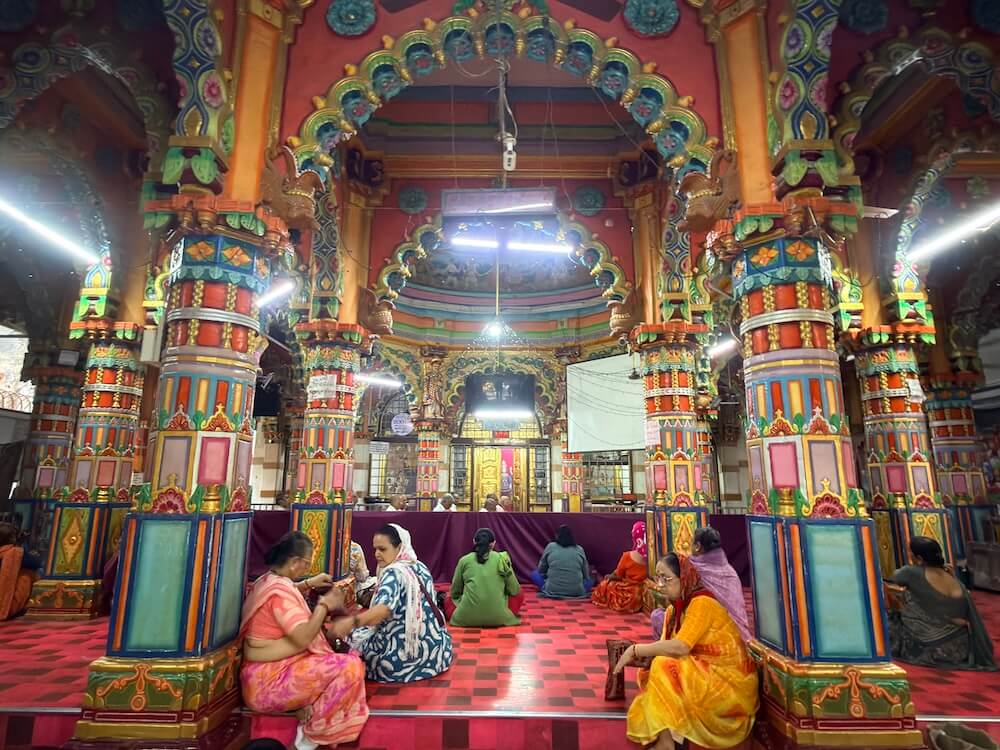
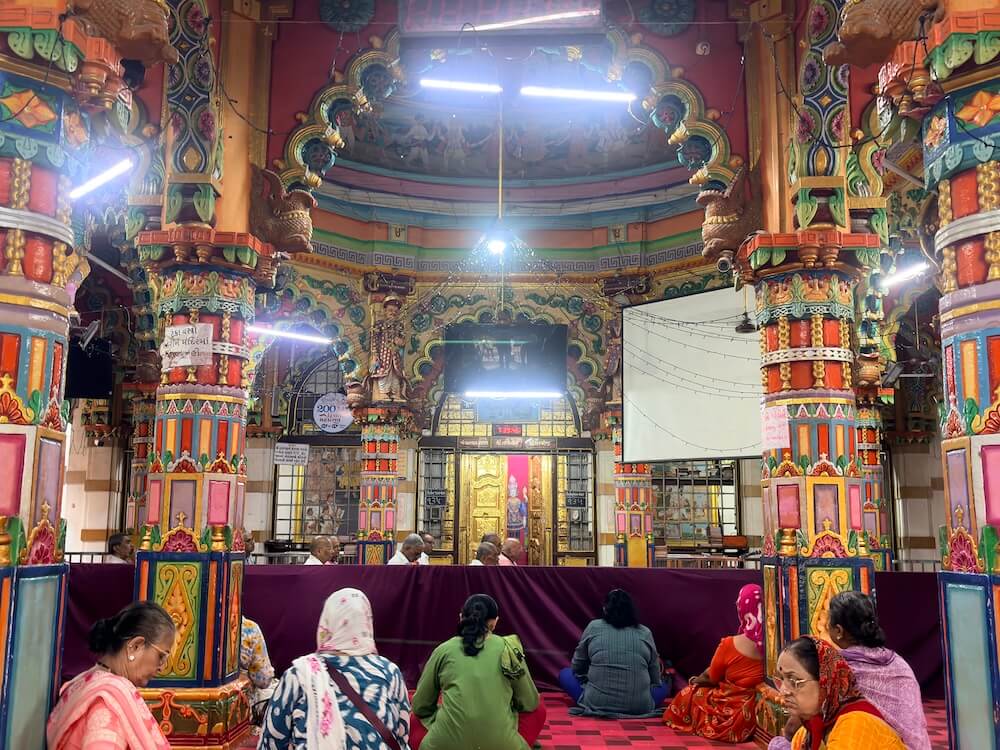
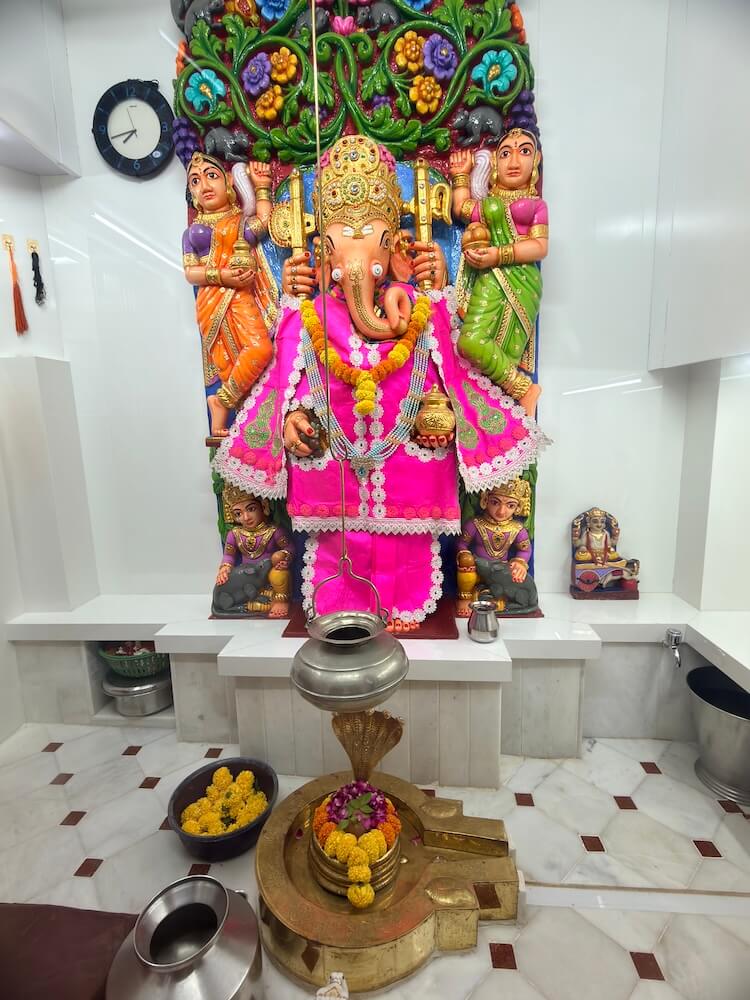
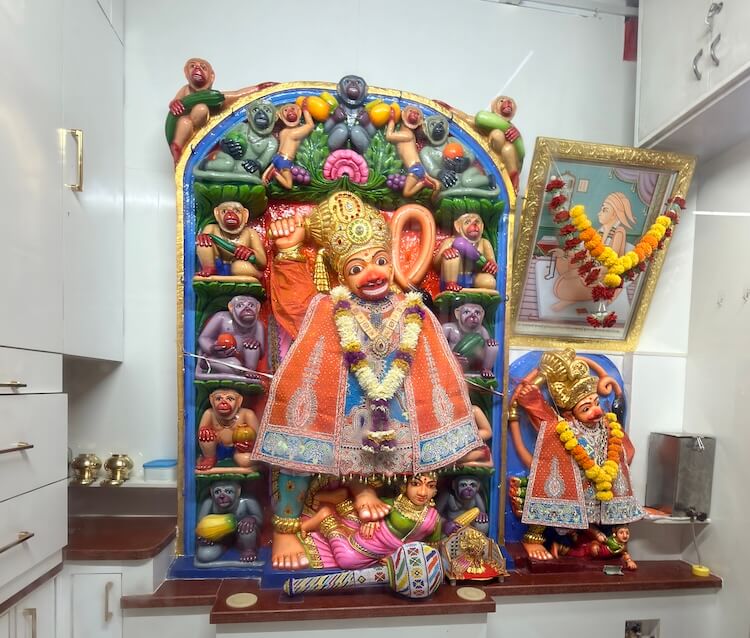
Situated in the renowned Phool Galli of Bhuleshwar, the exterior facade of this temple is adorned like a historic mansion. The temple’s assembly hall is located on the ground floor of this four-story structure. Satsang, discourses, and devotional singing (bhajans) are held here regularly. Entering through the main gate of the mansion, one ascends twenty-five marble steps to reach the temple’s assembly hall (sabhamandap). Here, on the left, an idol of Lord Ganesha is enshrined in a beautiful niche, while an idol of Lord Hanuman is seated on the right. The assembly hall is supported by fifty-four pillars decorated with intricate carvings, topped by a domed ceiling painted with colorful depictions of the various pastimes of Lord Krishna. The side walls of this hall feature portraits of Lord Swaminarayan, as well as the Acharyas and saints associated with the Vadtal Gadi. This is a triple-shrine (trikuta) style temple, featuring three sanctum sanctorum (garbhagrihas). These sanctums are embellished with gold-plated sheets featuring intricate carvings. Among them, the central sanctum houses the serene marble idols of Ghanshyam Maharaj, Bhagwan Narayan, and Lakshmi, placed within a golden canopy on a marble altar. Here, the idol of Bhagwan Narayan is four-armed, while Mother Lakshmi is depicted in the gesture of fearlessness (abhaya mudra). Following the traditions of Swaminarayan temples, these idols are adorned with rich garments, ornaments, and golden crowns. One of the side sanctums enshrines the idols of Harikrishna Maharaj, Golokvihari, and Radhika. The idol of Golokvihari, representing Krishna Kanhaiya, is carved from black stone. Harikrishna Maharaj wears a golden mask on his face, while the idol of Radhika is carved from white stone. These idols are also decorated with opulent clothing and jewelry. The third sanctum houses the Lord’s bedchamber (shayya). Here, the idols and crowns of Lord Swaminarayan are placed upon a large bed flanked by two golden lion statues. A magnificent portrait of Lord Swaminarayan in the Rajasthani painting style is displayed here. The assembly hall is crowned by a dome-shaped spire (shikhara), topped with a four-tiered amalaka and a finial (kalash). As there are three sanctums, the temple features three spires. The central spire, characterized by intricate carvings and a vertical row of finials, is the tallest. This spire, built in the urushringa style, features a five-tiered amalaka topped with three stacked finials.
Devotees can visit the Swaminarayan temple for darshan from 7:30 in the morning to 12:00 in the afternoon and from 4:00 in the evening to 8:30 at night. Since Lord Sahajanand was born on Ram Navami, this is the grandest festival celebrated at the temple. Thousands of followers of the Vadtal Gadi from Mumbai participate in this celebration with great fervor. During this time, various religious programs such as discourses and bhajans are organized. Festivals like Janmashtami, Mahashivratri, Ganeshotsav, Nrusimha Jayanti, and the Hindola festival during the month of Shravan are also celebrated here with immense crowds of devotees and great enthusiasm.
This sacred temple stands as a testament to deep spiritual devotion, ancient architectural grandeur, and rich local cultural traditions.
The sanctum sanctorum houses the divine idol consecrated according to ancient Vedic traditions, surrounded by serene courtyards and traditional temple architecture.
Navratri, Maha Shivratri, Annual Temple Jatra & Deepotsav
Compare and book flights, secure top-rated local hotels near the temple, hire reliable guides, and rent cars instantly.
Extend your pilgrimage by visiting other highly sacred temples located nearby.


Add ₹999 more to unlock FREE SHIPPING!
Your sacred cart is currently empty.
Shop Photo FramesFill in your delivery details below to place your order.
Add comment