
Add ₹999 more to unlock FREE SHIPPING!
Your sacred cart is currently empty.
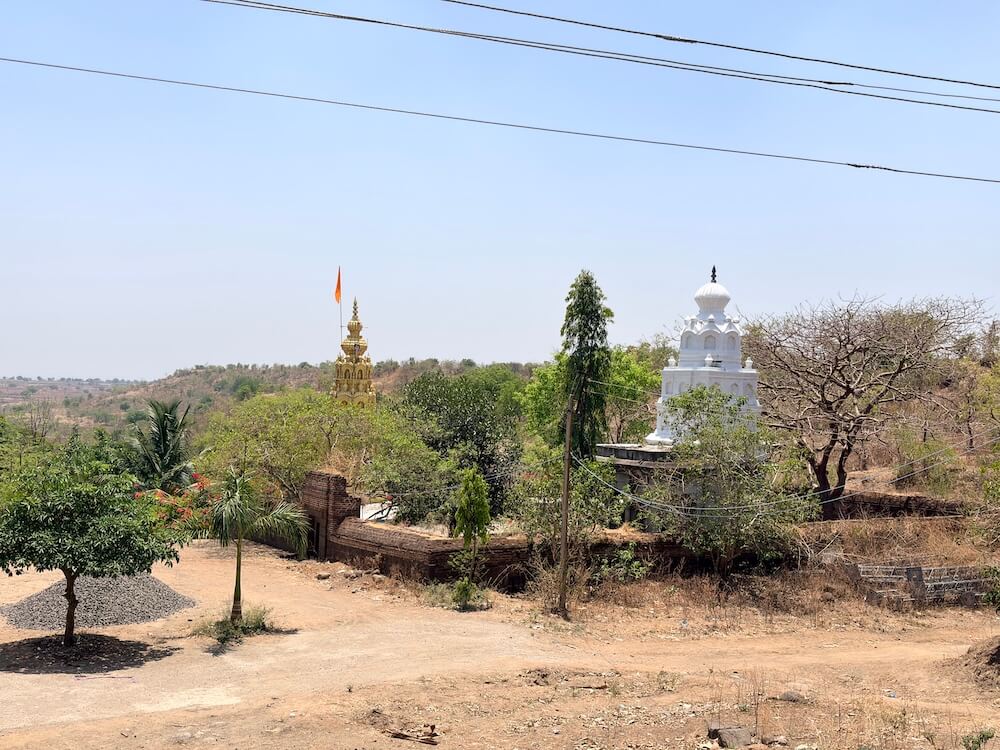
Shop Photo FramesOn the historic and religious soil of Marathwada, there are several ancient temples in Jalna district. Among these temples, the Naganath Mahadev Temple at Nagapur Sewali is considered an extremely famous and important religious center. It is a prominent sub-shrine (upapeetha) of the well-known Aundha Naganath Jyotirlinga Temple in Hingoli district. This ancient temple is the presiding deity (gramdaivat) of the village of Nagapur Sewali and a primary place of faith for thousands of devotees in the surrounding area. Built in the fourteenth or fifteenth century, this temple is known for its exquisite Hemadpanti architectural style. Nestled in a peaceful and picturesque environment, this temple is a beautiful confluence of historic architecture, ancient holy temple tanks (teerthkunds), and religious traditions. Devotees have a firm belief that having darshan of the Shiva Linga here bestows the religious merit (punya) of having darshan of the Aundha Naganath Jyotirlinga.
The Aundha Naganath Shiva Temple in Hingoli district of Marathwada has a history spanning thousands of years. According to popular belief, this temple is considered to be from the era of the Pandavas, while historians believe it belongs to the Yadava era and dates back to around the twelfth century. This is a primary place of faith for all Shaivites in India and is one of the main Shiva seats. There is a large community of devotees of Aundha Naganath in Marathwada. This main temple has sub-shrines in many villages. One such ancient and famous sub-shrine of Aundha Naganath is situated in the village of Nagapur Sewali in Jalna district. Scholars express the opinion that, judging by the characteristic Hemadpanti construction of the temple and the old stepwell (barav) in front of it, this temple must be at least four to five hundred years old.
Regarding the establishment of the temple, the legend goes that in ancient times a devoted worshipper of Lord Shiva lived in the village of Nagapur Sewali. Every year during the holy month of Shravan, he would regularly go for the darshan of Aundha Naganath. Later, due to old age, it became impossible for him to undertake this journey on foot. When the pilgrimage became too strenuous for him, he emotionally asked the Lord for forgiveness and prayed earnestly from the bottom of his heart, ‘May you always remain before my eyes.’ Responding to this earnest call of the devotee, the Lord gave him a vision in a dream. The Lord stated in the dream, ‘I am situated in the hill near the village, go there and search for me.’ According to this divine vision, the devotee went into the hills and began his search. At the spot he had seen in the dream, he started digging. While digging, his pickaxe suddenly struck a stone. That stone was none other than the Swayambhu (self-manifested) Shiva Linga. As soon as the blow of the pickaxe struck, blood began to ooze from that Shiva Linga. Seeing this, the devotee felt deeply distressed and immediately begged the Lord for forgiveness, and thereafter established the Shiva Linga and founded this temple at that very sacred spot.
Although this temple is situated in a tranquil area a little away from the main village, a paved road is available up to the temple. There is a spacious parking lot near the temple. This temple is located at a level lower than the parking area. From the parking lot, there are carved stone steps leading down towards the temple. Descending about twenty steps, one reaches the entrance gate located in the sturdy fortification of the temple. From this entrance gate, one has to descend another ten to fifteen steps to enter the courtyard of the temple. Right along the fortification in the temple courtyard, the residences of the temple attendants and priests are built.
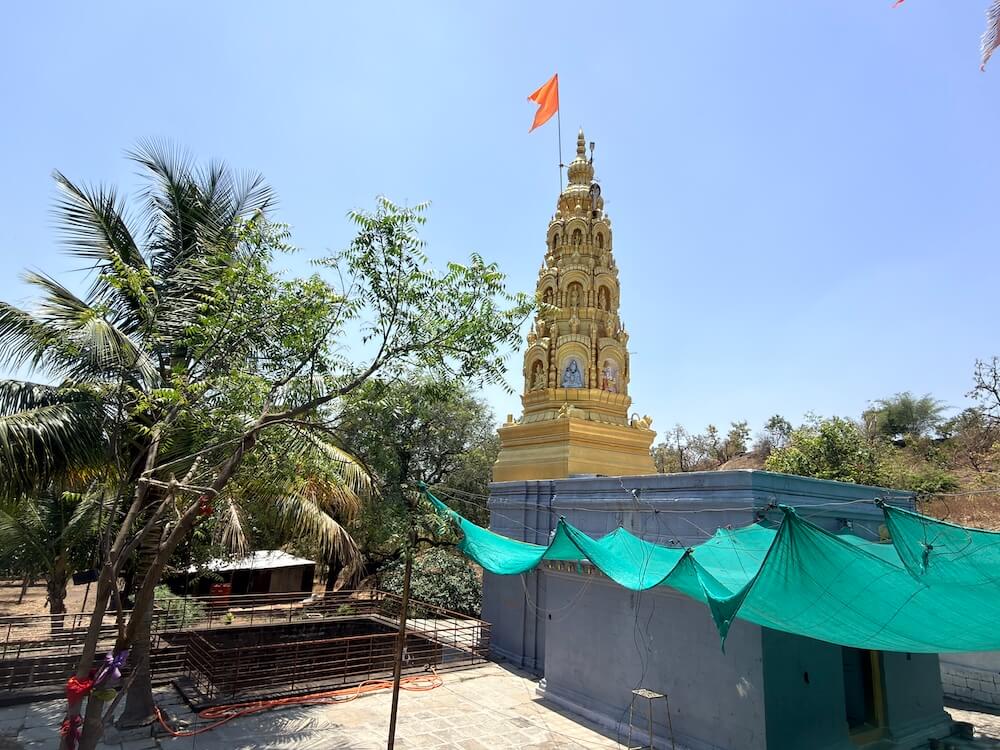
In the courtyard, directly in front of the temple, are two ancient holy temple tanks built in carved stone. Both of these tanks, dating back to the time of the temple, have a neat arrangement of steps for descending into them. Devotees can take a bath in one of these tanks, while the sacred water in the other tank is kept exclusively reserved for the ritual bathing (abhishek) of the deity. Niches (devkoshthas) are carved into the inner walls of these temple tanks, and various divine idols are enshrined within them. The water reserves in both tanks are perennial. The villagers here state that even in summer, the water in these tanks never dries up. During the summer days, all wells and tanks in the surrounding area of the temple go dry, yet these holy tanks always remain brimful of water. The priests here maintain that this is a divine miracle. Near these temple tanks, carved pillars and some old ruins of the ancient temple can be seen scattered around.
The layout of this temple consists of a assembly hall (sabhamandap), an intermediate hall (antarala), and the sanctum sanctorum (garbhagriha). On the door jambs (দ্বারशाखा) of the main entrance of the assembly hall, attractive vertical-lined carvings are etched. A beautiful sculpture of Sri Ganesha is seated on the lintel (lalatbimba) of this entrance. Strong wooden shutters are fitted to the entrance. This assembly hall is completely enclosed. Upon entering the assembly hall, stone platforms about three feet high can be seen built on both the left and right sides. The space about four feet wide between these two platforms is slightly depressed. In this depressed area on the floor, a beautiful stone sculpture of a tortoise is carved. On the high platform on the right side, the idols of Viththal-Rakhumai are enshrined. In the assembly hall, on the left and right sides of the antarala, there are two empty rooms which are currently used as storage rooms. In the walls of the assembly hall and the antarala, there are lamp niches (deepkoshthas) at various places. In ancient times, lamps were lit in these niches. Ahead of the assembly hall is the antarala, and in front of this antarala is the entrance to the sanctum sanctorum. There are floral and leaf carvings on the door jambs of the sanctum. An idol of Ganpati is carved on its lalatbimba as well. In the lower part of the entrance, i.e., on the threshold (mandarka), a beautiful moonstone (chandrashila) can be seen in the form of a step. The main sanctum sanctorum is much deeper than the antarala and has steps built to descend into it.
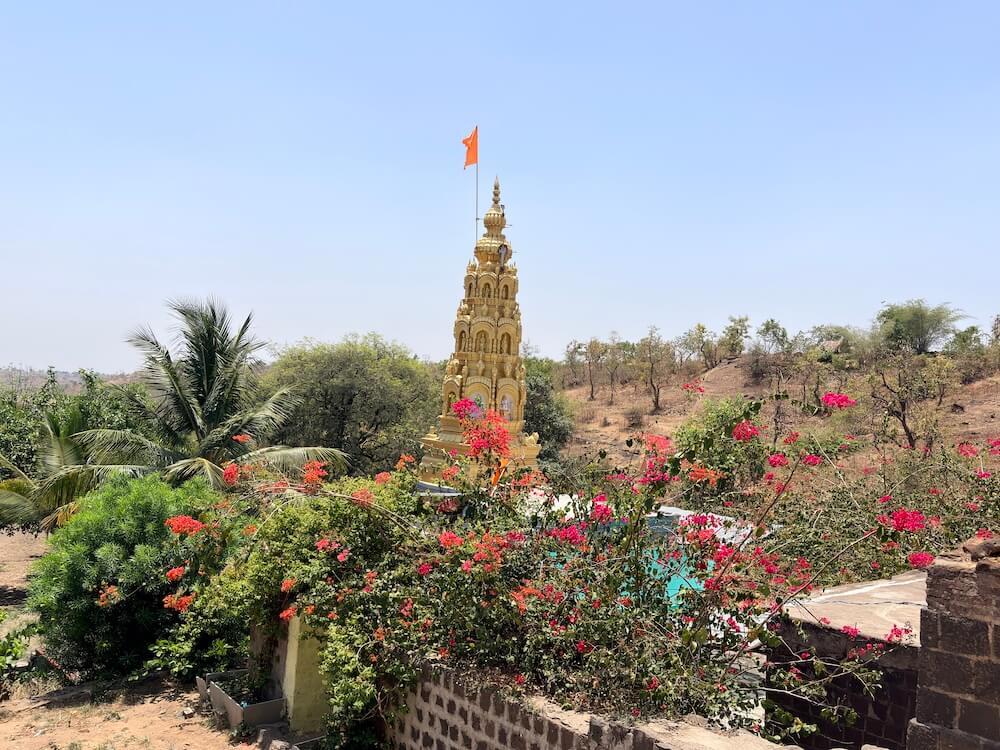
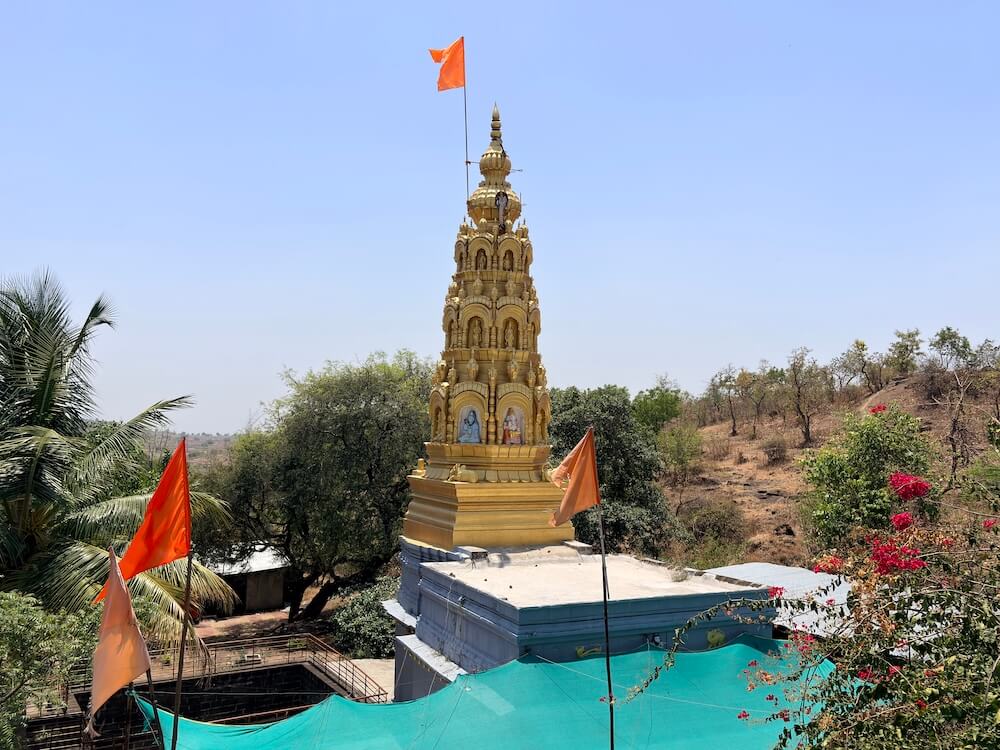
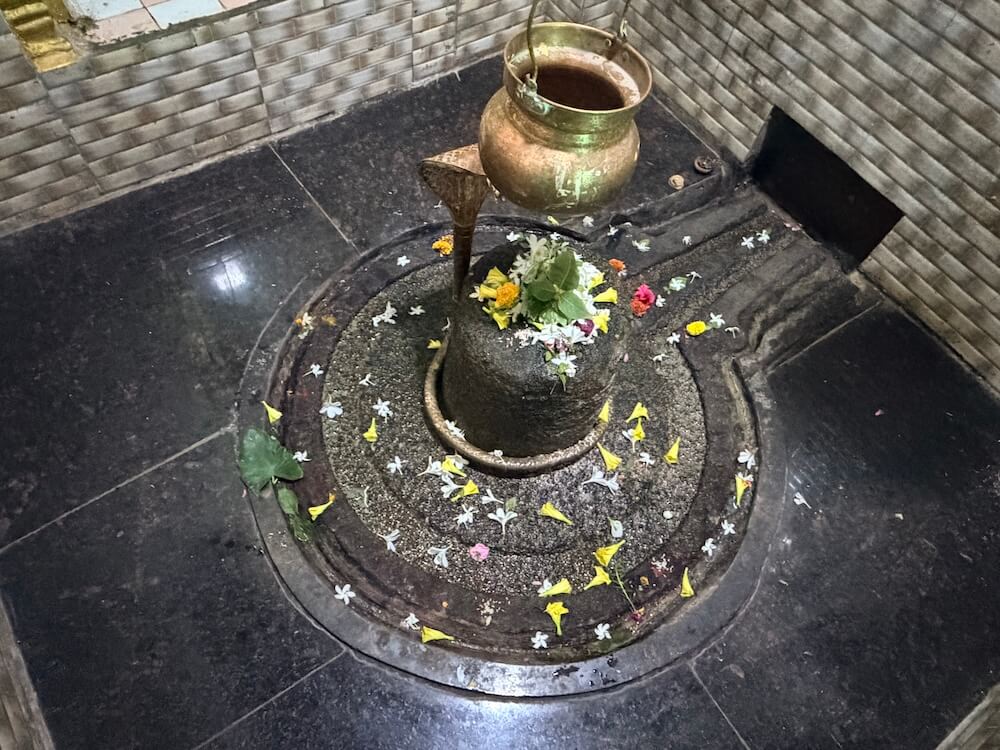
There is an old religious custom here that while entering the sanctum sanctorum, devotees should remove any leather items on their body, such as belts or wallets, as well as take off their shirts and go inside bare-chested. Right in the middle of the floor inside the sanctum sanctorum, the Swayambhu Shiva Linga is enshrined. At a specific spot on this Shiva Linga, a deep scar or wound mark is visible. It is said that this wound is the mark of the pickaxe that struck while discovering the Shiva Linga from the earth. The Shiva Linga is very beautifully coiled by a copper serpent. A large copper abhishek vessel, holding a continuous stream of water over the Shiva Linga, is suspended from the ceiling. On the back wall of the sanctum sanctorum, a stone idol of Goddess Parvati is seated in a niche. The ceiling of the sanctum sanctorum is circular and of a characteristic structure. Brass bells offered by devotees are suspended from this ceiling. A sturdy safety railing is built along all four sides on the roof of the Sabhamandapa. Exactly in the middle of the front facade of this safety railing, a beautiful sculpture of Naganath Maharaj is carved, and on the left and right sides of this sculpture, mythological Vyala sculptures can be seen carved. A grand five-tiered octagonal Shikhara is erected over the roof of the main Sanctum Sanctorum (Garbhagriha). Eight niches (Devakoshtakas) are created in each tier of the Shikhara, in which attractive idols of various deities are installed. Small miniature Shikharas, featuring an Amalaka and a Kalasha at the top, are carved above each of these niches. At the very pinnacle of the main Shikhara, there are two large stone Amalakas placed one upon the other, with an elegant Kalasha mounted on the top Amalaka. There is an ancient Ganapati temple in the courtyard in front of the Mahadev temple. This temple houses Sri Ganesha, Gaurihar, a Shiva Linga (Shivpind), and Nandi. Apart from this, a Nagshila is also worshipped here.
In the courtyard behind the main Mahadev temple, there is a Samadhi temple dedicated to the late priests of this holy shrine. In addition to this, temples of Maruti, Saint Tukaram Maharaj, Saint Dnyaneshwar Mauli, and Saint Savata Mali are built in this complex. At a stone’s throw distance from the main temple structure lies an extremely old, dilapidated, and broken ancient matha.
Maha Shivratri is considered to be the main annual festival celebrated here. On the sacred occasion of Maha Shivratri, a grand seven-day Harinaam Saptaha is organised here every year. During this Saptaha, melodious Kirtans by renowned Kirtankars from the district are arranged. Throughout all seven days of the Saptaha, well-known singers and bhajan mandals from the surrounding area gather at the temple to offer their sweet devotional singing service (bhajan seva). Prominent Pravachankars who guide society in the right direction are invited for special discourses during this festival. Throughout this entire festival period, thousands of devotees who visit the temple for the Darshan of the Lord joyfully partake in the various religious programmes held here. Excellent arrangements for the meals of all devotees arriving here for the festival are made by the generous donors and the temple committee of the village. On all Mondays of Shravan, devotees flock here in huge numbers to perform Panchamrit Abhishekh to the Shiva Linga and to have Darshan. Apart from Maha Shivratri and the holy month of Shravan, devotees make it a point to visit for the Darshan of Lord Naganath on the occasions of various other important festivals such as Vaikunth Chaturdashi, Nagpanchami, Kartik Pournima, and Kojagiri Pournima. Devotees can have Darshan at this temple daily from morning six to night eight o’clock.
This sacred temple stands as a testament to deep spiritual devotion, ancient architectural grandeur, and rich local cultural traditions.
The sanctum sanctorum houses the divine idol consecrated according to ancient Vedic traditions, surrounded by serene courtyards and traditional temple architecture.

Navratri, Maha Shivratri, Annual Temple Jatra & Deepotsav
Compare and book flights, secure top-rated local hotels near the temple, hire reliable guides, and rent cars instantly.
Extend your pilgrimage by visiting other highly sacred temples located nearby.


Add ₹999 more to unlock FREE SHIPPING!
Your sacred cart is currently empty.
Shop Photo FramesFill in your delivery details below to place your order.
Add comment