
Add ₹999 more to unlock FREE SHIPPING!
Your sacred cart is currently empty.
Shop Photo FramesThe Nāth Sampradāya, which arose in the thirteenth century, propagated the principles of humanity and equality, rejecting ritualism, the Chaturvarṇya system, and caste discrimination. In this tradition, which reveres Mahādev as the Ādyaguru, the Navanāths—Machhindranāth, Gorakṣanāth, Jālandharnāth, Kānīphnāth, Gahinināth, Bhartṛharināth, Revaṇnāth, Charpaṭīnāth, and Nāgnāth—along with the eighty-four Siddhas, were prominent propagators. Among these, Brahmannath is considered the forty-eighth Siddha. Only a few temples dedicated to Brahmannath are found in Mahārāṣṭra; among them, the original shrine of Brahmannath is situated on the banks of the Sindphaṇā River in Yeḷambā village, Shirūr Talukā. Devotees hold a deep faith that this awakened deity here grants their wishes.
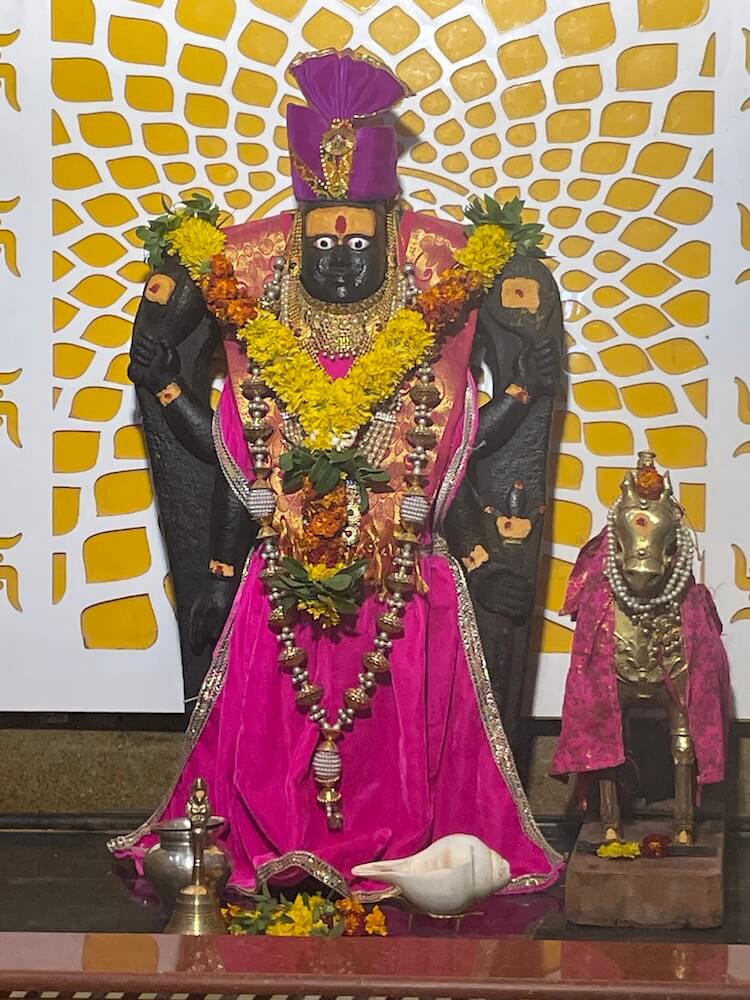
Historians state that this temple, with its original Hemāḍpantī stone construction, is an excellent example of the Yādava-era architectural style from approximately the thirteenth century. In recent times, the temple has undergone renovation. For the propagation and spread of the Nāth Sampradāya, the Navanāths and eighty-four Siddhas travelled across the country, establishing numerous maṭhas and temples. While serving and enlightening the common people, they composed abundant scriptures. In highlighting the glory of the Sampradāya’s work, miracles and wondrous tales were often associated with it. The work of Brahmannath, among the eighty-four Siddhas, is considered especially significant. As common people believe him to be an incarnation of Mahādev Bhairavnāth, his four-armed idols were sculpted. In his hands are the conch, discus, and trident. Local villagers say that Brahmannath settled in Yeḷambā village while spreading the work of the Nāth Sampradāya, and this is his original abode. The utsava mūrti (processional idol) of Brahmannath is enshrined in the village temple.
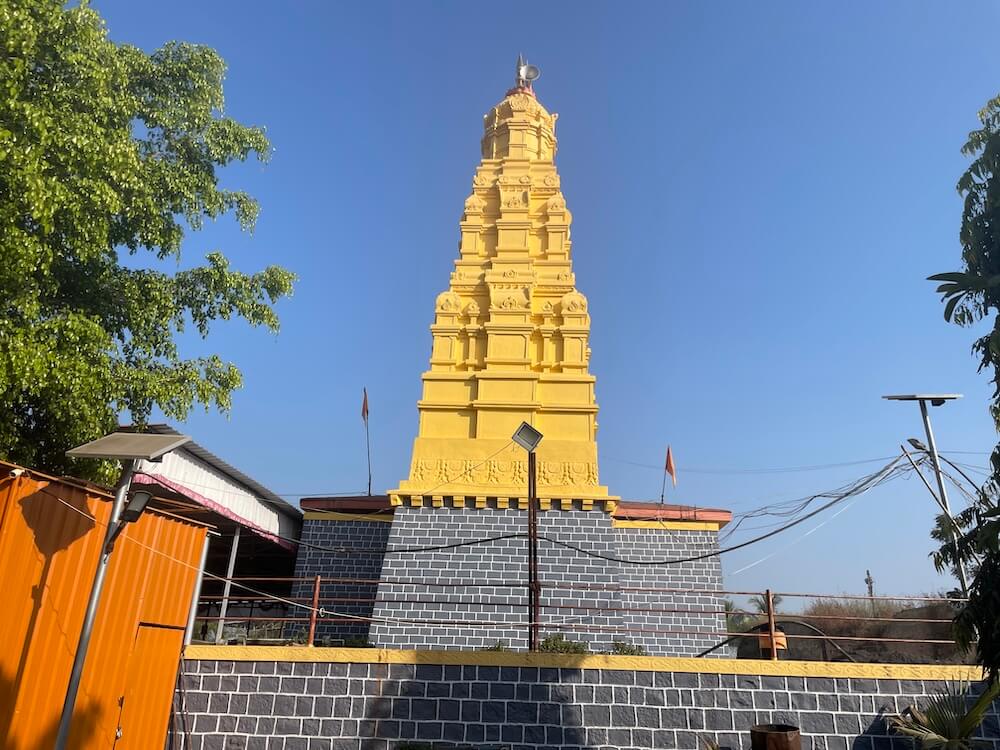
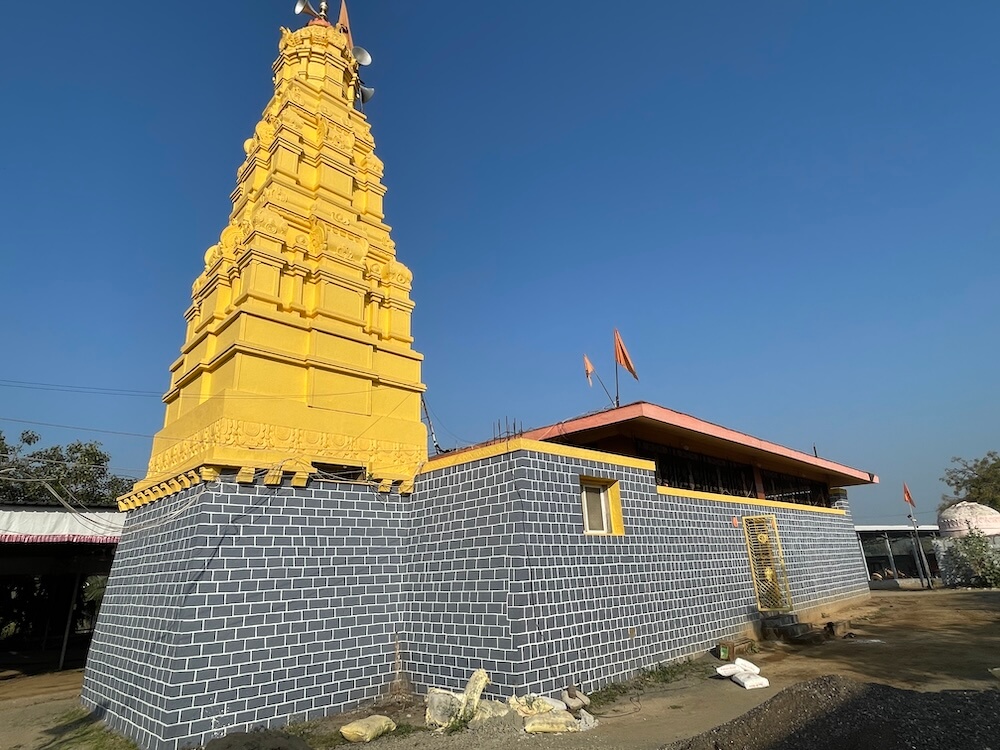
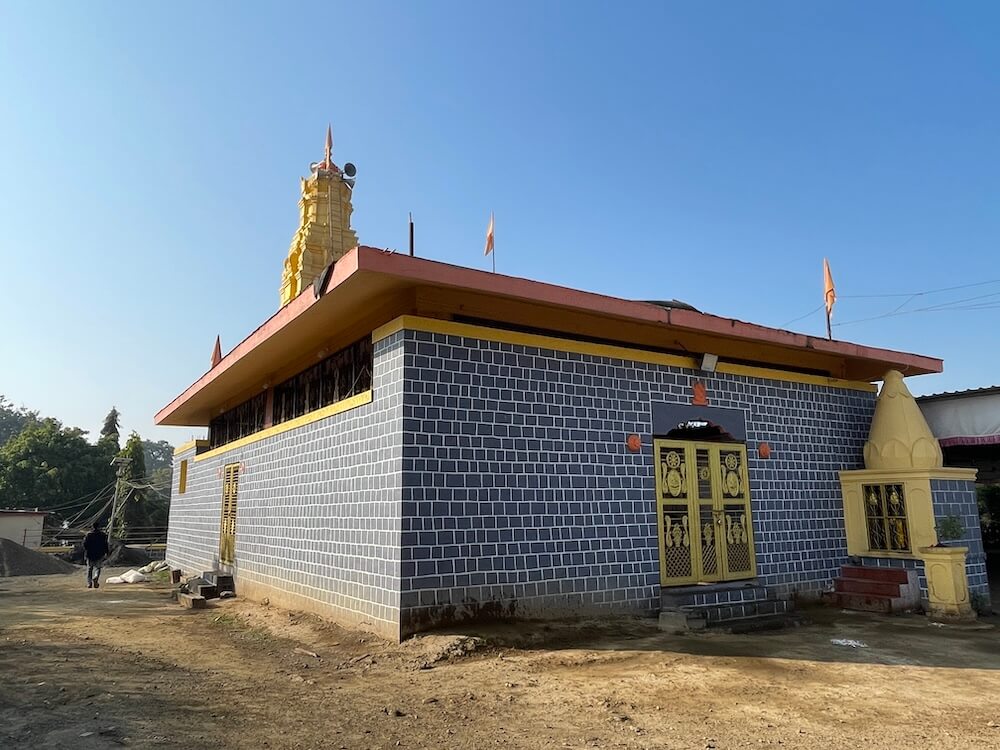
A paved road leads to this temple, which is close to the village. The temple has a strong fortification with one main entrance. In the spacious courtyard of the temple, there is a Tulasī Vṛndāvan and a small shrine nearby. Viragaḷs (hero stones) and other ancient sculptures are preserved along the front wall of the temple. The temple’s structure comprises a Sabhāmaṇḍap (assembly hall), Antarāḷ (vestibule), and Garbhagṛha (sanctum sanctorum). The Sabhāmaṇḍap has a total of three entrances: one at the front, one on the left, and one on the right. Since the entrances of the Sabhāmaṇḍap are higher than the courtyard, there are two steps in front of each of the three entrances. The front entrance features an arched toran (archway) and a Gaṇapati sculpture on the Lalāṭabimba (lintel). On the front walls on both sides of the toran, lotus motifs are carved. The enclosed Sabhāmaṇḍap has vātāyanas (windows) for light and air. In the Antarāḷ, which is in front of the Sabhāmaṇḍap, there are two chambers on the left and right sides.
Further, as the entrance to the Garbhagṛha is elevated above the Antarāḷ, there are also two steps there. The wooden doorframes of the entrance are carved with leaf and flower motifs, and ornate wooden shutters are installed. On the shutters, a Maṅgal Kalaś (auspicious pot) and Gajatoraṇ (elephant archway) are carved, with leaf and flower motifs visible on them. Inside the Garbhagṛha, on a Vajrapīṭha (diamond pedestal), is a four-armed idol of Brahmannath made of black stone. In the upper two hands of the idol are a conch and a discus, while in one of the lower hands is a trident, and the other hand is in the Abhaya Mudrā (gesture of fearlessness). It is said that the idol is four-armed because Brahmannath is believed to be an incarnation of Bhairavnāth Mahādev. Beside the idol on the Vajrapīṭha is a brass sculpture of a horse. The enclosed Garbhagṛha has vātāyanas for light and air. On the vitāna (ceiling) of the Garbhagṛha, lotus motifs are carved. The roof of the Garbhagṛha has a three-tiered square Śikhara (spire). This Drāviḍian-style Śikhara has kūṭa and śālā compositions in the first two tiers, and a dome on the third circular tier. At the apex of the Śikhara are an Āmalaka, surmounted by a Kalaś (finial) and Dhvajapatākā (flag).
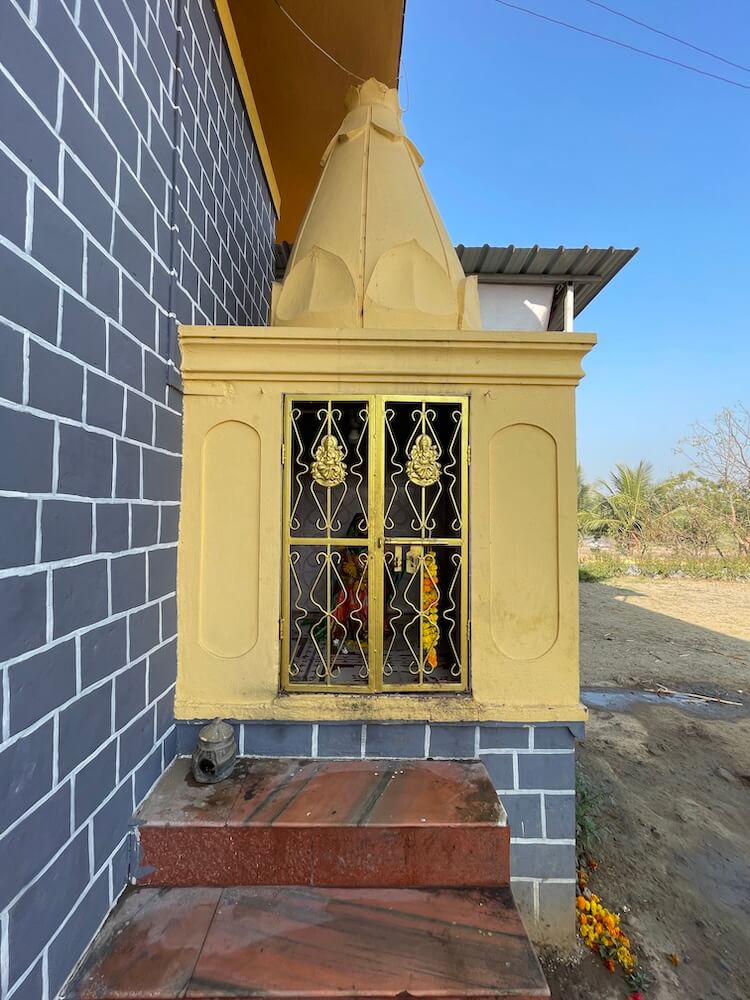
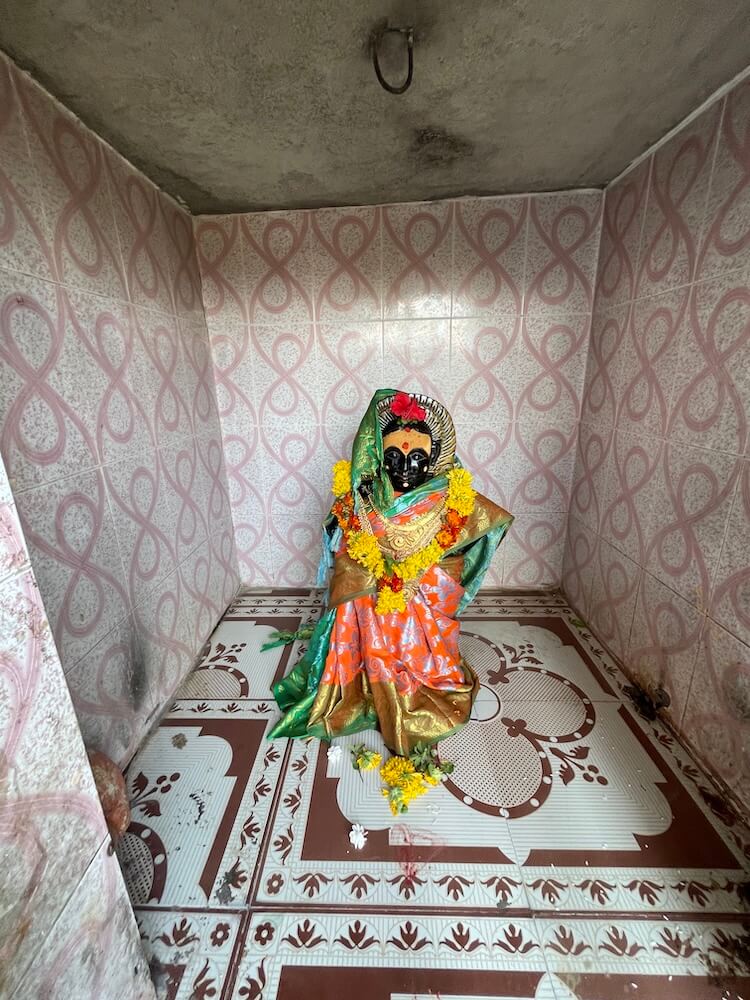
Beside this temple, to the left of the entrance in the fortification, is a small Shiva temple. In front of the temple, a Nandī is seated on a Vajrapīṭha, and near the entrance are Viragaḷs and deity sculptures. A Shivapiṇḍī is installed in this temple. The temple’s roof has a domed Śikhara, with a Stūpikā at the apex, surmounted by a Kalaś. Outside the courtyard, at some distance from the temple, is a small temple of a local deity.
The annual fair of the temple is celebrated on the fourth Monday of the month of Chaitra. Special fairs are held at the temple on all Mondays of Shrāvaṇ. During the fair, devotees bring Kāvaḍ Tīrth (sacred water carried in a Kāvaḍ) to the temple and perform Liṅgārchan Abhiṣek on the deity. Throughout the day, religious programmes such as Bhajan, Kīrtan, Pravachan, and Mahāprasād are organized at the temple. At night, a palanquin procession of the deity takes place with the sound of ḍhol-tāshā (drums and cymbals) and the showering of Gulāl (coloured powder). During this time, the utsava mūrti of Brahmannath, which is in the village, is placed in the palanquin and a circumambulation of the village is performed. During the festival, thousands of devotees come for Darśan of the deity, to fulfill their vows, and to participate in the palanquin festival. Festivals and celebrations such as Chaitra Pāḍavā, Dasarā, Divāḷī, Nāgpanchamī, etc., are celebrated with enthusiasm at the temple. On Mondays, Thursdays, Pradosh, Pourṇimā, and Amāvāsyā, there is a special rush of devotees for Darśan at the temple.
This sacred temple stands as a testament to deep spiritual devotion, ancient architectural grandeur, and rich local cultural traditions.
The sanctum sanctorum houses the divine idol consecrated according to ancient Vedic traditions, surrounded by serene courtyards and traditional temple architecture.
Navratri, Maha Shivratri, Annual Temple Jatra & Deepotsav
Compare and book flights, secure top-rated local hotels near the temple, hire reliable guides, and rent cars instantly.
Extend your pilgrimage by visiting other highly sacred temples located nearby.


Add ₹999 more to unlock FREE SHIPPING!
Your sacred cart is currently empty.
Shop Photo FramesFill in your delivery details below to place your order.
Add comment