
Add ₹999 more to unlock FREE SHIPPING!
Your sacred cart is currently empty.
Shop Photo FramesSituated in the village of Hatta in Vasmat taluka, the Shri Hatkeshwar Temple is considered a historical and spiritual treasure of Marathwada. With an ancient tradition dating back approximately 400 to 500 years, this temple is known as the ‘Deity of the Golden Linga’. ‘Hataka’ means gold; according to the legend in the Skanda Purana, this form of Hatkeshwar was established by Lord Brahma himself in a golden form, and it is believed to be a living deity that rushes to answer the calls of its devotees. Like those in Chhattisgarh and Gujarat, this site of Hatkeshwar in Maharashtra is considered rare.
In Sanskrit, the word ‘Hataka’ means gold or golden. Hatkeshwar means ‘God of the Golden Linga’. The story of Hatkeshwar is found in the Nagara Khanda of the Skanda Purana: once, Lord Mahadeva was wandering in the Daruka forest in a naked (Digambar) state, begging for alms. Seeing his radiant and enchanting form, the wives of the sages were attracted to him. Seeing this, the sages became uncontrollably angry and cursed Shiva, saying that the Linga (the source of this beauty) that caused this infatuation should fall off. Due to the sages’ curse, Shiva’s Linga fell to the earth and penetrated deep into the netherworld (Patala). This caused chaos in all three worlds. Finally, Lord Brahma and Lord Vishnu prayed to Shiva. Shiva stated that until this Linga is worshipped, it will not be pacified. Lord Brahma established the Linga in a golden form and worshipped it. As a golden (Hataka) Linga, it became famous by the name ‘Hatkeshwar’.
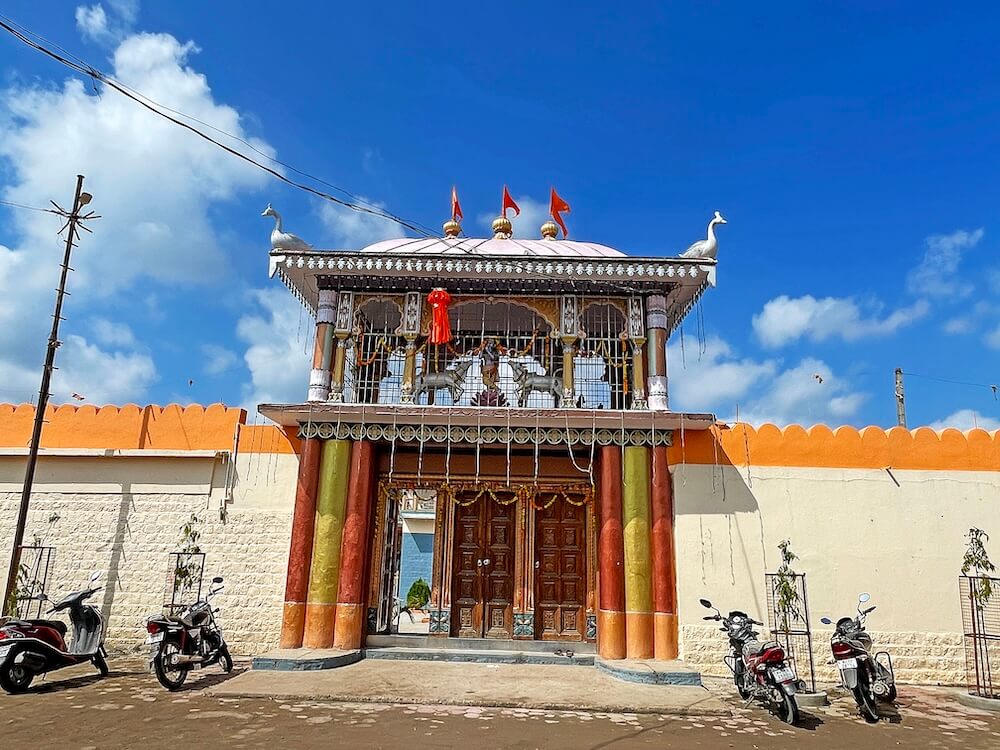
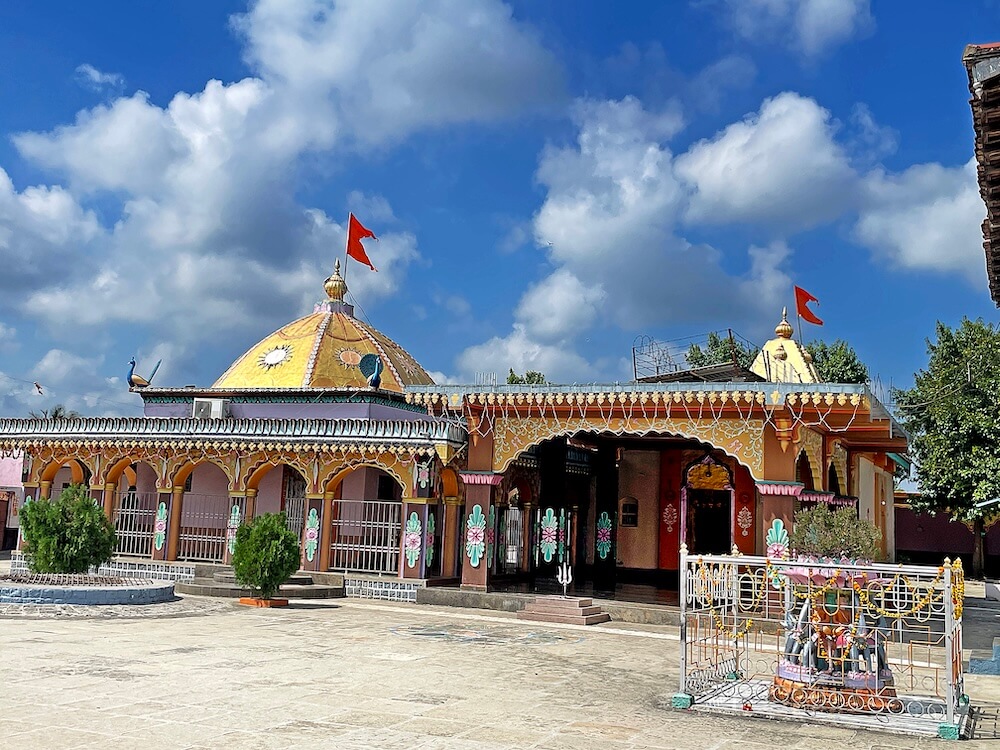
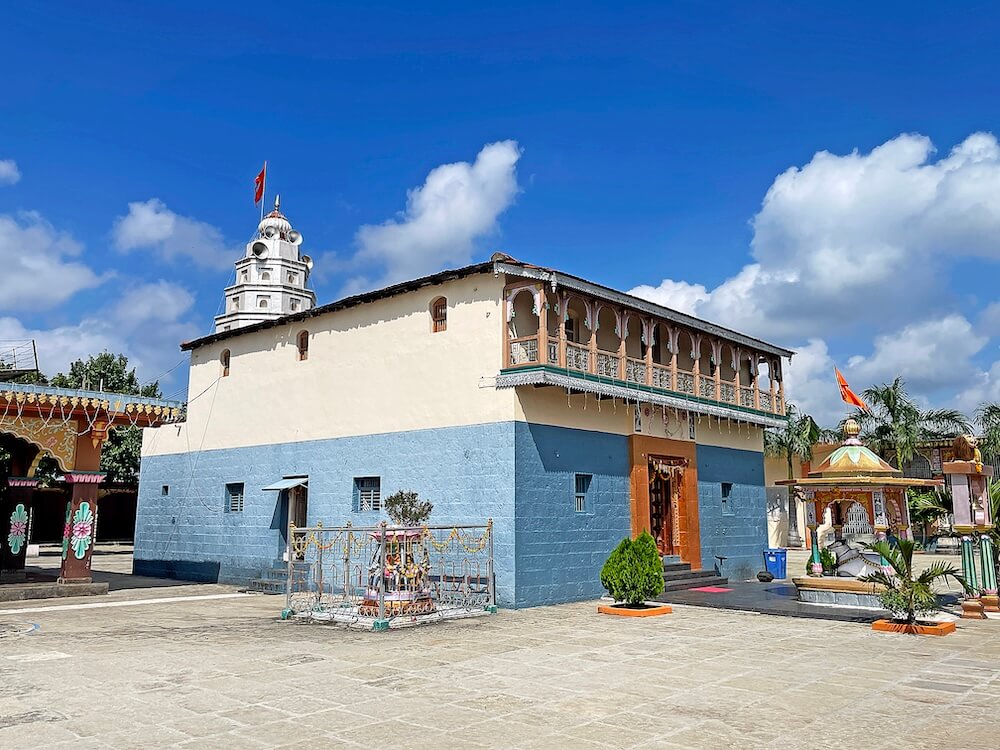
This temple is about four to five hundred years old. The temple has been renovated in recent times. Onkarnath Maharaj, who performed spiritual work in this region, renovated ancient temples in seven villages: Karla, Hatta, Erandeshwar, Aral, Tridhara, Ansing, and Ranjani. The Hatkeshwar temple is one of them. On the road leading from the village to the temple, there is the first welcome arch. On the balcony of this arch, in the center, stands an idol of Venugopal Krishna on a lotus flower. There are two cow sculptures on the left and right sides of Krishna. At the top, in a horizontal line, are three Amalakas topped with a Kalash. The temple has a sturdy fortification wall about twelve feet high. There is a two-story entrance gate in this fortification. On both sides of the entrance, there are three circular pillars each. These pillars support the balcony of the upper floor. There is an idol of Gopal Krishna on the balcony. Also, on the shikhara (spire) of the balcony, there are swan sculptures at all four corners. In the courtyard, adjacent to the fortification, are cloisters, a pilgrim rest house (Dharmashala), a food distribution center (Annachhatra), residential quarters for the staff, and a chariot room. The chariot used during festivals is kept in the chariot room. In the spacious courtyard of the temple, there is a staircase to reach the fortification wall near the entrance. To the left of the Mahadeva temple in the courtyard, there is a Tulsi Vrindavan on a raised platform. In the Tulsi Vrindavan, there are sculptures of four elephants at the four cardinal directions with mahouts sitting on their backs. This Tulsi basin is balanced on the raised trunks of the four elephants.
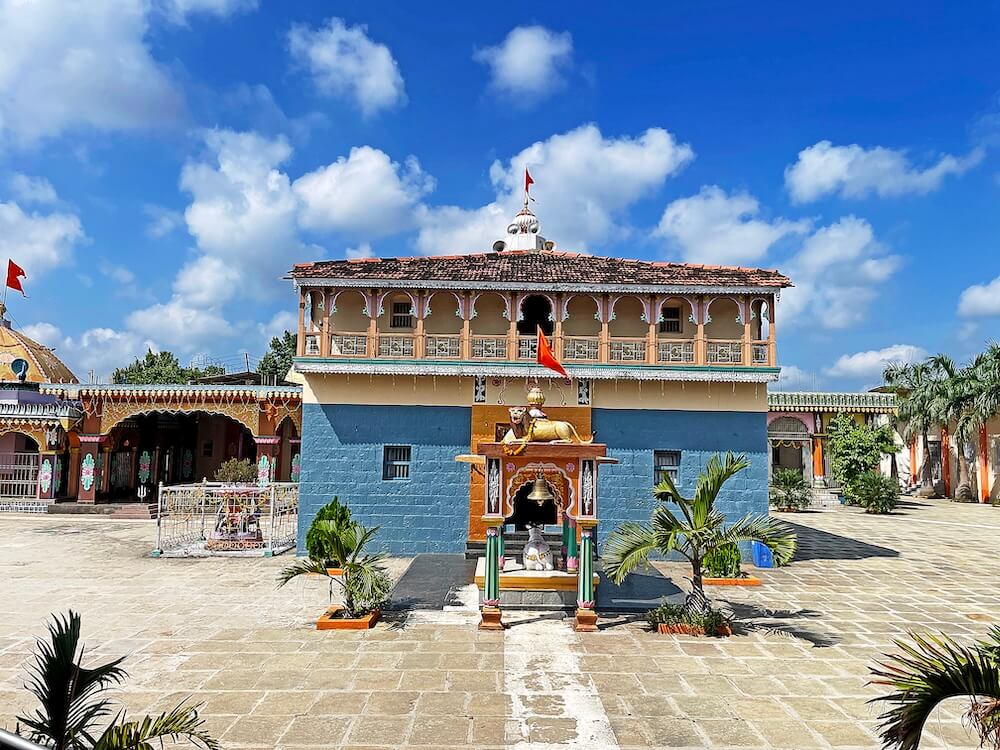
In the courtyard, in front of the Mahadeva temple, there is a Lion Arch (Simhakamana). In the Lion Arch, two circular pillars standing on pillar bases are connected by an arched gateway. There is a lion sculpture on the balcony above these pillars. In front of the Lion Arch, facing the temple entrance, is a Nandi Mandapa with a roof supported by four circular pillars on a platform. All four pillars of the Nandi Mandapa are connected to each other by arched gateways. There is a circular spire on the pillars. At the top of this spire is an Amalaka and a Kalash. There is a stone idol of Nandi on the platform in the Nandi Mandapa.
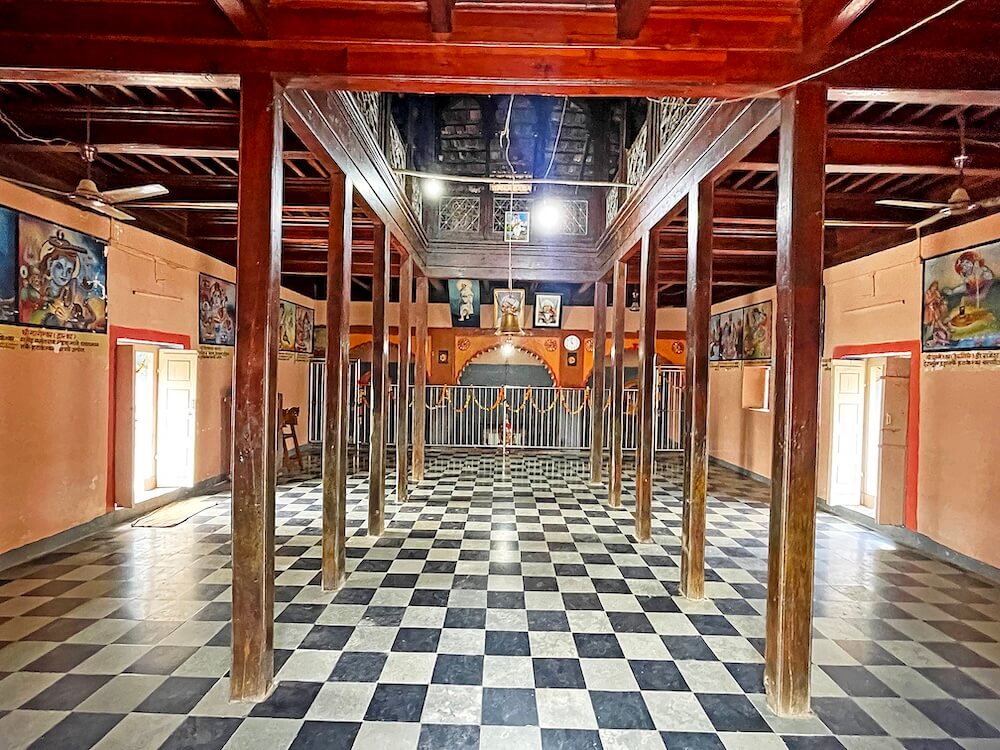
The structure of the Hatkeshwar temple consists of a two-story assembly hall (Sabhamandapa), an intermediate chamber (Antarala), and the sanctum sanctorum (Garbhagriha). The entrance to the assembly hall is slightly higher than the courtyard. The door frames are carved with leaf and flower motifs. There is also a Ganesha sculpture on the lintel. Above the entrance, on the exterior side, is the balcony of the upper floor. On the balcony, twelve wooden pillars are connected to each other by arched gateways. There is an entrance to move from the inner balcony of the assembly hall to the outer balcony. The assembly hall has two more doors in the right and left walls. The enclosed assembly hall has windows for light and ventilation. There are two rows of five square wooden pillars each in the assembly hall. There is a balcony on the second floor of the assembly hall. There is a staircase near the entrance to reach this balcony.
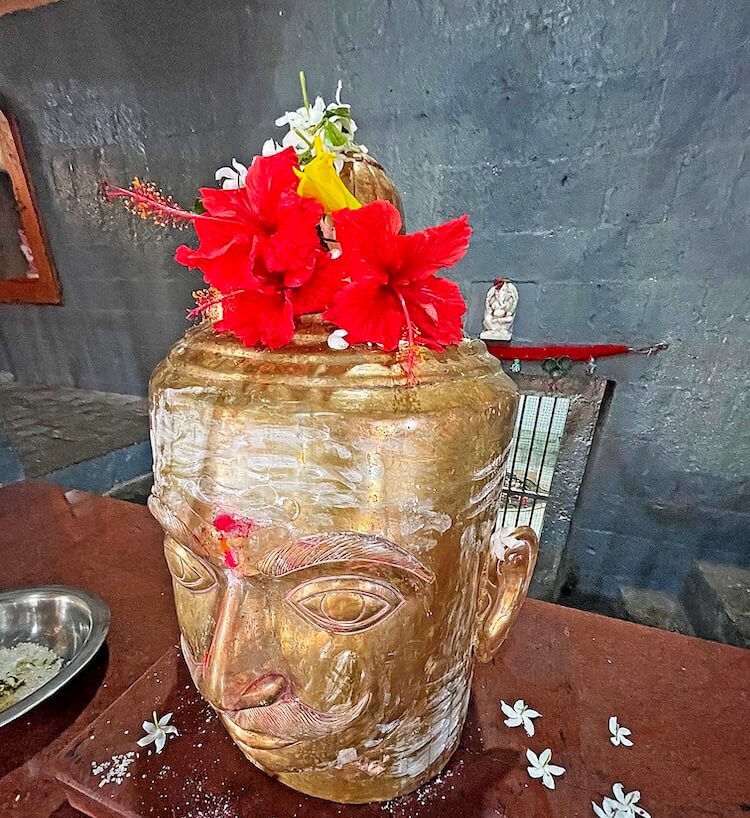
Further ahead is an intermediate chamber (Antarala) about five feet deep. In the assembly hall, there is a stainless steel railing along the side of the Antarala. Near the railing, on a table, is a brass mask of Hatkeshwar Mahadeva. During crowded times, devotees have to take darshan from here. There are five steps each on the left and right sides to descend into the Antarala, which is deeper than the assembly hall. The sanctum sanctorum is deeper than the Antarala. There are steps to descend there. In the sanctum sanctorum, there is a Swayambhu Shiva Linga in the center of the floor. On the ceiling of the sanctum sanctorum, there is a six-layered hexagonal spire. In the lower five layers of the spire, there are six empty niches each. At the top of the spire is an Amalaka. On this Amalaka, there is a Kalash and a flag.
Next to the Mahadeva temple is a Hanuman temple. In the sanctum sanctorum, there is an idol of Veer Maruti on a Vajra pedestal. Next to the Hanuman temple is the Vaishno Devi temple. In front of the entrance of this temple, which has a semi-open assembly hall and a sanctum sanctorum, is a sacrificial fire pit (Yajnakunda). In the sanctum sanctorum, there is a two-armed idol of Vaishno Devi on a Vajra pedestal.
Adjacent to this temple is the room containing the seat (Gadi) of Onkarnath Maharaj. Here, there is a brass idol of Onkarnath Maharaj on the seat. It is said that Onkarnath lived in this building for many years. Nearby is the Onkarnath Maharaj Samadhi temple. It contains a meditative idol of Onkarnath. In front of the idol, on the floor, is a Shiva Linga.
Mahashivratri and Hanuman Jayanti are the main annual festivals here. The Hanuman Jayanti festival lasts for twelve consecutive days from Chaitra Purnima to Krishna Dwadashi. Festivals and celebrations such as Sharadiya Navratri, Ashadhi and Kartiki Ekadashi, Chaitra Padwa, Dussehra, Diwali, and the months of Shravan and Margashirsha are celebrated in the temple. During festivals, programs like bhajans, kirtans, discourses, music, and Mahaprasad are organized in the temple. During festivals, thousands of devotees from across the state and other states come for the darshan of the deity and to fulfill their vows.
This sacred temple stands as a testament to deep spiritual devotion, ancient architectural grandeur, and rich local cultural traditions.
The sanctum sanctorum houses the divine idol consecrated according to ancient Vedic traditions, surrounded by serene courtyards and traditional temple architecture.
Navratri, Maha Shivratri, Annual Temple Jatra & Deepotsav
Compare and book flights, secure top-rated local hotels near the temple, hire reliable guides, and rent cars instantly.
Extend your pilgrimage by visiting other highly sacred temples located nearby.


Add ₹999 more to unlock FREE SHIPPING!
Your sacred cart is currently empty.
Shop Photo FramesFill in your delivery details below to place your order.
Add comment