
Add ₹999 more to unlock FREE SHIPPING!
Your sacred cart is currently empty.
Shop Photo FramesThe literal meaning of Jyotirlinga is the Linga of Jyoti, meaning the Linga of light. According to Hindu religious tradition, the places where Lord Shankara manifested in the form of light are called Jyotirlingas. According to the Kotirudra Samhita of the Shiva Purana, there are countless Lingas and Upa-lingas of Shankara throughout the entire universe. Among them, twelve Lingas are considered the principal ones. These are the Dwadasha Jyotirlingas. Out of these twelve, five Jyotirlingas are in Maharashtra, and the Vaijnath Jyotirlinga at Parli Vaijnath is one of them. Due to its magnificent architecture and mythological significance, there is a constant stream of devotees here for Darshan.
Vaijanath Jyotirlinga is also known as Vaidyanath. In the ‘Dwadash Jyotirlinga Stuti’ verses, there is a shloka regarding this sacred site: Purvottare Prajvalikanidhane Sada Vasantam Girijasametam. Surasuraradhitapadapadmam Shri Vaidyanatham Tamaham Namami. This means, ‘I bow to that Shri Vaidyanath, who constantly resides with Parvati in the northeast in the cremation ground (Vaidyanath Dham), and whose lotus feet are worshipped by both Devas and Asuras.’ This clarifies that the name of Vaijanath is also Vaidyanath. The legend regarding this states that the temple of Vaijanath Mahadeva is nestled in the lap of the Naganarayan hill, which is known as Mount Meru. In ancient times, medicinal plants were found in abundance on the hills here, and physicians (vaidyas) used them for healing. Therefore, this Mahadeva came to be called Vaidyanath, meaning the Lord of physicians.
In the twenty-eighth chapter of the Kotirudra Samhita of the Shiva Purana, the legend of the Vaidyanath Jyotirlinga is narrated as follows: The Lord of Lanka, Ravana, performed intense penance to please Lord Shankara. However, Shankara was not pleased with him. Then, Ravana dug a large pit and lit a fire in it. He installed an image of Shankara there and began severe penance. When Shankara still remained unpleased, he began to cut off his own heads one by one and offer them to Shankara. In this manner, he cast nine of his heads into the sacrificial fire. Just as he was prepared to sever his tenth and final head, Shankara appeared before him. He asked Ravana to express his desire. Ravana then requested that He accompany him to Lanka and accept his hospitality. Shankara first made Ravana immensely powerful and then entrusted His Jyotirlinga into his hands. At that time, Shankara imposed a condition upon Ravana that he must not place the Jyotirlinga on the ground. While on his way, Ravana felt the urge to relieve himself. At that moment, he saw a cowherd there. He placed the Shivlinga in his hands. The young cowherd waited for Ravana to return for some time, and eventually, he placed the Shivlinga on the ground. The Shivlinga became firmly established right there. It became famous by the name Vaidyanath. In the ‘Bhaktikosha’ by Vidyavachaspati Shankar Abhyankar, the etymological legend of Vaijanath is narrated as follows: the cowherd who placed the Jyotirlinga on the ground was Lord Shiva’s son, Ganesha, and he had assumed the name Vaiju. Consequently, this Jyotirlinga came to be known as Vaijanath.
The ancient name of Parli was Parayali. This Parayali is mentioned in the Mayurkhandi (Morkhandi, Karnataka) stone inscription of the Rashtrakuta King Govinda (III), who ascended the throne around the year 793. The text ‘Anguttara Nikaya’ mentions that there were 16 Mahajanapadas in the south during the Mauryan period. Ashmaka or Assaka or Andhaka Mahajanapada was one of them. This region was a stronghold of Shaivites, and the Tantra tradition was deeply rooted here. Epigraphic evidence is available indicating the presence of Shaiva sects such as Pashupata and Kalamukha in this area. Nestled in the lap of the Nagnarayana hill, known as Meru Parvat, in Parli—which was part of this Ashmaka Mahajanapada—lies the temple of Vaijanath Mahadeva.
The history of this temple is linked to the Yadavas. It is said that this temple was built by Hemadri, also known as Hemadpant, who was the chief minister (Pradhan) of Ramdevraya Yadava. While Hemadri lived during the thirteenth century, the temple was established in the twelfth century. According to the book ‘Ashmak’ by historian Sudhakar Deshmukh, this temple was constructed in the year 1186. At that time, the Yadava King Bhillam, who ascended the throne in the year 1178, was ruling here. Although the construction of this temple follows the Hemadpanti architectural style, temples in this style were being built even before Hemadpant. That style was known as Bhumija. Because Hemadpant built many temples using this method, the style came to be known by his name. Over time, this temple suffered significant decay. According to the ‘Beed District Gazetteer’, the Queen of the Indore State, Punyashlok Ahilyabai Holkar, was a devout follower of Lord Shiva. Once, when she came here for darshan, she noticed the dilapidated state of the temple. Seeing this, she immediately ordered the renovation of the temple. According to the records on a Sanskrit inscription located to the north of the eastern entrance of the temple, Punyashlok Ahilyabai Holkar, in the Krodhana The renovation of this temple was performed on the auspicious occasion of Chaitra Shukla Panchami, Samvat 1706, Shake 1784 (1784 CE). During the Peshwa era, 5280 bighas of land were granted as an endowment to all the Brahmins of the village for the management of this sacred shrine.
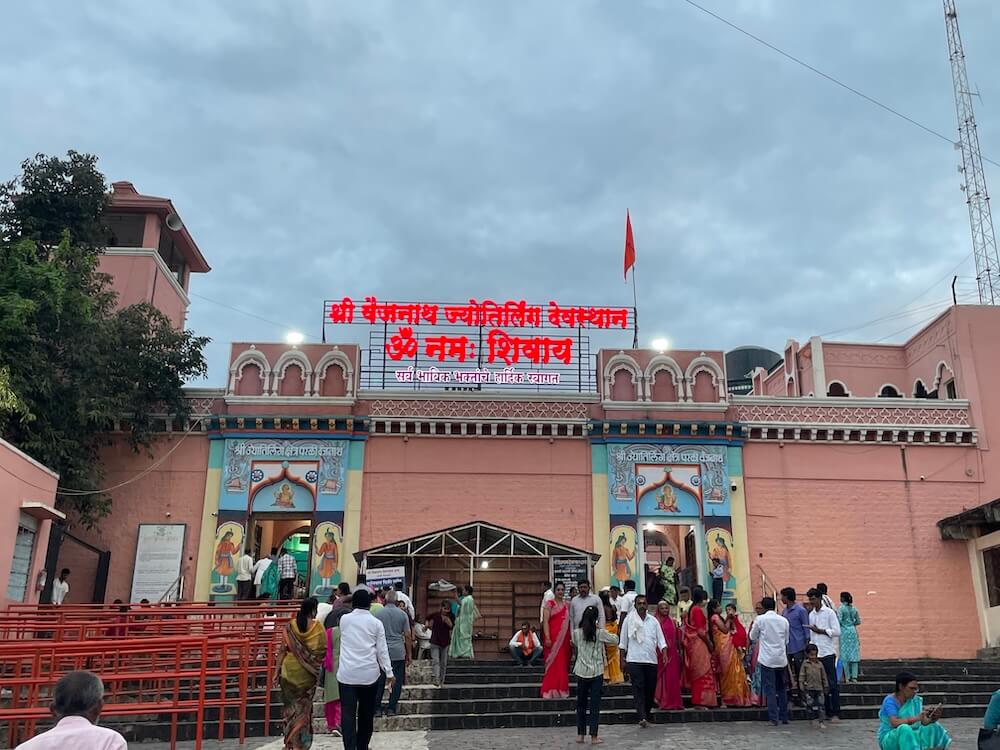
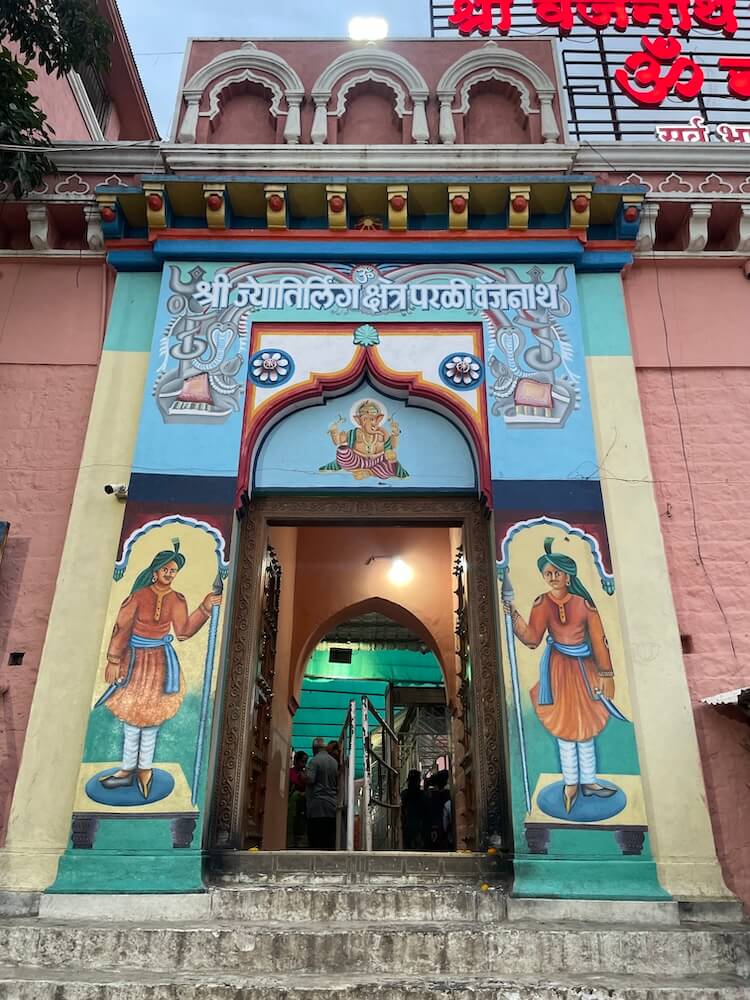
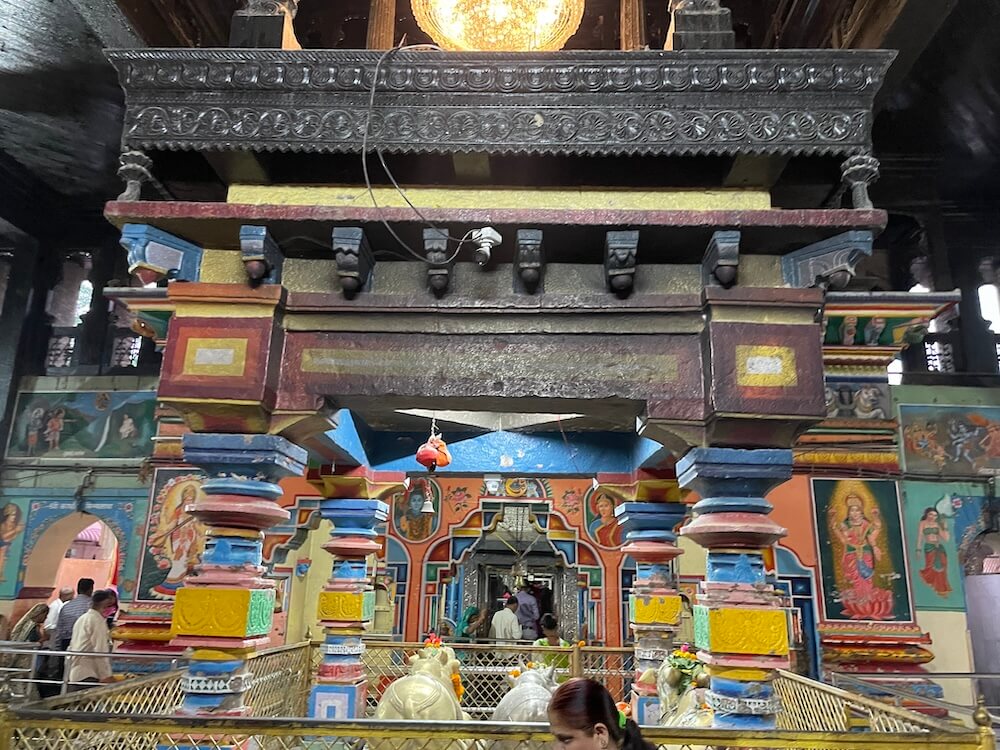
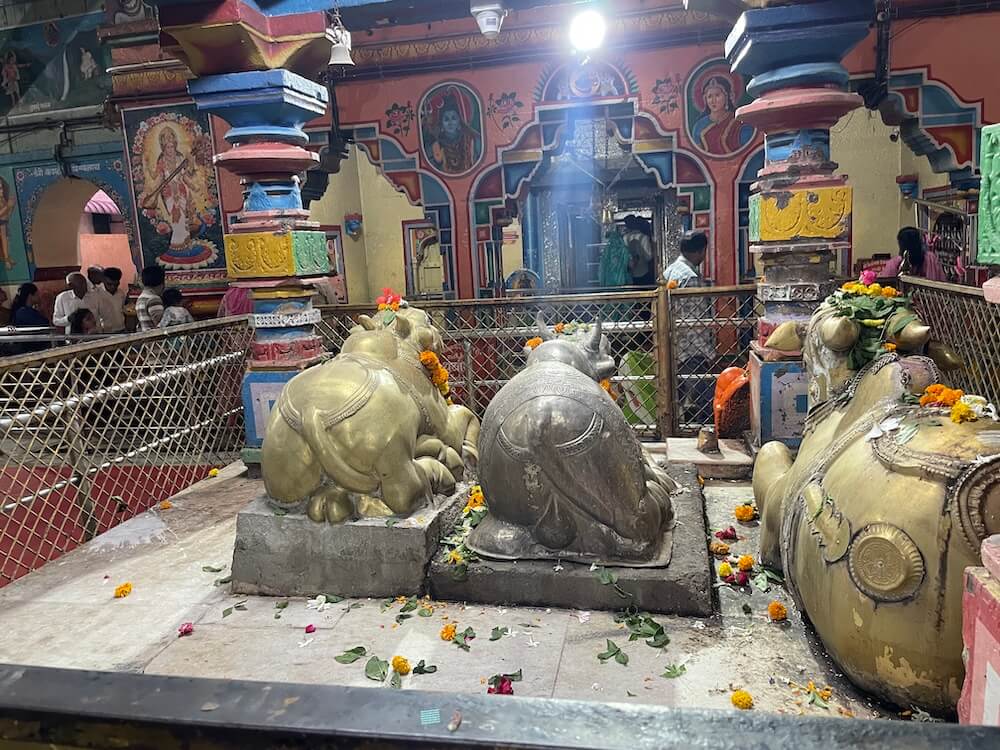
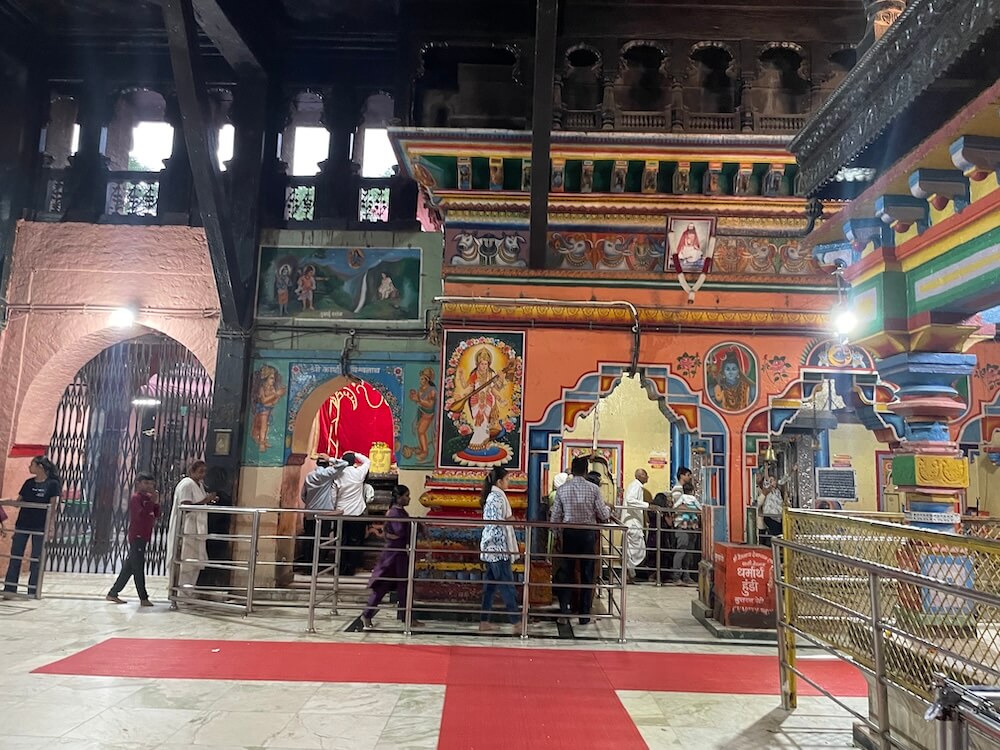
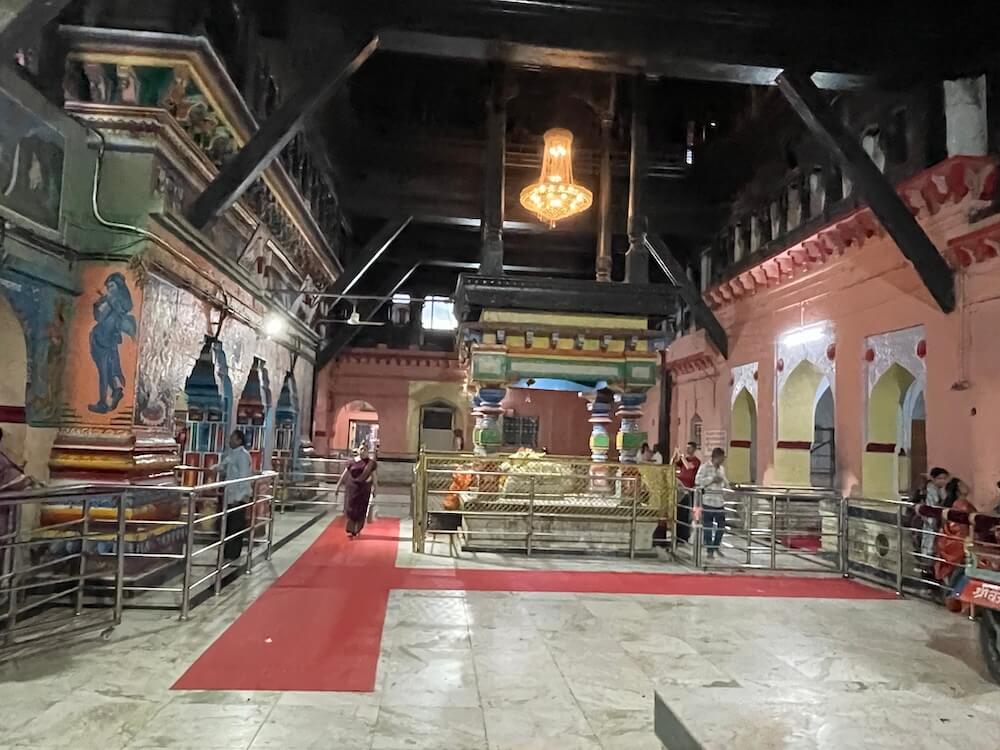
The Vaijnath Jyotirlinga Temple is situated within a spacious complex enclosed by a magnificent perimeter wall built of black stone. To enter the temple, there are three gateways in the perimeter wall: North, South, and East. The North gateway is open for devotees. This entrance is reached after proceeding through a wide pathway consisting of many stone steps. Built of stone and adorned with colorful paintings of gatekeepers, this entrance features a carved teak wood frame and a sturdy door. Inside, there is a vast courtyard where thousands of devotees can sit at once. There are spacious verandas on the sides. From the long queue for darshan here, one enters directly into the main assembly hall of the temple. The magnificent two-story grand entrance leads into a spacious and lofty assembly hall (Sabhamandapa) featuring grand pillars, stone arches, a carved teakwood ceiling, a balcony-like structure at the upper level, and marble flooring. In the center of the assembly hall stands a large stone Nandi pavilion. Built upon a high plinth, this Nandi pavilion reflects the architectural style of the Yadava era. The pavilion features carved stone pillars that are square at the base and disc-shaped at the top, supporting a wooden ceiling. Within this pavilion, three large statues of Nandi, adorned with brass plating, are enshrined. A legend associated with this is that Lord Vaijnath Mahadev rides upon these Nandis to circumambulate the town three times a day—at four in the morning, at noon, and at midnight. These three Nandis are placed here for this purpose. Beside the pillars of this Nandi pavilion, a vermilion-anointed stone idol of Lord Ganesha is enshrined. As devotees proceed through the queue for darshan, they first behold the idol of Veerabhadra. Located on the eastern side of the temple, in a niche within the wall of the assembly hall, the brass idol of Veerabhadra is enshrined. Here, Veerabhadra, depicted with a beard, mustache, and wearing a crown, is shown in the Abhaya and Ashirwad mudras, holding a trident in one hand. Veerabhadra is seated with both legs dangling downwards. A short distance from here, on a platform, the Shivalinga of Somnath is consecrated. Nearby, the temple’s palanquin-chariot is kept. While moving through the darshan passage toward the sanctum sanctorum, one can also see a large Shivalinga of Kashi Vishwanath in a side chamber. There is also a shrine dedicated to Nagnath within the assembly hall.
From here, one enters the Mahamandapa. On both sides of the entrance to the Mahamandapa are ancient sculptures of door guardians (Dwarapalas). The entrance to the Mahamandapa is adorned with silver, intricately carved plating. At the lintel, there is a carved idol of Lord Ganesha. Above the arch, there is a crescent moon stone flanked by two Kirtimukhas. On one side of this door frame, there is an inscription recording that the renovation of this temple was carried out by the pious Ahilyabai Holkar. In this inscription, Vaijnath is referred to as ‘Vaidyanath’. The ceiling of the Mahamandapa is a stone dome. Passing through this circular Mahamandapa, which features arched doorways in the front sections of the walls, one enters the small vestibule (Antarala) and then the sanctum sanctorum. Here, on one side, an idol of Lord Ganesha is enshrined, while on the other side, some ancient idols and sculptures, including that of Tulja Bhavani, are kept. The entrance to the sanctum sanctorum is covered with silver, intricately carved plating. The lintel of the door frame features a Ganesha sculpture. Inside the sanctum, on the floor, lies a stone Shivalinga of a large diameter. A unique feature of this Linga is that it is made of smooth Shaligram stone. There is a silver canopy over the Shivalinga. Here, devotees are permitted to touch the Jyotirlinga to perform worship. It is the firm belief of the devotees that this touch alleviates various ailments. Nanda-lamps are lit on all four sides of the sanctum, and it is said that they burn continuously. Another unique feature of the Vaijnath Mahadev temple is that Goddess Parvati is seated to the left of the Shivalinga. In an ornate silver shrine, an idol of Mother Parvati, crafted from black stone, is consecrated. The idol holds a lotus flower in one hand and a damaru in the other.
Behind the main temple in the courtyard, there are small shrines dedicated to Trimbakeshwar and Grishneshwar Mahadev. In the courtyard stands a statue of Sadhvi Ahilyabai Holkar, and behind it is a large stone lamp tower (Deepmala).
Various religious festivals and celebrations are observed in the temple with great enthusiasm. During the month of Shravan, Rudrabhishek is performed here daily. A large crowd of devotees gathers to witness the procession taken out around the temple on the Mondays of Shravan. On the day of Vijayadashami, special pujas and yagnas are held in the temple. A festival of lights (Deepotsav) is celebrated here on Kartik Purnima. That night, the entire temple glows with the light of lamps. Similarly, festivals like Navratri, Vaikuntha Chaturdashi, Deepavali, and Makar Sankranti are celebrated here with religious programs. Mahashivratri is the grandest celebration here. On this auspicious occasion, thousands of devotees observe a night-long vigil. Special worship and continuous chanting of Omkar are performed in the temple. During these festivals, no distinction is made between Bel leaves and Tulsi. Parli is considered a place of Harihar Milan (the meeting of Vishnu and Shiva). Water from the local Harihar Tirtha is brought here daily for the worship of Vaijnath.
This sacred temple stands as a testament to deep spiritual devotion, ancient architectural grandeur, and rich local cultural traditions.
The sanctum sanctorum houses the divine idol consecrated according to ancient Vedic traditions, surrounded by serene courtyards and traditional temple architecture.
Navratri, Maha Shivratri, Annual Temple Jatra & Deepotsav
Compare and book flights, secure top-rated local hotels near the temple, hire reliable guides, and rent cars instantly.
Extend your pilgrimage by visiting other highly sacred temples located nearby.


Add ₹999 more to unlock FREE SHIPPING!
Your sacred cart is currently empty.
Shop Photo FramesFill in your delivery details below to place your order.
Add comment