
Add ₹999 more to unlock FREE SHIPPING!
Your sacred cart is currently empty.
Shop Photo FramesAs soon as the name Parli Vaijnath is uttered, the sattvic and radiant form of Lord Vaijnath, one of the twelve Jyotirlingas, floats before one’s eyes. However, this pilgrimage site is also a sacred place sanctified by the presence of Vighnaharta Ganesha in his various forms, alongside Lord Shiva. In this holy land of Parli, ancient temples of Ganaraya are scattered everywhere, and significantly, there are temples with Ganesha faces in all four directions of this region. Among these, the South-Facing Ganesha Temple is a place of deep faith for the devotees who come here. A unique feature here is that the idol of Ganesha in this temple is without a trunk.
One becomes aware of Ganesha’s presence as soon as one enters the premises of the Vaijnath Temple, one of the twelve Jyotirlingas. In the sanctum of the main temple, near the Nandi, a Ganesha idol is enshrined. It is a tradition to have darshan of this Ganesha before entering for the darshan of Lord Vaijnath. Devotees pay obeisance to this Ganesha, who faces west, before proceeding towards the main sanctum. Thereafter, while exiting after the darshan of the Jyotirlinga, another Ganesha idol facing east on the right side in the tortoise hall (Kasav Gabhara) catches one’s attention. Apart from this, Ganesha’s vigil is seen to be constant in the temple premises as well. There are a total of four ancient Ganesha idols on all four sides of the Vaijnath Temple: one facing south on the steps of Harihar Tirtha and one facing east at the main entrance of the temple.
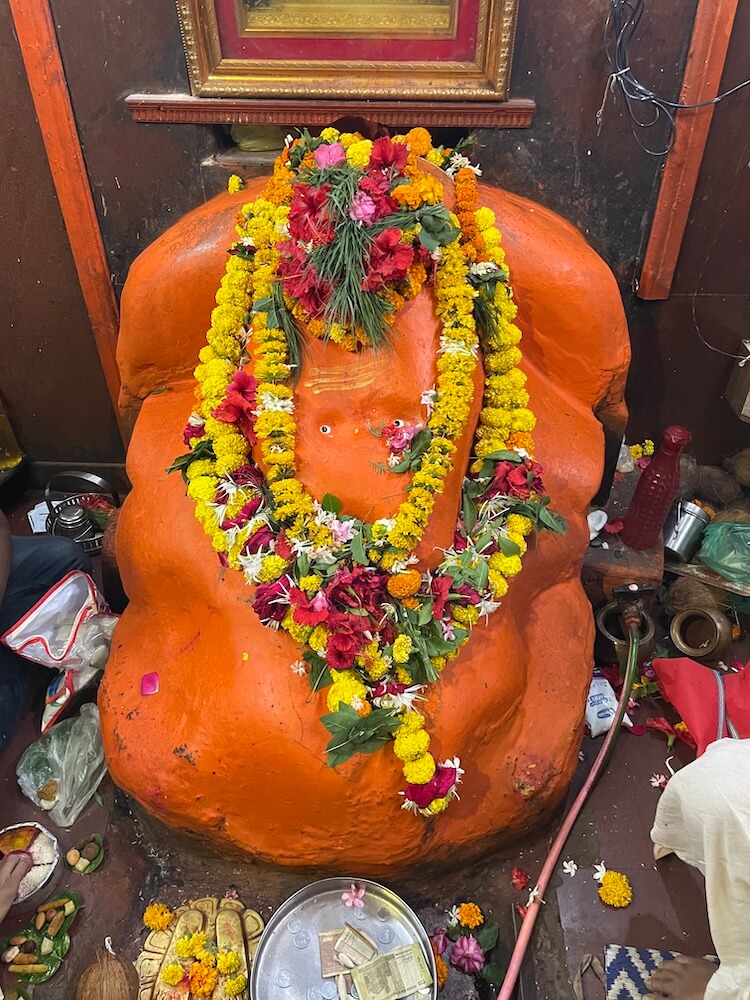
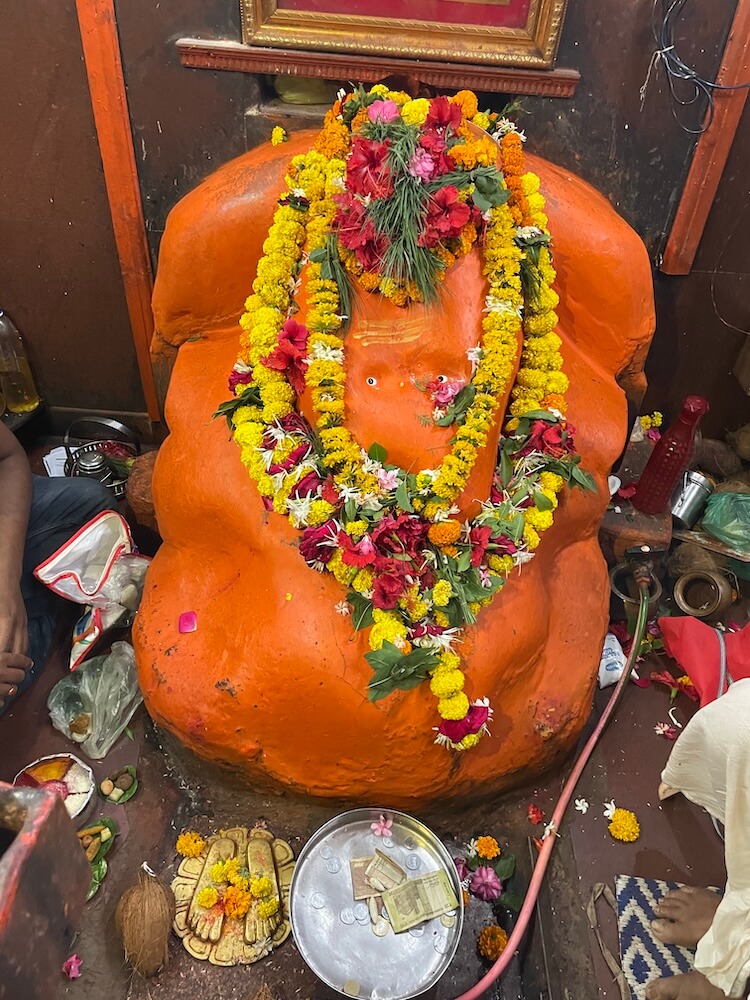
At a short distance from this temple, in front of the Saint Shri Guruling Swami Temple, is the highly awakened and ancient South-Facing Ganesha Temple. The form of the idol in this temple is unique. This Ganesha is without a trunk. Furthermore, the idol, seated in a wrestler-like posture, appears grand and radiant. It is a long-standing tradition here that devotees coming to the Parli region first have darshan of this Ganesha in his wrestler form. The legend of this temple is that Ganesha incarnated here to slay the demon king Vighnasura. Vighnasura, the son of Lord Brahma and Mahajumbheshi, was very handsome, which is why he was named ‘Sundar’. Due to a boon from Lord Brahma, he had attained immense power. He possessed the strength that whoever he embraced would meet their death. But he became arrogant with this power and began to torment sages and people. It was because of these cruel deeds that he came to be called Vighnasura. When the sages, fed up with his harassment, sought refuge with Lord Brahma, he suggested the path of worshipping Lord Shiva. Lord Shiva comforted them by saying that the son born to Goddess Parvati would slay this demon.
During this same period, for safety, Lord Shiva had kept Mother Parvati at Prabhakarkshetra, which is present-day Parli. While Mother Parvati was resting on the banks of the Padma Sarovar (in the area of Poos, Ghatnandur) in the Parli region, Vighnasura arrived there in the guise of a Brahmin and severed the head of the child who was to be born from Parvati’s womb. At the same time, elsewhere, Lord Shiva reached Parli after fighting Gajasura and carrying his head. When Parvati was saddened to see the child born without a head, Shiva attached the elephant head of Gajasura to the child’s torso and brought him to life. Later, this same child mastered the fourteen sciences and sixty-four arts, armed himself, fought a fierce battle with Vighnasura, and destroyed him. The Ganesha who performed these heroic deeds is this South-Facing Ganesha of Parli.
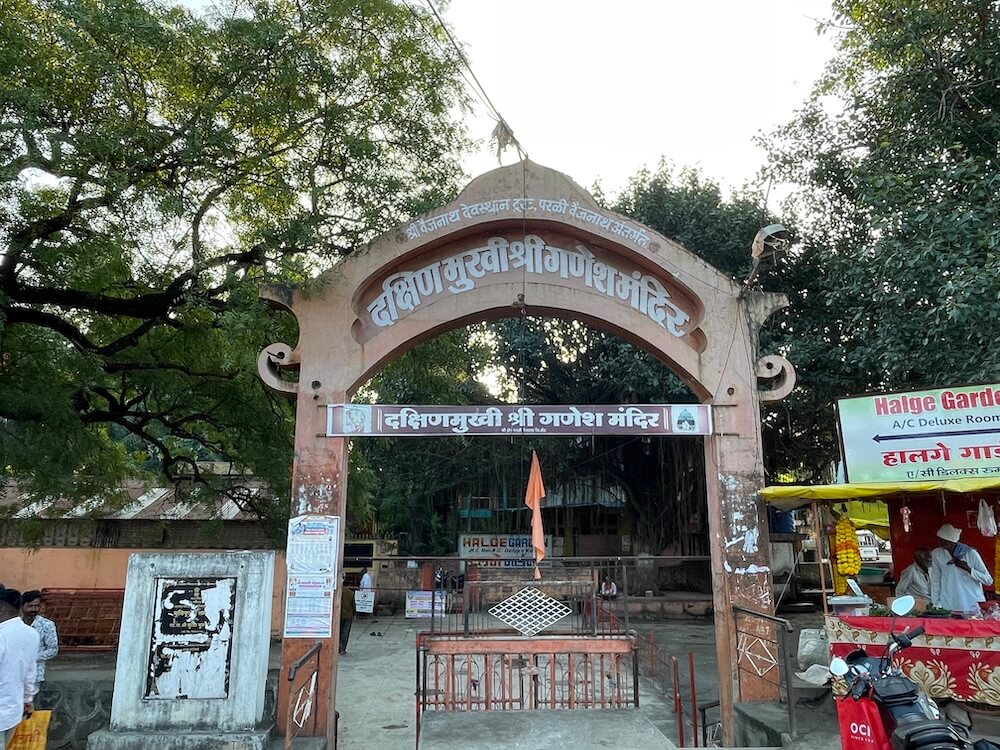
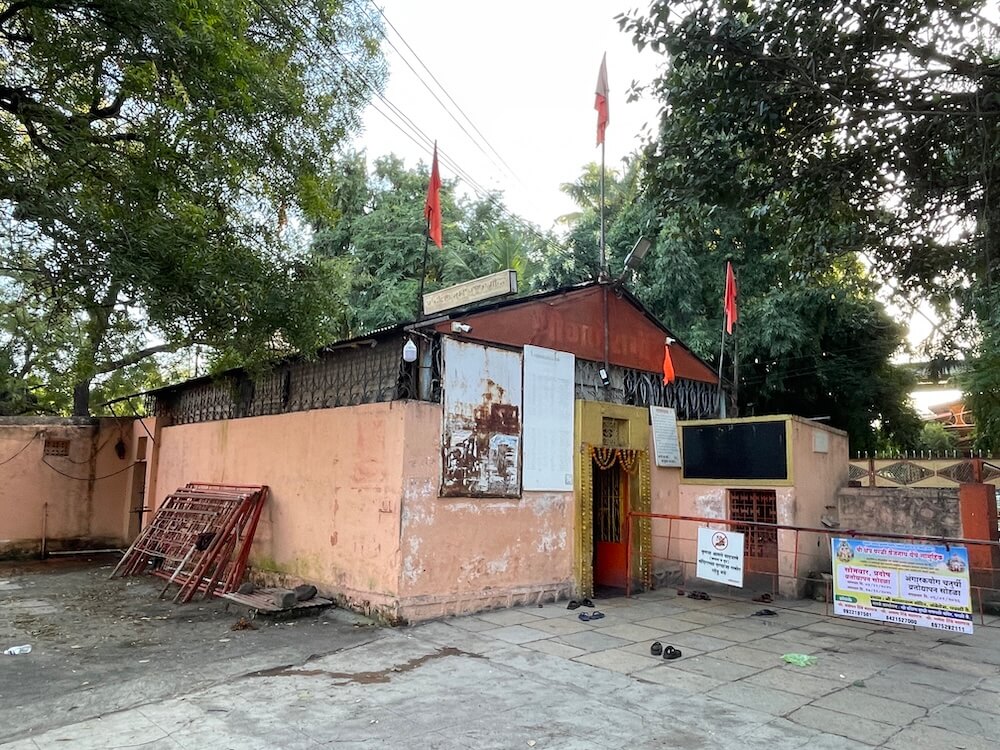
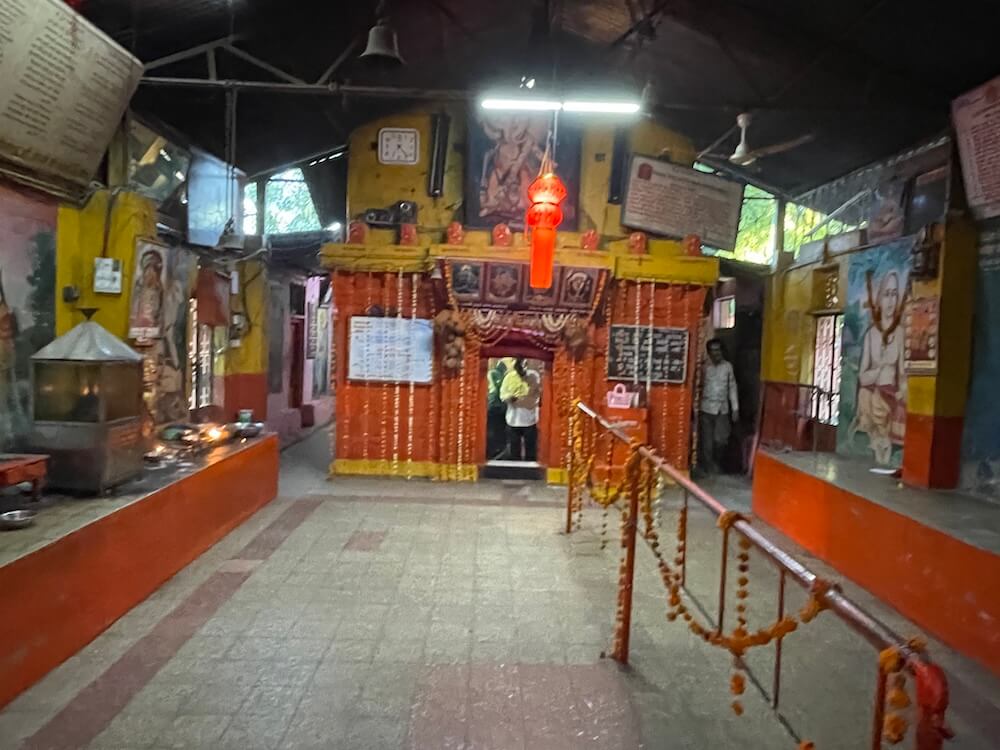
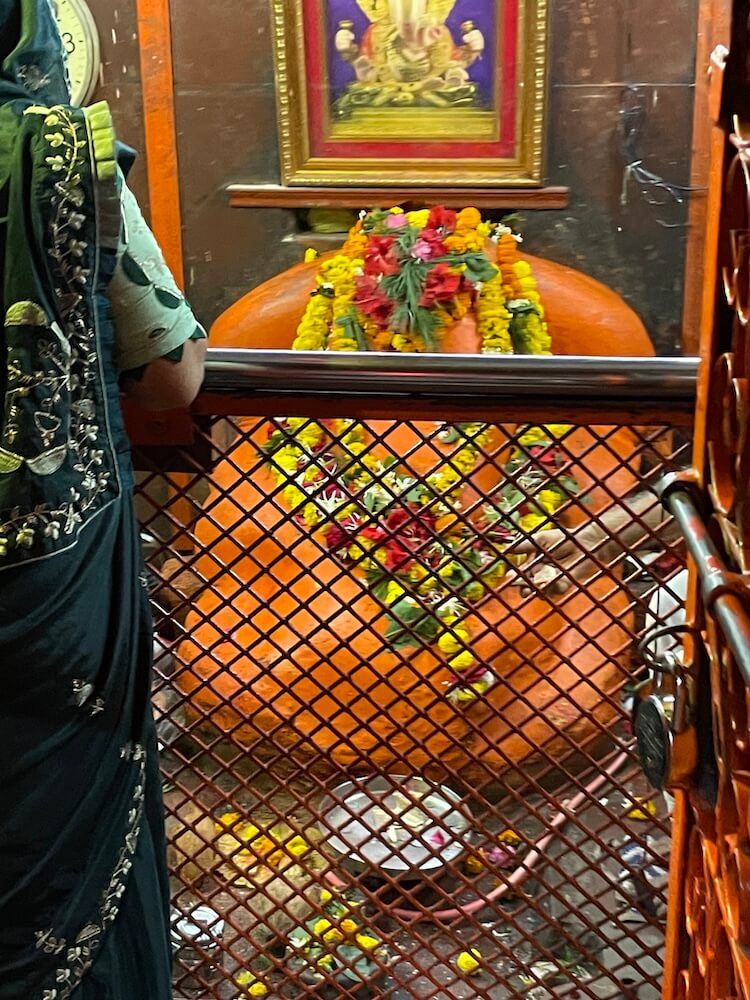
This temple is approximately १०० meters away from the Vaijnath Temple. There is a boundary wall around the courtyard of this temple. One enters the temple courtyard by descending a few steps through the entrance in the boundary wall. In this courtyard, a queue system has been arranged in front of the temple to manage the crowd of devotees. The structure of this temple consists of a long assembly hall (Sabhamandap) followed by a circumambulation path and then the sanctum. It is felt that this assembly hall was built later in front of the original sanctum. In this assembly hall, there are long stone benches on the left and right from the entrance to the sanctum. By installing an iron railing in the middle of the assembly hall, two paths have been created for going to and returning from darshan. The sanctum of the temple is small in size. In the center of the sanctum, there is a grand vermilion-smeared idol of Ganesha in the ground. On the spire of this temple, there are idols of Ganesha in various forms.
Daily worship, abhishek, and evening aarti and Mahaprasad take place in this temple. On the day of Sankashti Chaturthi, queues of devotees form for the darshan of this Ganesha from early morning. There is a tradition of celebrating both the Ganeshotsav in the month of Bhadrapada and Ganesha Jayanti in the month of Magh with great enthusiasm here. On these occasions, the premises resonate with Mahapuja, kirtan, and the chanting of Laghurudra mantras.
This sacred temple stands as a testament to deep spiritual devotion, ancient architectural grandeur, and rich local cultural traditions.
The sanctum sanctorum houses the divine idol consecrated according to ancient Vedic traditions, surrounded by serene courtyards and traditional temple architecture.
Navratri, Maha Shivratri, Annual Temple Jatra & Deepotsav
Compare and book flights, secure top-rated local hotels near the temple, hire reliable guides, and rent cars instantly.
Extend your pilgrimage by visiting other highly sacred temples located nearby.


Add ₹999 more to unlock FREE SHIPPING!
Your sacred cart is currently empty.
Shop Photo FramesFill in your delivery details below to place your order.
Add comment