
Add ₹999 more to unlock FREE SHIPPING!
Your sacred cart is currently empty.
Shop Photo FramesThe city of Ambajogai in Beed district is considered a Shakti Peetha in Maharashtra, sanctified by the presence of the Primordial Energy (Adishakti). This sacred land is blessed with the background of the union of two great powers: Yogeshwari Devi and Renuka Mata of Mahur. The original site (Moolsthan) of this Yogeshwari Devi is located in the hills near Ambajogai. An ancient temple of Renuka Mata is situated at a stone’s throw from this temple. According to the Puranas, when the demon Dantasura caused the decline of Dharma, Yogeshwari Mata personally summoned Renuka Mata for assistance to destroy him. Thus, these sites have become symbols of the unity and victory of divine power.
It is said that this temple is more ancient than the Ambajogai temple. Scholars state that this temple is mentioned in the works of the primordial poet Mukundraj. The legend regarding this temple is that in ancient times, the city of Ambajogai was ruled by Dantasura. In his arrogance of power, the demon began to commit unspeakable atrocities against his subjects. He began to disrupt the sacrifices (Yajnas) of the Brahmins and destroy the hermitages of the sages. To seek liberation from the torment of Dantasura, the devotees of the Goddess pleaded with Yogeshwari Devi. Responding to the call of her devotees, the Goddess slew Dantasura and rested here. Therefore, this place came to be known as the Moolsthan (original site). Because Yogeshwari Devi had called Renuka Mata for help in this battle, there is also a temple of Renuka Devi here.
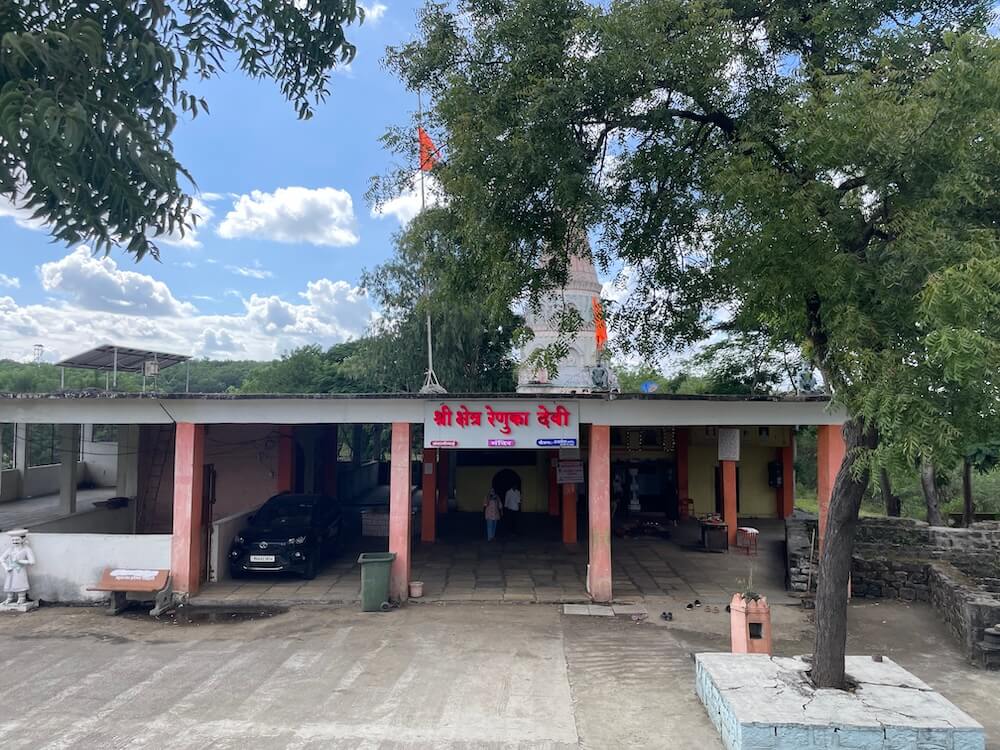
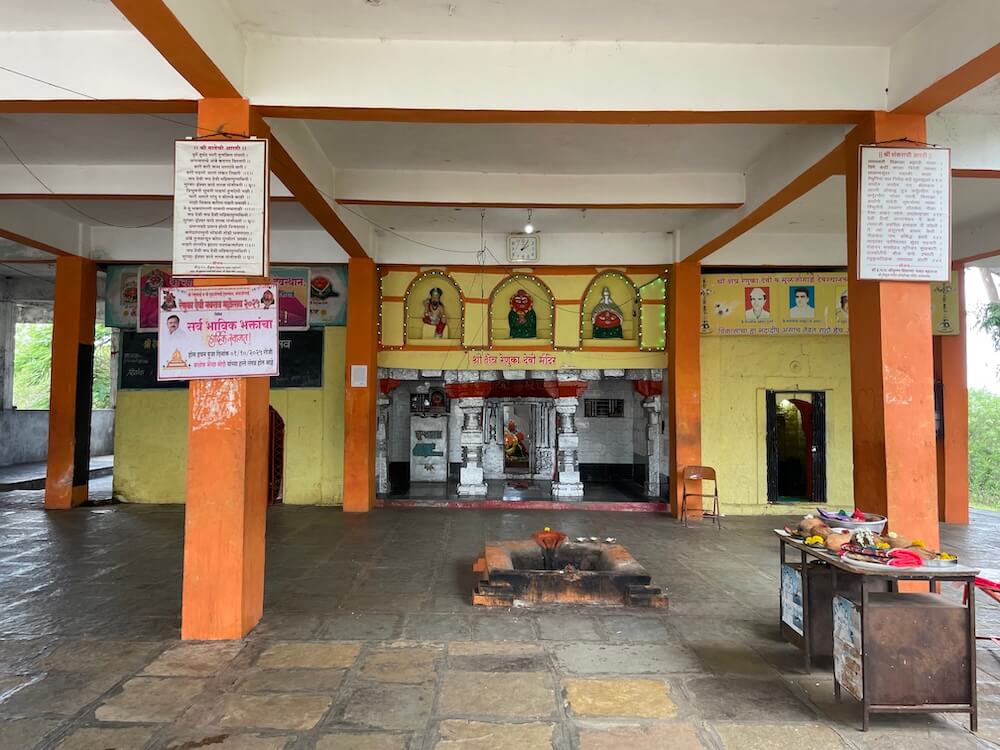
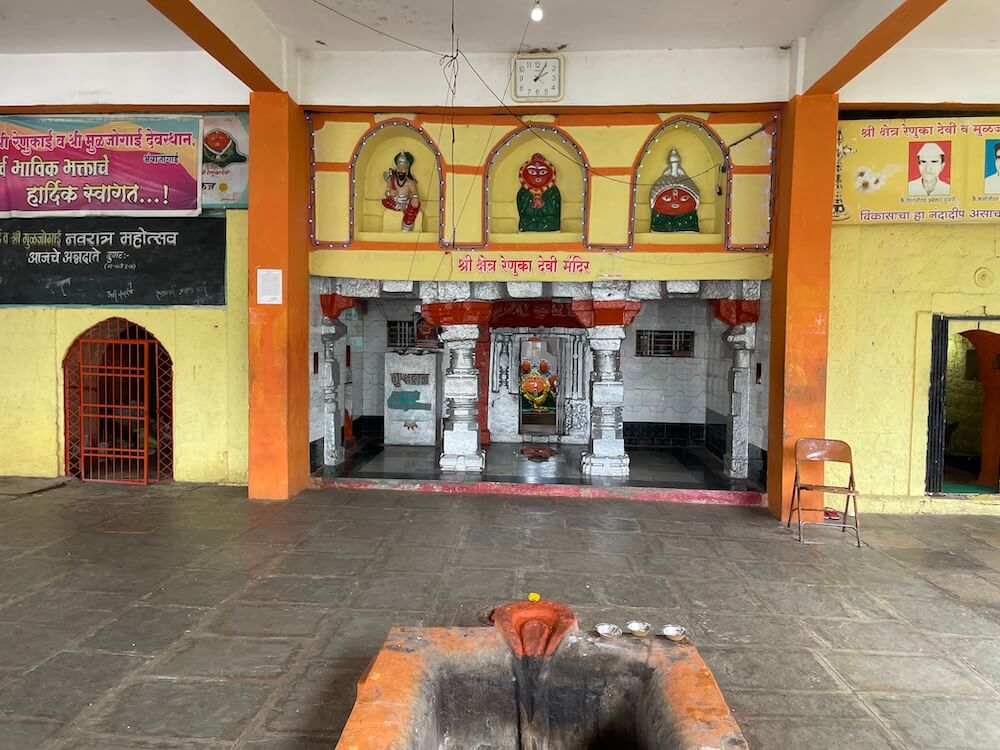
Located in the hills at some distance from the village, the premises of this temple are under the control of the Forest Department. There is a Forest Department checkpoint on the road leading to the temple. A welcome arch has been erected here by the Forest Department. There is a children’s park in the temple courtyard. The park has play equipment like slides for the entertainment of children. Further from here is the temple of Renuka Devi. In the courtyard in front of the temple, there is a platform with a lamp pillar (Deepstambha). In front of the temple is a Darshan Mandap (viewing pavilion) constructed in recent times. The cement concrete Darshan Mandap has about twenty square pillars. There is a sacrificial altar (Yajnakund) in front of the temple.
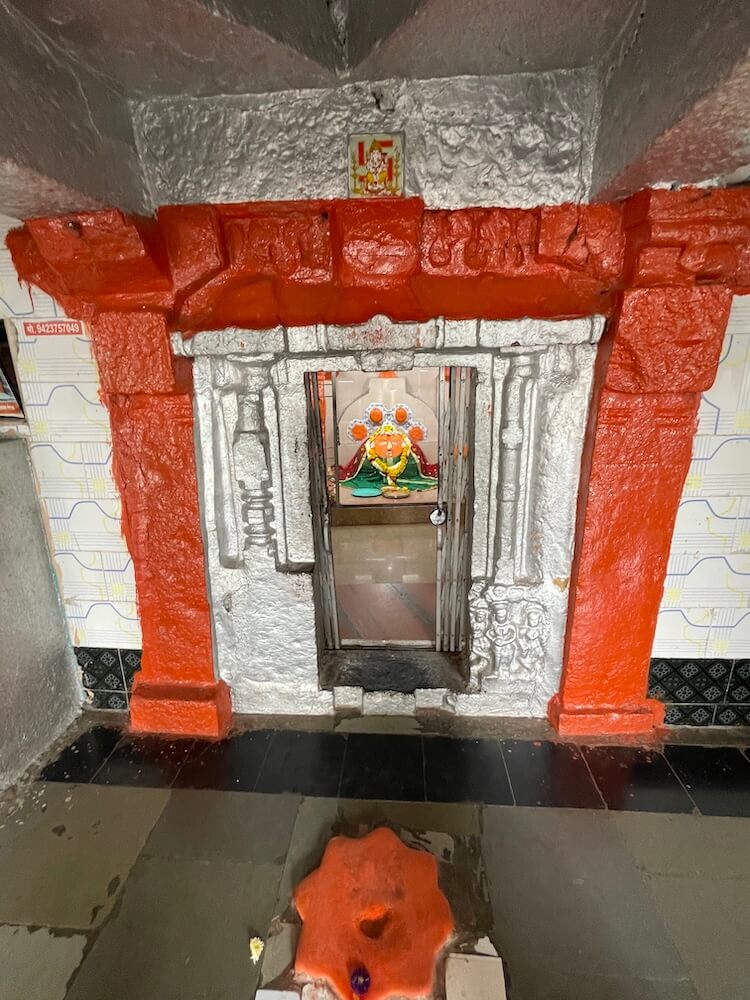
The construction of the assembly hall (Sabhamandap) and the sanctum sanctorum (Garbhagriha) is in the Hemadpanti style. New construction has been added to the sides and the roof. The assembly hall is open from the front. The upper parapet has three niches. The niches contain sculptures of Parashurama, Yogeshwari, and Renuka Devi. The assembly hall has eight ornate pillars. The outer pillars are embedded in the walls. All pillars stand on square bases, and the shafts feature various geometric shapes such as squares, hexagons, octagons, and circles. In the center of the assembly hall floor, there is a sculpture of a tortoise. The entrance to the sanctum sanctorum features door jambs with floral carvings and pillar motifs. On the lower sides of the door jambs are sculptures of gatekeepers (Dwarpal and Dwarpalika). The lintel (Lalatbimba) features a sculpture of Ganapati, and the upper section (Uttarang) has an arch of spire sculptures. There is a moonstone (Chandrashila) at the threshold. The sanctum sanctorum has four rows of four ornate pillars each. The outer pillars are embedded in the walls. The design of the pillars is similar to those in the assembly hall. Brass bells are hung from the ceiling. There are doors on the right and left sides of the sanctum sanctorum.
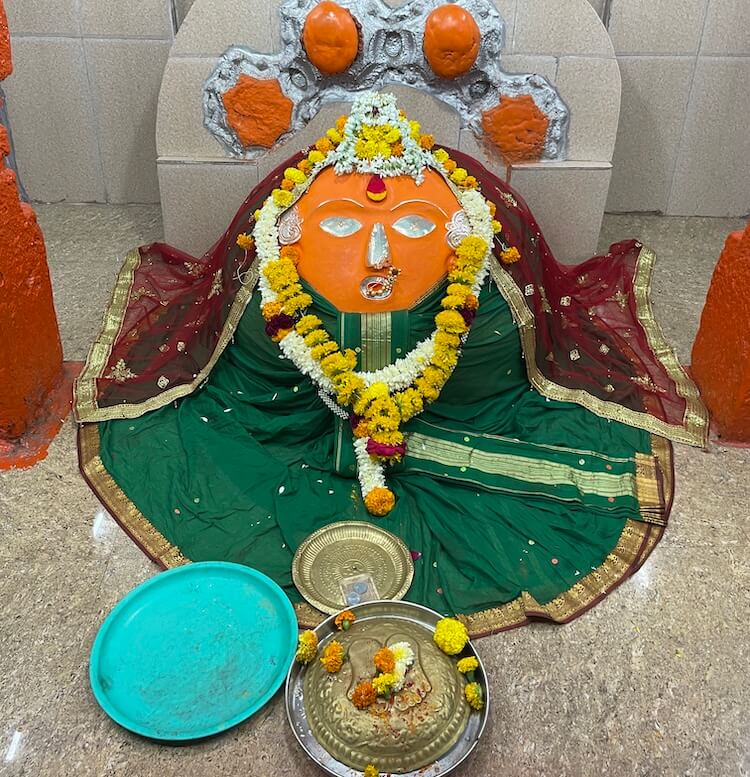
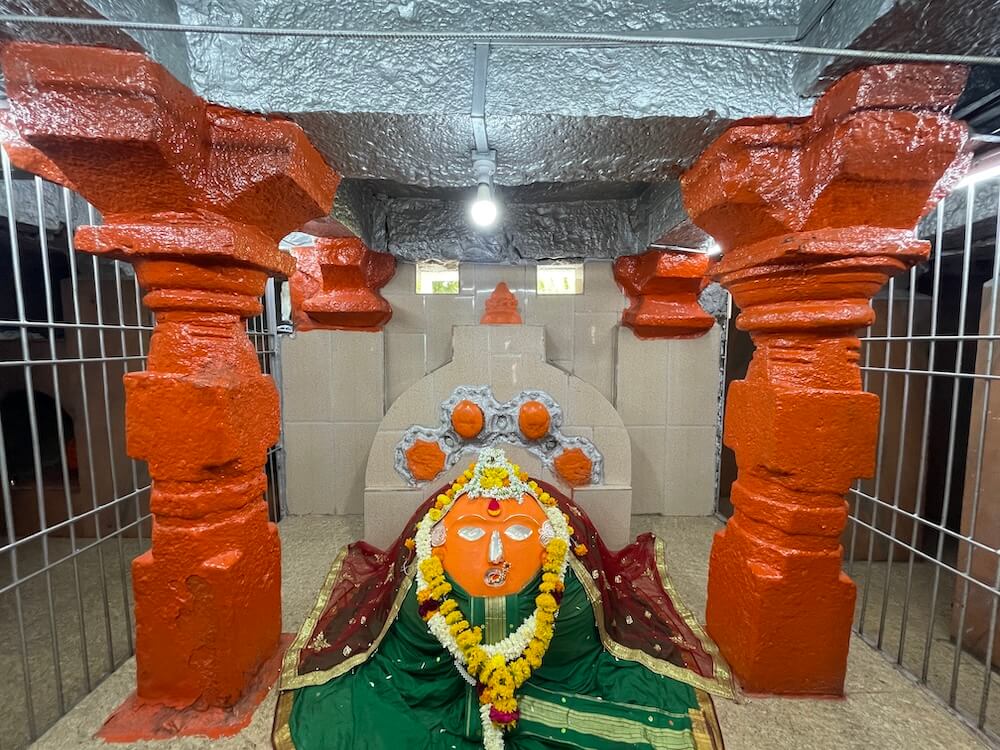
In the sanctum sanctorum, on a Vajra-pedestal, is the self-manifested (Swayambhu) stone icon (Tandla) of Renuka Devi. The eyes, nose, and mouth on the icon are made of silver. There is a lotus carving on the back slab of the Goddess, who is adorned with clothes and ornaments. There is a circumambulation path (Pradakshina Marg) around the Vajra-pedestal. The roof of the sanctum sanctorum has a two-tiered circular spire (Shikhara). The first tier below the spire has eight niches. They contain idols of various deities. The second tapering tier of the spire has pillar motifs. At the top, there is an Amalaka and a finial (Kalash).
Beside the temple are the Devasthan office and the residences of the priests. Ancient ruins and sculptures are scattered in the courtyard. Next to the temple is a Pushkarani (stepped tank) built of carved stone. There are steps on all four sides to descend into the Pushkarani. Inside, there is a natural water source. It is said that the water reserve here is inexhaustible.
About one hundred feet away from the Renuka Devi temple is the Moolsthan temple of Yogeshwari Devi. There is a spacious courtyard in front of this temple. In the courtyard, there is a lamp pillar on a platform. In front of the temple is a sacrificial altar and a small shrine to the side. It contains a stone idol of a local deity. There are ancient and dilapidated sculptures in the temple area. Although the Yogeshwari temple has been renovated, the entrance gate remains in its original form. The door jambs feature floral carvings and pillar motifs. On the lower sides are sculptures of gatekeepers. The lintel features a sculpture of Ganapati and there is a moonstone at the threshold. There is a step in front of the entrance. A lotus flower is carved on this step. Inside the temple, on a Vajra-pedestal, is the self-manifested stone icon of Yogeshwari Devi. The Goddess has a crown on her head. The roof of the temple has a two-tiered circular spire. The lower tier of the spire has three lotus mandalas. The upper tier of the spire is tapering. It features pillar motifs. At the top of the spire is an Amalaka and a finial.
The Sharadiya Navratri festival is the main annual festival here. During these ten days, thousands of devotees from the surrounding area come to visit both these Goddesses and fulfill their vows. During this time, programs such as Maha-Abhishek, Bhajans, Kirtans, Maha-Prasad, and Jagaran-Gondhal are organized in the temples. All festivals and celebrations throughout the year, such as Chaitra Padwa, Dussehra, Diwali, Makar Sankranti, and Nag Panchami, are celebrated in the temple. There is a special crowd of devotees at the temple on Tuesdays, Fridays, full moon days (Pournima), and new moon days (Amavasya).
This sacred temple stands as a testament to deep spiritual devotion, ancient architectural grandeur, and rich local cultural traditions.
The sanctum sanctorum houses the divine idol consecrated according to ancient Vedic traditions, surrounded by serene courtyards and traditional temple architecture.
Navratri, Maha Shivratri, Annual Temple Jatra & Deepotsav
Compare and book flights, secure top-rated local hotels near the temple, hire reliable guides, and rent cars instantly.
Extend your pilgrimage by visiting other highly sacred temples located nearby.
Add ₹999 more to unlock FREE SHIPPING!
Your sacred cart is currently empty.
Shop Photo FramesFill in your delivery details below to place your order.
Add comment