
Add ₹999 more to unlock FREE SHIPPING!
Your sacred cart is currently empty.
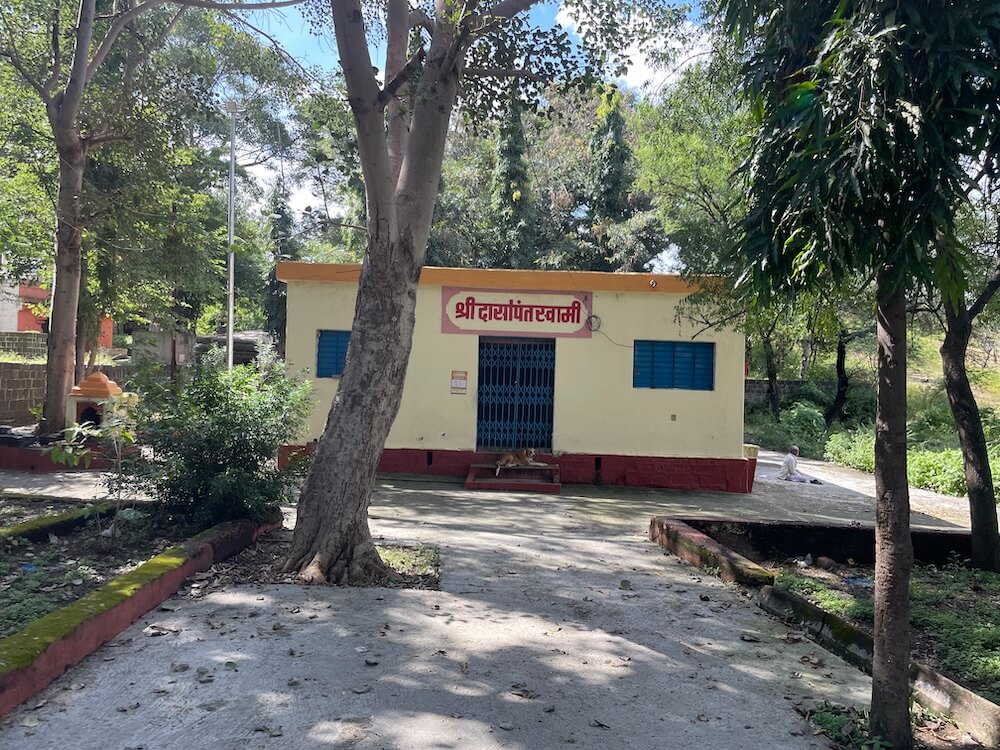
Shop Photo FramesSaint Dasopant, the revered author of sacred works such as *Gitarambha*, *Gitarthachandrika*, *Prabodhodaya*, *Padarnava*, *Grantharaja*, *Upanishad Bhashya* (Sanskrit), *Pasodi*, and *Panchikarana*, composed over five hundred thousand *ovis* (verses) in total. He was born on the auspicious day of Bhadrapada Shuddha Ashtami in the year 1551 AD at Narayanpet (Bidar) to Digambarpant Deshpande and Parvatibai. As Digambarpant was a chief revenue officer in the royal court, the family enjoyed immense prosperity. At the young age of sixteen, Dasopant renounced worldly householder life, embraced the path of *sannyasa* (asceticism), and dedicated himself to the spiritual welfare of humanity. At the age of 35, he arrived in Ambajogai, established a *matha* (monastery), and completed his earthly journey at the age of 64. His Samadhi Temple is a divine source of spiritual energy (*Chaitanya*). Devotees deeply believe that his holy presence is felt here to this day.
Although this Samadhi Temple was built in the second decade of the seventeenth century, scholars believe that the adjacent Narasimha Temple is even more ancient. Many divine legends surround Saint Dasopant. According to one legend, as his final moments approached, Dasopant summoned all his disciples and gave them an earthen idol of Lord Dattatreya, crafted by his own hands, instructing them to bury it inside a grain vessel. He foretold that the idol would turn into brass in one month, *panchadhatu* (five metals) in two months, silver in three months, gold in four months, and diamond in five months. However, he laid down a strict condition that the idol must not be removed from the vessel before five months had passed. After Dasopant’s passing, one of his disciples secretly removed the idol after two months to check it. Seeing that it had transformed into *panchadhatu*, he buried it back. When all the disciples gathered after five months and took the idol out, it remained *panchadhatu*. It was then realized that someone had prematurely unearthed the idol at the two-month mark.
Located in a serene and secluded spot, this Samadhi Temple is enclosed by a stone fortification wall featuring an entrance gate. The Samadhi Temple of Saint Dasopant is elegantly simple in structure. Doors are present at the front as well as on the left and right sides. At the center of the Samadhi Temple sits a raised platform (*chauthara*) built of finely carved stone over the Samadhi of Saint Dasopant. Windows (*vatayanas*) are provided to allow light and fresh air into the sanctum. Plaques bearing the sacred compositions of Dasopant are displayed on the walls.
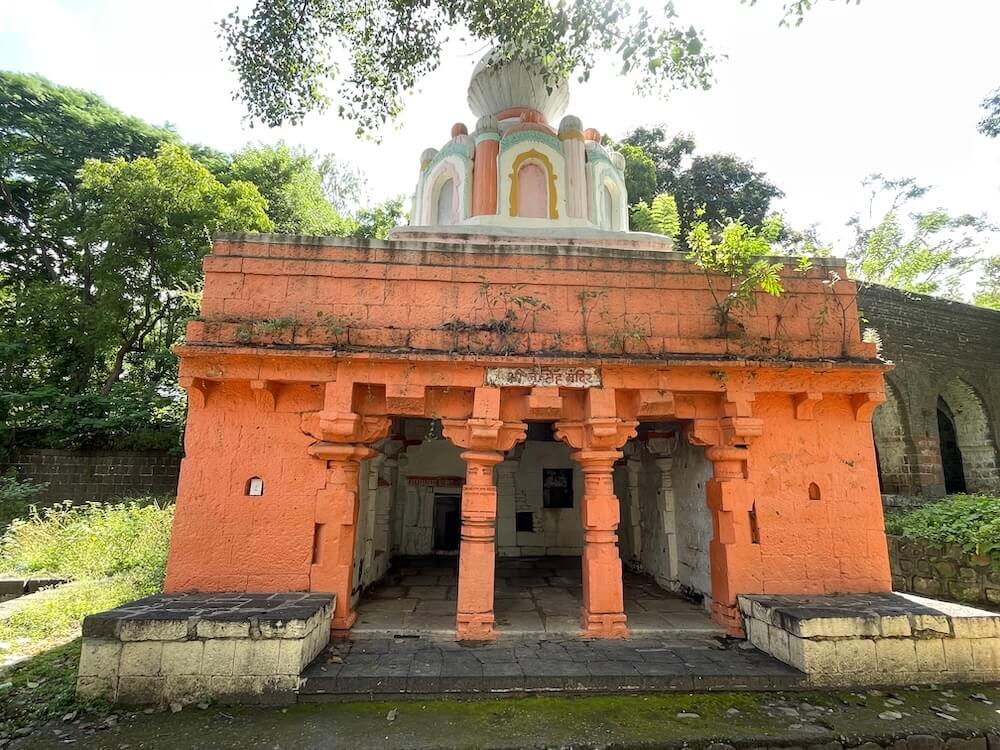
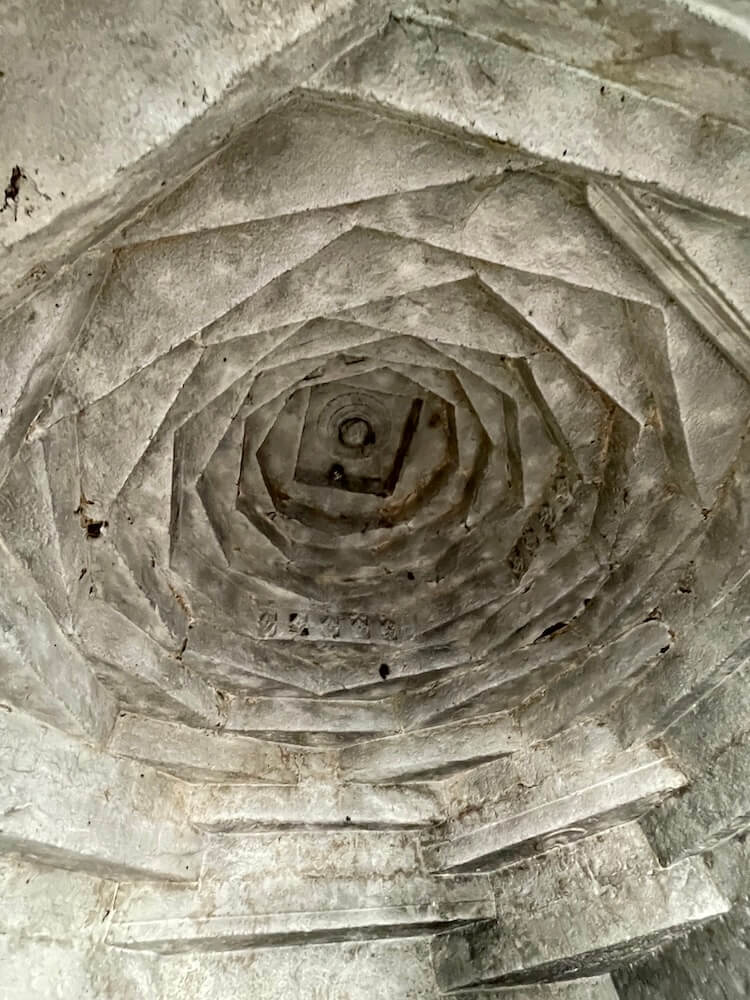
In the front courtyard, beneath a sacred peepal tree, stands a small shrine housing a stone idol of the local deity. Behind the main temple, on an elevated section of the courtyard, stands the ancient Lord Narasimha Temple. To reach it, one must ascend four stone steps. Several *samadhis* of revered sages and holy saints are located in this part of the courtyard. Beyond them stands the ancient Narasimha Temple constructed in the classic *Hemadpanti* architectural style. The temple rests on a high plinth. Two steps lead into the *Sabhamandapa* (assembly hall), the front side of which is completely open, flanked by stone platforms on both sides. The entrance to the *Sabhamandapa* features four intricately carved pillars, with the two side pillars embedded within the walls. The pillar shafts display various geometric shapes including squares, hexagons, octagons, and circles. The ceiling (*vitana*) of the *Sabhamandapa* is adorned with exquisite circular carvings.
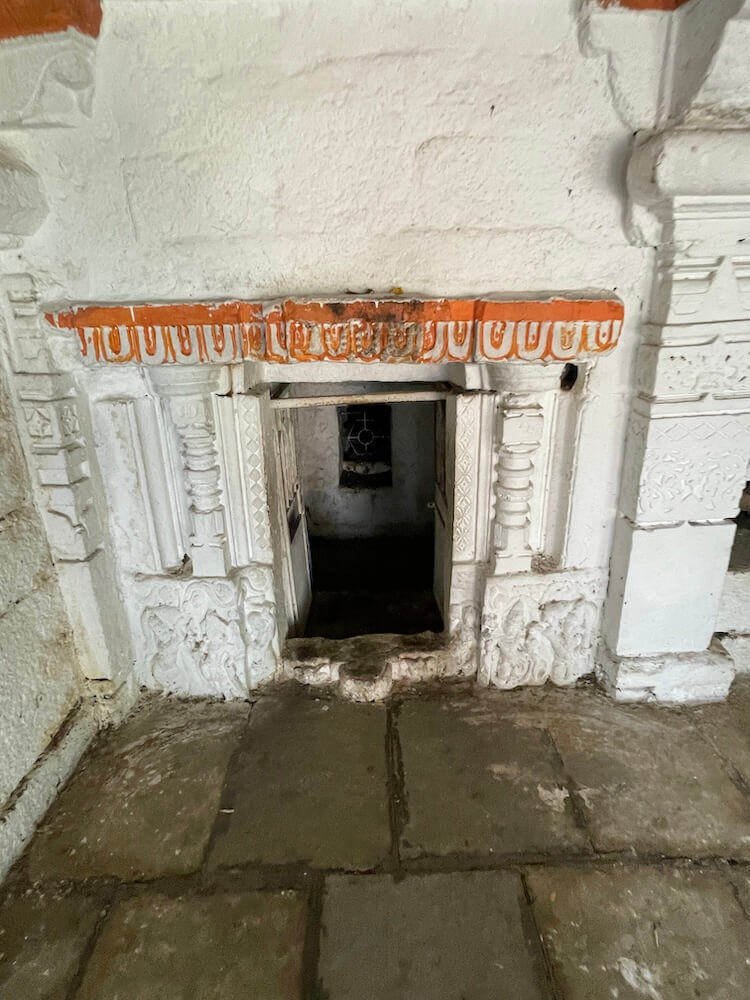
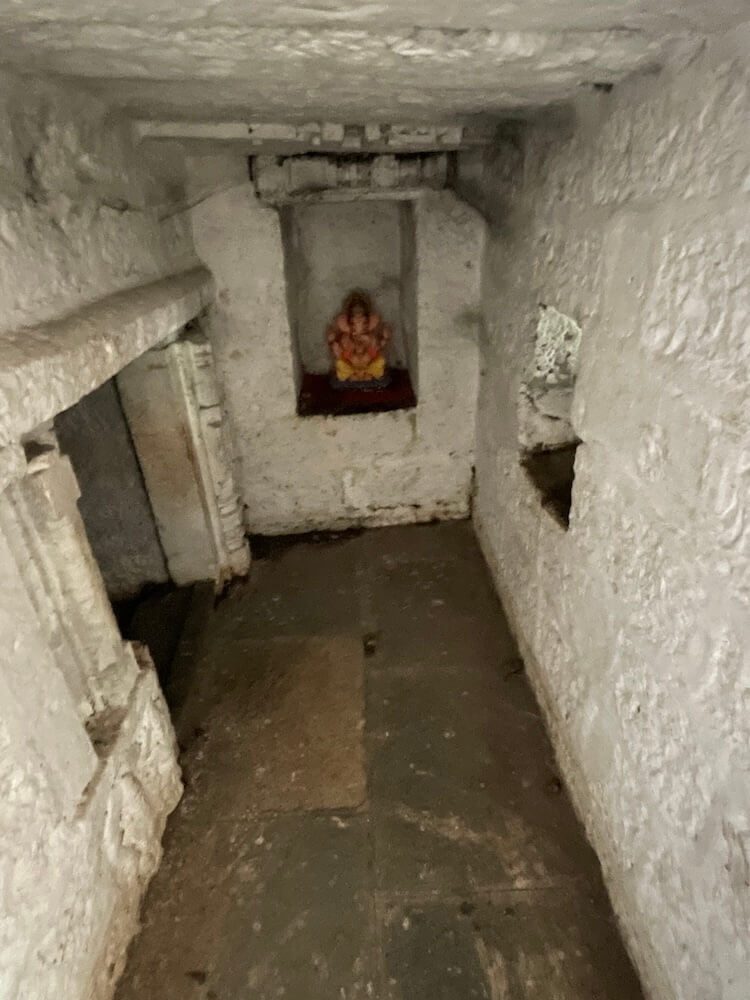
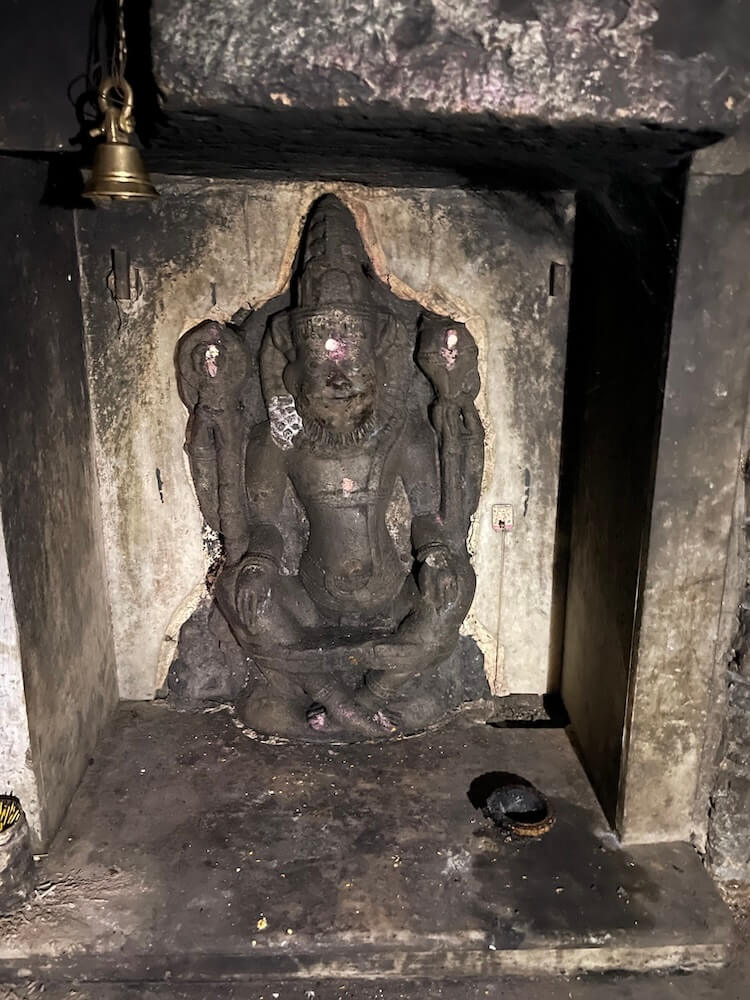
At the entrance of the *Garbhagriha* (inner sanctum), the lower portions of the door jambs (*dwarashakhas*) depict sculptures of *Dwarapalas*, *Dwarapalikas*, and the sacred river goddesses Ganga and Yamuna, while the upper portions feature elaborate foliage (*parnashakha*), floral motifs (*pushpashakha*), pillar motifs (*stambhashakha*), and creeper patterns (*velbuttishakha*). A sculpture of Lord Ganesha graces the *lalatabimba* (lintel crest), and pillar-work patterns adorn the *torana* (archway). Because the inner sanctum is situated within a natural hill cave, one must navigate left and right turns from the *Sabhamandapa* to reach the *Vajrapitha* (pedestal). Inside the sanctum, set against the back wall on the *Vajrapitha*, is an intricately carved four-armed (*Chaturbhuja*) idol of Lord Narasimha fashioned from fine black stone. To the right and left of Lord Narasimha stand the revered idols of Goddess Mahalakshmi and Goddess Padmavati.
Adjacent to the Narasimha Temple is a stone-carved sacred water tank (*Kund*), whose water source is believed to be eternal (*Akshaya*). Beside the tank are ancient stone arcades (*ovaryas*), which served as resting places and pilgrim accommodations in ancient times. In the front courtyard stands a stone platform with a *Deepamala* (sacred lamp tower). Next to the *Deepamala* is a Shiva Temple, with a sacred *Shivlinga* (*Shivpindi*) enshrined at the center of the sanctum floor. Another Shiva Temple is situated behind this temple.
Narasimha Jayanti, Datta Jayanti, and the birth anniversary of Saint Dasopant on Bhadrapada Shuddha Ashtami are celebrated at the temple with immense joy and devotion, accompanied by various religious programs and rituals. Hundreds of devotees from surrounding regions arrive for the sacred *darshan* of Dasopant’s Samadhi. Festivals such as Mahashivratri, Nag Panchami, Dasara, and Diwali are also celebrated with grand devotion. A large number of pilgrims visit the temple for *darshan* on Mondays and Thursdays.
This sacred temple stands as a testament to deep spiritual devotion, ancient architectural grandeur, and rich local cultural traditions.
The sanctum sanctorum houses the divine idol consecrated according to ancient Vedic traditions, surrounded by serene courtyards and traditional temple architecture.
Navratri, Maha Shivratri, Annual Temple Jatra & Deepotsav
Compare and book flights, secure top-rated local hotels near the temple, hire reliable guides, and rent cars instantly.
Extend your pilgrimage by visiting other highly sacred temples located nearby.
Add ₹999 more to unlock FREE SHIPPING!
Your sacred cart is currently empty.
Shop Photo FramesFill in your delivery details below to place your order.
Add comment