
Add ₹999 more to unlock FREE SHIPPING!
Your sacred cart is currently empty.
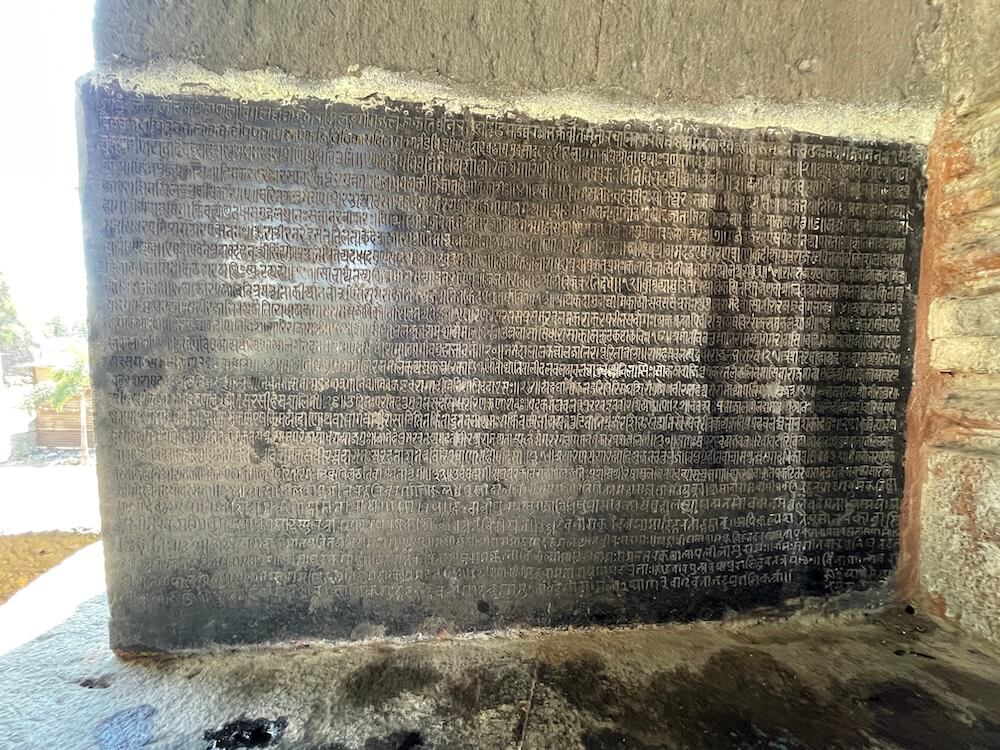
Shop Photo FramesPreserving the memory of the departed is ingrained in human nature. Even in primitive tribes, the practice of erecting stone pillars in memory of the deceased is evident. This is why memorials for the dead can be found in almost every culture across the world. In India, since historical and mythological times, temples, stepwells (barav), gardens, samadhis, and hero stones (virgal) built in memory of kings, queens, and commanders can be seen. The Kholeswar Temple in Ambajogai, built in the 12th century, was constructed in memory of Kholeswar and his son Ram, as mentioned in the local inscription.
This temple is approximately eight hundred years old. As stated in the inscription at the temple entrance, Kholeswar’s daughter, Lakshmi, built this temple in memory of her father and brother, Ram. Kholeswar was a commander under the Yadava King Singhana. Both he and his son were killed in battle. Lakshmi built this temple to ensure that the valor and achievements of her father and brother would be remembered forever and to grant them salvation in the afterlife. For this reason, the temple is known as Kholeswar.
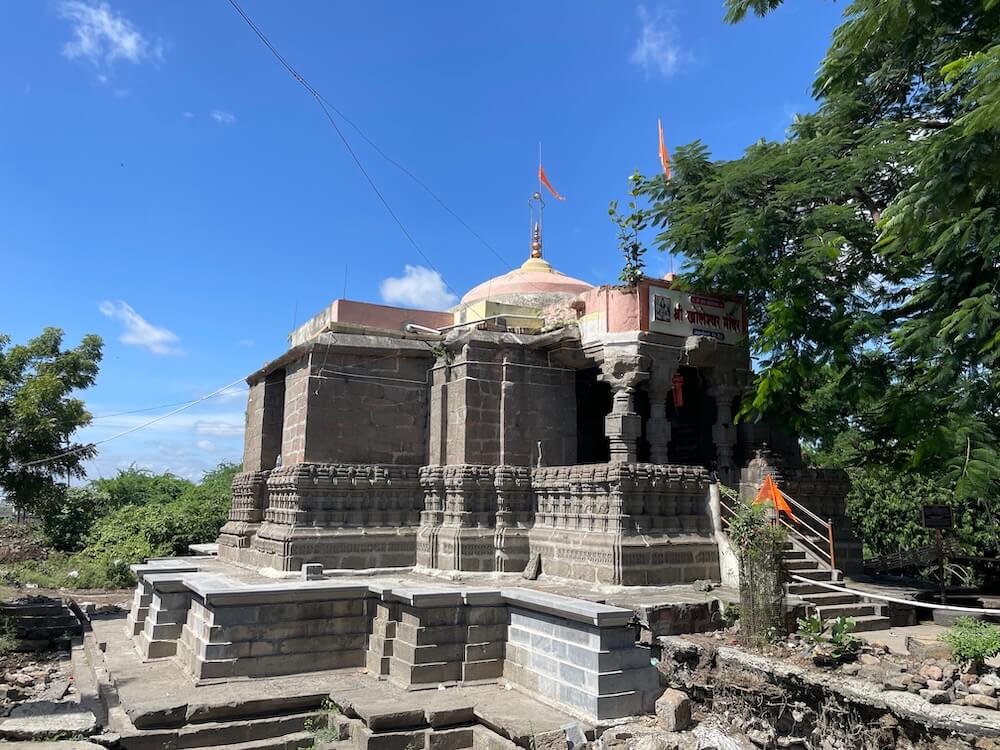
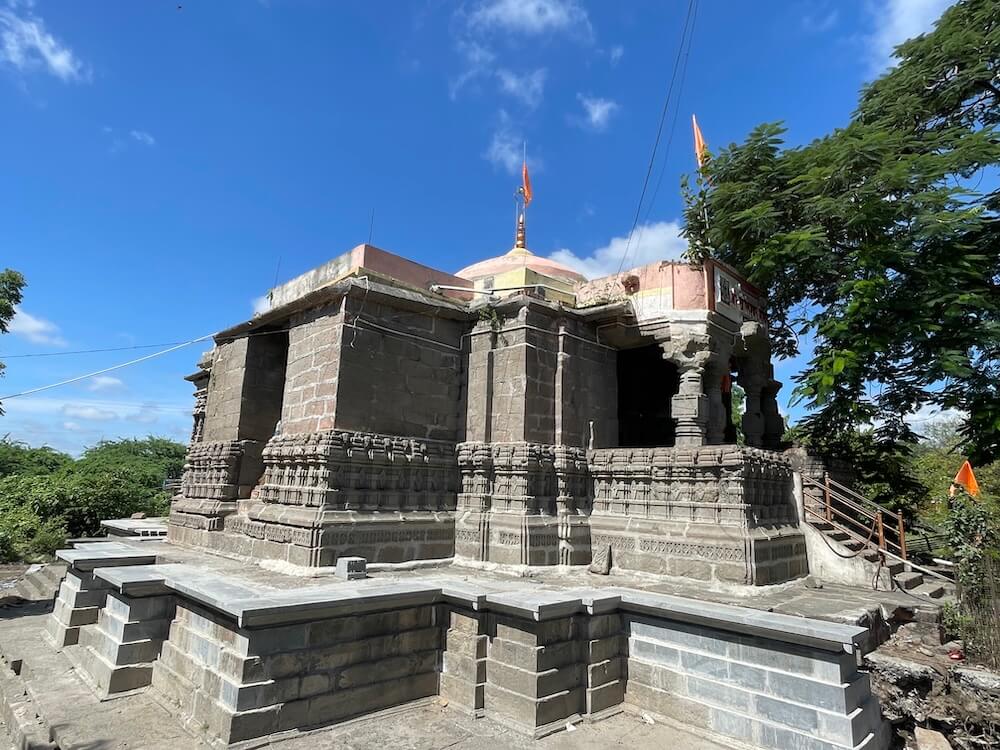
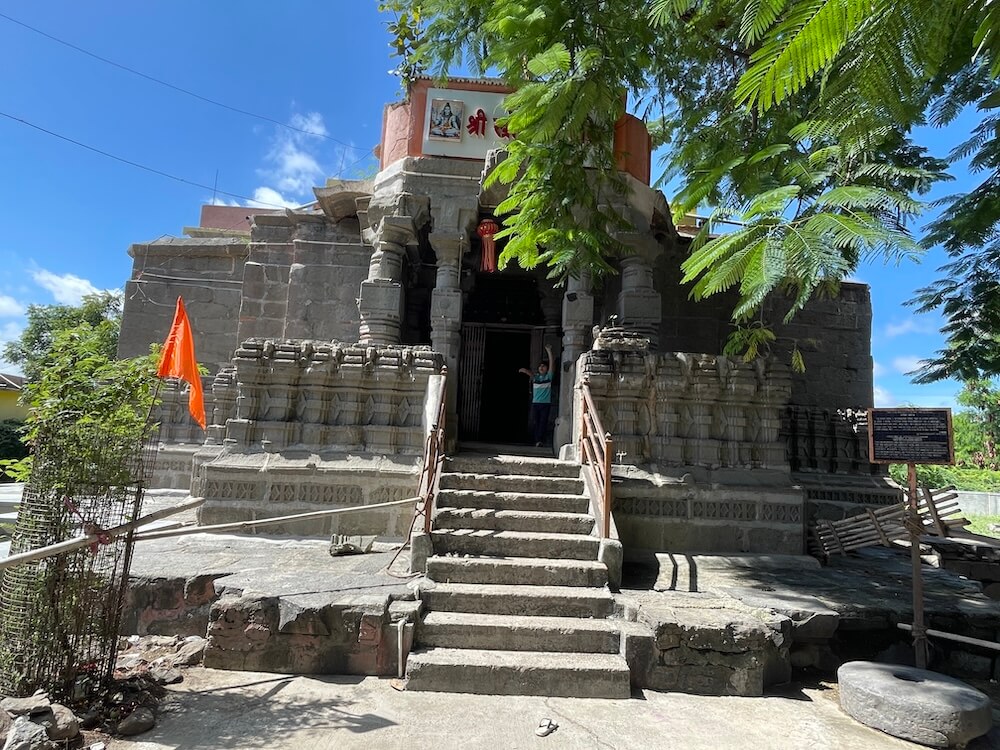
The temple is located along the main road in the Gavalipura area of Ambajogai city. In front of the temple is a parking area, followed by a courtyard. The temple stands on a high plinth (adhisthana), which features floral carvings, pillar motifs, and elephant-head sculptures. The temple structure consists of a porch (mukhamandapa), a main hall (sabhamandapa), an intermediate chamber (antarala), and the sanctum sanctorum (garbhagriha). There are porches on the east, north, and south sides of the temple, leading to the entrances of the main hall. Since all three porches are elevated above the courtyard, there are eight steps to reach each one. Iron safety railings are provided on both sides of the steps.
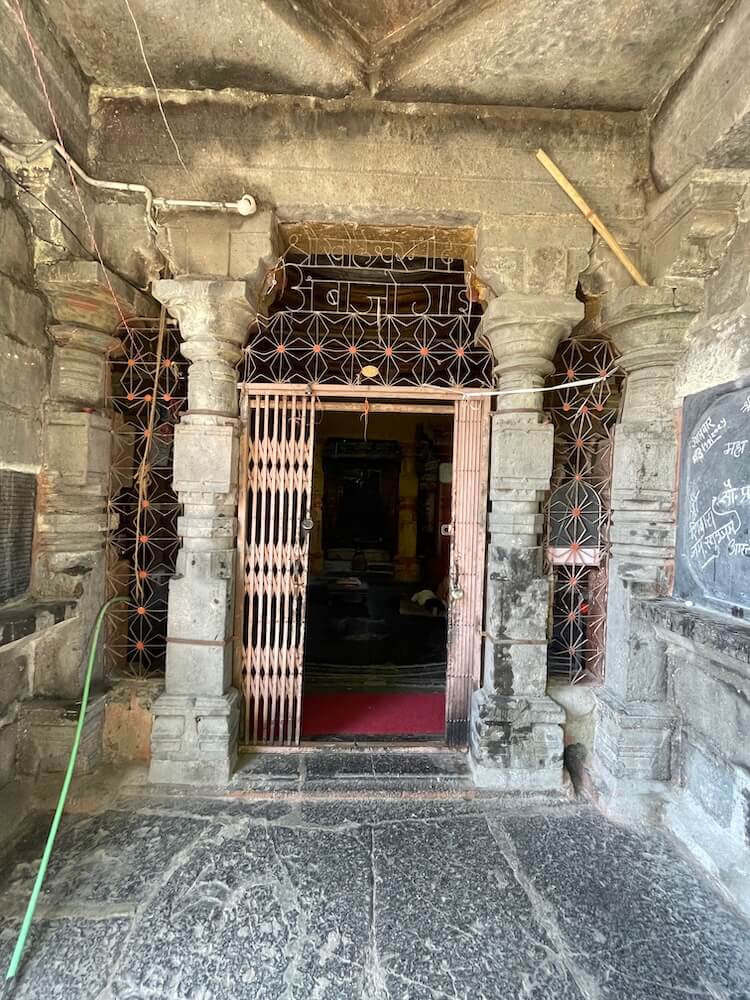
The eastern porch has a railing on the outer side, which includes seating (kakshasana) for devotees. There are a total of eight pillars in the porch—two on each side of the entrance and two on each side of the entrance to the main hall. All pillars stand on square bases. The pillar shafts feature various geometric shapes such as squares, hexagons, octagons, and circles. At the top of the pillars are capitals (kani) and brackets (hasta). Beams rest on these brackets, and the roof rests on the beams. The ceiling features a circular floral pattern. On the left railing of the porch, there is an inscription in Sanskrit, which clarifies the location, time, the name of the builder, and the purpose of the temple. Beyond this lies the entrance to the main hall.
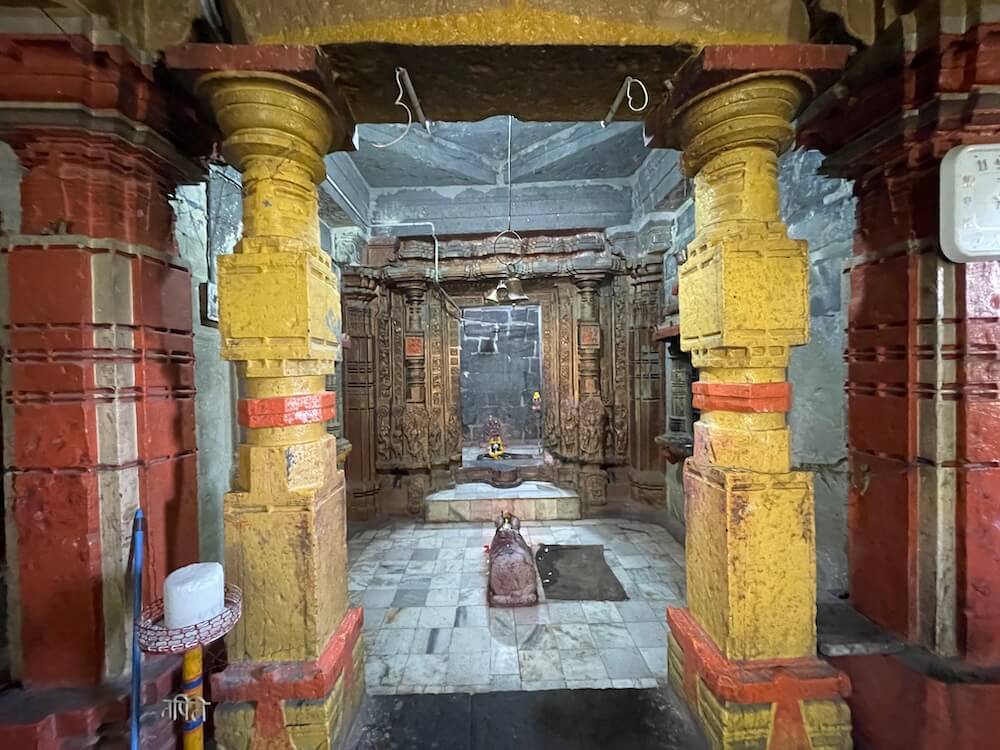
The circular main hall contains sixteen ornate pillars. All these pillars stand on square bases and feature geometric shapes like squares, hexagons, octagons, and circles. At the top of the pillars are capitals and brackets. Beams rest on the brackets, supporting a circular domed ceiling. This dome is constructed from circular stones stacked one upon another. In the center of the ceiling, a chakra (wheel) is carved. The main hall contains a circular stage (rangashila). In ancient times, performances such as dance and music were presented on this stage. Near the left wall of the main hall, there is an idol of the four-armed Lord Vishnu. On the front wall, on both sides of the entrance to the antarala, there are two niches (devakoshthakas). The left niche houses Lord Ganesha, while the right niche contains an indistinct sculpture.
In the center of the antarala floor, there is a Nandi idol made of black stone. There are two empty niches on both sides of the antarala. Further ahead, the entrance to the sanctum sanctorum is elevated above the antarala. There is a step in front of the entrance. The doorway features carvings of floral, leaf, human, pillar, and serpent motifs. On the lower sides of the door frame, there are sculptures of gatekeepers (dwarapala/dwarapalika) and the goddesses Ganga and Yamuna. The lintel (lalatabimba) features a sculpture of Lord Ganesha. The archway contains spire sculptures, and the threshold has a moonstone (chandrashila). In the center of the sanctum floor, there is a Shiva Linga. A brass cobra with a hood (chhatra) is placed over the Shiva Linga. A copper vessel for ritual bathing (abhishek) is suspended from the ceiling. A trident (trishul) stands beside the Shiva Linga. Near the back wall of the sanctum, there is an idol of Gauri-Har on a pedestal (vajrapitha), which is said to have been installed in later times. Four ornate pillars are embedded in the four corners of the sanctum walls. On the outer side of the temple, the walls (mandovara) feature pillar sculptures and niches containing divine idols. The temple roof is surrounded by a safety railing, which is said to have been built in recent times. In the center of the roof is a domed spire (shikhara), topped with a finial (stupika) and a kalash. Behind the temple, in the courtyard, there is a tank built of carved stone with steps to descend. Water from this tank is used for the ritual bathing of the deity.
Mahashivratri is the main annual festival celebrated here. During this time, thousands of devotees from the surrounding areas come for darshan and to fulfill their vows. During the festival, programs such as Laghurudra, Abhishek, Bhajans, music, Kirtans, and Mahaprasad are organized. The temple is crowded with devotees during the month of Shravan, Adhikamas, Dussehra, Diwali, Purnima, Amavasya, Pradosh, and on Mondays. Mahaprasad is organized every Monday.
This sacred temple stands as a testament to deep spiritual devotion, ancient architectural grandeur, and rich local cultural traditions.
The sanctum sanctorum houses the divine idol consecrated according to ancient Vedic traditions, surrounded by serene courtyards and traditional temple architecture.
Navratri, Maha Shivratri, Annual Temple Jatra & Deepotsav
Compare and book flights, secure top-rated local hotels near the temple, hire reliable guides, and rent cars instantly.
Extend your pilgrimage by visiting other highly sacred temples located nearby.
Add ₹999 more to unlock FREE SHIPPING!
Your sacred cart is currently empty.
Shop Photo FramesFill in your delivery details below to place your order.
Add comment