
Add ₹999 more to unlock FREE SHIPPING!
Your sacred cart is currently empty.
Shop Photo FramesThe Tulja Bhavani Temple in Tuljapur is considered one of the three and a half Shakti Peethas (major seats of power). Tulja Bhavani is revered as the Kuladevata (family deity) of Chhatrapati Shivaji Maharaj and the state of Maharashtra. There are many famous temples of the Goddess in Maharashtra, such as those in Umarga in Dharashiv district, Haveli in Pune district, and Panhalgad in Kolhapur district. One such ancient and renowned temple is located at Shivajinagar in Georai taluka. Devotees believe that the Goddess here is ‘Jagrut’ (awakened/manifest) and grants the wishes of those who pray with sincerity.
The legend associated with this temple states that in ancient times, a devout follower of Tulja Bhavani lived in the village of Gadhi. He would constantly chant the name of the Goddess on this hill. Pleased by his devotion, the Goddess asked him to seek a boon. The devotee requested that the Goddess reside here permanently to bless and protect her devotees. Honoring his wish, the Goddess manifested here in the form of an idol. It is also said that Chhatrapati Shivaji Maharaj visited this temple to seek the blessings of Goddess Tulja Bhavani.
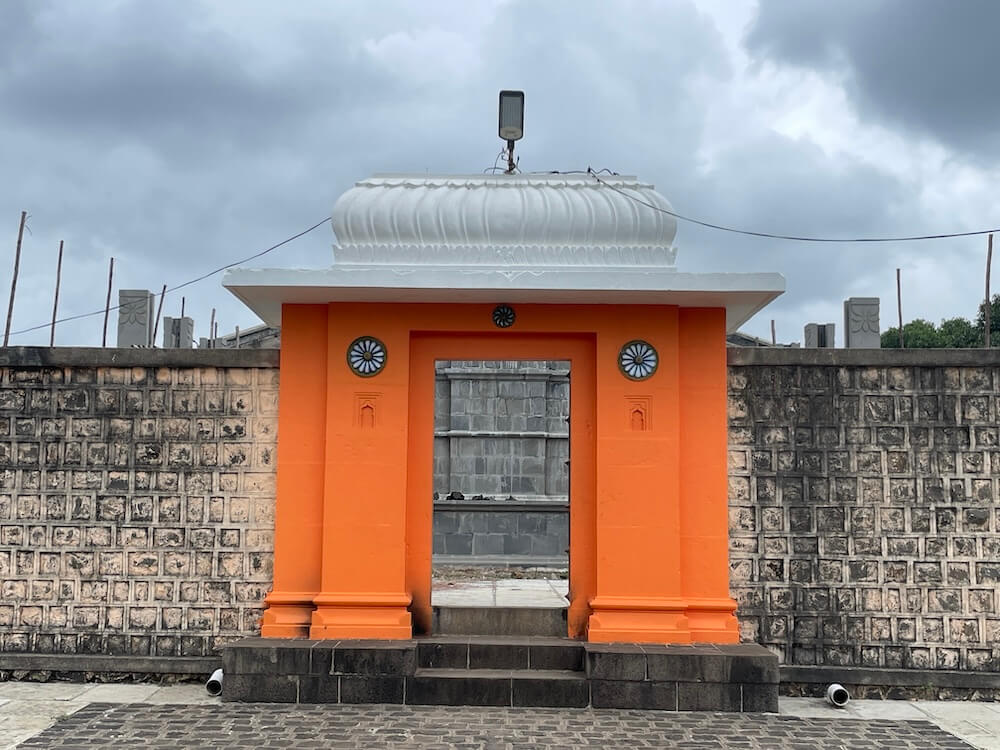
Local villagers state that this temple is about four to five hundred years old. However, scholars believe it to be even more ancient, dating back to the 13th or 14th century. Recent renovations have given the temple a modern luster. The temple is situated on a high hill near the village. A flight of stairs built from carved stone leads from the base of the hill to the temple. This path, consisting of nearly a hundred steps, is about ten feet wide and has safety railings on both sides. The temple complex is enclosed by a sturdy fortification wall with an entrance gate. The pillars on both sides of the entrance feature carvings of ‘Swagat Sundaris’ (welcoming maidens) playing the nagara (drum), while the upper section is adorned with chakra motifs. Passing through the entrance leads into the paved courtyard of the temple. The courtyard houses the residences of the priests and attendants, along with other structures.
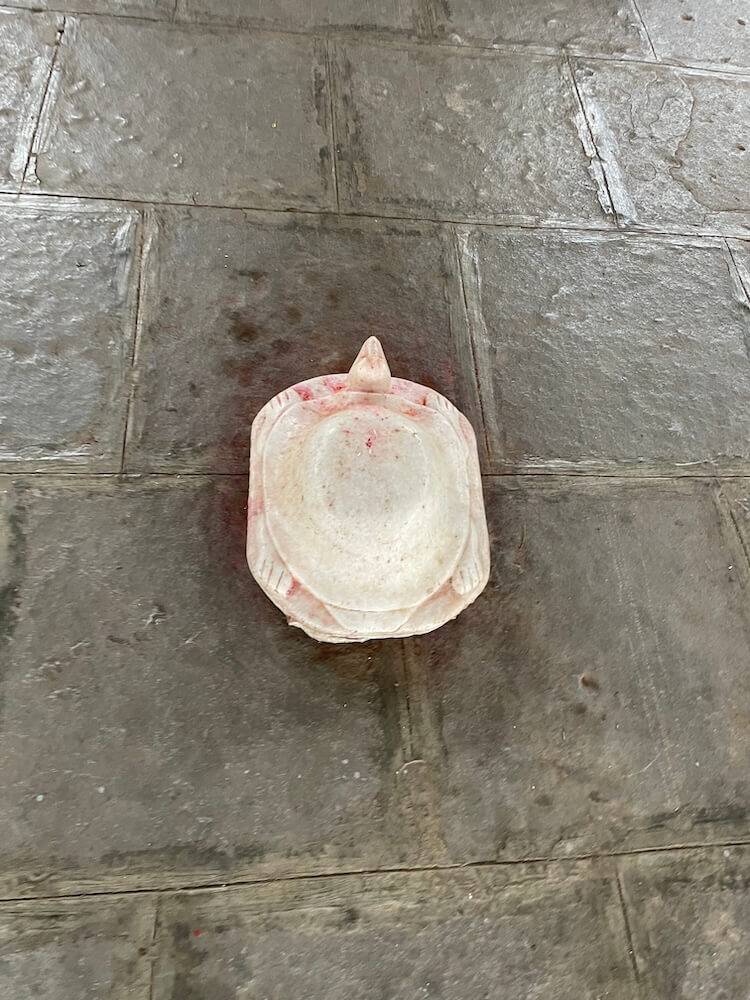
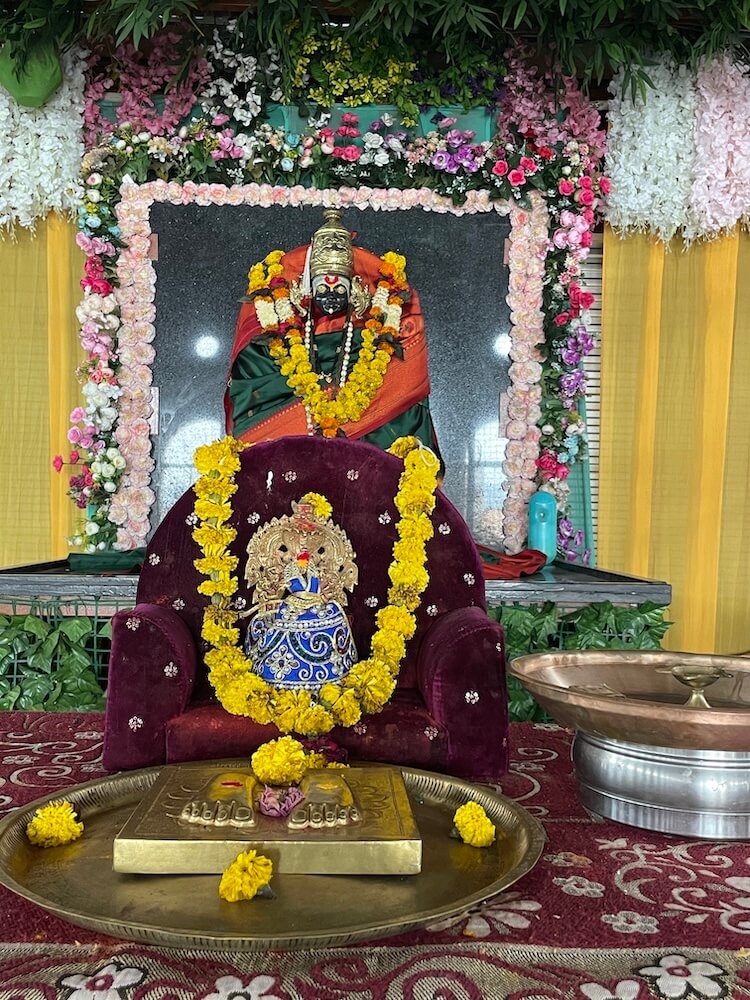
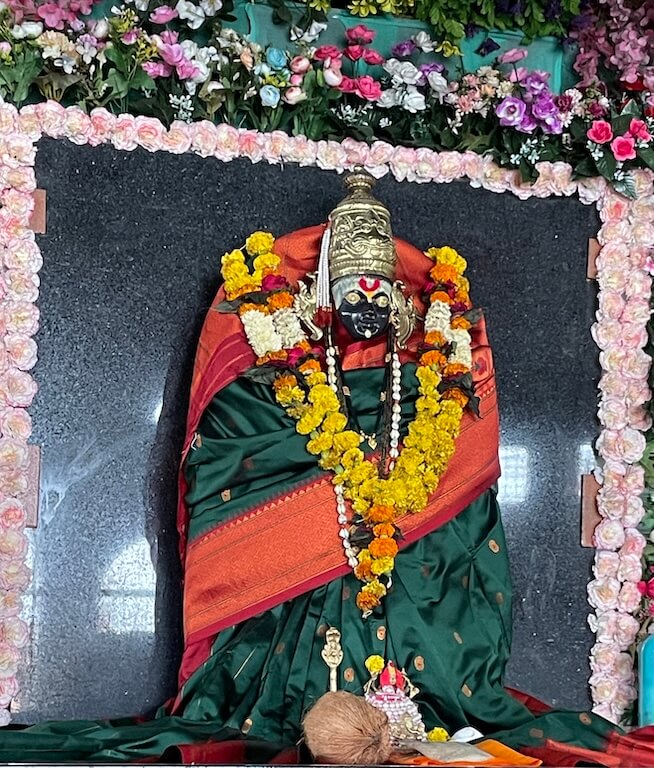
The courtyard has been developed into a garden with various types of trees. In front of the temple stands a raised platform (chautara) featuring a deepmala (lamp tower). The circular, tall deepmala tapers as it rises. Beautiful pathways have been created in the courtyard through a specific landscape design. In front of the temple, there is a grand Yajna Mandap (sacrificial pavilion) with a Yajna Kund (sacrificial fire pit) in the center. The Yajna Kund is flanked by four pillars. The exterior of the Yajna Mandap features a railing with a colonnade design. Inside, there are sixteen circular, ornate pillars standing on pedestals. All the pillars are connected by arched gateways. The roof is open in the center, a design specifically intended to allow smoke to escape during rituals. The roof of the Yajna Mandap is surrounded by a safety railing. Further ahead, on a stone platform, lies the temple structure comprising the Mukhamandap (front porch), Sabhamandap (main hall), and Garbhagriha (sanctum sanctorum). Since the platform is higher than the courtyard, there are three steps leading into the Mukhamandap. Beyond the Mukhamandap is the Sabhamandap. This semi-open hall is supported by sixteen ornate circular pillars on the outer sides, all connected by arched gateways. In the center of the floor of the Sabhamandap, there is a sculpture of a tortoise (Kurma). The Garbhagriha is slightly elevated above the Sabhamandap. Inside the sanctum, on a Vajrapitha (diamond throne), sits the eight-armed idol of Tulja Bhavani made of black stone, housed within a marble shrine. The Goddess is in the form of Mahishasura Mardini, holding various weapons. Adorned with various garments and ornaments, the Goddess wears a silver crown on her head. To the right of the Vajrapitha is the Goddess’s Shayamanchak (bedstead). Three swords are placed on the bedstead. It is said that these swords were offered to the Goddess by Chhatrapati Shivaji Maharaj. There is a circumambulation path (pradakshina marg) around the exterior of the Garbhagriha.
On the railing of the Mukhamandap roof, there is a sculpture of Tulja Bhavani facing the front. The roof of the Sabhamandap is enclosed by an iron mesh safety railing, while the roof of the Garbhagriha features a three-tiered circular Shikhara (spire). Each tier of the Shikhara has eight niches containing idols of various deities. The niches are topped with small spires and finials. The top of the main Shikhara is dome-shaped, crowned with an Amalaka and a Kalash.
In the courtyard, beyond the deepmala, stands an ancient Hanuman temple. The walls on three sides of this temple are latticed, and the entrance has latticed wooden shutters. Inside, on a Vajrapitha, is a stone idol of Hanuman smeared with vermilion (sindoor). Hanuman is depicted holding a mountain in one hand and a mace (gada) in the other. The temple roof has a square, dome-shaped spire.
The Sharadiya Navaratri festival is the main annual event celebrated here with great enthusiasm. During this time, the temple is crowded with devotees for ten consecutive days. Hundreds of devotees visit to seek the Goddess’s blessings and fulfill their vows. On the occasion of the festival, programs such as bhajans, kirtans, discourses, music, Mahaprasad, jagaran, and gondhal are organized for ten days. All festivals and occasions like Chaitra Padwa, Hanuman Jayanti, Dussehra, Diwali, Shravan month, Kojagiri Purnima, and Kartik Purnima are celebrated in the temple. Various religious programs are organized during all these festivals. A large number of devotees visit the temple on Tuesdays, Fridays, Purnima (full moon), Amavasya (new moon), Pradosh, and Ashtami.
This sacred temple stands as a testament to deep spiritual devotion, ancient architectural grandeur, and rich local cultural traditions.
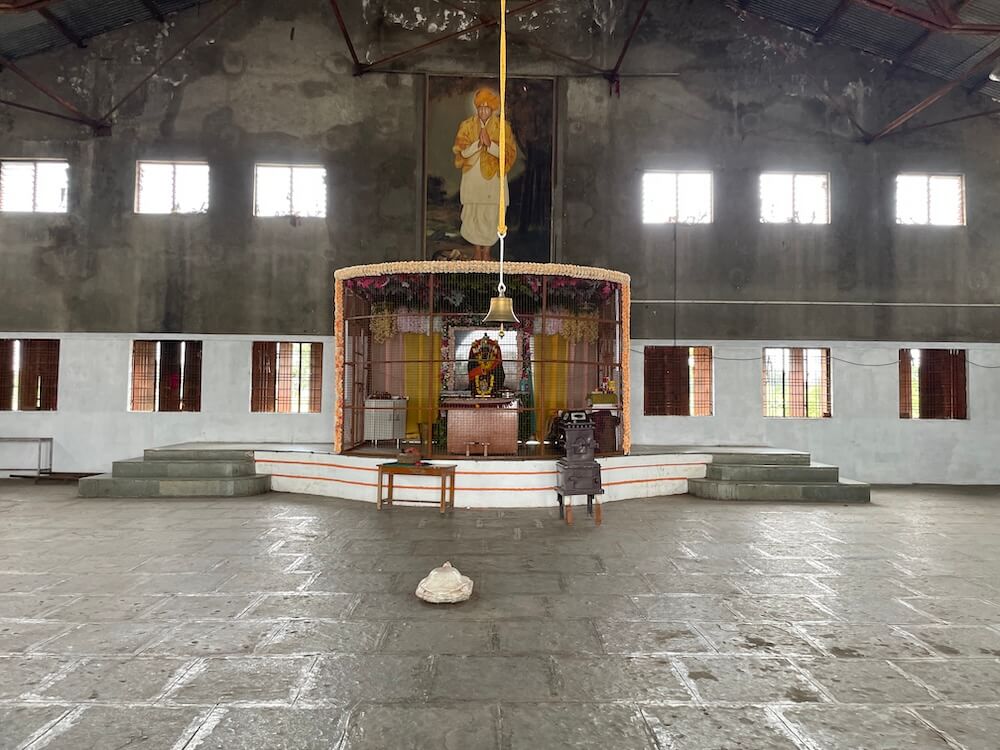
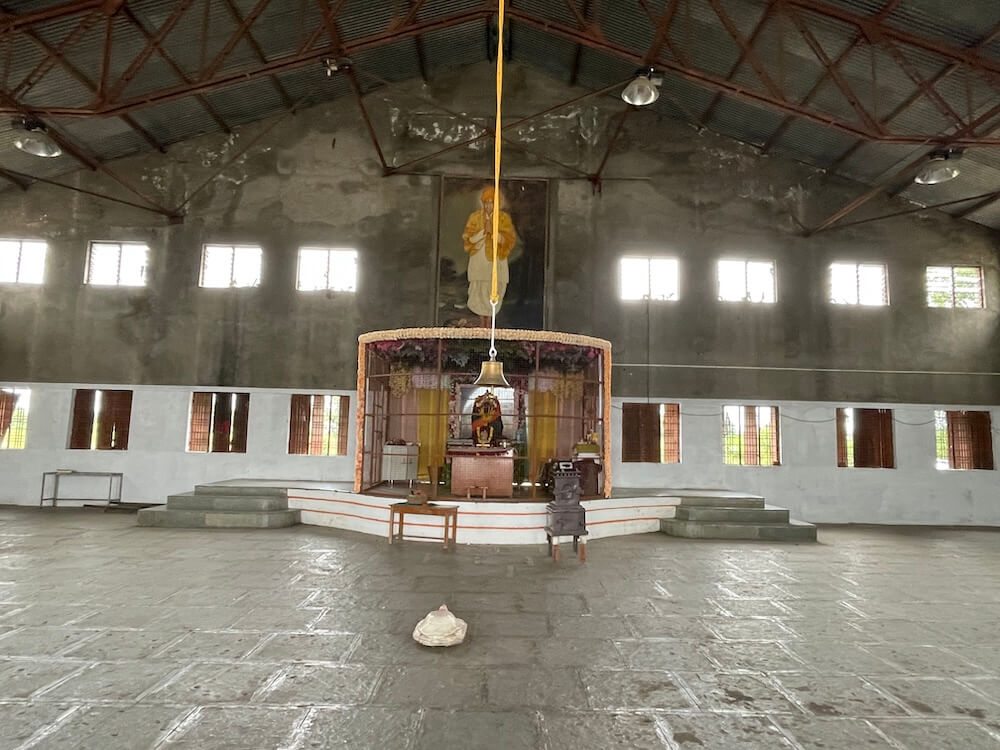
The sanctum sanctorum houses the divine idol consecrated according to ancient Vedic traditions, surrounded by serene courtyards and traditional temple architecture.
Navratri, Maha Shivratri, Annual Temple Jatra & Deepotsav
Compare and book flights, secure top-rated local hotels near the temple, hire reliable guides, and rent cars instantly.
Extend your pilgrimage by visiting other highly sacred temples located nearby.


Add ₹999 more to unlock FREE SHIPPING!
Your sacred cart is currently empty.
Shop Photo FramesFill in your delivery details below to place your order.
Add comment