
Add ₹999 more to unlock FREE SHIPPING!
Your sacred cart is currently empty.
Shop Photo FramesBeed district is blessed by major rivers such as the Manjara, Godavari, and Sina. Many smaller rivers also flow here, including the Sindphana, Van, Mikhati, Kangali, Kadi, Lendi, Amruta, Bindusara, Saraswati, Gunvati, Rena, Kej, Limba, Chausala, Wangi, Hol, Bokadi, Inchana, and Babhati. The Mohidara is a tributary of the Manjara River, and on the banks of this river, in the village of Madalmohi, stands the ancient and famous temple of Goddess Mohimata. Devotees believe that the awakened Goddess residing in this temple, situated within a beautiful underground stepped well (Pushkarani), fulfills their vows.
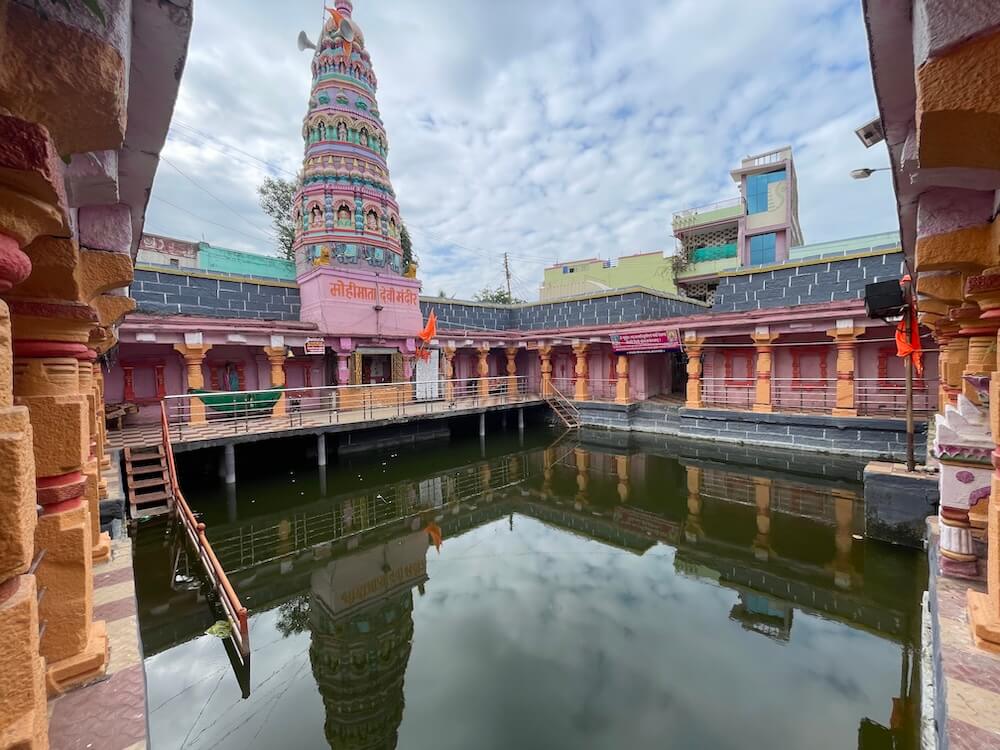
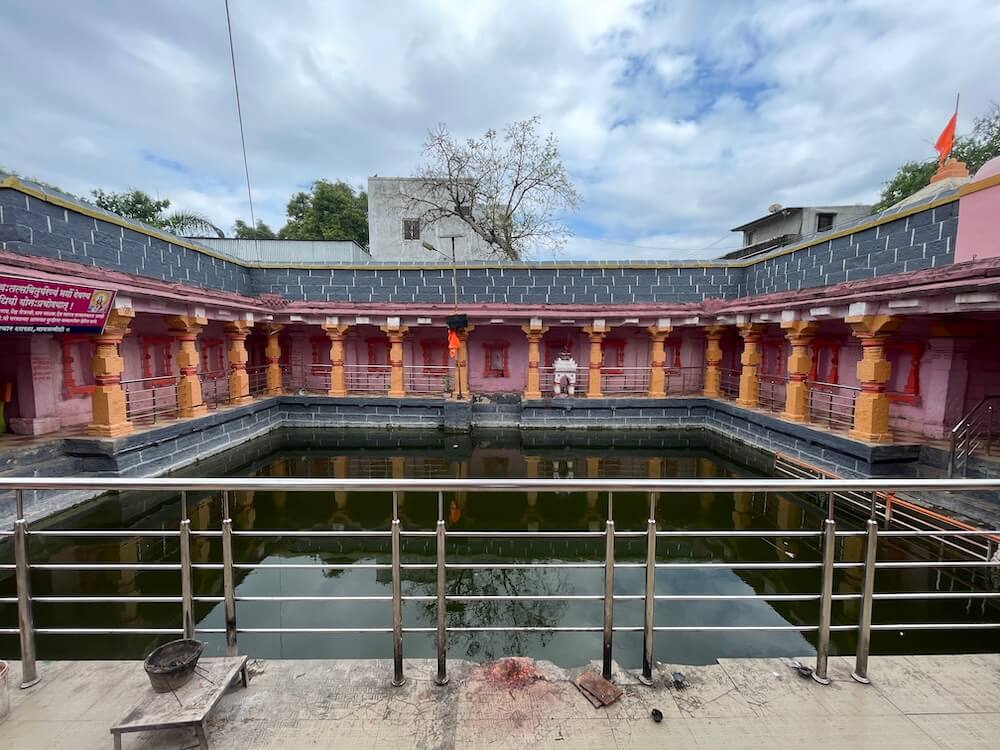
Villagers estimate that this temple dates back approximately eight hundred to one thousand years. The temple is located in the heart of Madalmohi village. It is said that the village was named Madalmohi because the village of Madal, which was washed away in a flood of the Mohidara River, was resettled in Mohi village. Mohimata is the presiding village deity (Gramadevata) of this place. A legend regarding this temple states that about fifteen hundred years ago, Tulja Bhavani from Tuljapur manifested here in the form of a self-existent (Swayambhu) stone (Tandala) and gave a divine vision to the villagers, leading to the construction of the temple at that time. Some scholars consider her a water deity, representing a form of the Mohi River. Therefore, the Tandala of Mohi Mata has been worshipped in the vast Pushkarani here since ancient times. The temple is nestled within a spacious Pushkarani. Regarding this Pushkarani, it is said that in ancient times, during the Goddess’s festivals, utensils for cooking would manifest from this water body.
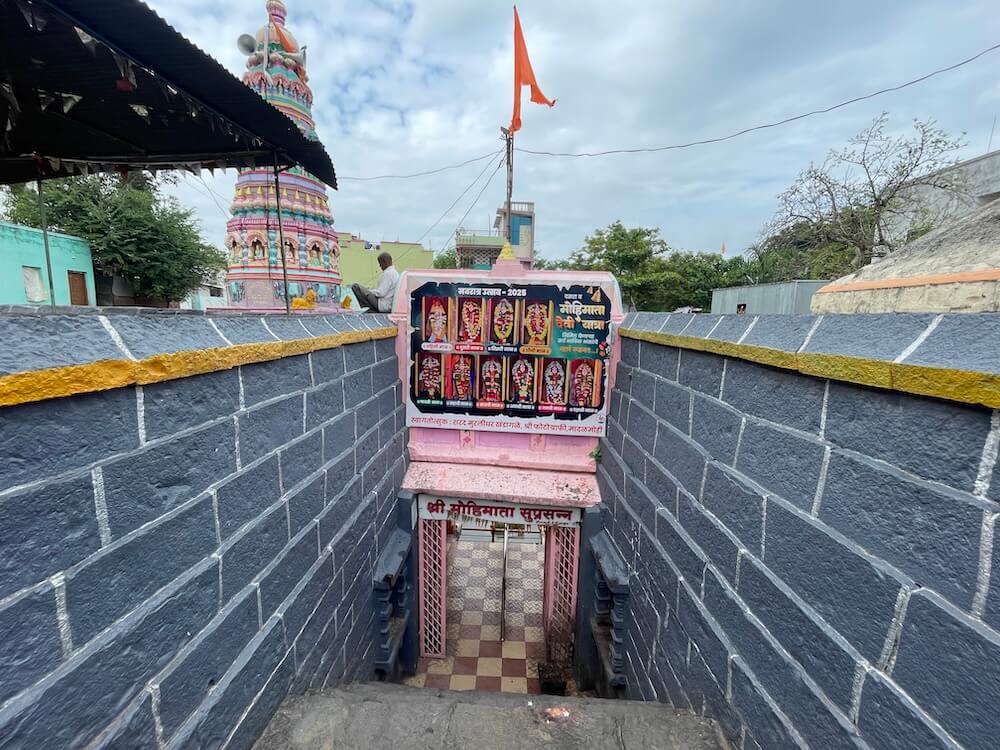
The temple is surrounded by a strong stone fortification. The double-storied entrances on the north and south sides of the fortification are about fifteen to twenty feet below ground level, requiring one to descend stairs to reach them. There are niches on both sides of the entrance. The door frames are carved with intricate vine patterns, and an image of Lord Ganesha is carved on the lintel. Inside the entrance, iron railings have been installed to manage the queue for Darshan. Inside the entrance, there are brass bells hanging from the ceiling, and the octagonal canopy features unique carvings. On the floor above the entrance is the Nagarkhana (drum house). The Nagarkhana has windows on both sides and a pyramid-shaped, stepped square spire in the center of the roof.
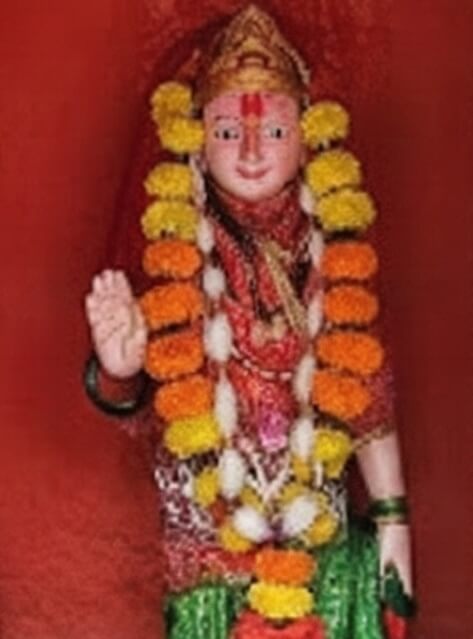
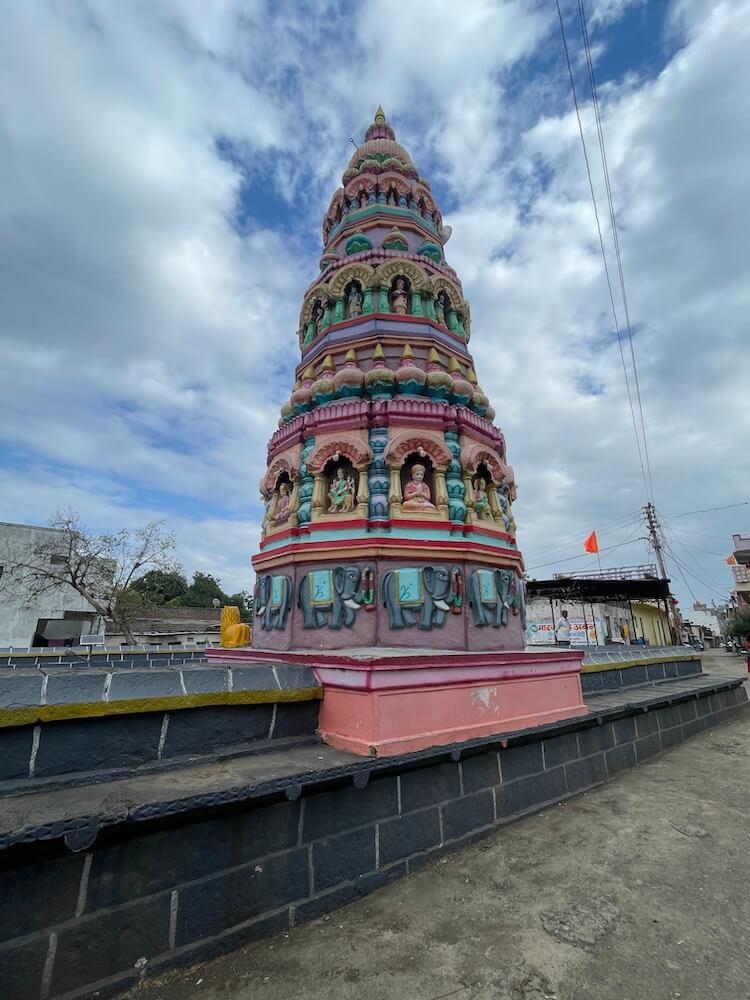
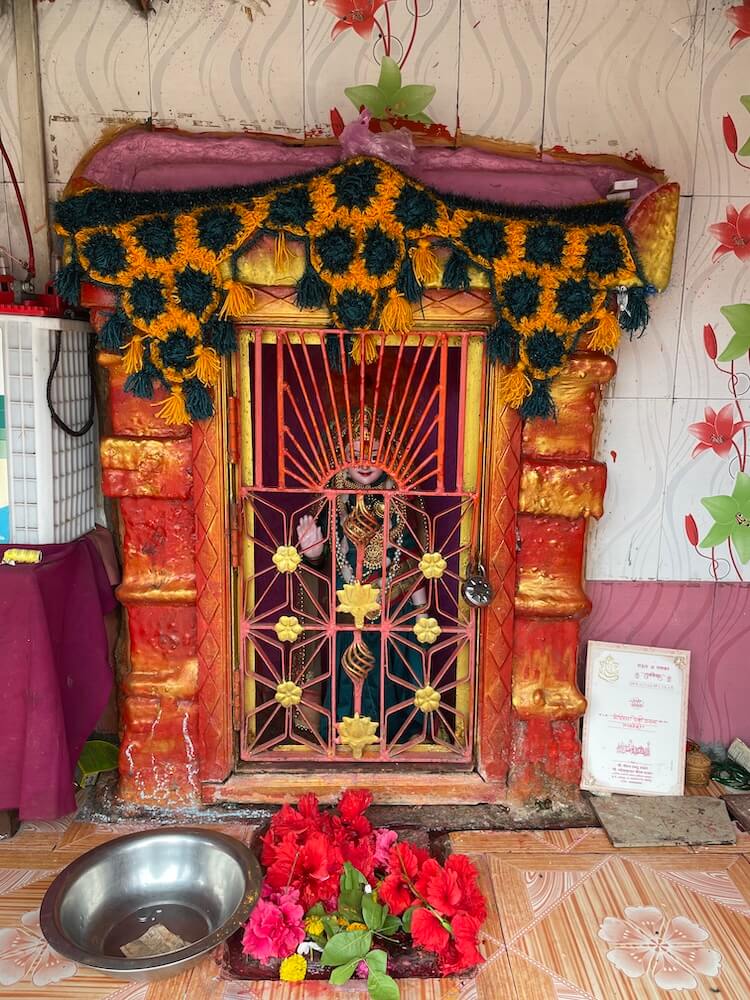
Upon entering through the entrance, one reaches an area with corridors (Osari) on all four sides of the Pushkarani. There are a total of 28 ornamental pillars in these corridors. All these pillars stand on square bases. Their shafts feature various geometric shapes such as squares, hexagons, octagons, and circles. One can perform a circumambulation (Pradakshina) of the Pushkarani through this path. There are a total of 24 niches in the walls behind the corridors on all four sides. All niches feature pillar carvings. Although these niches are currently empty, it is said that they once housed statues of various deities. The sanctum sanctorum (Garbhagriha) is located on the west side of the corridor. The door frame of the sanctum features square and pillar carvings. Inside the sanctum, on a Vajra-pedestal, stands a marble idol of Mohimata with two arms. One hand of the idol holds a lotus flower, while the other is in a blessing posture. The Goddess is adorned with clothes, ornaments, and a crown. Previously, there was a Swayambhu Tandala of the Goddess in front of the sanctum, but after the renovation of the temple, a marble idol of the Goddess was installed. The roof of the sanctum features a circular spire with about seven layers. There are lion sculptures at all four corners of the spire. The first layer below the spire features a row of elephants (Gajathar), where the elephants are seen in various moods. The second layer of the spire has twelve niches containing statues of various deities. The third layer has 24 Amalakas topped with a finial (Kalash). The fourth and fifth layers each have twelve niches containing statues of various deities. The roofs of the niches in the fifth layer have spires, and there are Amalakas at the tops of these spires. The top of the main spire features two Amalakas and a Kalash.
There are stairs to descend into the Pushkarani from the corridor, and stairs of a joint design are visible on all four sides of the Pushkarani. Previously, this Pushkarani was about fifty feet deep, but in recent times, due to the collapse of the stairs in the lower part, cement concrete layers have been laid in the center of the Pushkarani. A circular well has been created in the middle of the concrete layer. The depth of this well is equal to the original depth of the Pushkarani. This well holds water throughout the year. During the monsoon, this Pushkarani is filled to the brim with water.
The ten-day Sharadiya Navratri festival is the main annual festival celebrated with great enthusiasm at the temple. This is followed by a five-day fair (Jatra) from Ashwin Shuddha Ekadashi to Purnima. During the fair, the procession (Chhabina) of the Goddess goes around the village to the sound of drums and the throwing of Gulal. There is a tradition of pulling twelve bullock carts (Gada) at this time. Devotees pull the carts as a fulfillment of their vows. Devotees whose vows have been fulfilled offer food and clothing to other devotees. During both festivals, programs such as Bhajans, Kirtans, music, religious discourses, Jagaran, and Gondhal are organized in the temple. Thousands of devotees come to the temple for Darshan and to fulfill their vows during the festivals. Festivals such as Diwali, Nag Panchami, Sankrant, and the month of Shravan are also celebrated at the temple. Ganesh Visarjan in the month of Bhadrapada is performed in the temple’s Pushkarani. There is a large crowd of devotees for Darshan on every Tuesday, Friday, Purnima, Amavasya, and Ashtami.
This sacred temple stands as a testament to deep spiritual devotion, ancient architectural grandeur, and rich local cultural traditions.
The sanctum sanctorum houses the divine idol consecrated according to ancient Vedic traditions, surrounded by serene courtyards and traditional temple architecture.
Navratri, Maha Shivratri, Annual Temple Jatra & Deepotsav
Compare and book flights, secure top-rated local hotels near the temple, hire reliable guides, and rent cars instantly.
Extend your pilgrimage by visiting other highly sacred temples located nearby.

Add ₹999 more to unlock FREE SHIPPING!
Your sacred cart is currently empty.
Shop Photo FramesFill in your delivery details below to place your order.
Add comment