
Add ₹999 more to unlock FREE SHIPPING!
Your sacred cart is currently empty.
Shop Photo FramesWashim city is the modern-day manifestation of Vatsa Janapada, one of the sixteen ancient kingdoms of the country. In ancient times, this city was known as Vatsagulma. The text ‘Vatsagulma Mahatmya’ provides information about 108 sacred pilgrimage sites in Washim. In this text, which consists of 39 chapters in total, only two pilgrimage sites are mentioned in the first eight chapters. One is the Karuneshwar Mahadev Tirtha and the other is Padmatirtha. Legend has it that this Padmatirtha, located in the old Washim area, was established by Lord Vishnu. During the British era, water was supplied to Washim from this site.
The ‘Padmatirthopakhyana’ is narrated in chapters 23, 24, 25, and 26 of the ancient text ‘Vatsagulma Mahatmya’. The legend of this pilgrimage site is that once, Lord Vishnu came to Vatsaranya (the forest in the Vatsa kingdom) in the central region (present-day Madhya Pradesh, Vidarbha, etc.) in search of his vehicle, Garuda. Even after a long time had passed, Garuda could not be found. At one point, he placed the lotus (padma) he was holding in his hand on the ground while he continued his search. When he returned after some time, he saw that the lotus had disappeared. Upon digging at that spot, a reservoir was formed. This is Padmatirtha. Here, Vishnu established the Padmeshwar Linga.
One story of Padmatirtha in the Vatsagulma Mahatmya is associated with the Vedic sage Dadhichi. Sage Dadhichi’s father was Sage Atharvan, and his mother was Chitti, the daughter of Sage Kardama. According to mythology, Indra needed a highly effective and invincible weapon to fight the demon Vritrasura. At that time, Sage Dadhichi donated his bones to Indra. Indra’s Vajra and other weapons were fashioned from these bones. (The Param Vir Chakra, the highest military gallantry award, features the Vajra made from Dadhichi’s bones engraved upon it. After independence, the Param Vir Chakra was instituted under the orders of Pandit Jawaharlal Nehru. Its design was created by Savitri Khanolkar, wife of Major General Vikram Khanolkar, who belonged to a prestigious family from the Sawantwadi princely state.) After the slaying of Vritrasura, Vishnu immersed the weapons made from Sage Dadhichi’s bones into Padmatirtha. It is believed that the water of this pilgrimage site had the power to dissolve bones. At that time, Vishnu installed a Shiva Linga here. Even today, the Dashakriya rituals in Washim city are performed under a banyan tree near this pilgrimage site.
Another legend about this pilgrimage site is told in the Vatsagulma Mahatmya. It is said that a wealthy and generous merchant named Dharmagupta had a wife named Guha. Young and beautiful, Guha was adulterous by nature. She had a son named Vibhavasu from an extramarital affair. Even after the birth of her son, she continued to meet her lover. Once, Dharmagupta caught her in the act of adultery. He beat her. Then, she and her lover murdered Dharmagupta and fled, leaving Vibhavasu behind. While fleeing, her lover was killed by a tiger in the forest. Eventually, her condition became so dire that she had to resort to prostitution. Meanwhile, her son Vibhavasu was raised by his uncle. In his youth, he quarreled with his uncle and left home. By chance, he reached the same brothel. There, he had a physical relationship with his own mother. While talking, they realized their relationship and felt disgusted by their actions. They decided to commit suicide by setting themselves on fire. They set their bodies ablaze, but due to a sudden rain, their bodies were only partially burnt. They did not die, but their bodies began to rot from the wounds. However, by bathing daily in Padmatirtha, their wounds healed. Thus, the author of the Mahatmya opines that Padmatirtha is a pilgrimage site that grants liberation from sins and suffering.
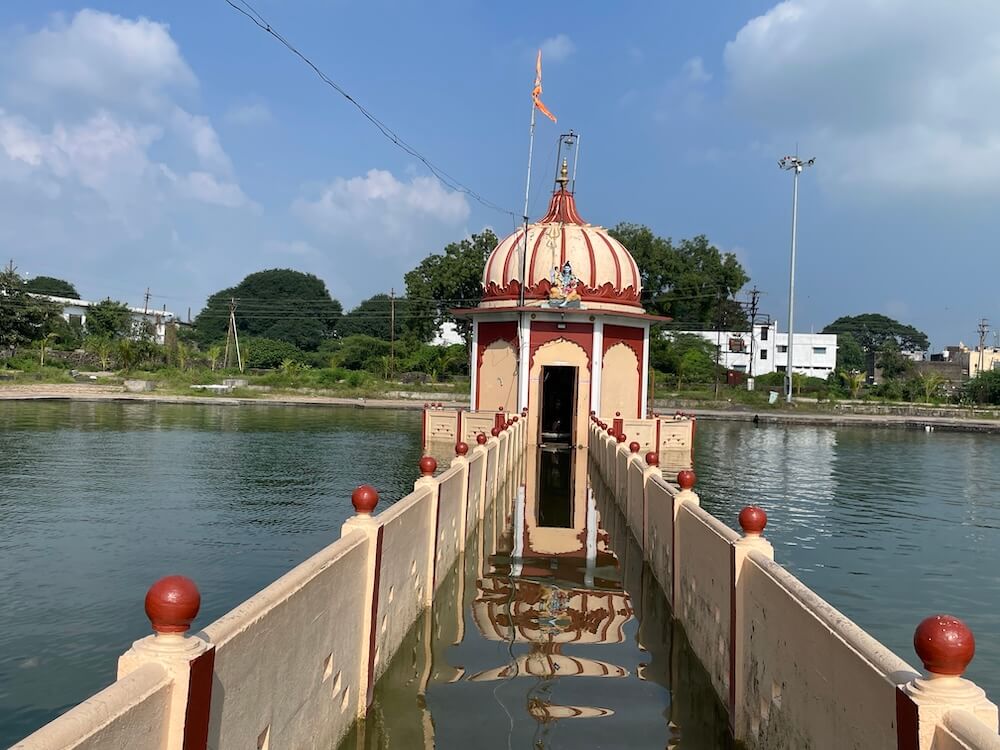
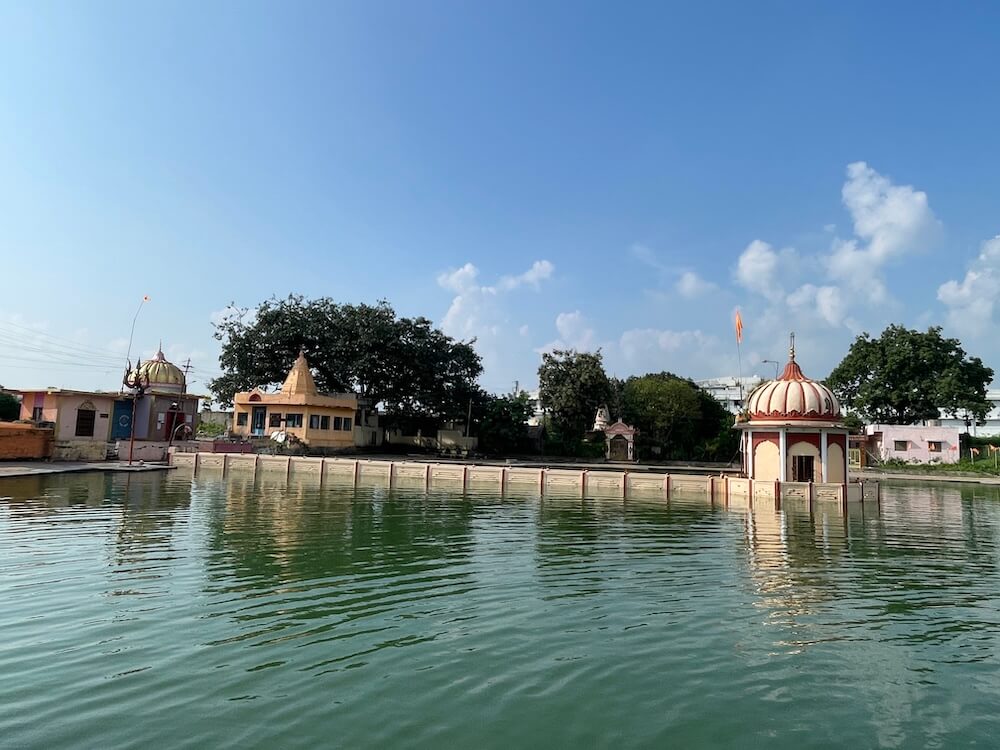
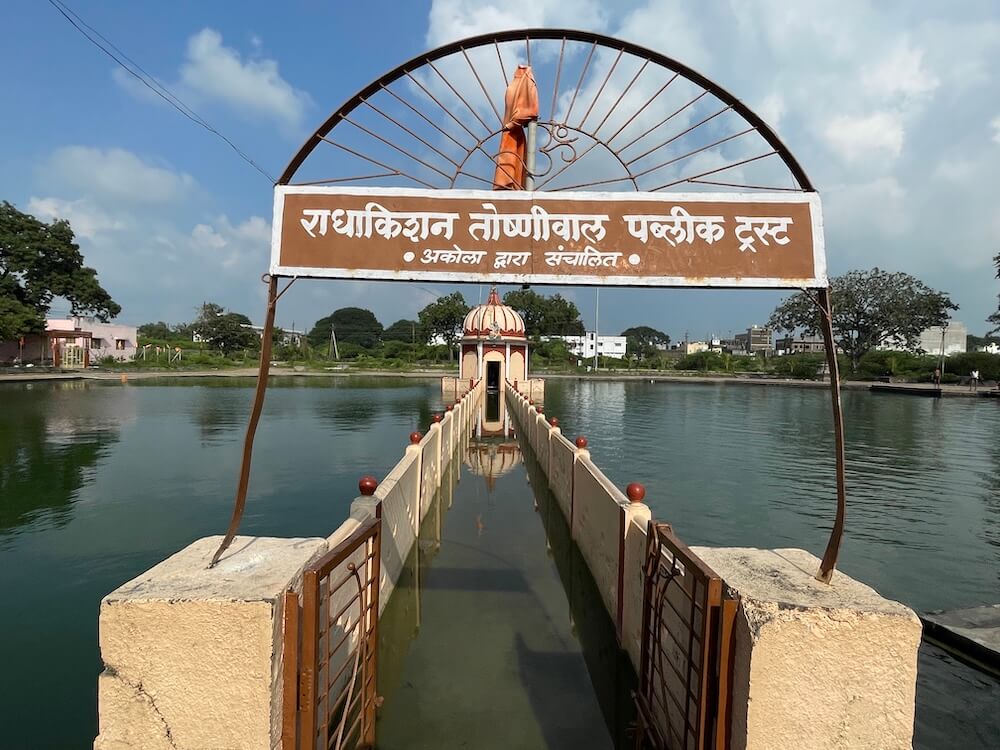
Padmatirtha is a sacred lake located in the southern part of old Washim city. According to the Vatsagulma Mahatmya, this lake was once in a dense forest, but now it is surrounded by human settlements. During the monsoon, the lake fills to the brim. In the middle of the lake is the temple of Padmeshwar Mahadev. A bridge with a cement railing, resembling a jetty, has been built to reach this temple. Near the entrance of this bridge, a large metal trident is erected on one side.
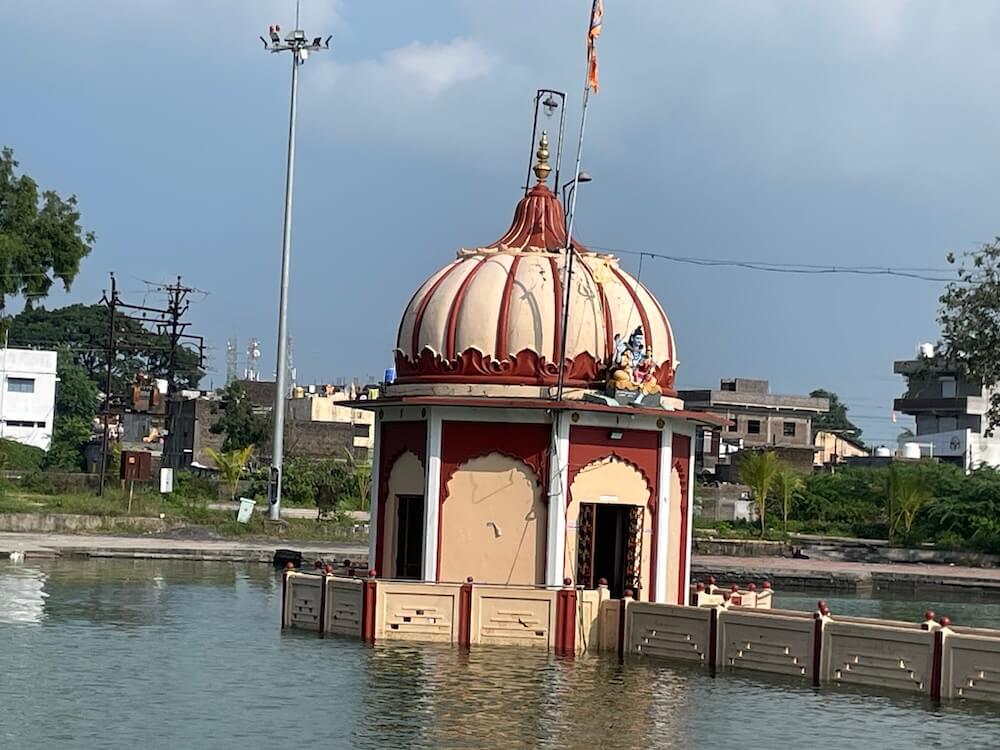
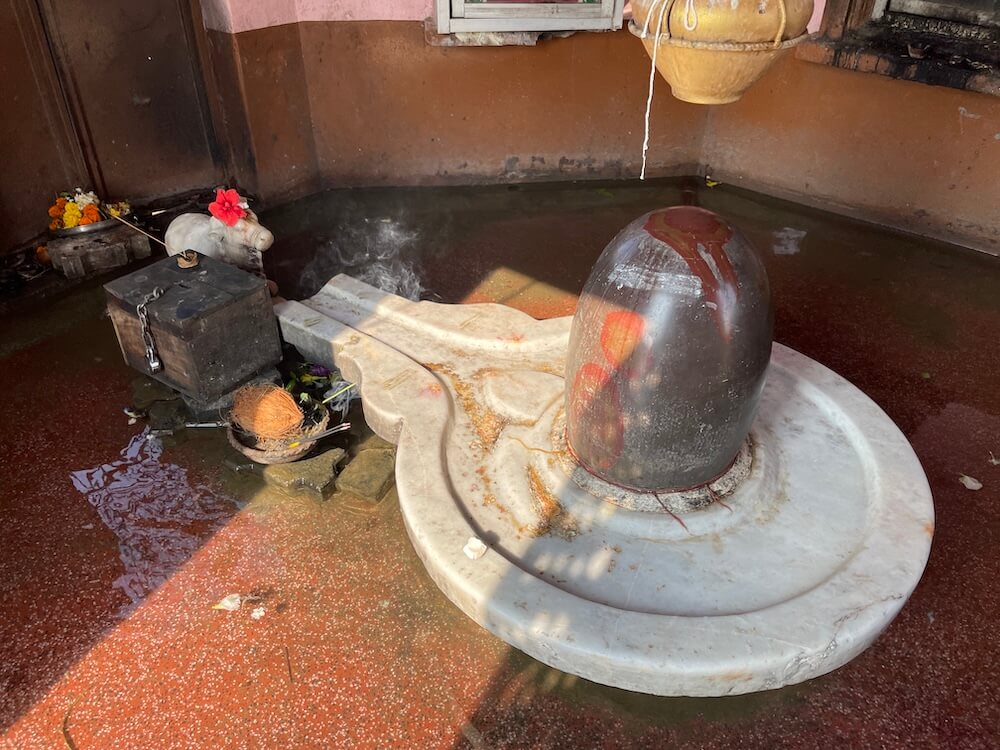
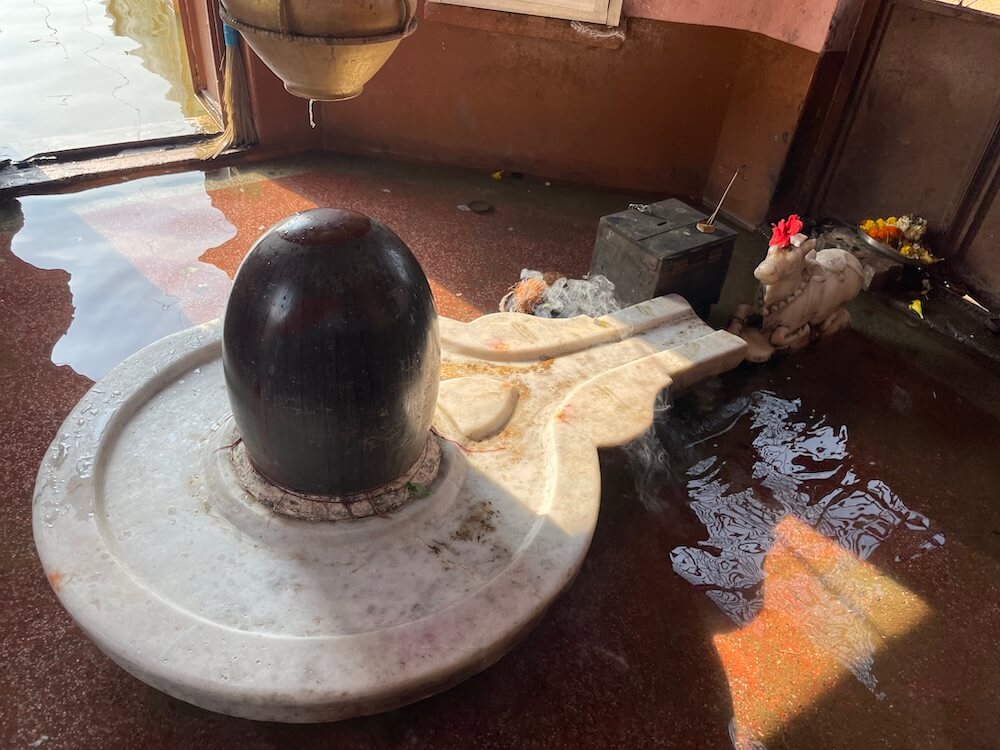
A small octagonal temple of Padmeshwar is situated in the middle of the lake. An octagonal circumambulation path has been created in this temple. Above the entrance of the temple, on the ceiling, an idol of Shiva is seated. This idol depicts him with Parvati on his lap and his son Ganesha. The temple has a dome-shaped spire. On top of it is a cone-shaped Amalaka and a Kalasha. Inside the temple, on the floor, is the Pindi of Padmeshwar. The Shalunka of this Pindi is crafted from marble. On top of it is a smooth, black stone Linga. In front of the Shiva Pindi is a small marble idol of Nandi. There is a large Panchadhatu vessel for Abhisheka over the Pindi. In the niches of the inner walls, beautiful idols of Goddess Annapurna, Ganesha, and Dattatreya are seated. Beside Padmatirtha, in the area facing the bridge coming from the main temple, is the Siddhivinayak Bhalchandra Ganpati temple. It houses an uncarved stone idol of Ganesha. Beside this temple are temples of the Serpent Deity and Mahadeva. In this pilgrimage area, there are Samadhi shrines of sage-like saints such as Narayan Maharaj, Jhingre Maharaj, and Ranade Baba.
A grand festival is celebrated at Padmatirtha on the day of Kartiki Prabodhini Ekadashi. At that time, the Padmatirtha area is decorated with electric lighting. On this day, many devotees take the opportunity to bathe at this pilgrimage site. Apart from this, a multitude of devotees gathers here every Monday and on Shivratri.
This sacred temple stands as a testament to deep spiritual devotion, ancient architectural grandeur, and rich local cultural traditions.
The sanctum sanctorum houses the divine idol consecrated according to ancient Vedic traditions, surrounded by serene courtyards and traditional temple architecture.
Navratri, Maha Shivratri, Annual Temple Jatra & Deepotsav
Compare and book flights, secure top-rated local hotels near the temple, hire reliable guides, and rent cars instantly.
Extend your pilgrimage by visiting other highly sacred temples located nearby.


Add ₹999 more to unlock FREE SHIPPING!
Your sacred cart is currently empty.
Shop Photo FramesFill in your delivery details below to place your order.
Add comment