
Add ₹999 more to unlock FREE SHIPPING!
Your sacred cart is currently empty.
Shop Photo FramesAdi Shakti Mahamaya has many forms. A Puranic tale recounts that Bhagwan Shivshankar created a host of एकशे नव्वद Matrikas. Among these, the group of Saptamatrikas or Ashtamatrikas is widely revered. Chamunda is the name of one of these divine Matrikas. This fierce form of the Devi, considered a symbol of power and valour, is revered as the Gramdevata (village deity) of Washim. The temple of this Chamunda Devi is situated in the old part of the city. Devotees firmly believe that if one worships this Devi with a pure heart, She fulfills all their desires. Thus, many people offer vows to the Devi here.
In Volume २ of ‘Devikosha’ by Pra. Kri. Prabhudesai, the story of the origin of the Saptamatrikas – Brahmi, Maheshwari, Kaumari, Vaishnavi, Varahi, Indrani, and Chamunda – is narrated. It states that even after Bhagwan Narasimha slew Hiranyakashipu, his demonic lineage continued. In this lineage, the demon Andhakasura was born. He established his rule on earth, causing great distress to the Devas. Thereupon, Shankara waged war against Andhakasura. In that battle, Shankara wounded Andhakasura with His arrow. He then plunged His Trishula into the demon’s stomach. However, from every drop of blood that fell from Andhakasura’s wound, a new demon was born. To consume this blood, Shankara, through His own divine effulgence, created the Matrigan (host of Matrikas).
Chamunda Devi is one of them. In the sacred text ‘Vishnudharmottara’, Chamunda is described in these words: This Devi is seated on a corpse. She has a fierce form. Her fangs protrude outwards. Her body is emaciated. Her eyes are sunken, and Her belly is perpetually empty. She has दहा arms. In them, She holds a mace, armour, arrow, ankus (elephant goad), sword, shield, noose, bow, staff, and axe. This Devi is also known by the names Kali and Charchika. The dark-complexioned Chamunda wears a garland of skulls; in Her hands are a Damaru, Trishula, sword, and a drinking vessel. She rides a tiger. In some places, She is depicted standing on human corpses. In the Shakta tradition, the Devi is considered the supreme truth and is worshipped in various forms.
The story of Chamunda Devi in Washim is connected to the Balaji Mandir here. According to records in the ‘Washim Gazetteer’ published by the state government, around the year १७६० CE, a horseman was casually digging soil with his stick when he saw a part of an idol’s hand. Excavation was then carried out there. Idols of Brahma, Vishnu, Mahadev, Parvati, Ganapati, Naga, and Devi were found. During Aurangzeb’s invasion of the South, these idols were buried here to prevent their desecration, and over time, people forgot about them. These were those very idols. At that time, Bhavani Pant Kalu, a great statesman and Sardar from Khadidhamani in Washim, was the Diwan of Sabaji Bhosale of Nagpur and later of Janoji Bhosale. He built the Balaji Mandir here in १७७९. It is said that the Chamunda Devi Mandir might also have been built around the same time. Balaji and Chamunda are considered brother and sister here.
An ancient legend about Chamunda Devi here recounts that once, Chamunda Devi appeared to a priest in a dream. In it, Chamunda Devi revealed Her location and where She wished to be installed. The priest informed the villagers. Accordingly, people excavated the Devtalav (sacred pond) here. Three idols – Balaji, Chamunda, and Nalsahib – were found. As per Chamunda Devi’s command, She was installed in this temple. The construction of the Devtalav, where the Devi’s idol was found, was being carried out simultaneously with the Balaji Mandir. It was completed in १७७६ CE.
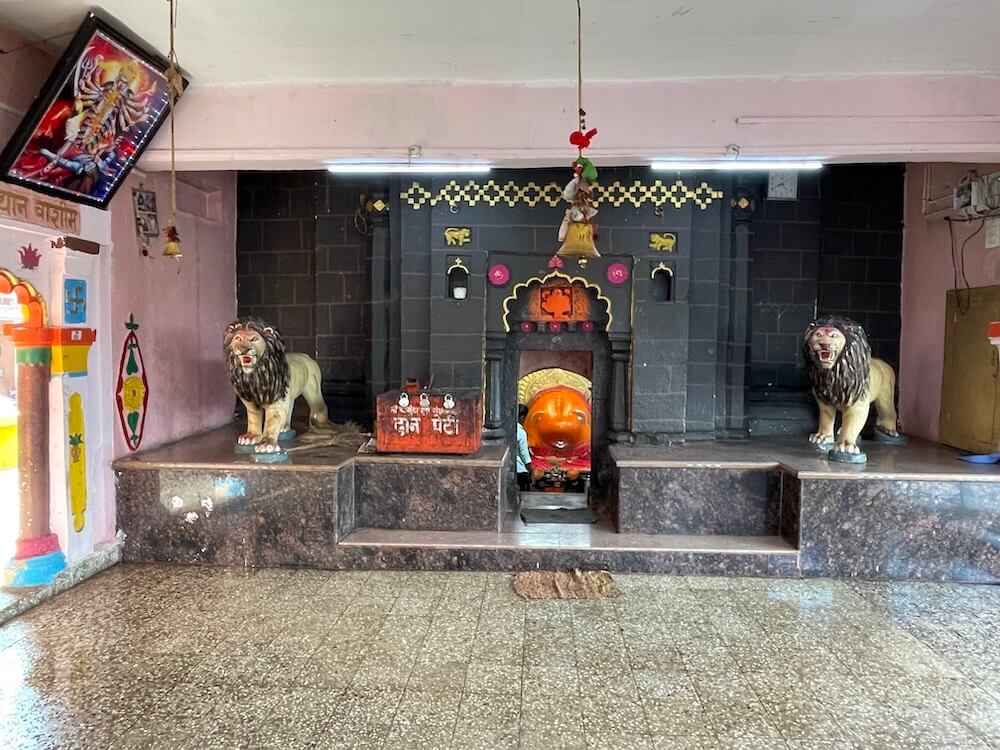
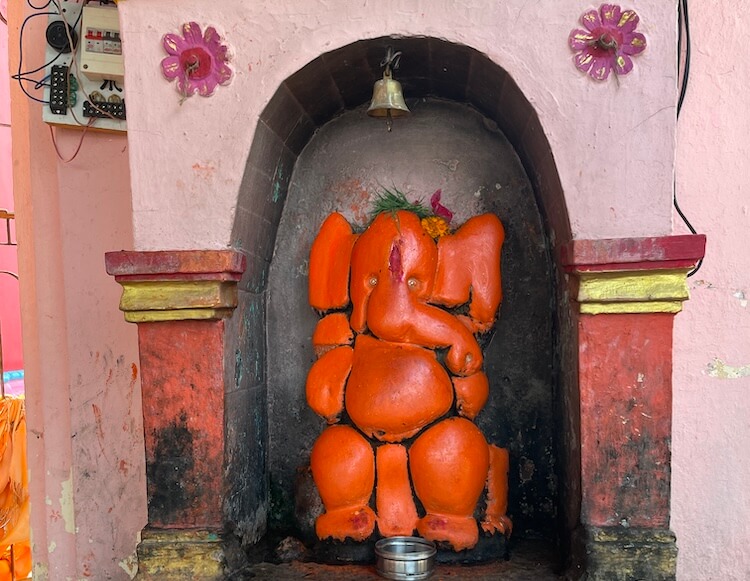
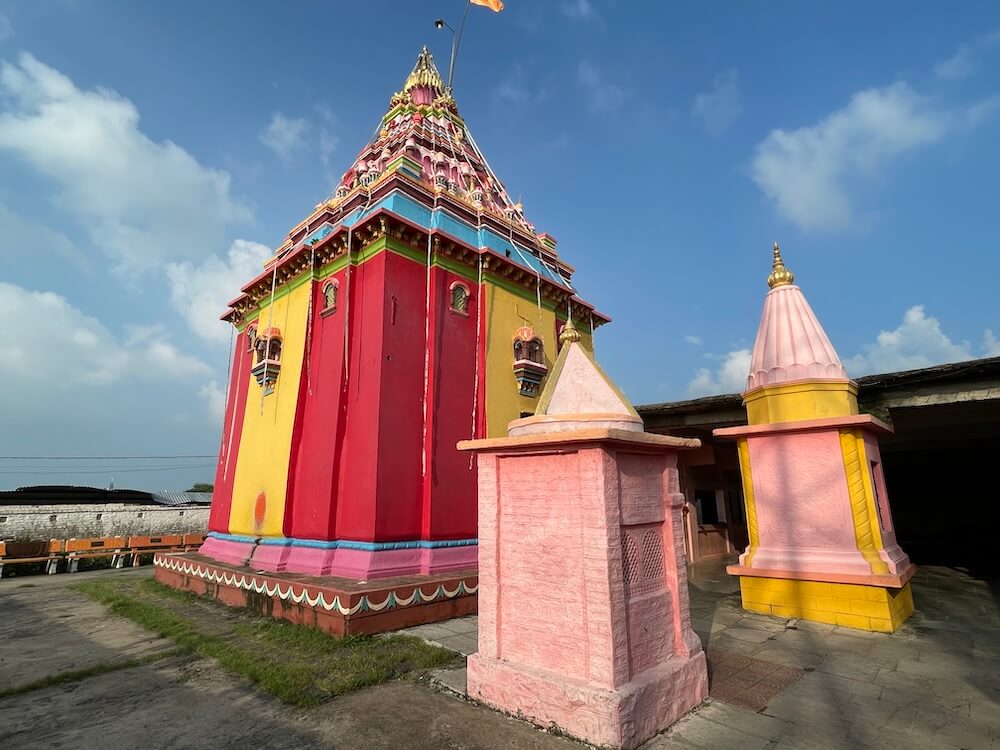
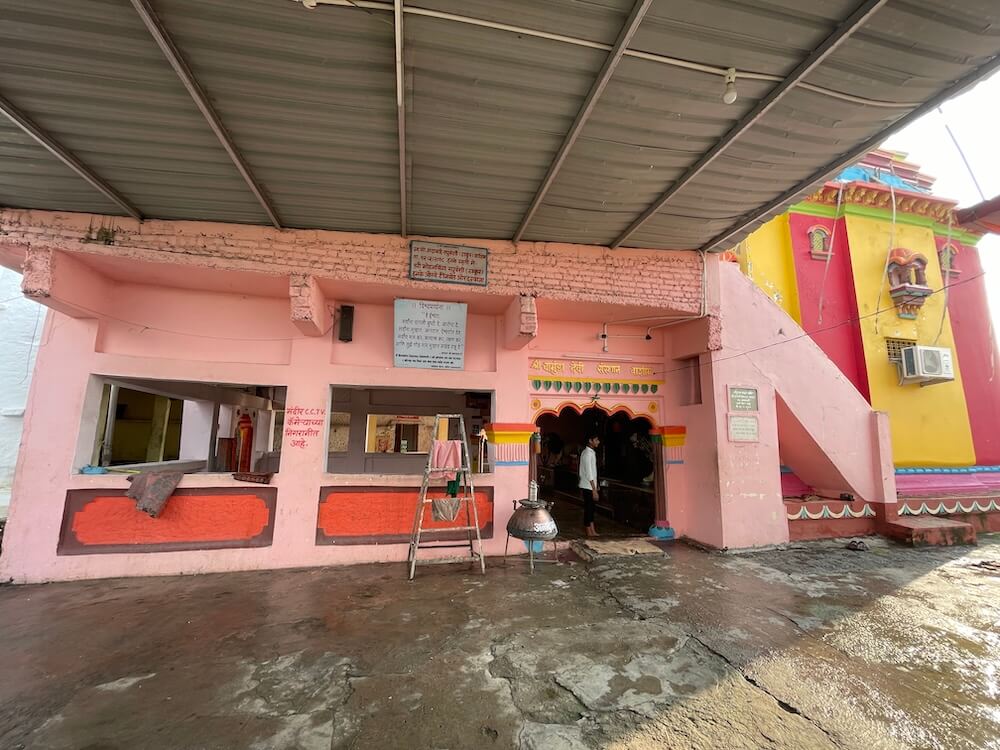
This Devi temple is situated in a courtyard enclosed by boundary walls. The boundary wall has a large arched entrance. Upon entering the temple courtyard from here, one finds a small shrine to the right. A stone idol of Ganapati is enshrined there. Its ancient nature is evident from its form. The main temple structure is directly ahead. Adjacent to it is an ancient Deepastambha (lamp pillar). The temple consists of a Sabhamandap (assembly hall) and a Garbhagriha (sanctum sanctorum). The Sabhamandap is of modern construction, spacious, and semi-open. On both sides of the Garbhagriha entrance, a high platform is built. On it are two lion idols, the vehicle of Durga Devi. The stone Garbhagriha part of this temple is the original ancient temple.
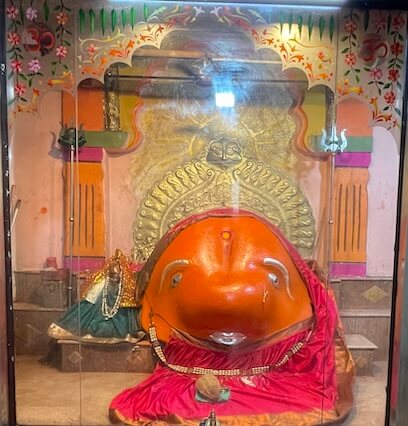
The Garbhagriha has an arched entrance. An image of Ganesha is carved on the upper part of the doorframe, and on the wall above it, two small lion sculptures are carved on either side. The Garbhagriha is situated below ground level. One enters by descending a few steps. Inside, in the front, on a high platform resembling steps, the vermillion-smeared idol of Chamunda Devi, in the form of a large ‘Tandalja’ (stone), is consecrated. The Devi’s eyebrows, eyes, and lips are made of silver. She wears ornaments around Her neck. This Devi’s form resembles that of Renuka Devi of Mahur. Behind the idol, on the wall, is a golden ornate Prabhaval (halo). In front of the idol are the Devi’s Padukas (footprints). Beside this idol, a small, adorned idol of the Devi is also enshrined. The Garbhagriha is topped by a tall Shikhar (spire) in Maratha architectural style, with intricate carvings on all चार sides. Within the temple complex are temples dedicated to Asramata, Hanuman, Dattatreya, Ashtabhuja Devi, Ganesha, and Gajanan Maharaj.
At Chamunda Devi Mandir, Shodashopachara Puja (sixteen-step ritual worship) is performed daily in the morning and evening. Special puja is offered every Tuesday, and a Mahabhisheka (grand anointing) is performed every Purnima (full moon). Navaratri is the biggest and most enthusiastically celebrated festival at this temple. On Ashtami during Navaratri, a saree and blouse are sent as an offering to the Devi from Balaji, who is considered Her brother. Only after this offering arrives does the Ashtami Homavidhi (fire ritual) commence here. Rituals such as Narayan Nagbali and Pitrudosh Shanti (rituals for ancestral appeasement) are also performed at this temple.
This sacred temple stands as a testament to deep spiritual devotion, ancient architectural grandeur, and rich local cultural traditions.
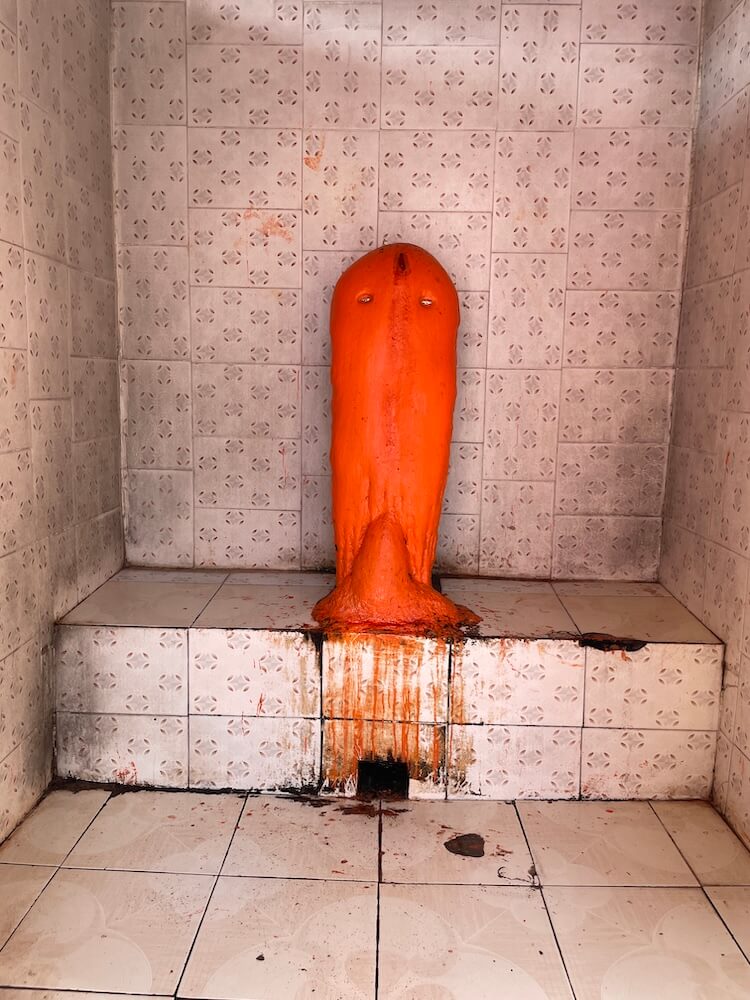
The sanctum sanctorum houses the divine idol consecrated according to ancient Vedic traditions, surrounded by serene courtyards and traditional temple architecture.
Navratri, Maha Shivratri, Annual Temple Jatra & Deepotsav
Compare and book flights, secure top-rated local hotels near the temple, hire reliable guides, and rent cars instantly.
Extend your pilgrimage by visiting other highly sacred temples located nearby.


Add ₹999 more to unlock FREE SHIPPING!
Your sacred cart is currently empty.
Shop Photo FramesFill in your delivery details below to place your order.
Add comment