
Add ₹999 more to unlock FREE SHIPPING!
Your sacred cart is currently empty.
Shop Photo FramesShantadurga is a popular deity in Goa. Although the name of the Goddess contains the name of Goddess Durga, the deity is enshrined here in a gentle (Saumya) form. Considered a form of Goddess Sateri, who is worshipped in Goa as well as the Konkan region, this Goddess is believed to be the mediator between the Shaiva and Vaishnava sects, having put an end to the conflict between Lord Shiva and Lord Vishnu. It is believed that this Goddess is a replica of the Goddess at Cuncolim. The Gade festival held here in the month of Chaitra is famous, and thousands of devotees participate in it.
Sateri or Santeri, worshipped in the Konkan region in the form of an anthill (Varul) and considered one of the Saptamatrikas, is the same as Shantadurga of Gomantak. In the Sahyadri Khanda of the Skanda Purana, there is a chapter titled ‘Shantadurga Pradurbhav’ in the Nagavya Mahatmya. The story goes that in ancient times, a sage named Shantamuni lived in Nagavyapur, which is the present-day village of Nagve. He pleased the Goddess with his penance. When the Goddess appeared before him, he urged her to reside in this soil of Goa for eternity. Saying “Tathastu” (so be it), the Goddess fulfilled his wish. She disappeared into an anthill there. That is Goddess Santeri. An anthill is considered a symbol of Goddess Sateri. In the Shakta tradition, the worship of an anthill holds a significant place.
According to the Sthala Mahatmya, a cruel demon named Kalantaka lived in the Cuncolim area in ancient times. To get relief from his atrocities, the devotees prayed to the Goddess. Hearing their plea, the Goddess appeared there and slew Kalantaka. Following the insistence of the devotees, the Goddess stayed there. It is said that during the Portuguese era, the Goddess was relocated from Cuncolim to Balli. The history of this is told as follows: in the year 1510, the Portuguese invaded Goa. Following this, their religious fanaticism made life difficult for the Hindus of Goa. In the year 1560, the Inquisition was established in the Goa islands. Through this institution, the brutal persecution of Hindus began. They were forced to convert. They were strictly forbidden from worshipping Hindu deities. Their temples were demolished and burnt down. The Portuguese also cast their evil eye on the Shantadurga temple in Cuncolim, Salcete taluka. Upon receiving news that their temple would be attacked, the villagers moved the idol of the Goddess overnight across the Zuari River to Balli in the Adilshahi kingdom, and subsequently to Fatorpa. Over time, a grand temple was built here.
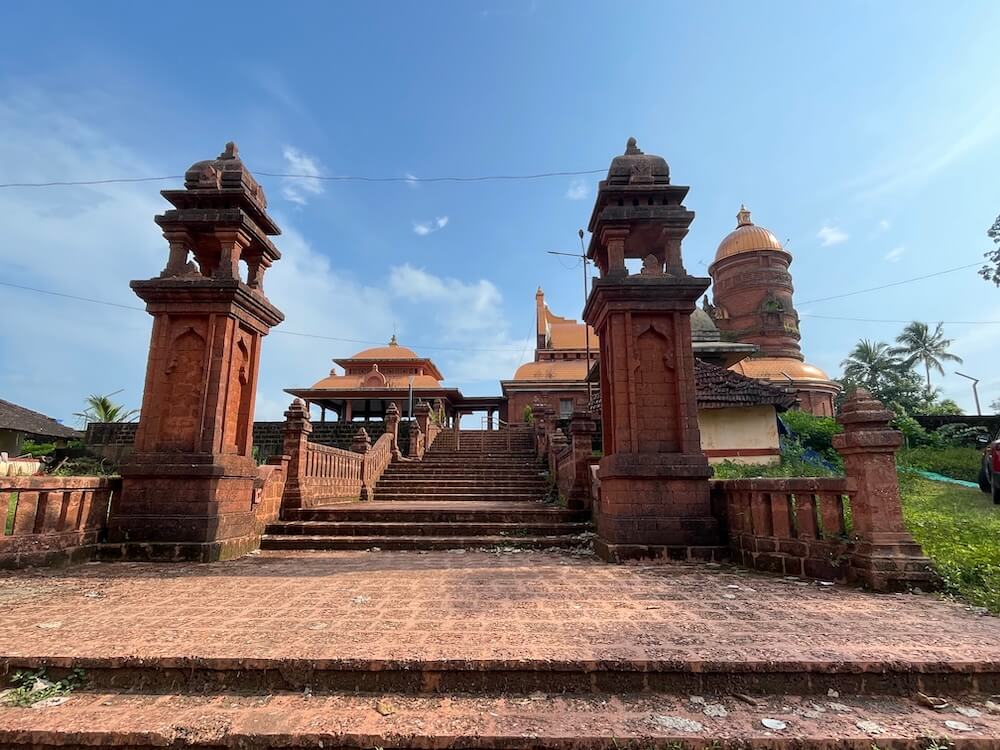
This temple is located two kilometers away from the famous Shantadurga Cuncolikarini temple in Fatorpa. Affiliated with the Gokarna Partagali Jivottam Math, this temple is situated in a spacious courtyard. There are about 25 steps from the road to reach the temple premises, which are adjacent to the Balli-Fatorpa road. The entire temple, including the stairway, is constructed of red stone (laterite). There are towers on both sides of the stairway. The spacious courtyard is paved with paver blocks. A beautiful garden with many flowering plants has been developed around the temple.
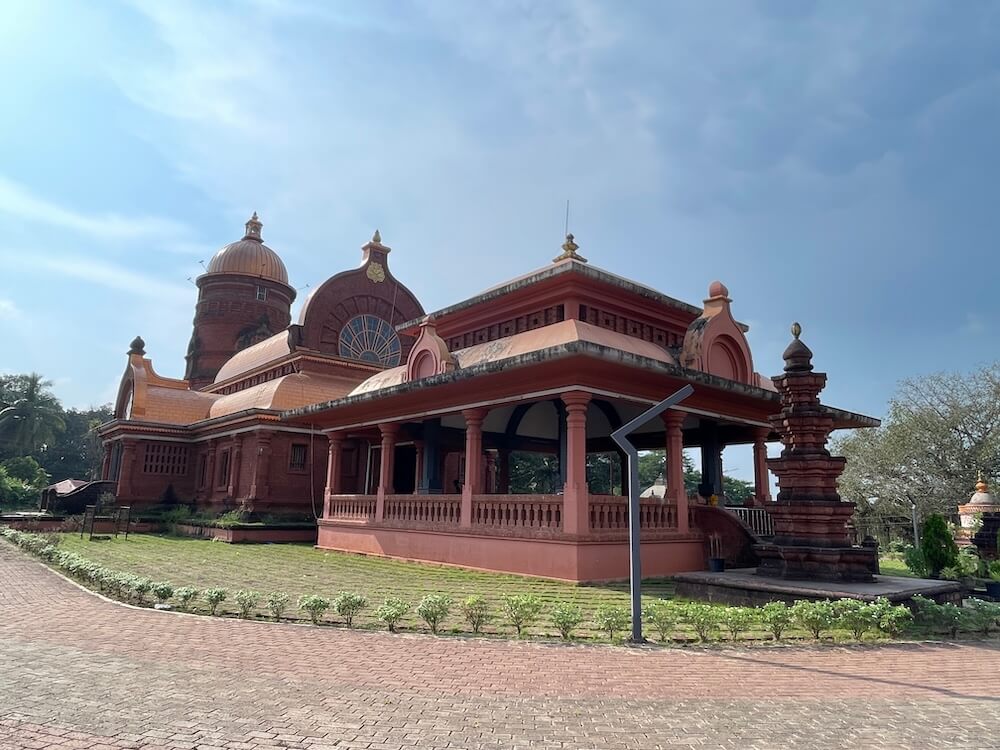
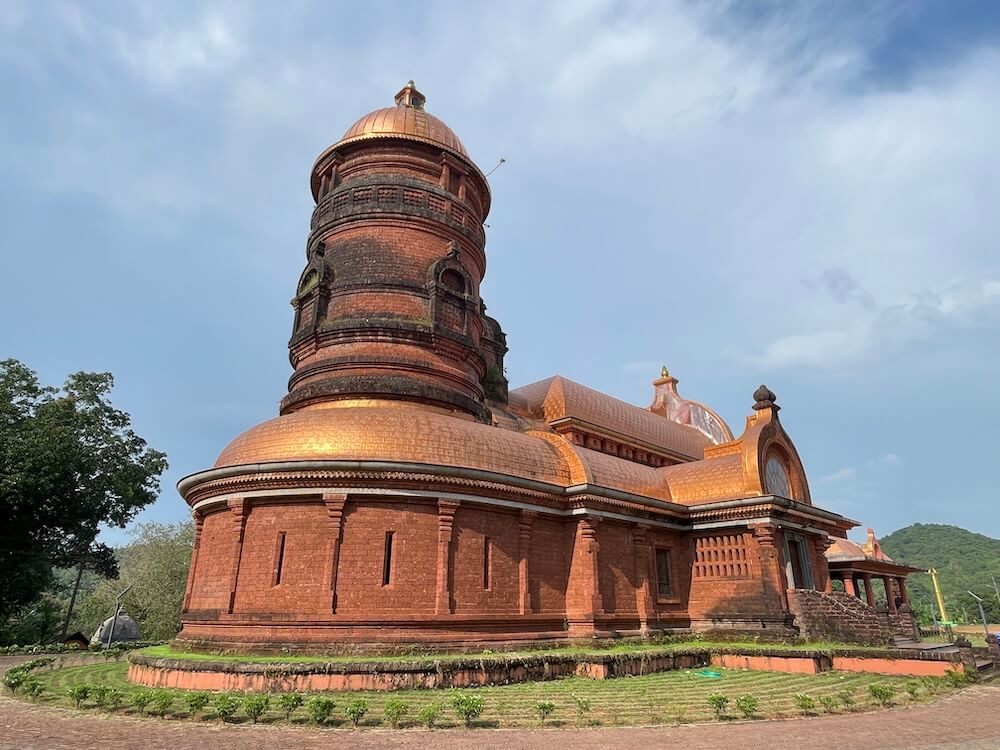
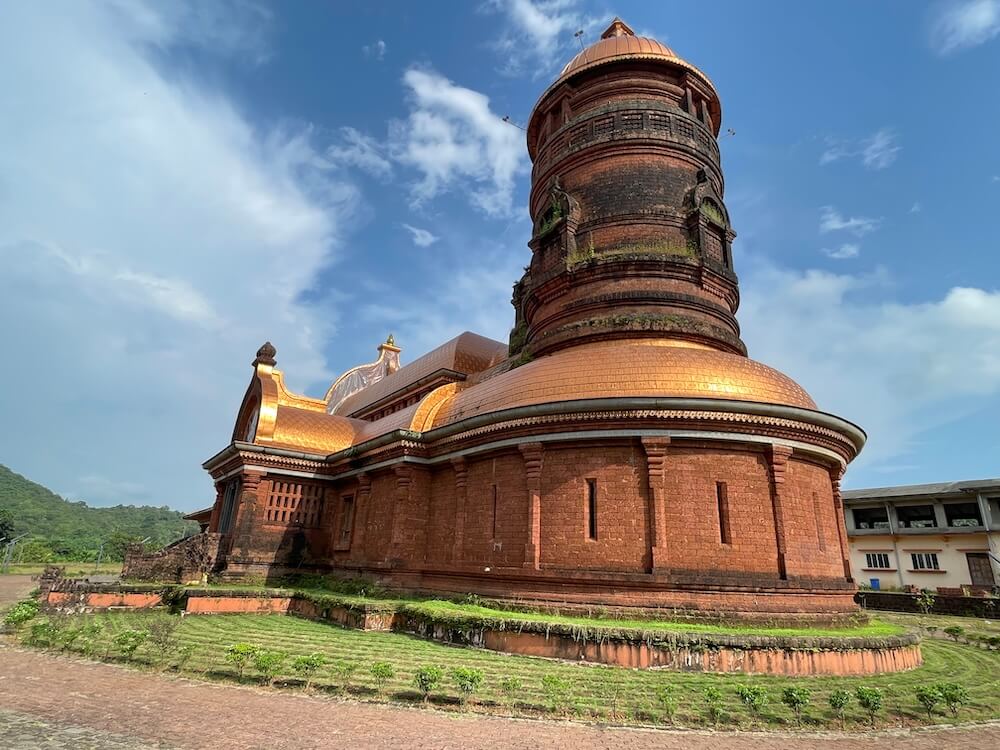
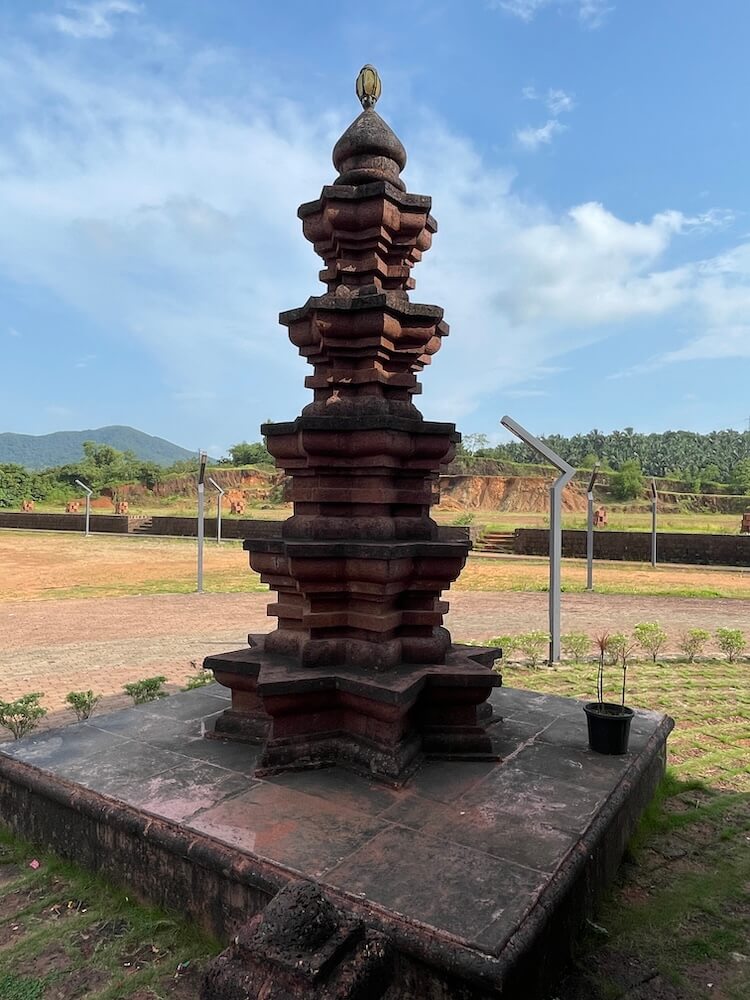
In front of the temple entrance, on a large platform, stands a unique octagonal lamp pillar (Deepmal). This is different from the Gomantak style and relates to the lamp pillars erected outside temples in Maharashtra. The architecture of this temple is in the traditional Gomantak style. The temple structure consists of an open Sabha Mandap with a double roof, a Gudha Mandap with an elephant-back (Gajaprishtha) roof, and a Garbhagriha (sanctum sanctorum). The Garbhagriha has a dome and a spire in the Gomantak style. The structure comprises a semi-open Sabha Mandap, an Antarala, and a Garbhagriha.
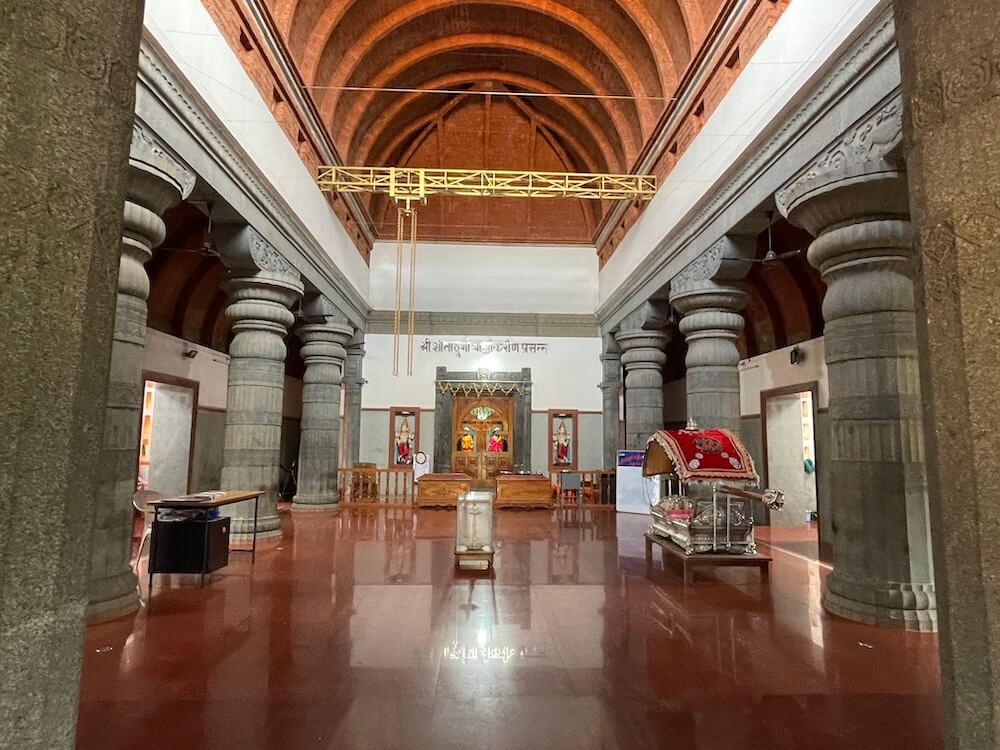
One enters the semi-open Sabha Mandap of this temple, which stands on a high plinth, by climbing six steps from the courtyard. The Antarala features a semi-circular ceiling and stone-style pillars. The Garbhagriha is designed behind the Antarala, leaving space for a circumambulation path (Pradakshina Marg). The door frames of the Garbhagriha are carved with floral motifs, and there are door guardians (Dwarapalas) carved at the bottom. Additionally, there are Dwarapala idols in the niches on the front wall of the Garbhagriha. There is an idol of Lord Ganesha on the lintel of the entrance. There are two idols of the Goddess on a Vajrapitha in the Garbhagriha. Both these idols, carved in black stone, are installed in separate wooden shrines (Makhar).
In the spacious courtyard in front of the main entrance of the temple, a metal pillar stands in the center. It is used for the famous Gade festival here. In many villages in Maharashtra, there is a tradition of rotating a ‘Bagad’ or ‘Gadi-Bagad’ during temple festivals. Similarly, the ‘Shidi Utsav’ or ‘Gade Utsav’ is celebrated in this temple in Balli during the month of Chaitra. This is the main annual festival here. Preparations for this festival begin from the fifth day (Panchami) of the bright fortnight of Chaitra. In this, devotees hang themselves from a horizontal wooden beam attached to the tall metal pillar. Then, the horizontal beam is rotated. This arduous ritual is performed as the fulfillment of a vow made to the Goddess. The devotee who hangs in this manner is called ‘Gado’. This Gado observes a strict fast during the festival period. During that time, he consumes only fruits and water. The jaggery-rice sweet prepared on this occasion is also called ‘Gade’. A large number of devotees come here to witness this ritual.
Navaratri is also celebrated with great enthusiasm in the temple. Lalita Panchami is celebrated on Magh Shukla Panchami. On Kartik Shuddha Dwadashi, the Tulsi Vivah ceremony and Vanabhojan (picnic) take place here.
This sacred temple stands as a testament to deep spiritual devotion, ancient architectural grandeur, and rich local cultural traditions.
The sanctum sanctorum houses the divine idol consecrated according to ancient Vedic traditions, surrounded by serene courtyards and traditional temple architecture.
Navratri, Maha Shivratri, Annual Temple Jatra & Deepotsav
Compare and book flights, secure top-rated local hotels near the temple, hire reliable guides, and rent cars instantly.
Extend your pilgrimage by visiting other highly sacred temples located nearby.

Add ₹999 more to unlock FREE SHIPPING!
Your sacred cart is currently empty.
Shop Photo FramesFill in your delivery details below to place your order.
Add comment