
Add ₹999 more to unlock FREE SHIPPING!
Your sacred cart is currently empty.
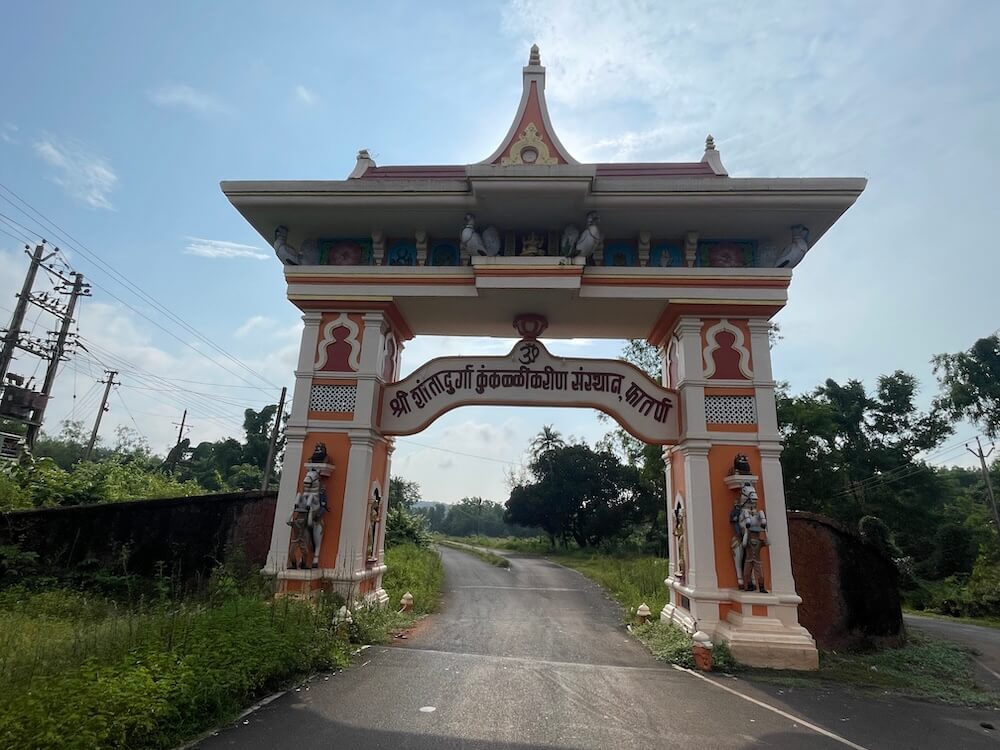
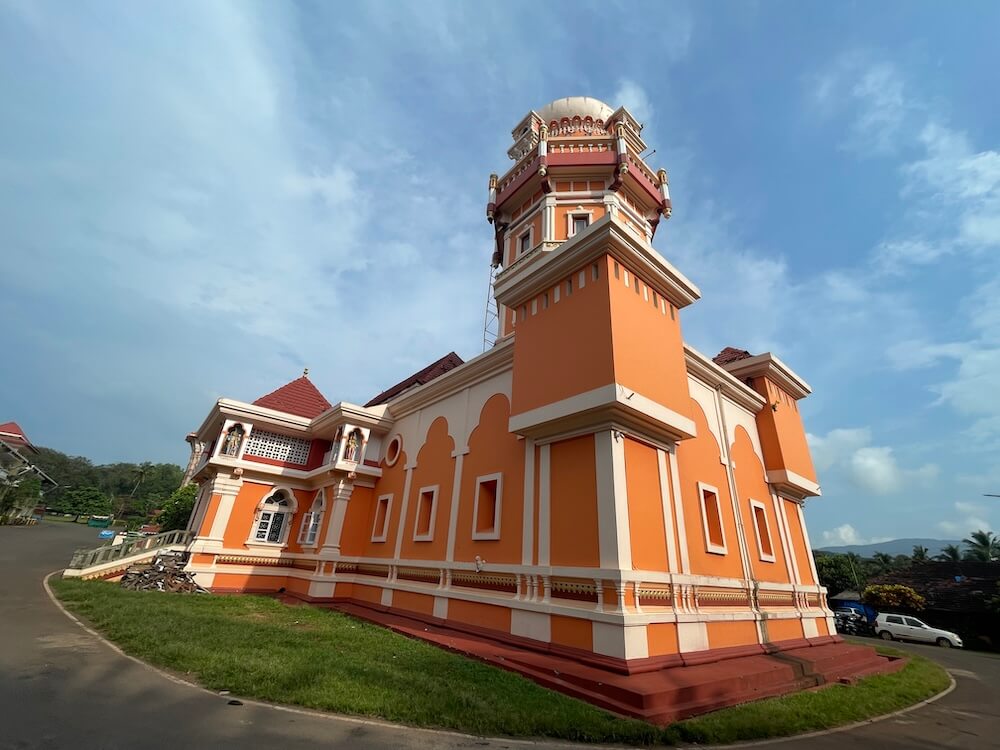
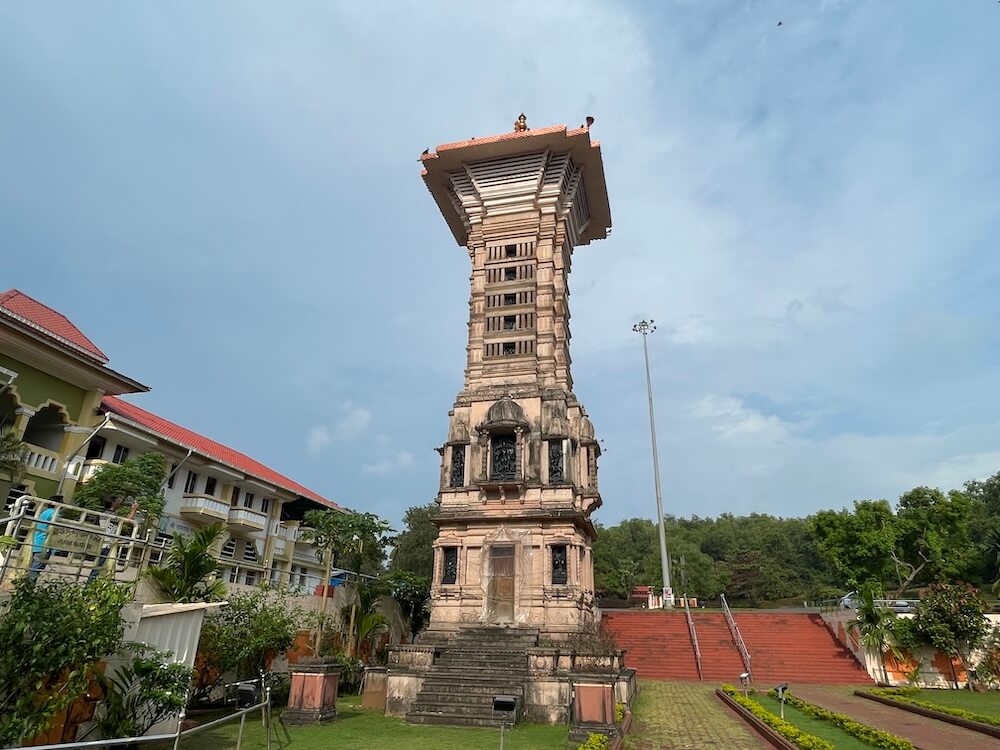
Shop Photo FramesGoddess Shantadurga is the center of faith for all Goans. There are many temples dedicated to her across Goa. Shantadurga in each of these temples is identified by the name of her original village. That is why the Shantadurga whose temple is in Fatorpa is known as Kunkallikarin. In the sixteenth century, to avoid the threat of Portuguese invaders, the idol of this Goddess was shifted from Kunkalli to Fatorpa. A tall ‘Deepmanora’ (lamp tower), which is a hallmark of Goan architectural style, is a unique feature of this temple. Another specialty of this place is that, just like Hindus, Christian devotees also come here to fulfill their vows.
The story of how Goddess Shantadurga came to Gomantak is that after Parashurama settled Gomantak, he performed a Yajna for his victory. For its successful completion, he brought learned Saraswat Brahmins from Trihotrapura (the region north of the Ganges in the present-day state of Bihar), such as Bharadwaj, Kaushik, Vatsa, Kaundinya, Kashyap, Vashistha, Jamadagni, Vishwamitra, Gautam, and Atri, to Gomantak. There were ६६ clans of these Brahmin sages who arrived here. They also brought their family deities (Kuldevatas) with them, namely Mangeshi, Mahalaxmi, Mahadev, Shantadurga, Nagesh, Saptakoteshwar, and Mahalasa. This deity was first established in Keloshi in Gomantak. This Goddess is considered a form of Goddess Sateri. Sateri, worshipped in the form of an anthill in Goa, is considered one of the Saptamatrukas.
The original history of the Shantadurga temple at Fatorpa is linked to the village of Kunkalli. There had been a temple of the Goddess in Kulwada, Kunkalli, since ancient times. There were १२ Wangods (clans) of Gaonkars, the influential landlords of the village. They held collective ownership of the village lands. They paid taxes to the respective rulers. These Gaonkars also managed the main temples of the village. In those days, these temples were the primary centers of the village. The traditional fairs and festivals held there were a source of the village’s economy. As Portuguese Christian missionaries were attacking these temples and Hindu religious traditions, great resentment arose in the village. Consequently, the villagers came together and decided not to pay taxes to the Portuguese government. They also rebuilt the temples that had been demolished during the Bahmani era. The seeds of this rebellion were sown in the Sasashti region, with Kunkalli as its focal point. In such a situation, on June १५, १५४३, some Jesuit missionaries arrived in Kunkalli with their followers. Their intention was to erect a cross and designate a site for a church. Upon learning this, the enraged villagers armed themselves and marched against them. They killed five Jesuit priests, one Portuguese citizen, and १४ converted Christians. After receiving this news, the Portuguese army attacked the village, causing massive arson and killing many. The Portuguese military officer, Gomez Eanes de Figueiredo, captured the sixteen main leaders of this rebellion and sentenced them to death on charges of treason. However, one of them managed to deceive the Portuguese and escaped to the Karwar region. In memory of these sixteen heroes who sacrificed their lives for the village, sixteen lamps are lit even today on the first day of the Goddess’s annual festival (Jatrotsav).
This event has been recorded in history as the Kunkalli Rebellion. After this rebellion, the Portuguese committed unspeakable atrocities on the village and converted many people. During this period, some people moved the idol of the Goddess to a safe place in Fatorpa. The legend regarding this is that the Goddess appeared to her devotees in a dream and ordered them to build her temple in the hilly and peaceful area of Fatorpa. Accordingly, while the idol was being taken to Fatorpa, it suddenly became very heavy. At this time, Christian devotees of the Goddess who were present there showed the way to move the idol. The idol was moved into the hills of Fatorpa in the darkness of the night. The temple of the Goddess was built here within a few months after the rebellion of June १५४३.
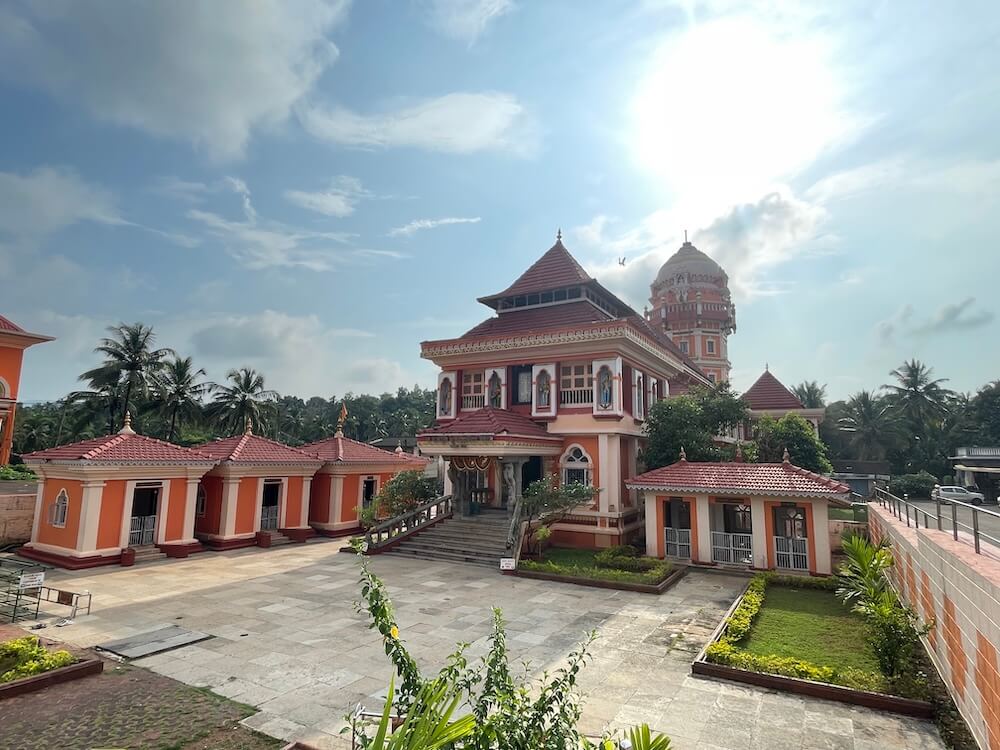
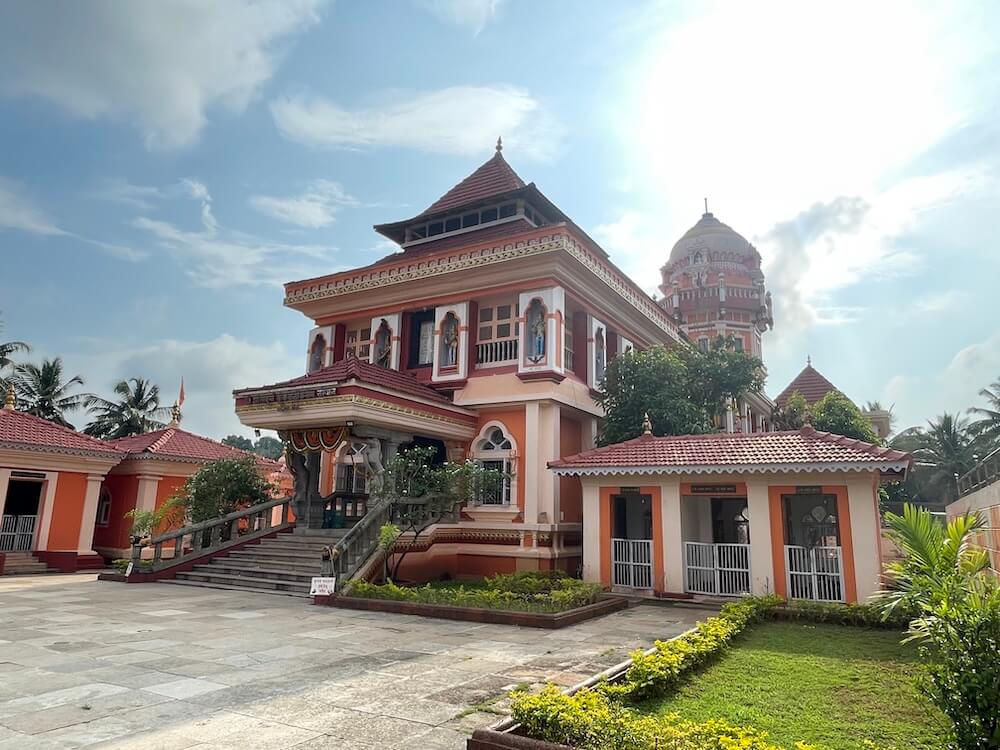
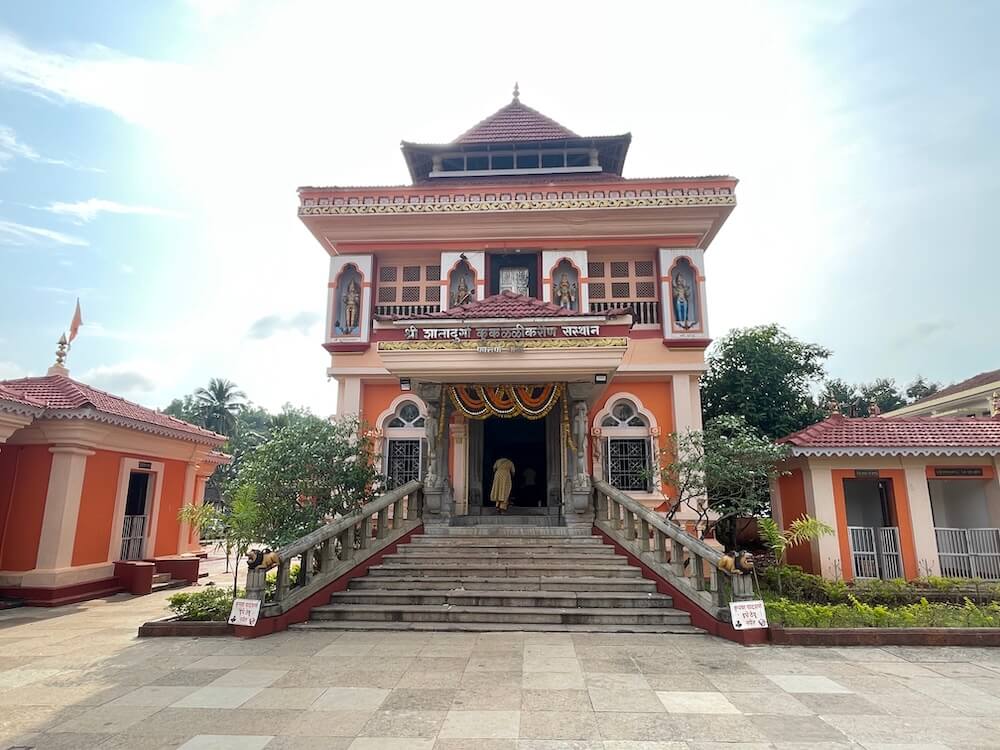
Later, during the reign of Chhatrapati Shahu Maharaj, the son of Chhatrapati Sambhaji Maharaj, the Marathas once again established their influence over the Portuguese. During this period, in the year १७३८, the temple was renovated. The current temple was built in १९८४. The structure of the temple is in the traditional Goan style. One can enter the temple through the main door as well as through doors on both sides of the Sabhamandapa (assembly hall). The temple structure consists of a Mukhamandapa (entrance porch), Sabhamandapa, Antarala (vestibule), and Garbhagriha (sanctum sanctorum). On the exterior of the Sabhamandapa, there are many sculptures in niches and alcoves. Among them, along with the idol of Shiva performing Anandatandava, there is also Ardhanarinateshwara. Along with other deities, there are also idols of the Navagrahas. In front of the temple stands a tall ‘Deepmanora’, which is a hallmark of Goan architectural style. The construction of this structure, which expands as it goes upwards, is remarkable. It also features many sculptures of gods and goddesses.
To enter this three-story temple situated on a high plinth, one has to climb about ten steps. After the Mukhamandapa is the main spacious Sabhamandapa. From this Sabhamandapa, there are two staircases, one on the left and one on the right, to go to the upper floor. On the walls of this balcony-adorned Sabhamandapa, there are many idols of gods and goddesses in niche-like structures at the top. The roof of the Sabhamandapa is also conical and high like a spire. On the door of the Antarala, there is a circular shape depicting the १२ zodiac signs. Beside them are relief sculptures of elephants. A silver sheet has been embossed on the door frame. On both sides of the door, there are Dwarapalas (gatekeepers) in niches. The door of the Garbhagriha is also covered with silver sheets. In the Garbhagriha, there is a large idol of the Goddess on a Vajrapitha (thunderbolt pedestal) with a silver arch. To the left of the Goddess is the idol of Khandoba. It is the faith of the devotees that Khanderaya himself brought the Goddess to Kunkalli. The temple has a square-shaped, high-rising tiled roof with a pinnacle (Kalash) on top.
At this temple, a palanquin procession of the Goddess and Mahaprasad are held every Sunday. Devotees offer rice here and consume the soft-cooked rice as Prasad. The annual temple festival is celebrated for five days from Paush Shuddha Panchami to Dashami. It is counted among the major festivals of Goa. During the festival, the processions feature an elephant with a howdah on the first day, a flower chariot on the second day, a victory chariot with horses on the third day, and the main grand chariot on the final day. Thousands of devotees arrive here for this festival. The Chhatrotsav is celebrated here on Rangpanchami in the month of Phalgun. On this occasion, the Goddess visits her original abode in Cuncolim along with twelve umbrellas representing twelve clans. For the stay of devotees, there is a well-equipped Bhaktaniwas facility here. This includes air-conditioned rooms as well as standard rooms.
This sacred temple stands as a testament to deep spiritual devotion, ancient architectural grandeur, and rich local cultural traditions.
The sanctum sanctorum houses the divine idol consecrated according to ancient Vedic traditions, surrounded by serene courtyards and traditional temple architecture.
Navratri, Maha Shivratri, Annual Temple Jatra & Deepotsav
Compare and book flights, secure top-rated local hotels near the temple, hire reliable guides, and rent cars instantly.
Extend your pilgrimage by visiting other highly sacred temples located nearby.


Add ₹999 more to unlock FREE SHIPPING!
Your sacred cart is currently empty.
Shop Photo FramesFill in your delivery details below to place your order.
Add comment