
Add ₹999 more to unlock FREE SHIPPING!
Your sacred cart is currently empty.
Shop Photo FramesThe unique feature of Fatorpa village is that the Goddess Shantadurga resides here under two names. In one of these temples, the original Shantadurga of Kunkalli, known as Shantadurga Kunkallikar, is established, while at a short distance from this shrine is the temple of Goddess Shantadurga Fatorpekari. She is a popular deity among the devotees of Goa. Goddess Shantadurga is worshipped as the deity who established peace in the universe by ending the great war between Lord Vishnu and Lord Mahadeva. The Goddess’s presence here dates back 525 years. It is said that the Goddess here originally hails from Karnataka.
The mythological legend regarding Goddess Shantadurga is that in ancient times, a fierce war took place between Shiva and Vishnu. This war threatened the very existence of the universe. Seeing this, Lord Brahma finally created the Adishakti Jagadamba from his divine radiance. He sent her to earth and asked her to bring about reconciliation between the two gods. Accordingly, the Goddess arrived on the battlefield and, standing between the two warriors, preached to them. According to the Ambika Khanda of the Skanda Purana, the Goddess taught them that Brahma is the same as Hari and Maheshwara. In this way, the Goddess stopped the war and established peace. Hence, she came to be known as Shantadurga.
According to the folk traditions of Goa, Shantadurga is a form of Sateri or Santeri, who is worshipped in the form of an anthill and is considered one of the Saptamatrikas. In Hindu religious tradition, an anthill is considered a symbol of Goddess Sateri. Regarding Renuka, the mother of Lord Parashurama who settled the lands of Goa and Konkan, a mythological legend states that Renuka was born from an anthill and also disappeared into one. For this reason, the worship of the anthill holds an important place in the Shakta tradition.
History records that many temples in Goa were demolished by invaders for religious, as well as political and economic reasons. Due to the religious intolerance of the Portuguese who arrived here in the sixteenth century, many Hindus, as well as their deities, had to be moved to safer locations. Prior to this, during the Bahmani Sultanate period, many prosperous temples here were looted and destroyed out of greed for wealth. The founder of the Bahmani Sultanate, Zafar Khan, was originally named Hasan Gangu. He was a servant to a Brahmin. Legend has it that the Brahmin had predicted that Hasan Gangu would become a great man in the future. In gratitude to that Brahmin, Hasan Gangu adopted the name Bahmani. Established in the year 1347, this Bahmani power, within the next ten years, by the year 1358, conquered territories from Mandu in the north to Raichur in the south, and from Bhongir in the east to Dabhol and Goa in the west. Their raids caused great damage to the Saptakoteshwara temple at Narve on Divar Island. It is said that this was the original site of the Goddess Shantadurga, the Kuladevi of the Gaud Saraswat Brahmin (GSB) community. To prevent the desecration of the Goddess’s idol by the Bahmani forces, the idol was moved to a place called Morpirla in the year 1365. Later, around the year 1500, the idol was brought to Fatorpa and a small temple was built. Over time, a large temple was constructed here.
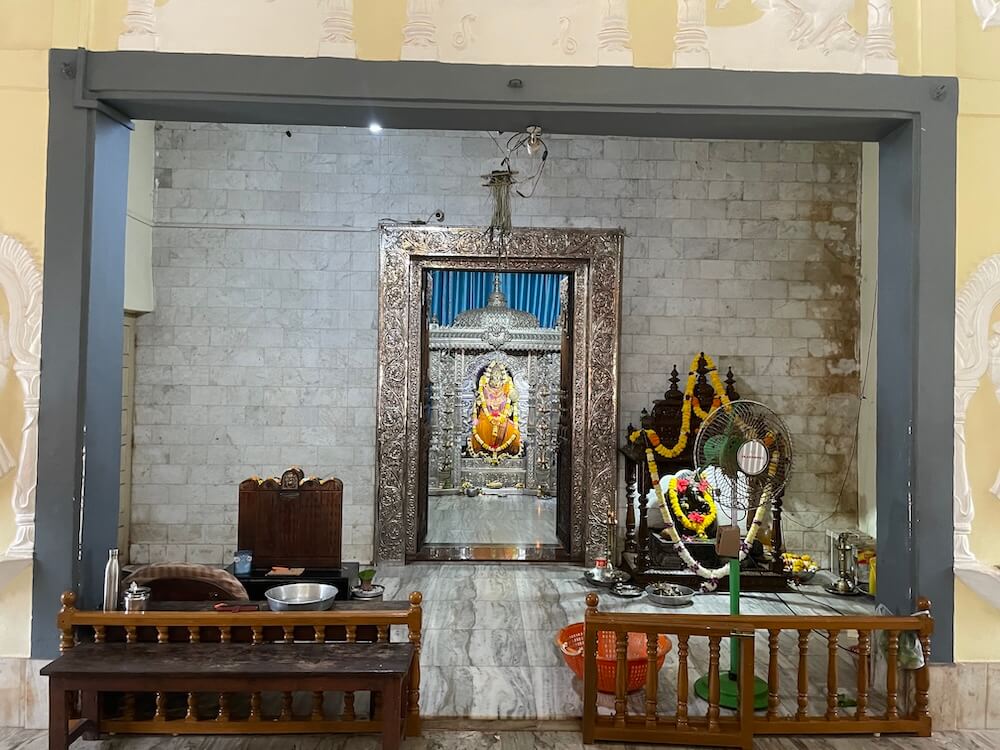
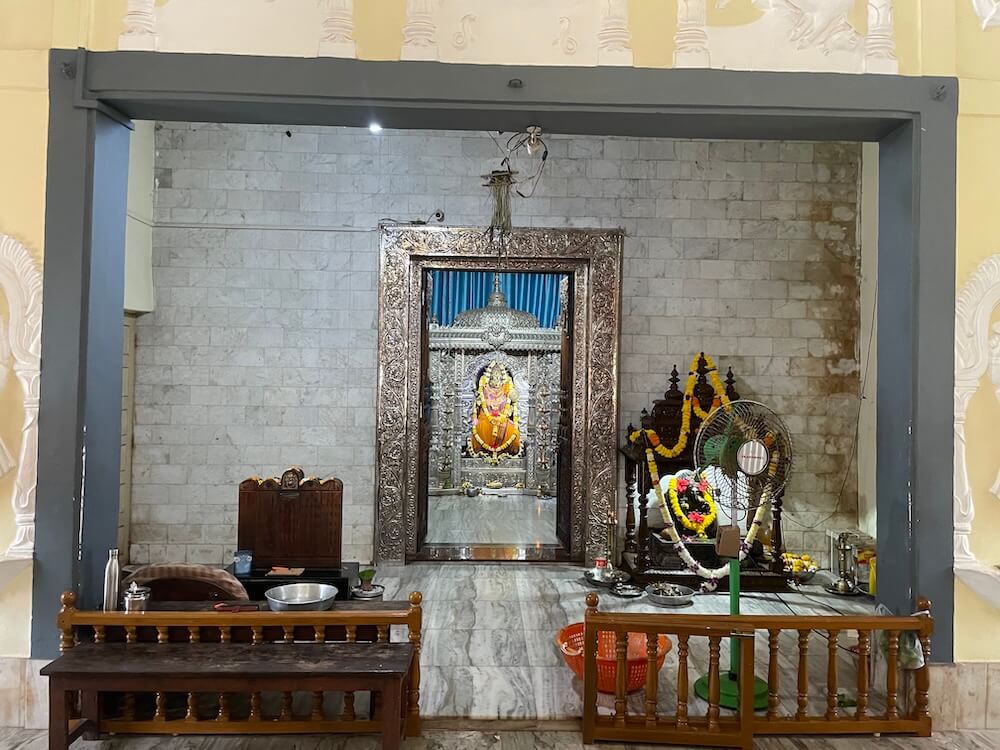
The surroundings of the Fatorpa temple are picturesque. There is a spacious courtyard around the temple, which includes a mandapa and other sub-temples. The structure of this temple consists of a Mukhamandapa, Ardhamandapa, Sabhamandapa, and Garbhagriha. One enters the two-storied Ardhamandapa of the temple by climbing four steps in the Mukhamandapa. There are Vyala sculptures on both sides of the entrance to the Ardhamandapa. There is a staircase to go to the upper floor from the Ardhamandapa. In the niches on the front walls of the Sabhamandapa in the Ardhamandapa, there are statues of Dwarapalas. The ceiling of the Sabhamandapa features statues of various deities and the Dashavatara in niches. The large wooden pillars here are intricately carved. The door of the main Garbhagriha has a silver frame. Inside the Garbhagriha, there is a beautiful four-armed idol of Shantadurga in a silver throne.
Festivals like Navratri, Vasant Panchami, and Lalita Panchami are celebrated with great enthusiasm in this temple. The biggest festival here is the Jatra. The five-day Jatra festival begins on the first day of the bright fortnight of Pausha. On the first day, Mahamangalarchana, Abhisheka, and Aarti are performed. From the second day, the Rathotsava (chariot festival) begins. The Goddess is taken out in a procession in various decorated chariots. On the third day, the Magani tradition is observed. In this, the Goddess is adorned like a bride during a wedding. Rituals similar to those performed during a wedding week are conducted here. On this occasion, performances of drama, music, and folk arts are also presented. Devotees can take darshan of Goddess Shantadurga in this temple every day from seven in the morning until eight at night.
This sacred temple stands as a testament to deep spiritual devotion, ancient architectural grandeur, and rich local cultural traditions.
The sanctum sanctorum houses the divine idol consecrated according to ancient Vedic traditions, surrounded by serene courtyards and traditional temple architecture.
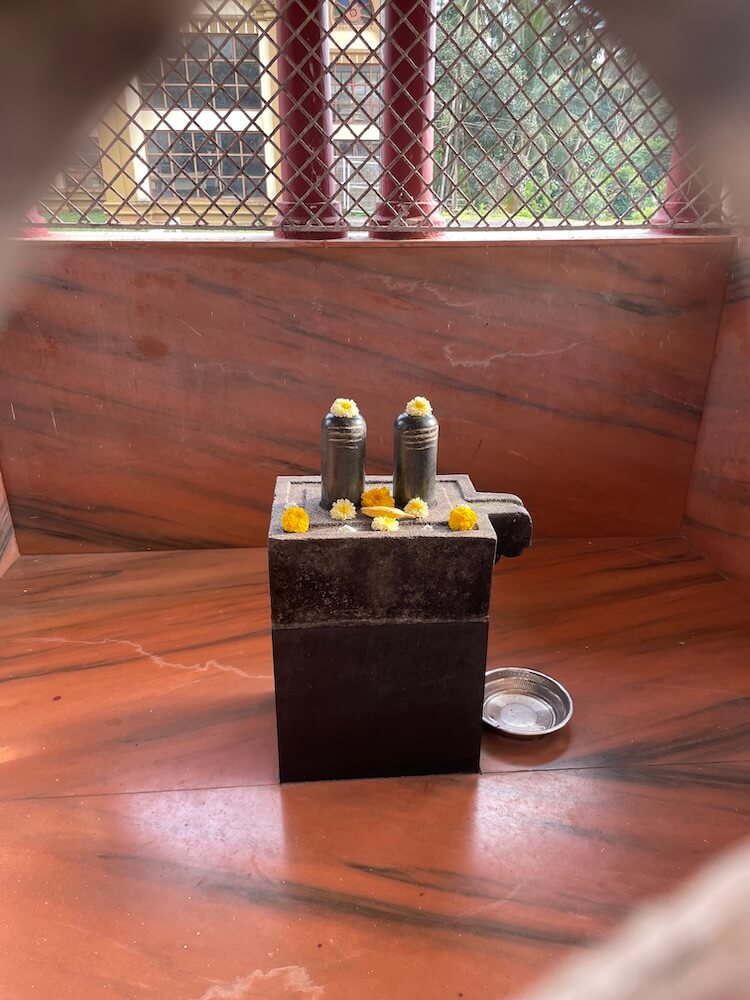
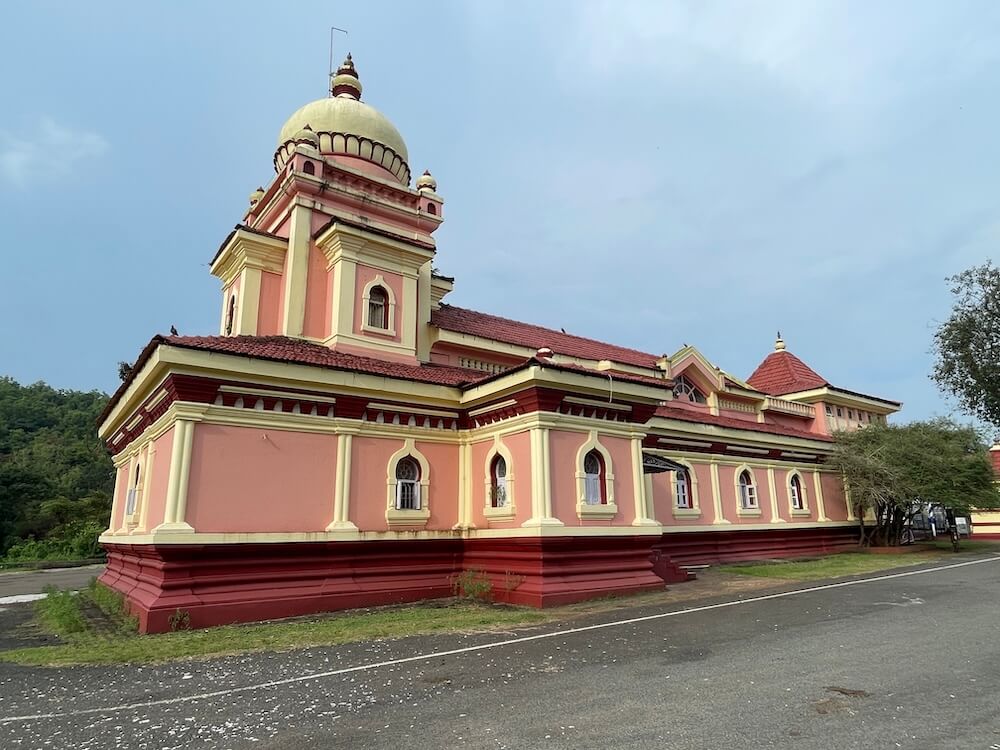
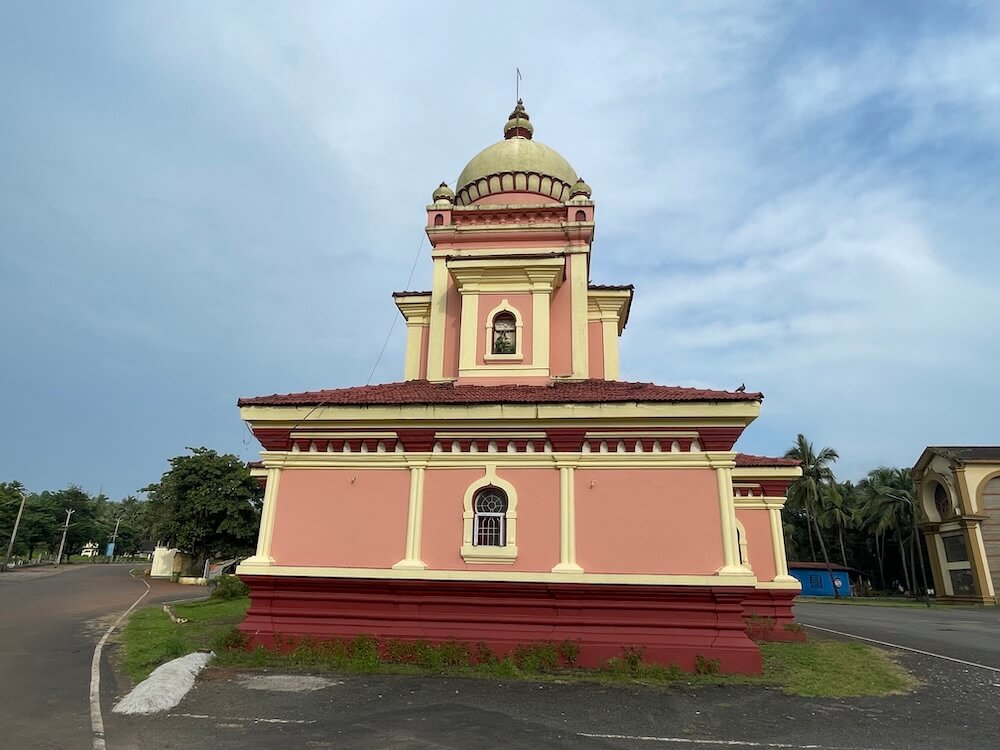
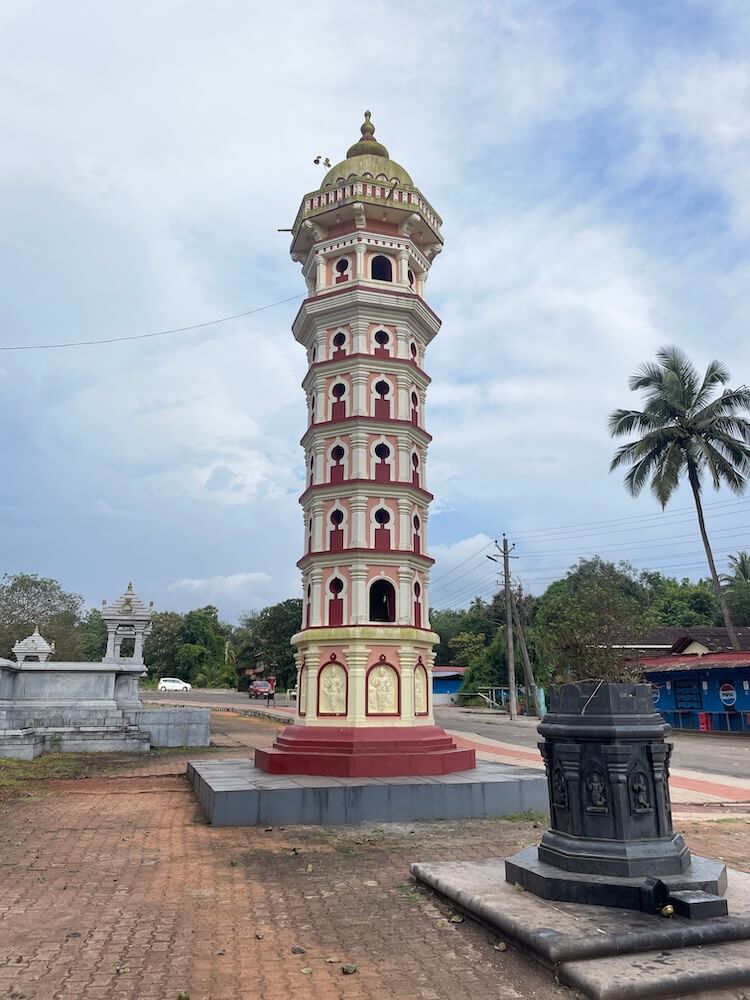
Navratri, Maha Shivratri, Annual Temple Jatra & Deepotsav
Compare and book flights, secure top-rated local hotels near the temple, hire reliable guides, and rent cars instantly.
Extend your pilgrimage by visiting other highly sacred temples located nearby.

Add ₹999 more to unlock FREE SHIPPING!
Your sacred cart is currently empty.
Shop Photo FramesFill in your delivery details below to place your order.
Add comment