
Add ₹999 more to unlock FREE SHIPPING!
Your sacred cart is currently empty.
Shop Photo FramesSwami Samarth of Akkalkot is renowned as the third complete incarnation of Lord Dattatreya. Swami Samarth resided for a long period in the mansion (wada) of his contemporary devotee, Balappa, at Shivpuri. Consequently, the mansion naturally transformed into a Math (ashram). The successor of this Math, Gajanan Maharaj, established an independent Math and undertook the significant task of propagating and spreading the practice of Agnihotra. In this Math, also known as Shri Gajanan Maharaj Math or Vishwa Foundation, thousands of devotees gather to perform community Agnihotra. Devotees believe that Agnihotra helps alleviate stress, sorrows, ailments, and pain in human life.
The Math is situated on 150 acres of land, approximately three kilometers from Akkalkot. Gajanan Maharaj laid the foundation of the Math in 1953 after purchasing the land here. It is believed that on May 17, 1918, Lord Mahadeva himself was born as Gajanan Maharaj to father Shivanand Yogi and mother Sonabai, with the blessings of Goddess Annapurna. Although Shivanand was born into a royal family, he was a great Yogi. His son, Gajanan Maharaj, attained self-realization (Atmabodh) at the young age of twenty-three, on May 25, 1941. On September 27, 1944, the day of Dussehra, Lord Parashurama gave him a vision. With Lord Parashurama as his witness, he resolved to take the knowledge of the Vedas to the common people. His devotees consider Gajanan Maharaj to be the Vishnu of the Kali Yuga, or the Kalki Avatar. The Samayaga organized by the Maharaj at Shivpuri is considered extremely rare. Today, millions of devotees worldwide are followers of the Swami. Thousands of devotees benefit daily from the Agnihotra health therapy conducted at the ashram. On May 4, 1984, the day of Parashurama Jayanti, he concluded his avataric mission, ended his earthly journey, and merged into the Shiva-tattva. The Math rests amidst dense greenery on 150 acres of land. The Shiva temple is the main structure here. The Shiva temple has a separate enclosure, and the entrance gate features three crescent-shaped arches resting on four ornate pillars within the enclosure. There is an idol of Nandi in the Nandi-mandapa in front of the temple. The Shiva temple, designed with a Sabha-mandapa (assembly hall) and a Garbhagriha (sanctum sanctorum), features floral carvings on the door frames of the assembly hall. The architrave of the entrance gate depicts an idol of Parashurama, a Shiva Linga, and a Kamadhenu sculpture. In the niches of the front wall of the Garbhagriha within the assembly hall, there are idols of Maruti and other deities.
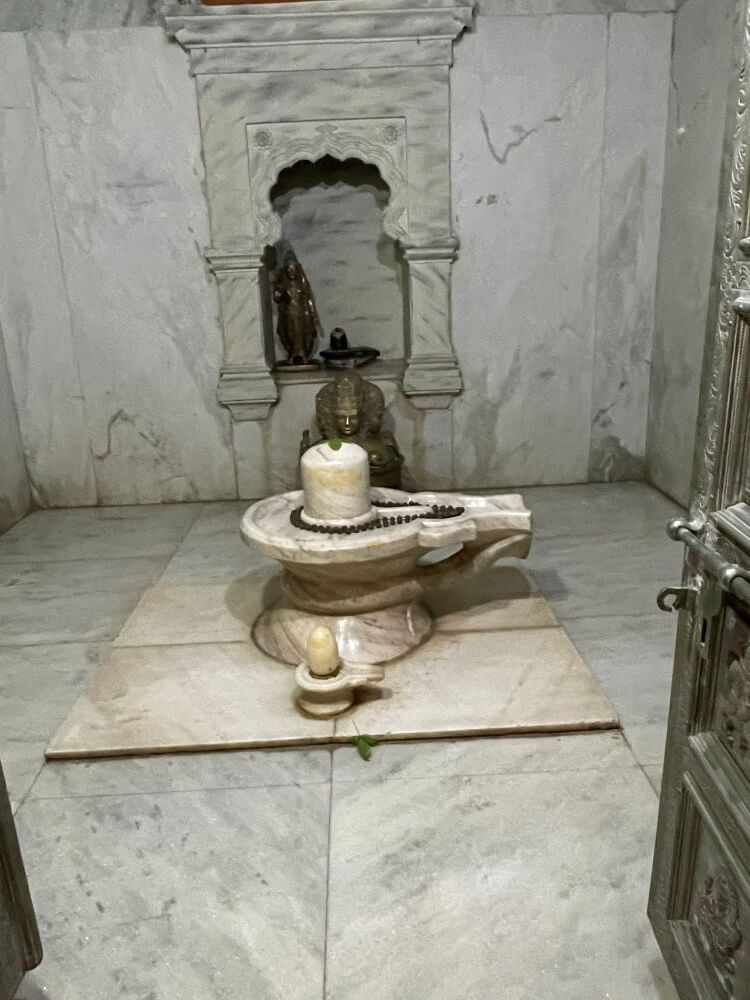
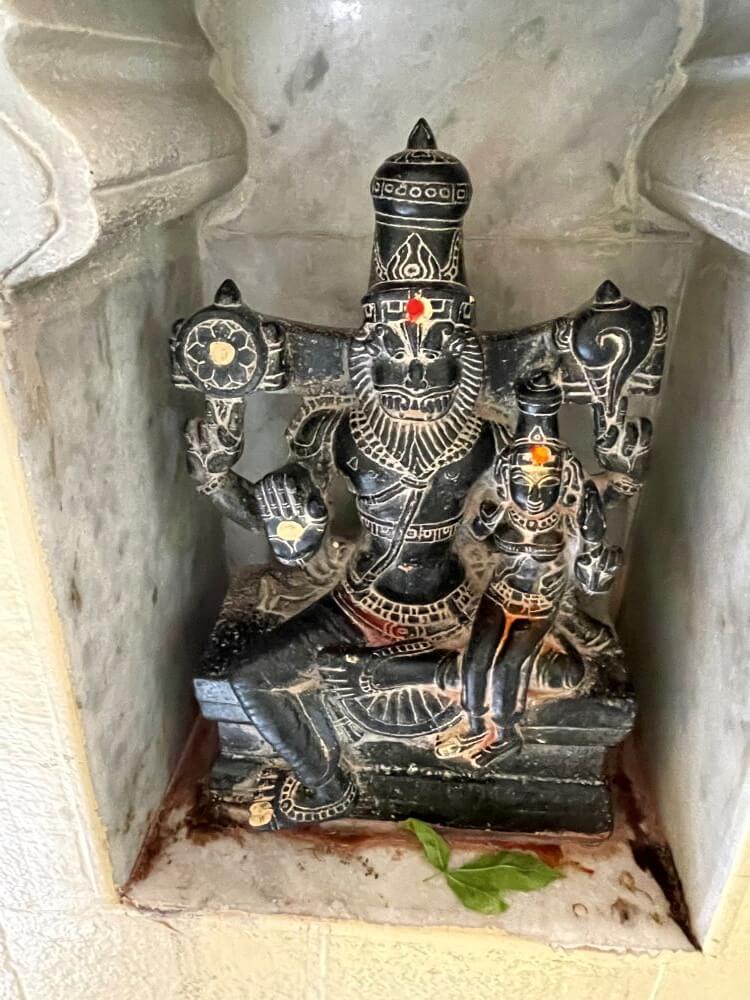
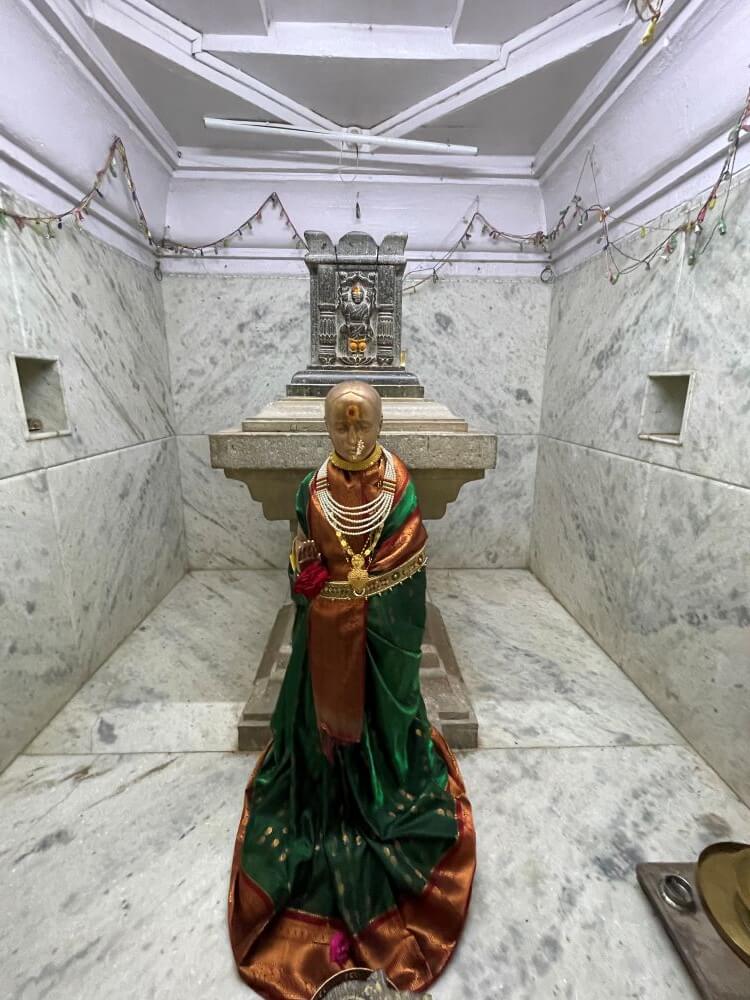
Further ahead is the entrance to the Garbhagriha. The inner walls and floor of the sanctum are covered with white marble tiles. In the center of the floor, there is a marble Shiva Linga. Near the back wall of the temple, there is a replica of the Trimurti from Gharapuri, and in the wall niches, there are idols of Shri Rama and a Shiva Linga. The architrave above the niche features idols of Shiva and Parvati. In the left niche of the temple, there are idols of Lord Nrisimha and Lakshmi, and on the right, an idol of the three-faced Dattatreya. The roof of the Garbhagriha features a four-tiered Dravidian-style square Shikhara (spire). The entire Shikhara is adorned with sculptures of various deities and pillar carvings. On the dome-shaped part above the Shikhara, there is a stupika and a kalasha. Adjacent to this temple is the Samadhi temple of Gajanan Maharaj’s father, Shivanand Swami. The entrance of the temple has two ornate square pillars on both sides with an architrave above. The architrave features a sculpture of Sheshashayi Vishnu with Lakshmi at his feet. On both sides of this sculpture are two sage sculptures. The temple, designed with a Sabha-mandapa and a Garbhagriha, houses an image of Gajanan Maharaj in the assembly hall. The Garbhagriha contains the Chaitanya Padukas of Shivanand Swami, a life-sized marble statue of Gajanan Maharaj, and a sculpture of Kamadhenu with her calf. Next to this temple is the Samadhi temple of the Maharaj’s mother, Sonamata.
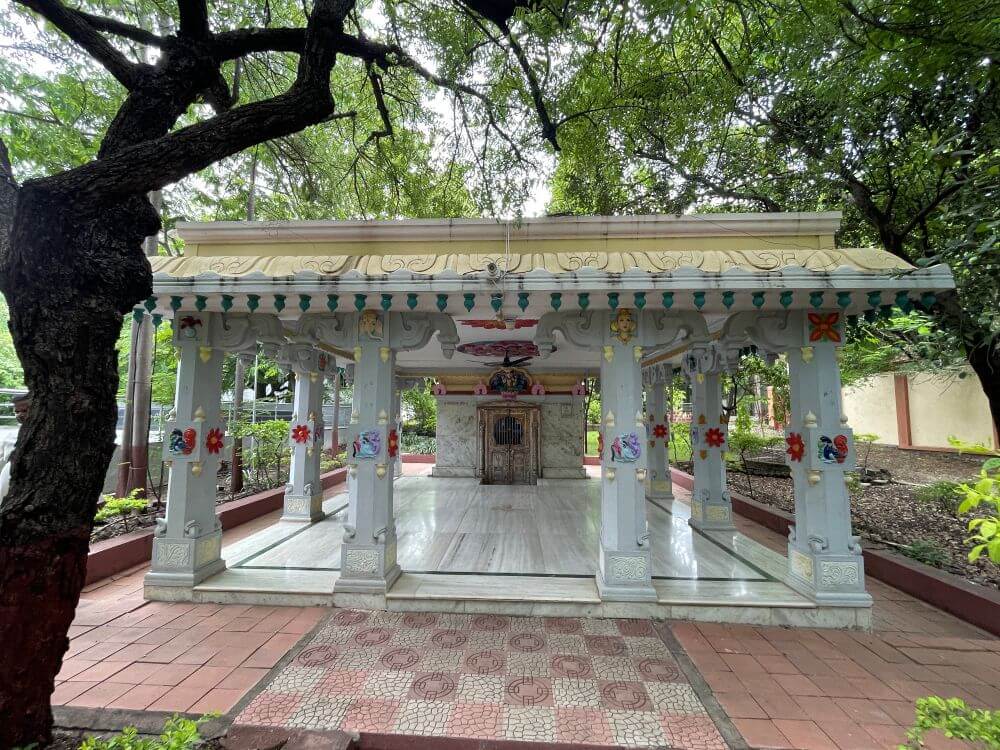
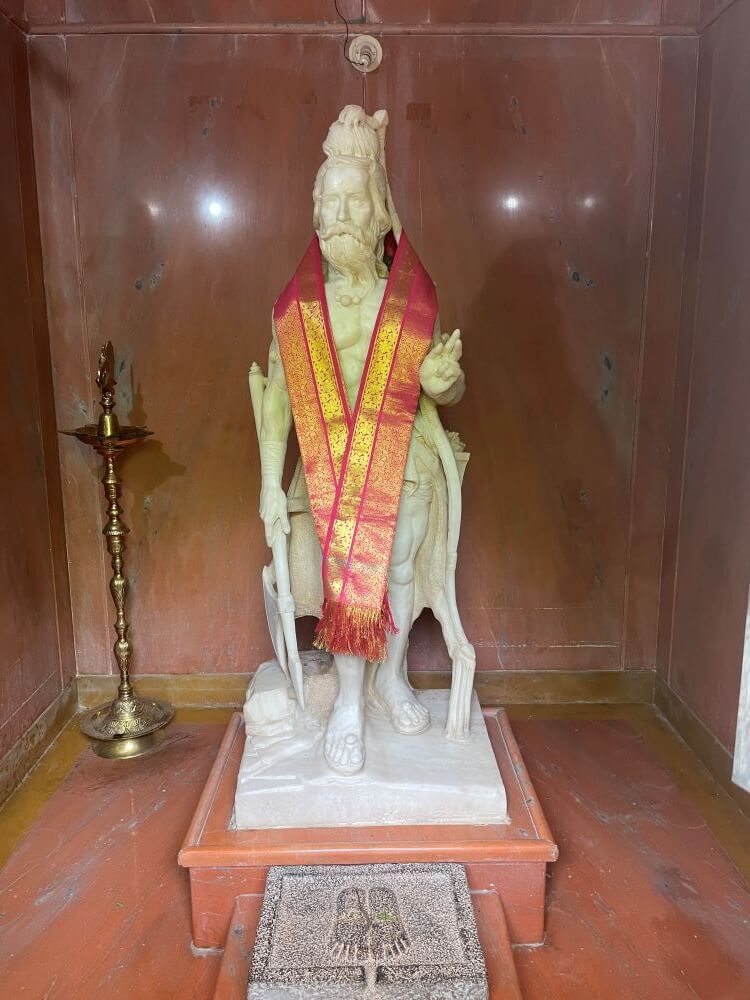
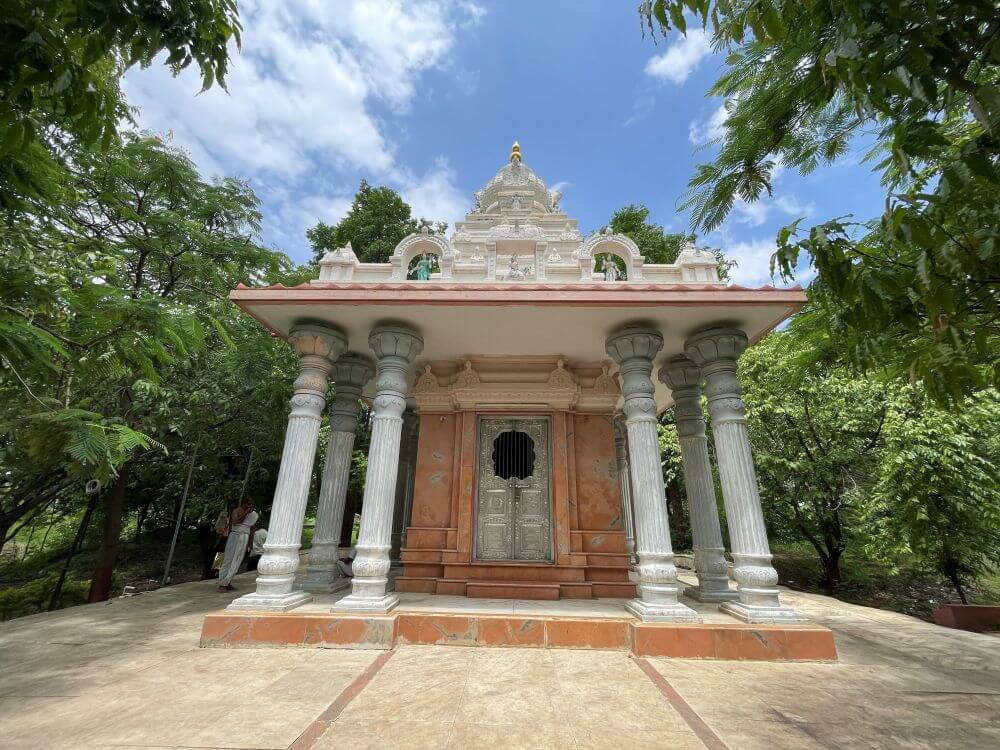
A few meters ahead is the Parashurama temple. The structure of this temple consists of an assembly hall roof supported by eight pillars on the outside and a Garbhagriha in the center. The door frames of the entrance have floral carvings, and there is an idol of Ganapati on the lintel. The entrance has ornate silver doors. Inside the Garbhagriha, there is a marble idol of Lord Parashurama on a Vajra-pitha (diamond pedestal). The ceiling of the assembly hall has a decorative railing, and the niches within it contain idols of deities. The roof of the Garbhagriha features a Dravidian-style square Shikhara, topped with a stupika and a kalasha.
There are various types of sculptures on the many platforms and pavilions in the temple courtyard. Sanskrit shlokas, subhashitas (wise sayings), and their meanings are inscribed on half-walls throughout the courtyard. There is an Agnihotra replica sculpture in the courtyard. The Math has an Agnihotra Yajna-mandapa where hundreds of devotees perform Agnihotra at once. The Math provides a Bhakta-niwas (pilgrim accommodation) and an Annachhatra (dining hall) for devotees. Activities such as a Goshala (cow shelter), organic farming, and pollution-free sustainable nature initiatives are carried out at the Math.
May 17, the Swami’s birthday, and December 25, the day of Atmabodh, are celebrated with great enthusiasm at Shivpuri. Parashurama Jayanti is celebrated in the ashram as the Swami’s Punyatithi (death anniversary). Agnihotra is performed regularly in the Math every morning and evening throughout the year. Agnihotra is said to be the fundamental worship of the Vedas. Agnihotra involves igniting a fire with cow dung cakes in a copper vessel at sunrise and sunset, and offering rice soaked in cow ghee while chanting mantras. The Vedas describe that the regular practice of Agnihotra brings peace of mind, happiness, prosperity, health, and vitality to the follower. The daily routine of the temple begins at 5:00 AM with the prescribed Yajna. The morning Agnihotra is performed at this time. Throughout the day, Homa-havan, mantras, and japa continue. In the evening, Agnihotra and other rituals are performed again. Devotees can visit this temple for darshan daily from 5:00 AM to 9:00 PM.
This sacred temple stands as a testament to deep spiritual devotion, ancient architectural grandeur, and rich local cultural traditions.
The sanctum sanctorum houses the divine idol consecrated according to ancient Vedic traditions, surrounded by serene courtyards and traditional temple architecture.
Navratri, Maha Shivratri, Annual Temple Jatra & Deepotsav
Compare and book flights, secure top-rated local hotels near the temple, hire reliable guides, and rent cars instantly.
Extend your pilgrimage by visiting other highly sacred temples located nearby.


Add ₹999 more to unlock FREE SHIPPING!
Your sacred cart is currently empty.
Shop Photo FramesFill in your delivery details below to place your order.
Add comment