
Add ₹999 more to unlock FREE SHIPPING!
Your sacred cart is currently empty.
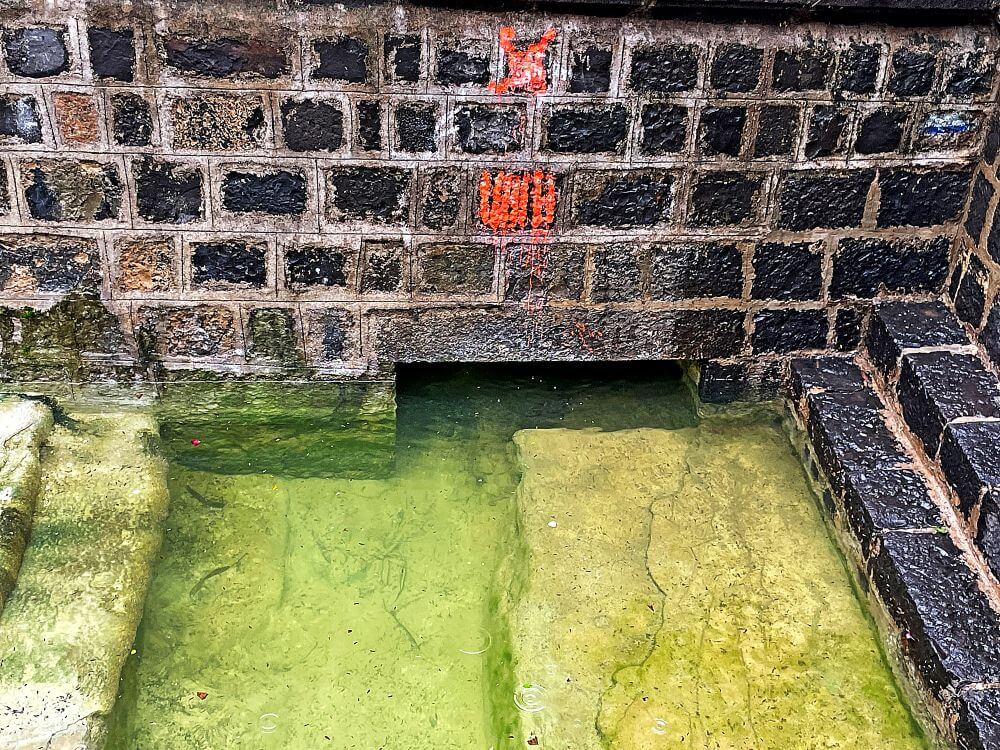
Shop Photo FramesThe Tulja Bhavani Temple in Tuljapur is one of the three-and-a-half Shakti Peethas. Consequently, the city of Tuljapur holds immense religious significance. Beyond the main temple, numerous temples dedicated to Tulja Bhavani, known by various names, are famous throughout the city. These temples, each associated with different legends, highlight their own unique characteristics. Among these, the Indravaradayini Temple is renowned as the place where Tulja Bhavani granted Lord Indra the boon of liberation from his sins. Devotees believe that bathing in the Papanash Kund (sacred pond) at this temple washes away one’s sins.
It is said that this temple and the Papanash Kund have existed since time immemorial. However, scholars believe that the construction of this temple and the pond likely dates back to the latter half of the 13th century. The legend associated with this temple states that in the Krita Yuga, Lord Indra, the king of the gods, incurred the sin of Brahmahatya (the killing of a Brahmin) after slaying the demon Vritrasura. Seeking liberation from this sin, Indra prayed to Tulja Bhavani. The Goddess granted him the boon of becoming ‘Papanash’ (the destroyer of sins), instructing him that bathing in this pond would cleanse him of the sin of Brahmahatya. Hence, the Goddess here came to be known as Indravaradayini.
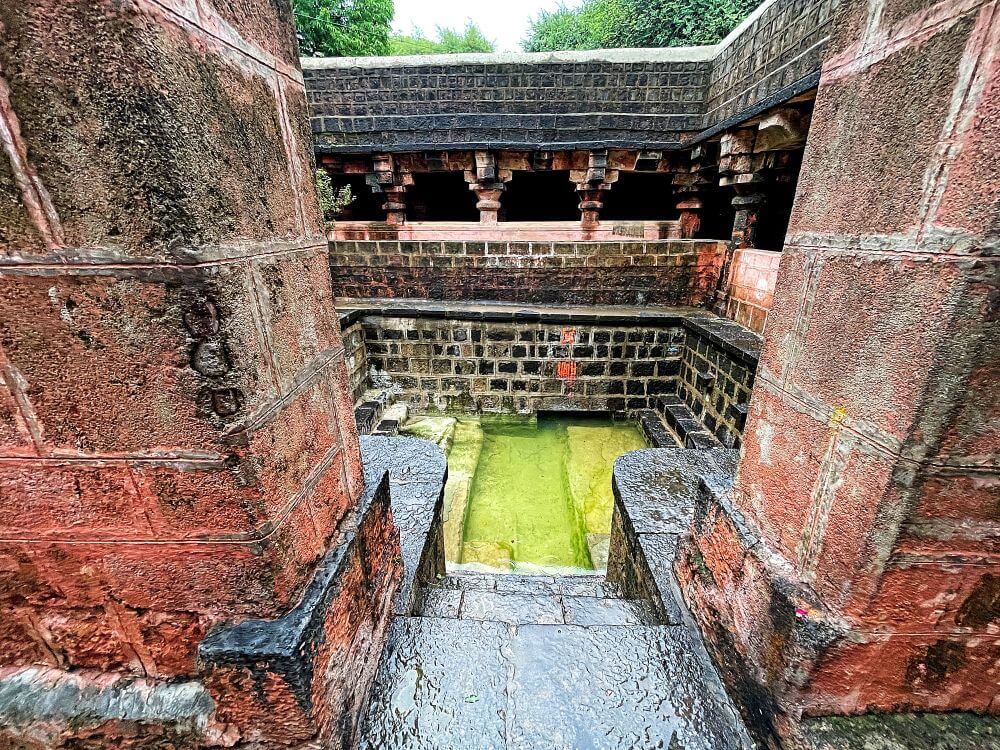
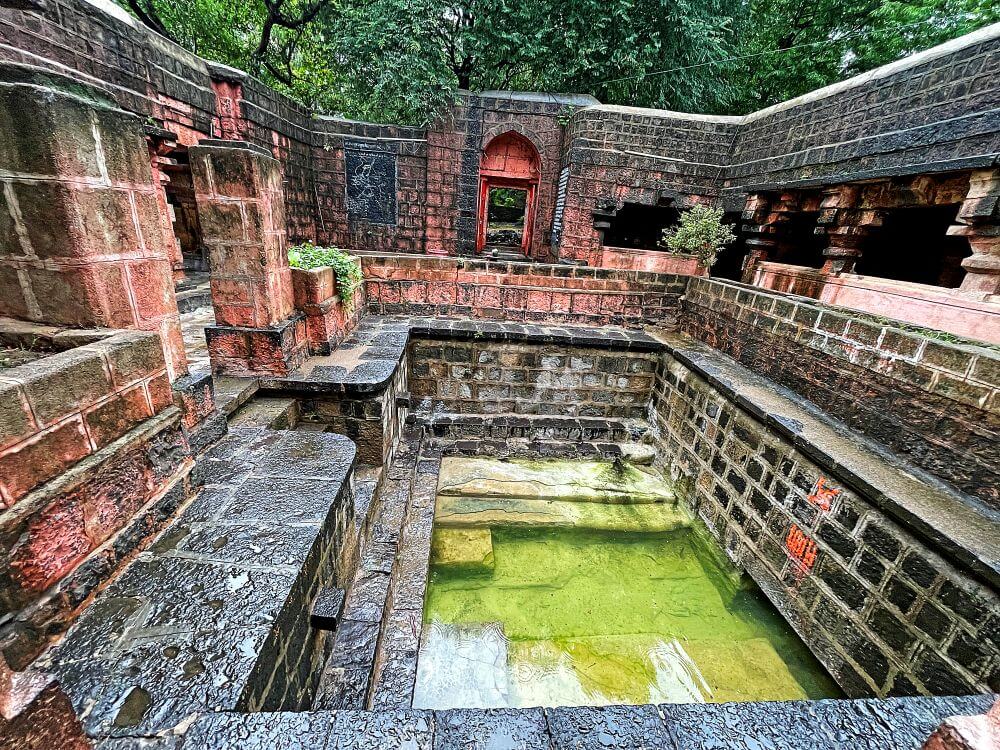
A paved path leads to this temple, situated in a lush green garden about one kilometer from the main Tulja Bhavani temple. A narrow entrance is set within the sturdy fortification wall surrounding the temple. This entrance leads into the small courtyard of the temple, where the Papanash Kund is located in the center. The walls of the kund are built of carved stone, and there are steps to descend into it. It is said that bathing in this kund, which features a descending structure on both sides, liberated Lord Indra from the sin of Brahmahatya.
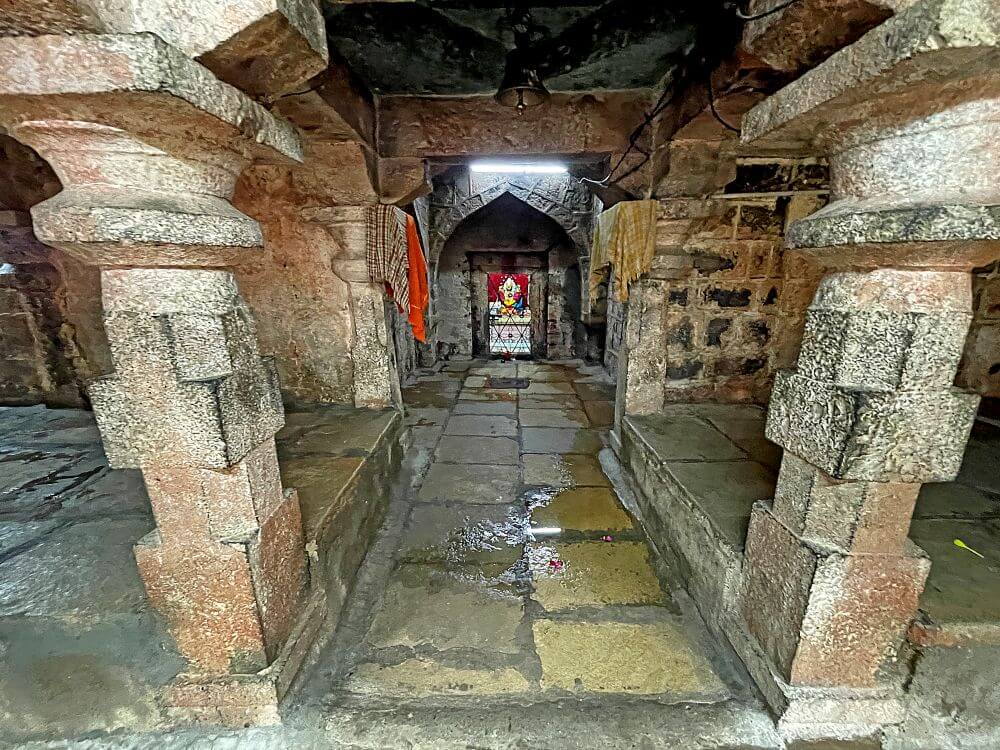
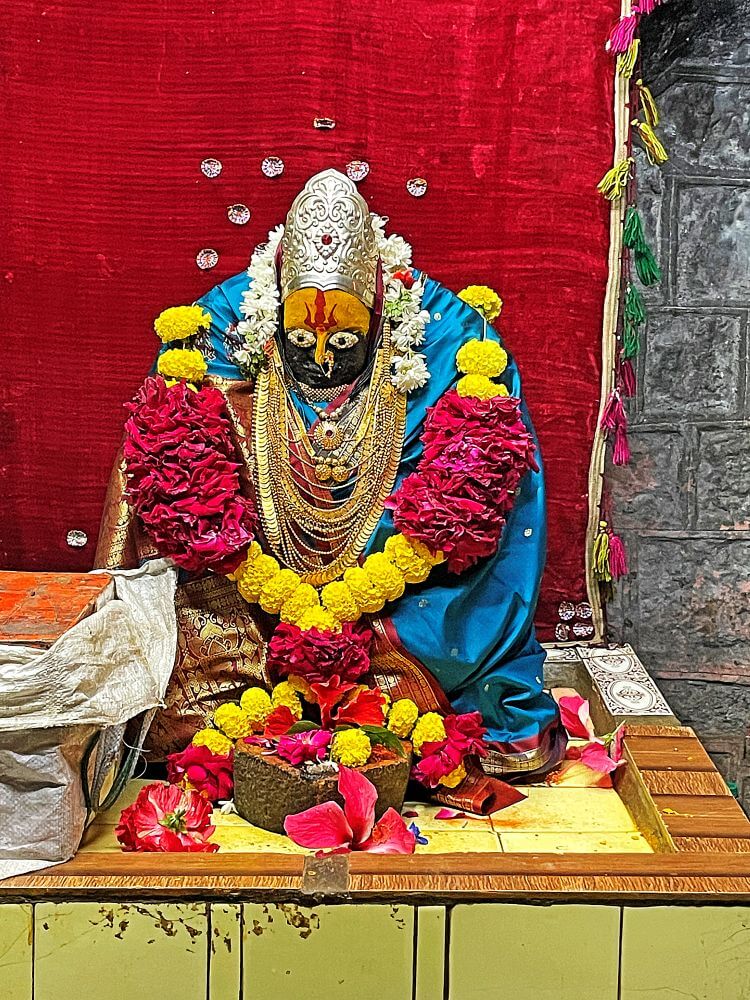
Opposite the kund stands the temple of Goddess Indravaradayini. Its structure consists of a Mukhamandapa (front hall), a Sabhamandapa (assembly hall), and a Garbhagriha (sanctum sanctorum). The Mukhamandapa features four ornate square pillars. The enclosed Sabhamandapa is open on the side facing the entrance. The walls of the Sabhamandapa are designed with niches for lamps to provide illumination. Further ahead is the entrance to the Garbhagriha. The door frames are adorned with vertical carvings, and the lintel features an image of Lord Ganesha. Inside the Garbhagriha, on a Vajrapitha (throne), stands the eight-armed idol of Goddess Indravaradayini. The Goddess holds various weapons such as a trident, sword, bow, and arrow in her hands, while one hand is in the Abhaya Mudra (gesture of fearlessness). The Goddess is adorned with a silver crown, garments, and jewelry.
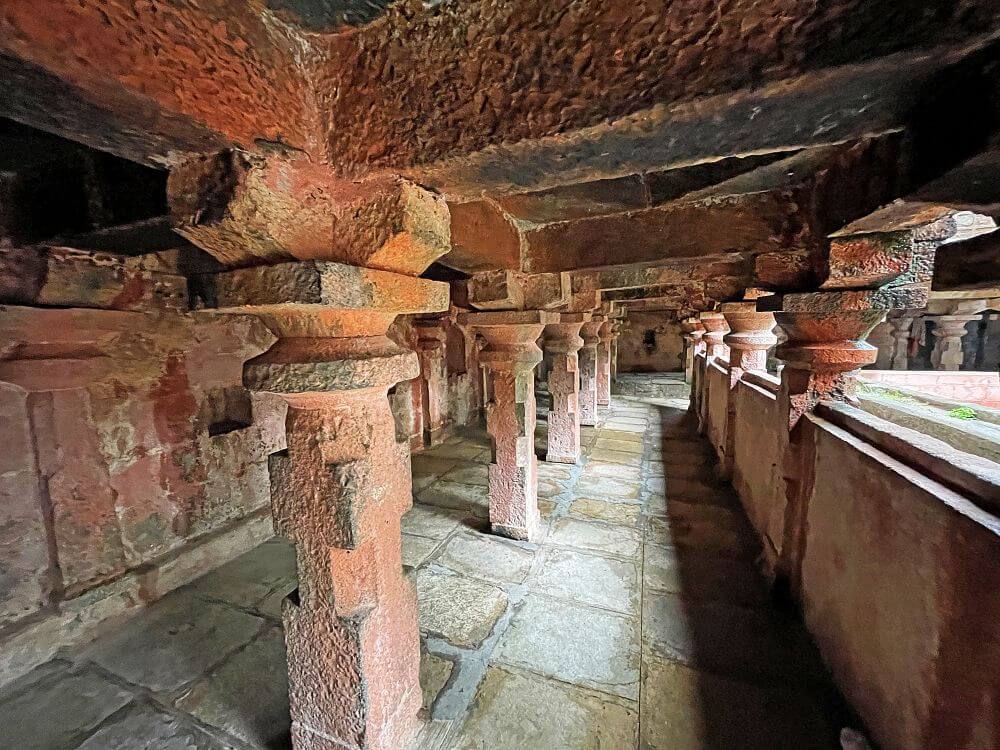
In the temple courtyard, adjacent to the Mukhamandapa, there are stone-built cloisters on both sides. The back walls of these cloisters are part of the fortification. On the front side, there is a half-wall with pillars. The ground between the cloisters and the half-wall is sunken. In the left cloister, there is an idol of Ganesha on a Vajrapitha. Adjacent to the right cloister is a temple dedicated to Lord Mahadeva, which also consists of a Sabhamandapa and a Garbhagriha. In the Sabhamandapa, there is a black stone idol of Nandi on a Vajrapitha. Opposite is the entrance to the Garbhagriha, which features vertical carvings on the door frames and an image of Ganesha on the lintel. Above the entrance, on the facade wall, there is a hand-carved design and a balcony (sajja) above it. The balcony features toran (arch) carvings and stone chandeliers on both sides. In the center of the Garbhagriha floor lies a large Shiva Linga. Above the Shiva Linga, there is a brass serpent holding a canopy and a copper vessel for Abhisheka (ritual bathing).
Annual festivals and celebrations such as Chaitra Padwa, Chaitra Navratri, Sharadiya Navratri, Mahashivratri, Shravani Mondays, Dussehra, and Diwali are celebrated with great enthusiasm at the temple. Various religious programs are organized during all these festivals. A large number of devotees visit the temple for Kartik Snan, Shravan Snan, and bathing during the Adhik Maas. The temple remains busy with devotees on Tuesdays, Fridays, Mondays, full moon days, new moon days, and Ashtami.
This sacred temple stands as a testament to deep spiritual devotion, ancient architectural grandeur, and rich local cultural traditions.
The sanctum sanctorum houses the divine idol consecrated according to ancient Vedic traditions, surrounded by serene courtyards and traditional temple architecture.
Navratri, Maha Shivratri, Annual Temple Jatra & Deepotsav
Compare and book flights, secure top-rated local hotels near the temple, hire reliable guides, and rent cars instantly.
Extend your pilgrimage by visiting other highly sacred temples located nearby.


Add ₹999 more to unlock FREE SHIPPING!
Your sacred cart is currently empty.
Shop Photo FramesFill in your delivery details below to place your order.
Add comment