
Add ₹999 more to unlock FREE SHIPPING!
Your sacred cart is currently empty.
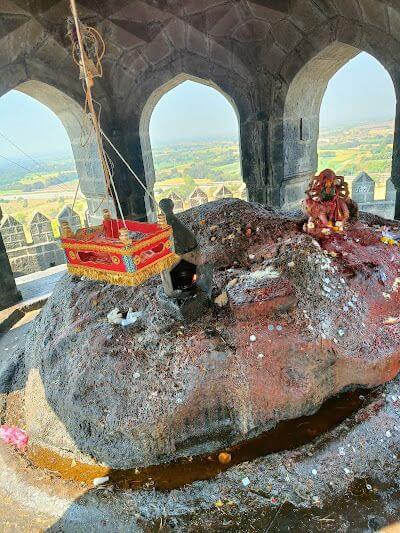
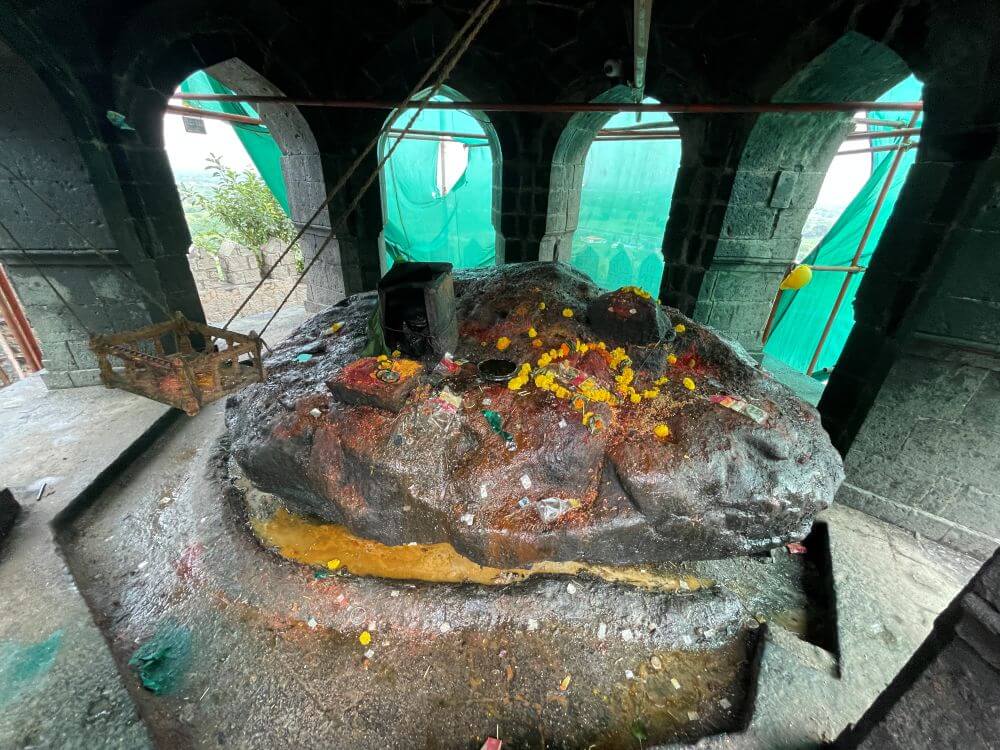
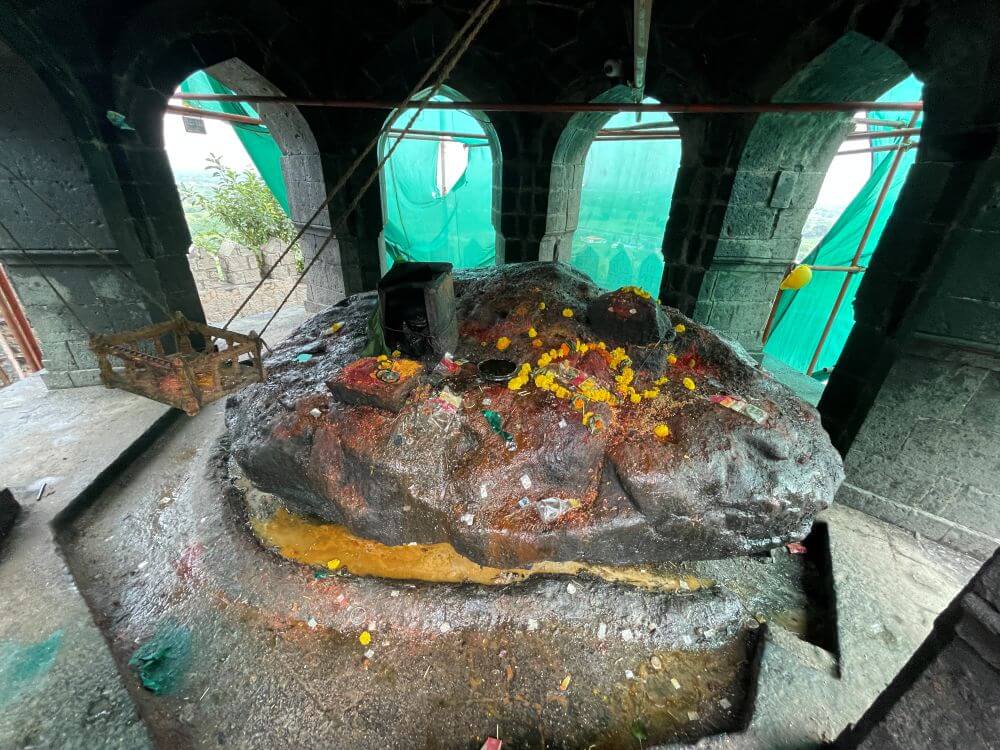
Shop Photo FramesThe Hindu community, which beholds the Divine in water, land, wood, and stone, is deeply devout. Hence, they perceive God in idols. They see the Divine in animals, birds, plants, and even in stones. That is why across various places in India, trees, leaves, rivers, lakes, animals, and birds are worshipped. Any place or object associated with divine legends or contact is revered as God. One such ancient temple is located in Tuljapur, where a sacred rock (shila) is worshipped. Devotees firmly believe that visiting this temple fulfills all their heart’s desires. This rock is also affectionately known by the name ‘Tukai’.
Experts estimate that this temple is contemporary with the Shri Tulja Bhavani Temple, making it likely from the Yadava period. It is also said that a painting of this temple made by a British officer in the eighteenth century is currently housed in the British Museum. Several legends regarding this temple are popular among the people. According to one legend, in ancient times, a cow from Sage Markandeya’s ashram began to limp after returning from grazing in the forest. When the sage inspected the cow’s hoof, he noticed a small stone lodged in it. The sage removed the stone from the hoof. Later, this small stone grew continuously and transformed into a large rock. Devotees believe even today that this rock grows grain by grain.
Another legend recounts that while Lord Shri Rama was wandering in search of Mata Sita, Goddess Parvati assumed the form of Sita to test Him and stood upon this rock. However, Lord Rama instantly recognized the Goddess, touched Her feet, and asked Her where Sita was. Standing on the rock, the Goddess then advised Lord Rama to proceed towards the southern direction.
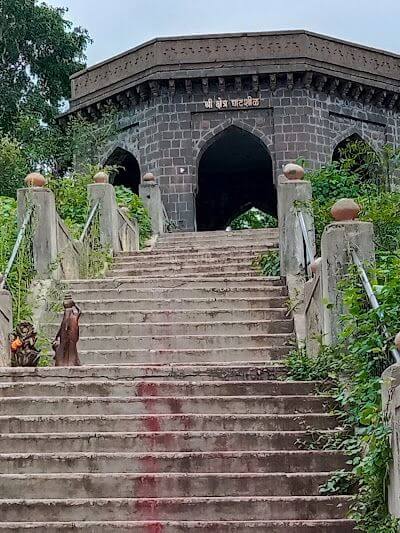
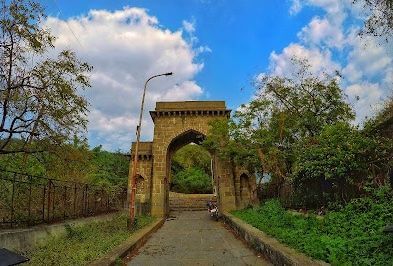
Located on the crest of the ghat in the southwest direction of Tuljapur town, one has to climb about 100 to 125 steps to reach this temple. This stepped pathway, built of carved stone, features stone security railings on both sides. Along the railings, there are square pillars topped with spherical stones every ten feet. At the beginning of the pathway stands a fort-like entrance gate constructed of stone. On both sides of the gate are walls approximately five feet wide containing guard chambers. The entrance features a crescent archway. Dense foliage covers the mountain on both sides of the pathway.
Midway along the pathway, there is a hexagonal tower built of carved stone featuring six pillars and six arches. A board here reads ‘Shri Rama Vanavas Gaman’ (Lord Rama’s journey into exile). This pathway leads to a flat and circular plateau (machi) at the top of the hill. Surrounding the paved plateau is a decorative stone railing. A breathtaking panoramic view of the ghat road below can be seen from here. Additionally, there is a road leading here from the Shri Tulja Bhavani Temple Bhakta Niwas (devotee rest house).
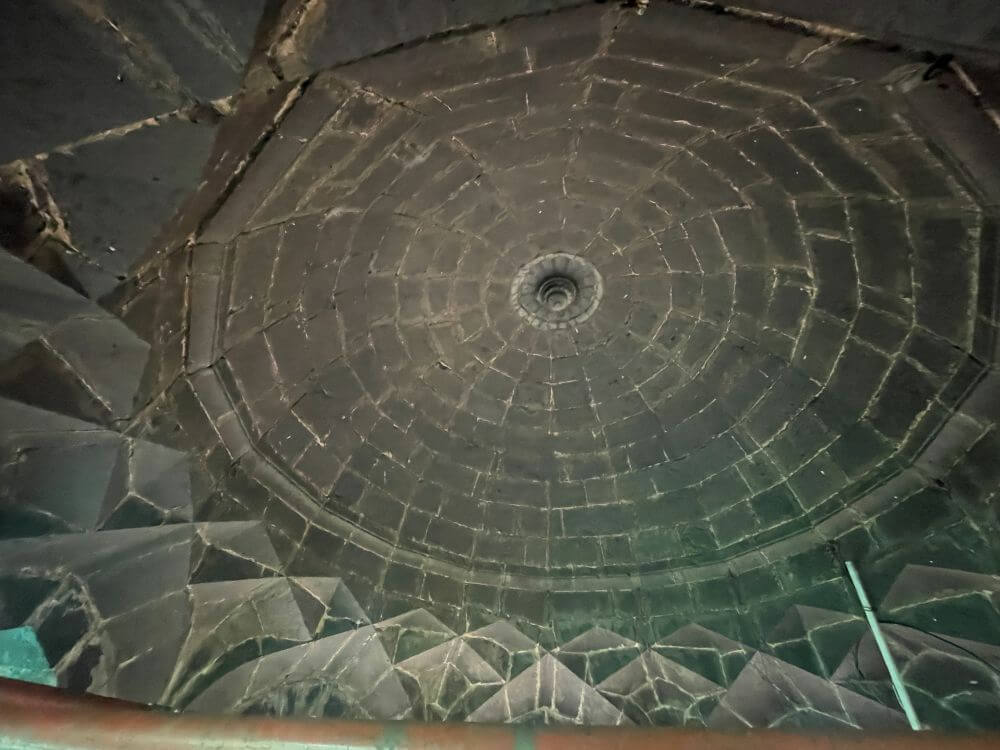
In the center of the plateau stands a hexagonal stone temple. In a conventional sense, it is not a typical temple, but a hexagonal canopy (Meghdambari) crafted from dressed stone. Resting on a platform (jagati) about three feet high, the structure features six square pillars, six entrance archways interconnected by crescent arches, and a tall hexagonal shikhara (spire) above the roof. All pillars stand on bases a few inches wide. Noches for oil lamps (deepkoshtak) are built into the pillars facing the entrances. On the front facade, each arch is decorated with lotus flower carvings on both sides, totaling twelve lotus motifs. At the center of the temple floor lies a massive Swayambhu (self-manifested) rock. Open on all six sides, devotees can take darshan of this sacred rock from any direction.
Atop the temple roof is a five-tiered spire (shikhara). The first hexagonal tier features carved pillars and arches. The upper three octagonal tiers house eight niche shrines (devakoshta) each, containing idols of various deities. At the apex of the spire is an amalaka with vertical fluted patterns, topped by a sacred Kalash.
Devotees flock to the temple during auspicious occasions such as Chaitra Navratri, Shardiya Navratrotsav, Somvati Amavasya, and Kartik Purnima. To fulfill their vows (navas), devotees offer sarees, traditional blouses, beads, mangalsutras, bangles, coconuts, and sacred offerings (oti) to the Goddess. Some devotees complete their vows by walking on their knees from the foothills to the Ghatshil Temple to the beat of traditional halgi drums. The temple sees a large gathering of devotees on Tuesdays, Fridays, and other sacred days.
This sacred temple stands as a testament to deep spiritual devotion, ancient architectural grandeur, and rich local cultural traditions.
The sanctum sanctorum houses the divine idol consecrated according to ancient Vedic traditions, surrounded by serene courtyards and traditional temple architecture.
Navratri, Maha Shivratri, Annual Temple Jatra & Deepotsav
Compare and book flights, secure top-rated local hotels near the temple, hire reliable guides, and rent cars instantly.
Extend your pilgrimage by visiting other highly sacred temples located nearby.


Add ₹999 more to unlock FREE SHIPPING!
Your sacred cart is currently empty.
Shop Photo FramesFill in your delivery details below to place your order.
Add comment