
Add ₹999 more to unlock FREE SHIPPING!
Your sacred cart is currently empty.
Shop Photo FramesKalbhairav is the fierce and formidable form of Lord Shiva. In Hinduism, Kalbhairav is revered as the Kotwal (guardian) of Kashi, a highly sacred pilgrimage site. He is the family deity (Aradhya Daivat) for many lineages across Maharashtra and Karnataka. The seat of Kalbhairav in the peaceful and picturesque village of Ankoli is considered extremely powerful and awakened (Jagrut). Devotees from various parts of the state visit here for his blessings. In particular, newlywed couples visit Kalbhairav to perform their traditional family rituals (Kul-dharma Kul-achar) and seek his blessings to begin their married life. It is the firm belief of devotees that vows made to this Kalbhairav are always fulfilled.
Kalbhairav is considered a Tantric deity and one of the Ashta-Bhairavas (eight Bhairavas) described in the Shaiva Agamas. According to lexicographers, the word ‘Bhairav’ means ‘formidable’ or ‘terrible’. It is also said that one of its meanings is ‘the one who protects from fear’. Papabhakshan, Amardak, and Kalraj are other names for Kalbhairav. The mythological legend regarding Kalbhairav states that he originated from the anger of Lord Shiva on the eighth day (Ashtami) of the dark fortnight of the month of Margashirsha. Born from the fire of Shiva’s rage, ignited by the insult caused by Lord Brahma, the dark-complexioned Bhairav severed the head of Brahma, who had been mocking Shiva. However, this act resulted in the sin of Brahma-hatya (killing a creator). Despite visiting all the holy pilgrimage sites, his sin was not cleansed. Finally, he attained liberation from this sin in Kashi, where he placed Brahma’s head. The spot where Kalbhairav placed the head is known as Kapalmochan Tirtha.
According to the Kalika Purana, Mahakal, a Gana of Shiva, was born as Bhairav due to a curse from Parvati. He was born during the fourth watch (Prahara) of the night. Another legend states that upon birth, Bhairav subdued all the gods. Consequently, Shiva cursed him to become a Damanak tree (Artemisia nilagirica) . Shiva also granted a boon that no worship of the gods would be considered fruitful without the offering of this tree. It is believed that Kalbhairav protects his devotees from distress and grants their wishes. While there is no concrete history regarding the construction of this temple, the deity’s palanquin (Palkhi) is said to be over seven hundred years old, suggesting the temple may be even older. In 1971, the villagers renovated the temple’s spacious pavilion (Mandap) using teak wood.
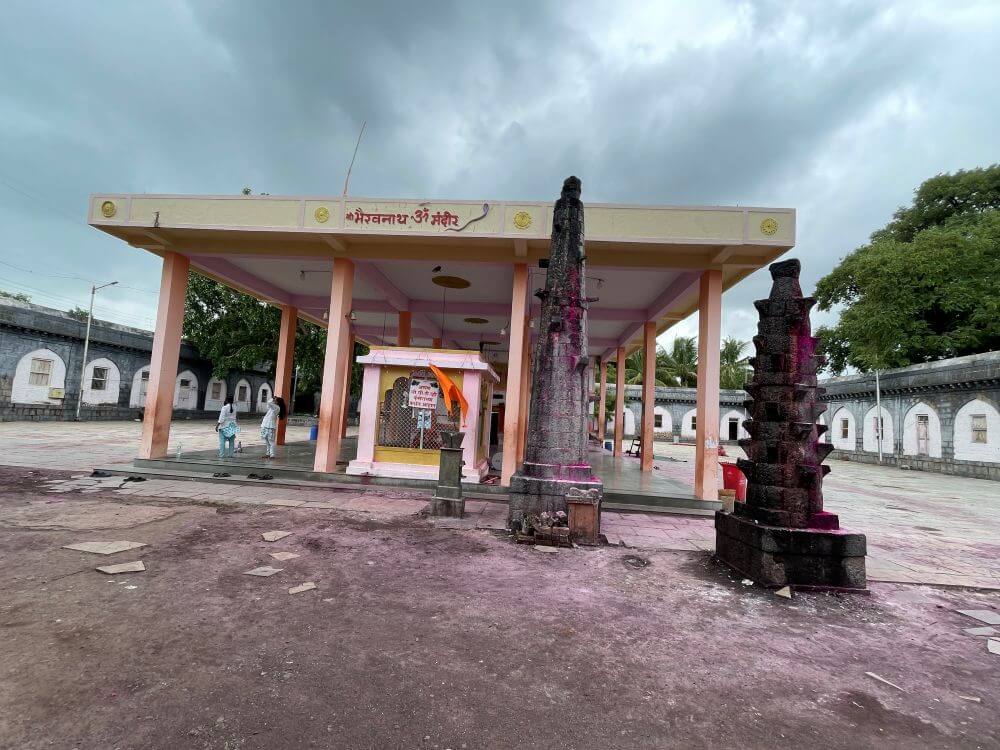
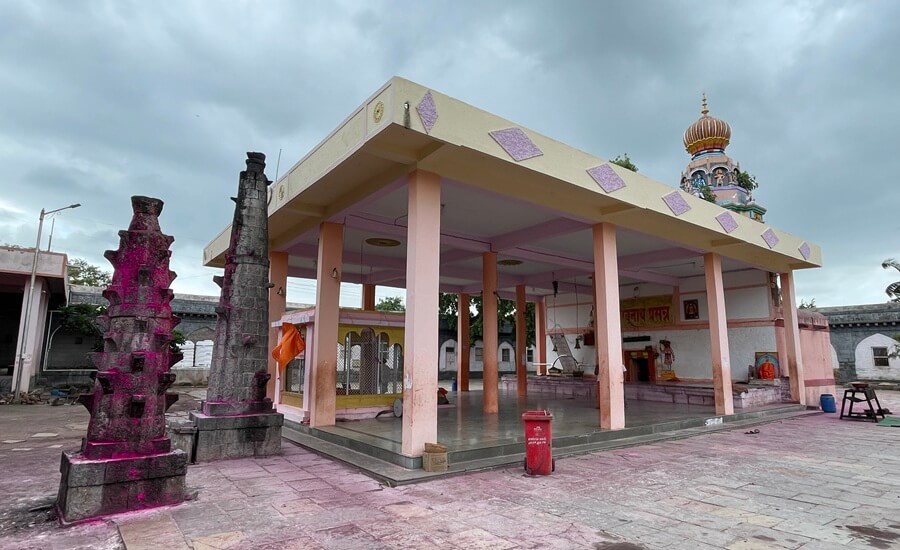
Ankoli village is located on the Mohol-Mangalwedha road. One enters the temple courtyard through a grand gateway in the perimeter wall. The stone-paved courtyard is surrounded by cloisters (Ovris) on all four sides, which are used by devotees for shelter, cooking, and religious activities. In one of the cloisters to the left of the entrance, there is the Dhuni (sacred fire) of Gorakshanath along with his idol. The courtyard features a square well and two lamp towers (Deepmalas). Devotees believe that the water in this well is as sacred as the Ganga in Kashi.
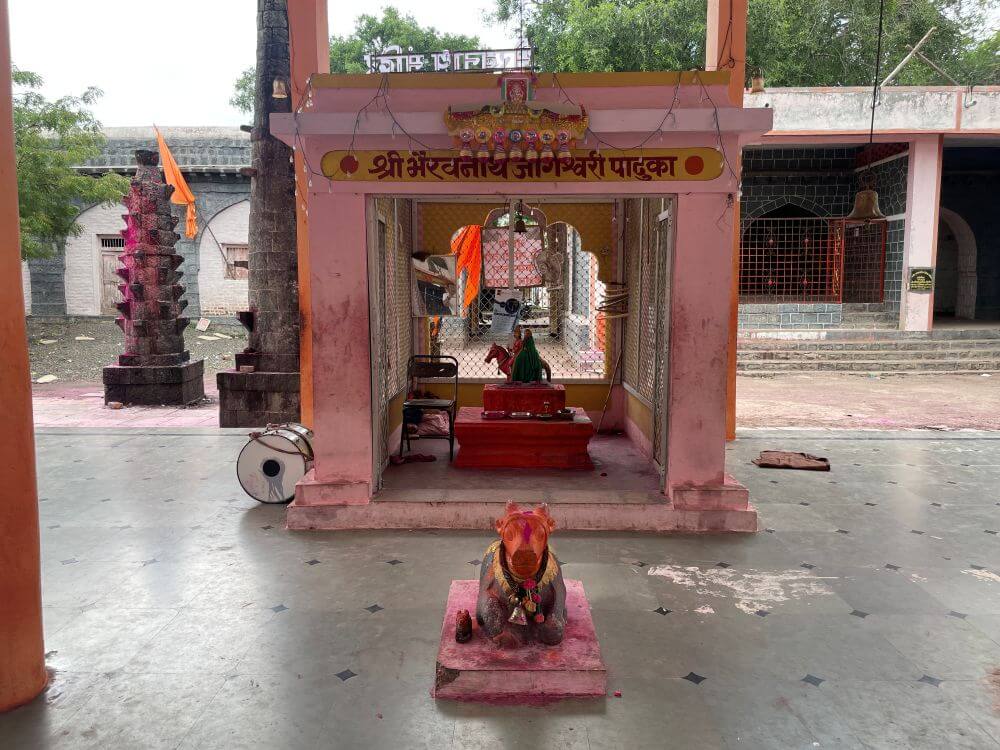
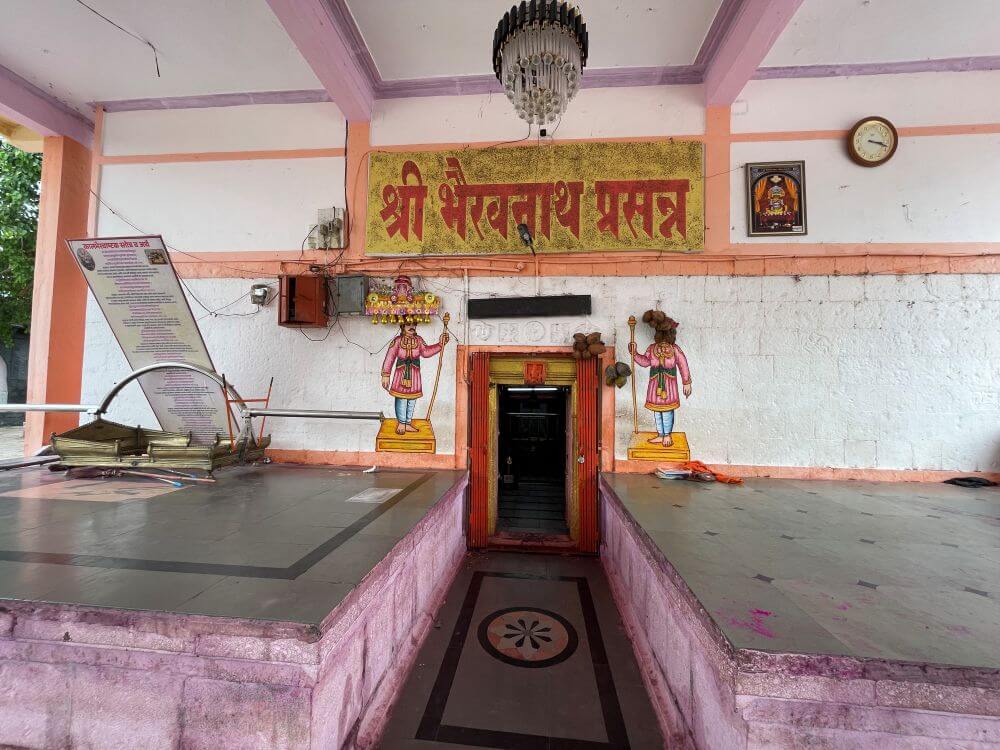
The temple structure consists of a large pavilion, a central hall (Sabhamandap), and the sanctum sanctorum (Garbhagriha). The pavilion appears to have been added in front of the temple at a later date. In a niche within the pavilion, there are idols of Bhairavnath and Jogeshwari Devi seated on a horse. The pavilion also houses an idol of Nandi carved from a single stone, with a turtle idol in front of it. There are platforms on both sides of the main temple entrance, which is adorned with paintings of gatekeepers (Dwarapalas). The lintel features an idol of Ganesha, with some relief sculptures above it. The central hall has four stone pillars. In addition to the main sanctum, there are two sub-sanctums attached to the left and right sides of the central hall.
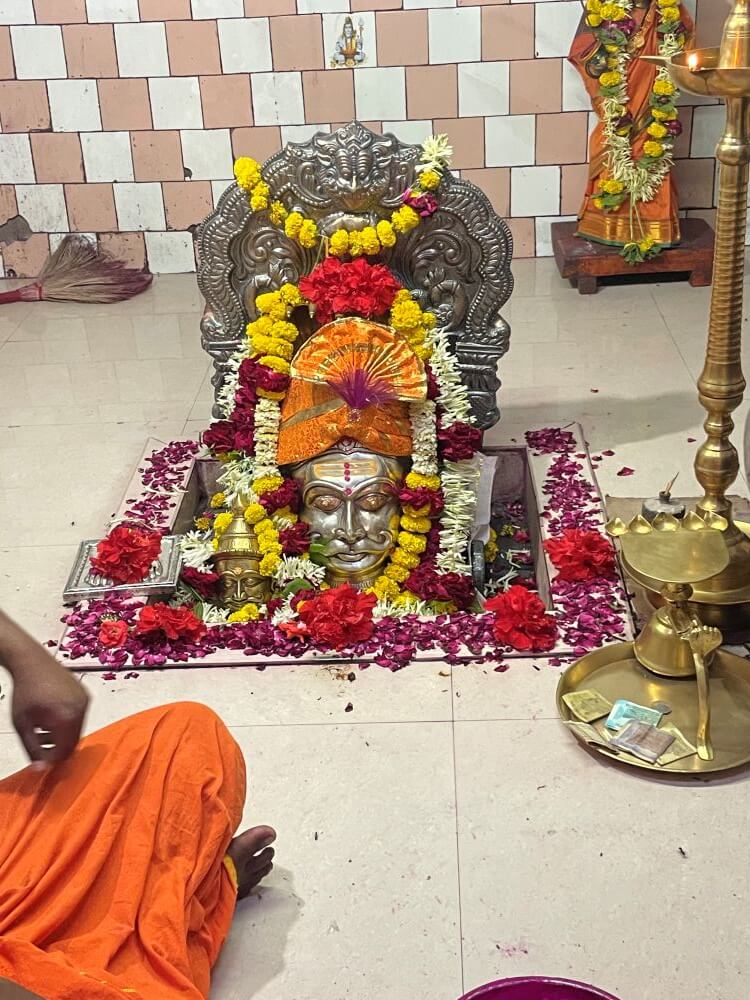
The main sanctum houses the Swayambhu (self-manifested) Linga of Kalbhairav Nath, adorned with a beautiful silver mask. The Linga beneath the mask can only be seen during the morning worship. Only Kalbhairav is enshrined in this sanctum. The legend goes that a dispute arose between Kalbhairav and Jogeshwari Devi, causing her to leave in anger. She traveled about 1.5 km to the east of the village, settling in a desolate area in the wilderness, where a temple dedicated to Jogeshwari Devi stands to this day.
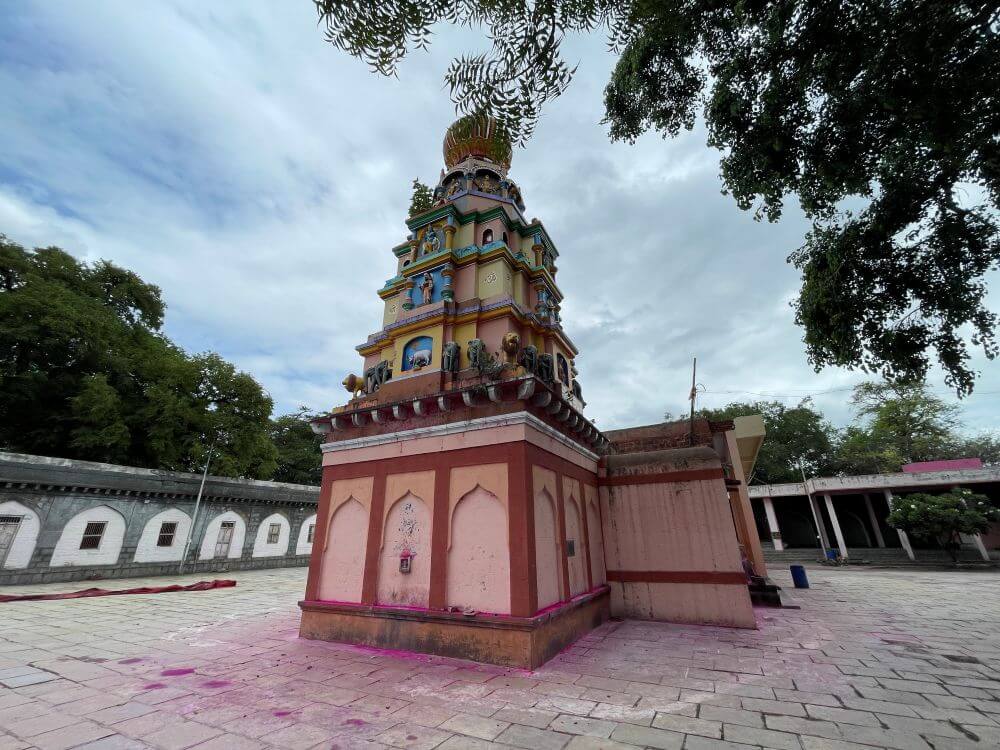
In the back corner of the sanctum, on the right wall, there is a standing idol of Jogeshwari Mata made of Panchadhatu (five-metal alloy); however, this is only an Utsav-murti (processional idol) used during festivals or palanquin processions. The outer walls of the temple feature some erotic sculptures. The lower layer of the temple spire is carved with figures of cows, elephants, and lions. The niches in the layers above contain idols of various deities. The spire is topped with an Amalaka and a Kalash.
A grand three-day fair is held here starting from the Ashtami following Hanuman Jayanti. The unique feature of this fair is that it lasts for three consecutive nights and three days (72 hours), during which the temple doors are never closed. Various religious programs are organized during this time. On Tripurari Purnima, the temple is illuminated with five thousand lamps.
This sacred temple stands as a testament to deep spiritual devotion, ancient architectural grandeur, and rich local cultural traditions.
The sanctum sanctorum houses the divine idol consecrated according to ancient Vedic traditions, surrounded by serene courtyards and traditional temple architecture.
Navratri, Maha Shivratri, Annual Temple Jatra & Deepotsav
Compare and book flights, secure top-rated local hotels near the temple, hire reliable guides, and rent cars instantly.
Extend your pilgrimage by visiting other highly sacred temples located nearby.


Add ₹999 more to unlock FREE SHIPPING!
Your sacred cart is currently empty.
Shop Photo FramesFill in your delivery details below to place your order.
Add comment