
Add ₹999 more to unlock FREE SHIPPING!
Your sacred cart is currently empty.
Shop Photo FramesThe Konkan region is renowned for its many ancient temples and deities. Two of the Aṣṭavināyaka pilgrimage sites are located in Raigad district in Konkan. Among these, the shrine of Lord Ballāḷeśvara Gaṇeśa at Pālī in Sudhāgaḍ taluka is especially famous among devotees. This temple, nestled at the foothills of the Sahyādri mountain ranges, houses a self-manifested (svayambhū) idol of Gaṇeśa. A unique feature of this temple is that during Dakṣiṇāyana, specifically from twenty-second September to twenty-second December, the sun’s rays fall directly upon the Gaṇeśa idol at sunrise. References to this temple can be found in the Gaṇeśa Purāṇa and Mudgala Purāṇa, where Pālī is referred to as ‘Pallī’.
The Gaṇeśa Purāṇa and the Mudgala Purāṇa are two principal texts of the Gāṇapatya tradition, and they are considered Upapurāṇas. The period from one thousand to one thousand one hundred CE is that of the Gaṇeśa Purāṇa. This is the period of its composition. In the fourth chapter of the first volume of this Purāṇa, the tale of Ballāḷeśvara is recounted within the narrative of King Bhīma of Kauṇḍiṇyapura in Vidarbha. According to this, there lived a wealthy Vaiśya named Kalyāṇa in a village called Pallī in Sindhu deśa (which is today’s Pālī). Once, his son Ballāḷa went into the forest with some companions. There, they saw an idol. They named that idol Gaṇeśvara and worshipped it.
They began. Everyone together erected a mandap there. Preparations for the Utsav were made. From that time onwards, Ballal, along with all his friends, started residing there and worshipping Shri Ganesha. Seeing this, the parents of his friends became enraged. They He went to Kalyāṇa and complained about Ballāḷa. “He is worshipping some stone in the forest. Stop him, or else we shall deal with him harshly,” they threatened Kalyāṇa. Thereupon, Kalyāṇa went into the forest and threw away that murti. At this, Ballāḷa folded his hands before his father and pleaded, “Do not disrespect Bhagavān Gaṇādhyakṣa, who is the Soul of all beings.” Ballāḷa said, “He is the Remover of Obstacles and the greatest of all Devas.” Hearing this, Kalyāṇa tied his son to a tree and said, “Now I shall see how your Gaṇādhyakṣa removes your obstacles.” Leaving Ballāḷa there, Kalyāṇa returned. Seeing this cruelty, Ballāḷa became enraged. He cursed his father, saying, “You shall become blind, mute, deaf, and crippled.” After this, Ballāḷa began to invoke Gaṇeśa. Finally, in despair, he decided to sacrifice his life and began to strike his head against the tree. Just then, Gaṇapati appeared there in the form of a Brāhmaṇa. He freed Ballāḷa and said, “From today onwards, this place shall be known as ‘Ballāḷ Vināyak’.”
The Ballaleshwar Devasthan is one of the Ashta Vinayakas that gained prominence during the reign of the Peshwas, who were devout worshippers of Shri Ganesha. This temple in Pali is approximately three hundred years old. It is said that the original temple here was made of wood. Around the year एक हजार सातशे साठ, during the time of the Third Battle of Panipat, Morobadada Phadnis, a cousin of Nana Phadnis, the astute statesman of the Peshwai, undertook the renovation of this temple. He constructed the present magnificent temple of carved stone here. Subsequently, the temple was renovated again in एक हजार नऊशे बत्तीस.
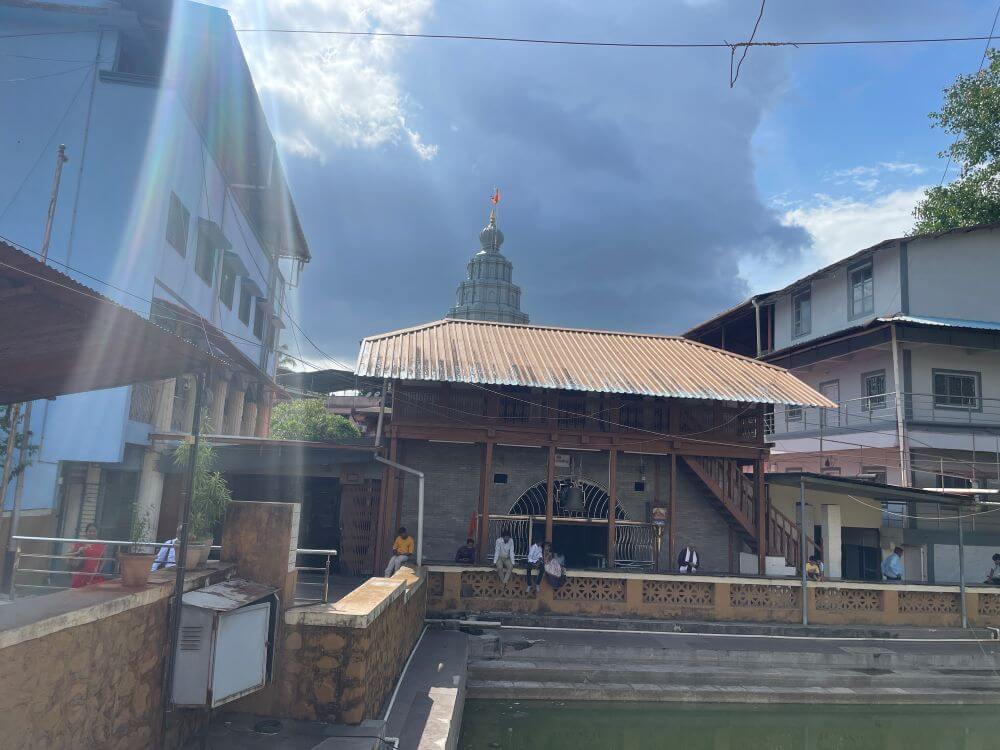
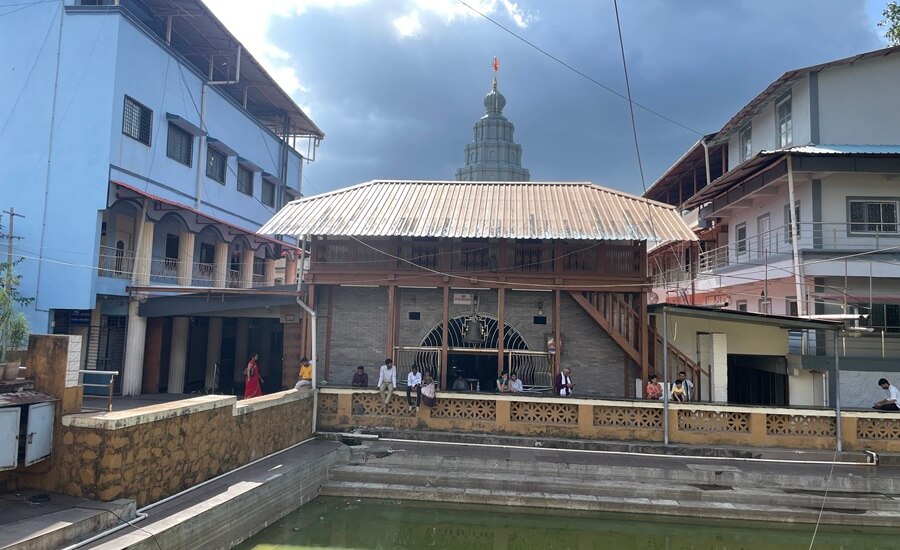
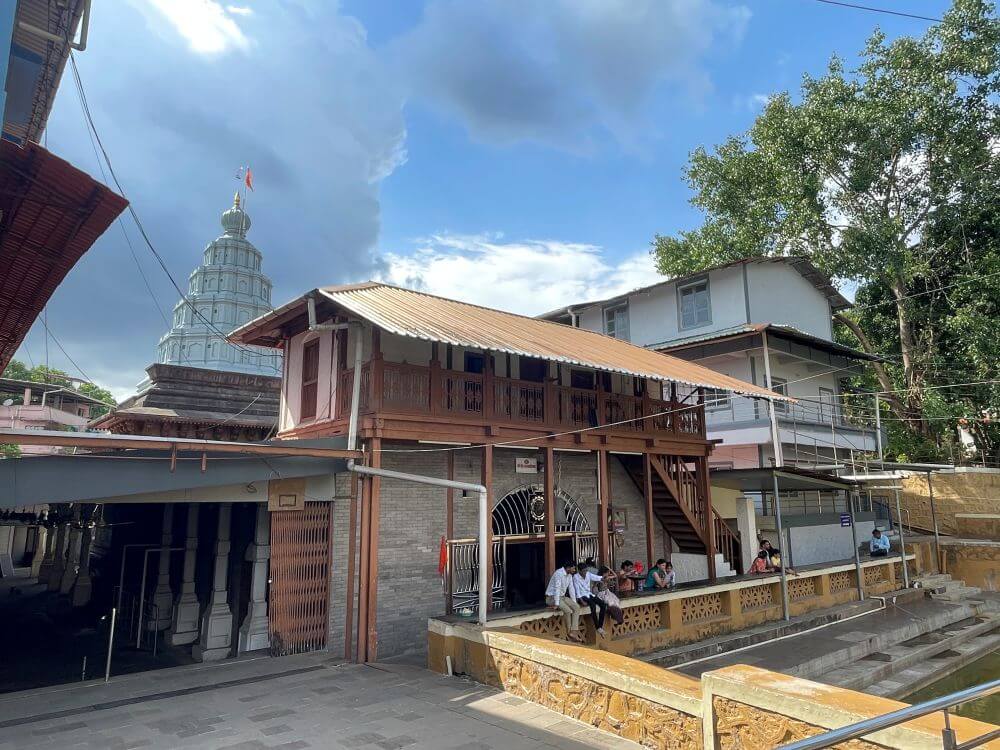
This temple faces east. The temple structure and premises are built of dressed stone. To the east, adjacent to the temple, are two spacious, ghat-lined ponds. One enters the temple complex from the rear. Proceeding through the rows of shops on both sides, which offer prasad and puja articles, one first encounters the temple of Dhundivinayaka. Devotees believe that this is the very Lord Ganesha worshipped by Bhakta Ballala. It is customary to have darshan of Dhundivinayaka before having darshan of Ballaleshvara. In the sabhamandapa of this temple, the mythological story of Bhakta Ballala is depicted on the walls, narrating The paintings have been completed. Moving forward from the darshan queue here, one first beholds the temple’s shikhara. The shikhara is octagonal and tapers upwards. Many devakoshthakas (niches for deities) are carved upon it. At its apex are an amalaka and a golden kalasha. As one proceeds towards the main temple, a very large wheel is visible at the rear of the temple. This is the very wheel from the oil press (ghani) that was used to churn the lime for the construction of this temple. It is one and a half feet thick and five and a quarter feet in diameter. It is said here that this wheel is so large that elephants must have been yoked to pull it.
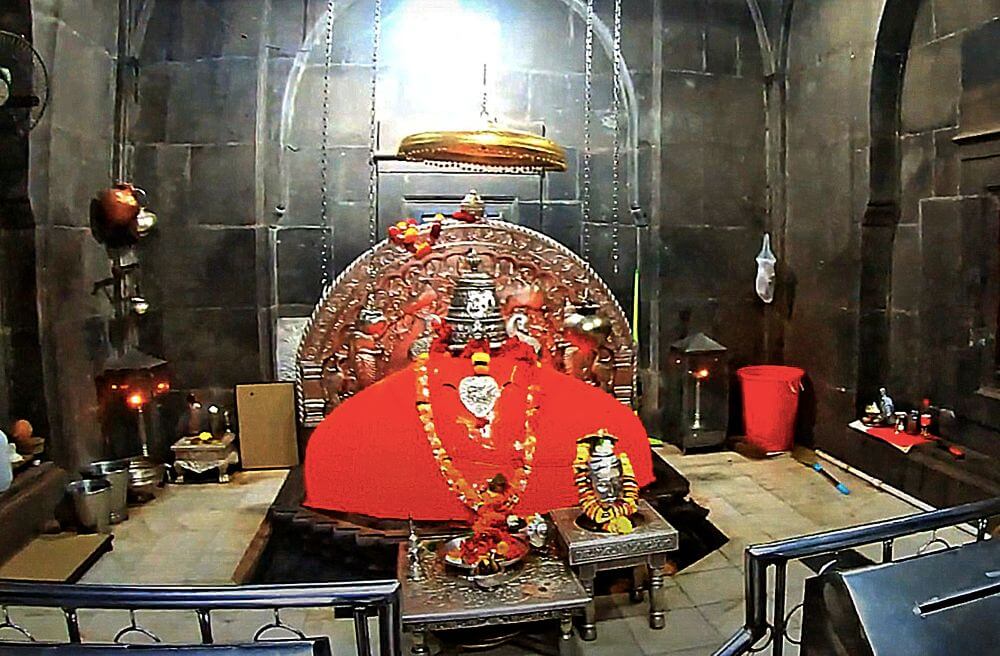
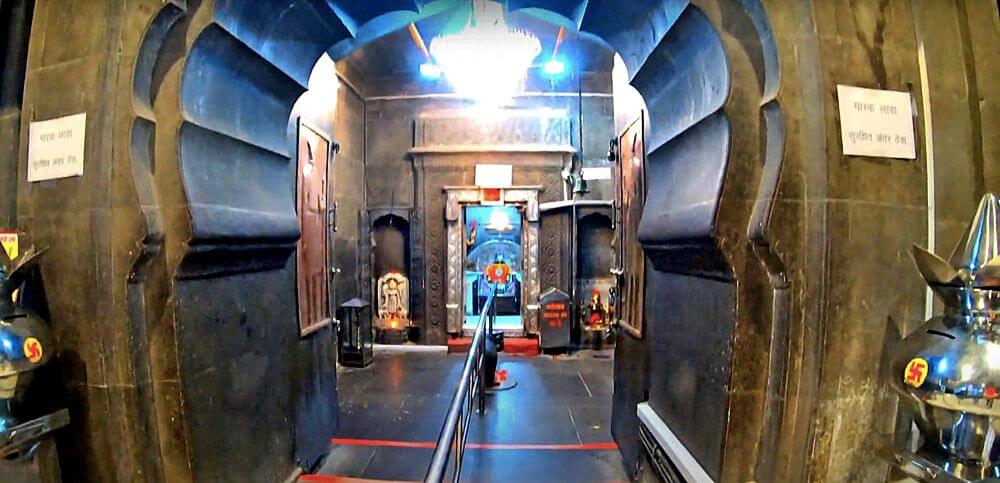
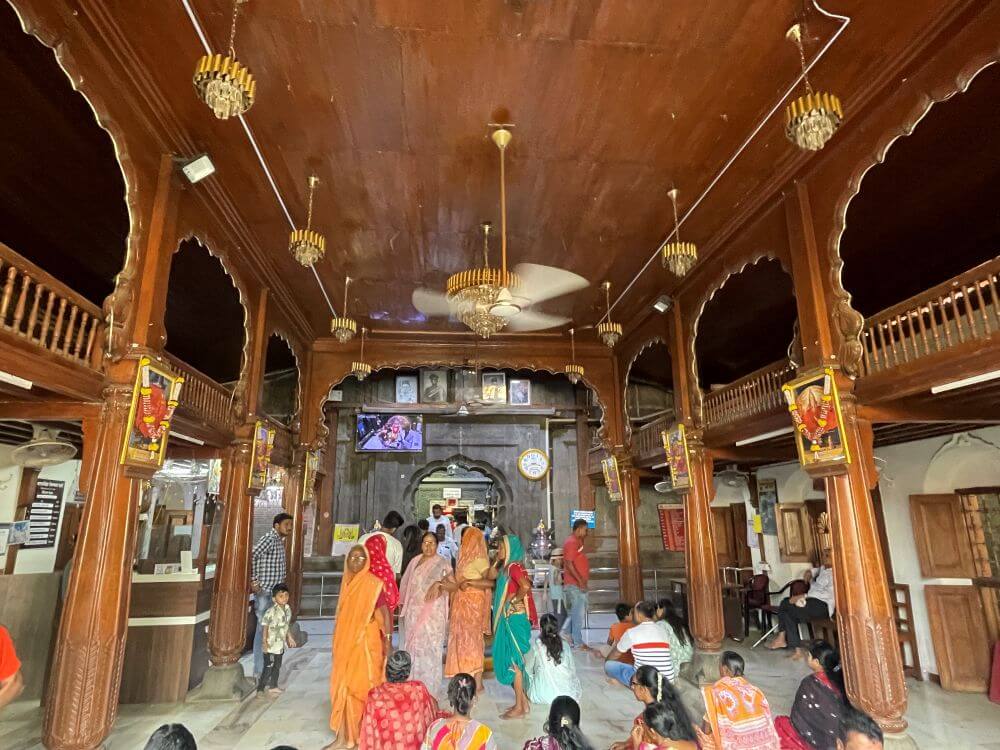
The temple’s structure comprises the Sabhamandapa, Antarala, and Garbhagriha. The Sabhamandapa has been constructed in the Konkani architectural style. Near the entrance, a large Panchadhatu bell is suspended. In the year एक हजार सातशे एकोणचाळीस, Chimaji Appa He conquered the fort of Vasai. In celebration of that victory, he offered this bell to Shri Ballaleshwar. The sabhamandapa (assembly hall) has eight wooden, intricately carved pillars. These pillars rest on small stone platforms at the base and are connected by arched gateways at the top. Images of the Ashta Vinayaka are installed on these pillars. The façade work of this sabhamandapa was undertaken around the year एक हजार नऊशे दहा by Shri Krishnaji Narayan Ringe, a devout Ganesh bhakta from Pali itself. The cost for that work was then अठरा हजार rupees. From the sabhamandapa, one enters the antarala (vestibule) of the temple. The entrance to the antarala is made of stone and features an arched gateway. Inside, there is an idol of Mushaka, the vahan (mount) of Shri Ganesha. The entrance to the garbhagriha (sanctum sanctorum) is trishakhiya (three-branched). These stone doorframes are adorned with carvings of leaves and flowers. At the lalata-bimba (lintel centre), there is an idol of Shri Ganesha, adorned with sindoor. Within the garbhagriha, the idol of Shri Ballaleshwar is seated on a vajra-peetha (diamond throne). The idol has its trunk turned to the left. The portion from the navel upwards is above the simhasana (throne). Diamonds are embedded in the idol’s navel and eyes. At the back, there is a silver prabhaval (halo). On both sides are idols of Riddhi and Siddhi. The idol is adorned with a beautiful, intricately carved silver crown weighing approximately four and a half kilograms.
At the Mandir, there is a daily programme of Śrī Ballāḷeśvara’s nitya pūjā and āratī. A pālakī procession takes place on every Saṅkaṣṭī and Vināyaka Caturthī. The Bhādrapadī Utsava is observed from Bhādrapada Śuddha Pratipadā to Bhādrapada Śuddha Ṣaṣṭhī. The Gaṇeśa Janmotsava is celebrated from Māgha Śuddha Pratipadā to Māgha Śuddha Ṣaṣṭhī. Devotees hold the belief that on the Caturthī of Māgha, Śrī Gaṇeśa Himself manifests here at midnight for a meal.
Here, one may enter the sanctum sanctorum and perform pūjā with one’s own hands from four o’clock in the morning until eight o’clock in the morning. However, due to the large crowds on Saṅkaṣṭī and Vināyakī Caturthī, such pūjā cannot be performed. After eight o’clock in the morning, darśan may be taken only from outside the sanctum sanctorum. Rituals such as Laghurudra, Mahāpūjā, and Abhiṣekam can be performed here. As this sacred pilgrimage site is renowned as ‘the Gaṇapati who grants wishes’, there is always a throng of devotees here.
This sacred temple stands as a testament to deep spiritual devotion, ancient architectural grandeur, and rich local cultural traditions.
The sanctum sanctorum houses the divine idol consecrated according to ancient Vedic traditions, surrounded by serene courtyards and traditional temple architecture.
Navratri, Maha Shivratri, Annual Temple Jatra & Deepotsav
Compare and book flights, secure top-rated local hotels near the temple, hire reliable guides, and rent cars instantly.
Extend your pilgrimage by visiting other highly sacred temples located nearby.


Add ₹999 more to unlock FREE SHIPPING!
Your sacred cart is currently empty.
Shop Photo FramesFill in your delivery details below to place your order.
Add comment